
Comfort and clear explanations matter as much as dental technology when you’re choosing care in San Antonio. Dental care and an active 2026 go hand in hand when you can feel at ease asking questions, understand what a tool or treatment is for, and make informed choices about your smile.
It’s natural to look for a welcoming office with modern tools, but reviews are most useful when they describe specific experiences. Learn how to assess comments about comfort and technology, including what they may reveal about communication, exams, and treatment discussions. Then compare those details with your own priorities to help you choose dental care that fits your needs and routine in San Antonio.
Key Takeaways
- Look for review details about how staff explain care and respond to comfort concerns, not just star ratings.
- Notice whether reviewers describe the technology they experienced and how it helped make their visit clearer or easier.
- Read reviews in context: individual experiences can differ, so focus on patterns that match your own priorities.
- Use what you learn to prepare questions about your exam, cleaning, and the tools involved in your care.
What rules or eligibility requirements apply in 2026?
When choosing dental care in San Antonio, “eligibility” can mean whether an office suits your needs or whether a treatment suits your mouth. Reviews may help you assess the office, but they cannot determine which treatment is right for you. Each comment reflects one person’s visit, not a universal standard. Treat reviews as clues about comfort, communication, and technology, not proof that an office or treatment is a fit.
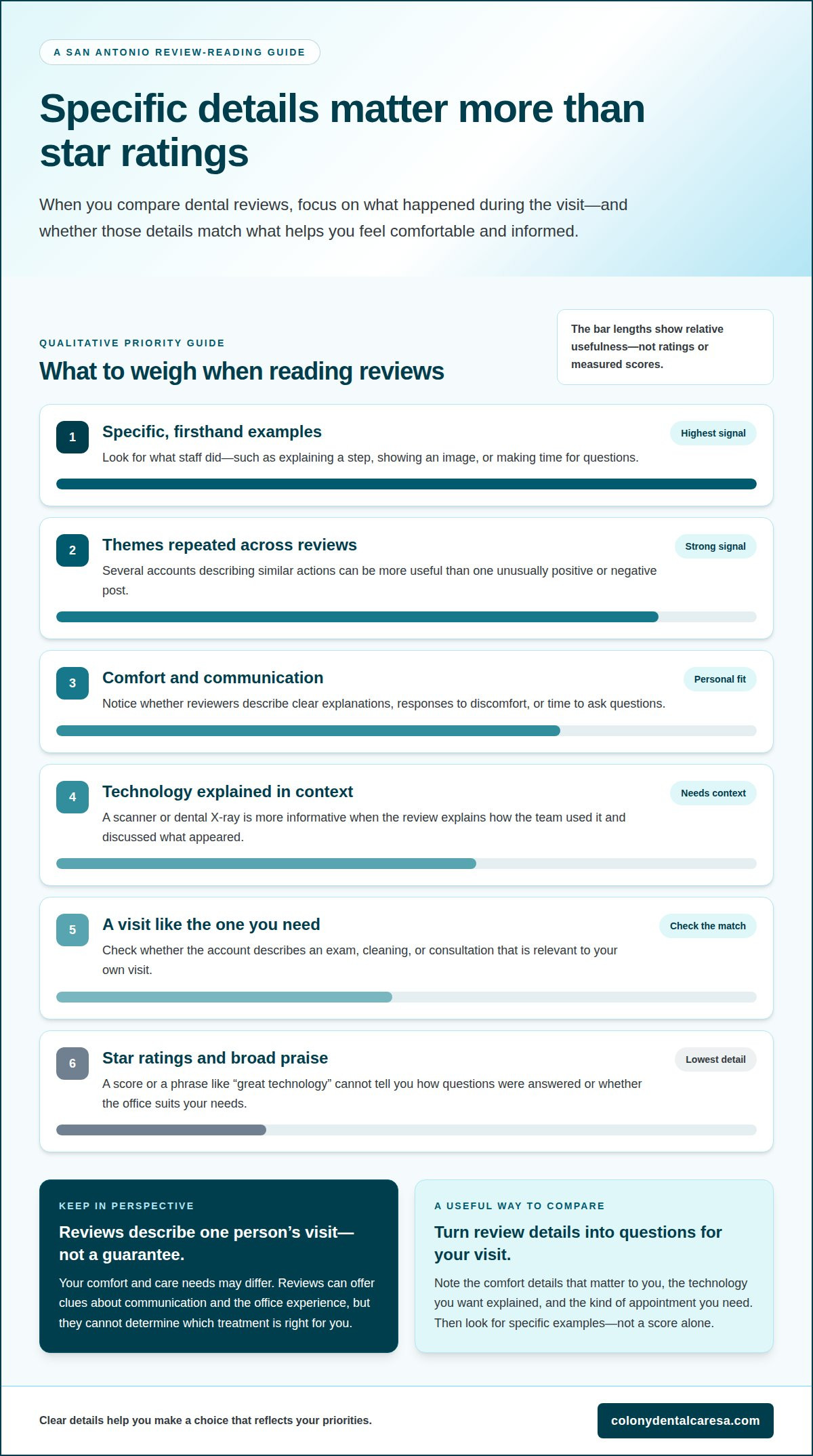
No single review score or phrase can establish that an office suits every San Antonio resident. Start with what matters to you. If appointments make you anxious, look for specific examples of how staff responded to questions or discomfort. If you want to understand dental images, notice whether reviewers describe how the team explained what appeared on screen. A detailed account is more useful than a vague claim that an office felt “modern.”
Use a simple process to distinguish specific experiences from general opinions:
- Identify the visit described, such as an exam, cleaning, or consultation.
- Look for a comfort detail, such as an explanation before a step or time for questions.
- Notice whether the reviewer names a tool, such as a scanner or dental X-ray, and explains its role.
- Compare several accounts for recurring themes instead of relying on one unusually positive or negative post.
Technology mentions need context. A review that names an intraoral scanner is more useful if it explains how the images informed an explanation or treatment discussion. The tool’s name alone does not tell you how the appointment felt, whether your questions were answered, or what care you may need. Look for how the team used it: did someone explain the image, invite questions, or connect a finding to a next step?
Comfort is personal, so another person’s preferences cannot determine whether you will have a good experience. One San Antonio reviewer may value a quiet room, while another may focus on clear explanations or a careful cleaning. Turn each comment into a question about your own needs. If a review mentions step-by-step explanations, for example, consider whether that approach would help you feel prepared.
Be cautious of absolute claims. One review cannot show that every appointment will be the same or that a device guarantees comfort. Instead, look for specific actions that appear across multiple reviews, such as staff explaining procedures or making time for questions. Separate firsthand details from broad opinions. “The dentist showed me the scan” offers a clearer example than “the office has great technology.”
Reviews cannot determine whether you are clinically suited to a procedure. Your oral health, goals, and examination findings help shape appropriate options. An account of a cleaning or cosmetic consultation may give you a sense of the office experience, but it cannot predict what your own exam will show. Use reviews to assess communication and comfort, then discuss your needs during a dental visit.
When balancing dental care and an active 2026 schedule, make a short note before reading reviews. List the comfort details that matter, technology questions you want answered, and the type of visit you need. Then compare those points with specific review examples. This approach keeps star ratings in perspective and helps you choose based on useful details, not a score alone.
Planning dental care and an active 2026 lifestyle starts with identifying what would make an appointment easier to understand. In San Antonio, the most useful review for your decision is one that speaks directly to your priorities. Use that perspective to prepare clear questions about your visit and the tools involved, so your next step reflects your own needs rather than someone else’s experience.
F1’s 2026 requirements also set technical limits for the car. The vertical impact test requirement for the F1 roll-hoop increases from 16 g to 20 g in 2026. The maximum wheelbase for an F1 car in 2026 is 3.4 m, 200 mm shorter than before. The minimum weight limit for an F1 car in 2026 is 768 kg, down from 800 kg.
Qualifying has a separate stated condition: in 2026 qualifying and Sprint Qualifying, six cars are eliminated in each of Q1/SQ1 and Q2/SQ2. These limits cover impact testing, dimensions, weight and elimination stages.
What risks, limitations, or exclusions should people know about?
Reviews can help you picture a dental visit in San Antonio, but they have limits. A comment about one appointment describes one person’s experience, not a promise about every visit. Someone may describe a calm cleaning, for example, while your appointment involves different questions or needs. Treat reviews as clues about communication and the office experience, not guarantees of a particular outcome.
Technology reviews may leave out important details. Someone might mention digital images or a scanner without explaining how the tool was used. Calling a practice “modern” does not tell you whether the team explained the image, answered questions, or discussed next steps. Look for details about how the technology was used: did someone show you the image and explain it in plain language?
Comfort means different things to different people. One person may value a quiet room; another may want staff to explain each step beforehand. If a review says an appointment felt “easy,” look for details that explain why. Comments about listening, clear explanations, or time to ask questions offer more useful context than a general compliment.
Reviews may omit circumstances that shaped an experience. A complaint about waiting, for instance, may not explain the appointment type or what happened that day. Similarly, praise for a quick visit does not show whether the reviewer received the explanation they wanted. Compare accounts for repeated, specific details, and avoid broad conclusions based on a single review.
- Separate firsthand details from broad praise. “The staff explained the image” is more specific than “great technology.”
- Check whether the visit matches yours. A review of a consultation may not describe a cleaning.
- Notice the explanation, not just the tool. Look for how the team connected a device or image to the visit.
- Consider your own comfort needs. A mention of step-by-step explanations may matter if uncertainty makes you uneasy.
Reviews cannot tell you what an exam will find or which care is right for your mouth. Another person’s consultation does not establish your needs. Use online comments to understand how people describe communication, comfort, and technology. Discuss your questions and personal concerns at your dental appointment.
Watch for absolute claims, too. Statements like “everyone feels comfortable” or “this technology solves every problem” go beyond what a reviewer can establish. A more grounded account describes a particular moment, such as staff explaining what would happen before starting. That example may help you decide what to ask, without assuming your visit will be the same.
For a more balanced read, note what matters before reviewing San Antonio offices: the kind of appointment you need, what helps you feel at ease, and what technology questions you have. If you’re planning dental care and an active 2026 calendar, these priorities can help you assess whether review details speak to your needs. Compare concrete examples rather than relying on overall impressions. As you prepare questions about a visit, use relevant dental care visit details to focus on communication and comfort.
Choosing care that supports your goals and an active 2026 routine starts with keeping reviews in perspective. Use them to prepare questions about communication and comfort, then bring those questions into a conversation about your own dental needs.
This caution also matters when reviews are used to prepare for preventive care or to speak up about personal needs. The 2026 Older Americans Month theme encourages people to manage their health, advocate for themselves, access preventive care, and make informed decisions that support independence. The 2026 Older Americans Month observance highlights evidence-based approaches, self-management, and community partnerships as ways to empower people to lead their healthiest lives. For a dental visit, use a review to identify questions you may want to ask, not to decide what care you need. You can ask the dental team to explain what an image shows, why a step is being recommended, and what alternatives or next steps are relevant to your situation.
If a review raises a concern, ask whether it describes a specific interaction or makes a sweeping claim. Keep your priorities in mind: you may want explanations before each step, time for questions, or help understanding an image. Tell the team what would make your visit clearer, then consider the response you receive rather than assuming another person’s experience predicts yours. Reviews can inform the conversation, but your questions and appointment discussion are where you can address your concerns.
Colony Dental Care: Dental Cleanings and Exams
At Colony Dental Care in San Antonio, Dental Cleanings and Exams give you an opportunity to discuss your oral health, raise concerns, and understand possible next steps. If reviews have left you wondering what an appointment will be like, bring your questions about comfort and technology. Clear explanations can help you understand each part of the exam.
If an exam identifies a concern, Tooth-Colored Fillings may be an option for a cavity. You can also discuss Invisalign Clear Aligners for alignment goals or Tooth Extractions if a tooth needs to be removed. The right conversation starts with your needs and exam findings.
For a welcoming next step in San Antonio, contact Colony Dental Care or visit colonydentalcaresa.com.
Make Your Next Dental Step Feel Clear
Your dental routine can support the everyday plans that make 2026 feel full and active. Choose a next step that fits your needs, whether you’re maintaining your smile or ready to discuss a concern. At Colony Dental Care, Dental Cleanings and Exams provide a place to talk through your oral health. Tooth-Colored Fillings and Invisalign Clear Aligners are other options you can discuss based on your goals and exam.
Bring the questions that matter to you, such as what a tool does, how a visit will proceed, and what care may involve. A clear conversation helps you take part in decisions at your own pace. You deserve to feel heard and comfortable as you plan your dental care in San Antonio.
Contact Colony Dental Care today to take a considered next step. Your smile can be part of an active 2026, supported by care that feels personal and clear.

