
Your dental care can be easier to organize when preventive, restorative, and cosmetic services are available at one practice. In San Antonio, a full service mix under one roof lets you discuss different needs in a connected setting. The right services still depend on your oral health and personal goals.
It’s reasonable to want care that feels comfortable, clear, and personal. You may also want to understand how a practice coordinates services, what to consider when choosing one, and how to discuss costs. Knowing what to ask can help you take a more active role in decisions about your care.
This article explains what one-roof dental care includes, where its convenience has limits, and how different services can support your overall care. You’ll also find practical questions to help you weigh your options and prepare for a dental visit in San Antonio.
Key Takeaways
- Consider how a single practice can make communication and care planning easier, while weighing the value of an outside perspective for some needs.
- Look at how coordinating different services can help keep your dental care connected and your next steps clear.
- Learn which questions about treatment, costs, and insurance can help you understand your options before making a decision.
- See how dental exams and cleanings, tooth-colored fillings, Invisalign Clear Aligners, and tooth extractions can support different needs.
What are the risks or drawbacks of using one provider for every service?
One practice can make appointments and records easier to coordinate, but convenience alone doesn’t show whether a service suits your needs. A practice may provide routine exams, fillings, and clear aligners, for example, yet each service still calls for a discussion about your goals. Don’t treat every available service as automatically appropriate. A full service mix under one roof is most useful when it supports informed choices, not when its range becomes a reason to accept a recommendation.
Recommendations come from the same practice where you receive care. That doesn’t make an in-house recommendation inappropriate, but you should understand its purpose. If a visit leads to a proposed treatment, ask what concern it addresses, what alternatives may suit your situation, and what affects the timing. If you came in with discomfort and receive a recommendation beyond that concern, ask how the additional step relates. Clear answers help you decide without feeling rushed or overwhelmed.
A service being available doesn’t automatically mean it matches your priorities. You might be interested in clear aligners while also wanting to address a separate dental concern. Ask for each recommendation to be explained on its own. A written plan can identify the concern, the proposed service, and why it’s included. That makes it easier to see what supports your goals and what you may want to discuss further.
Convenience can also create scheduling expectations that don’t match the appointment plan. A practice offering different services may arrange them across separate visits, depending on what each appointment involves. An exam and a restorative visit, for instance, may not happen together. Before agreeing to a plan, ask which appointments are expected, what each will address, and whether follow-up is part of the plan. This helps you plan around work, family responsibilities, and travel across San Antonio.
Cost clarity matters when a plan includes several recommendations. A single total can be difficult to interpret if it doesn’t show what each service covers. Ask for an itemized estimate and an explanation of how your insurance may apply. You may want to separate the cost of an exam from a proposed filling before deciding how to proceed. Plan terms affect your out-of-pocket costs, so review each item rather than relying on one combined figure.
- Ask about the purpose: Find out which concern each recommendation addresses.
- Clarify appointments: Ask what each visit covers and how the plan is arranged.
- Review charges separately: Request a clear breakdown of proposed services and insurance considerations.
Familiarity should make it easier to speak openly, not harder to raise concerns. If a recommendation isn’t clear, ask for an explanation in everyday language. Say which goals matter most and take time to consider the options. If you expected a routine visit but leave with several recommendations, ask which one addresses your original concern. A respectful conversation makes room for your questions and preferences. The goal isn’t to avoid one-practice care, but to ensure convenience and communication support decisions that feel right for you.
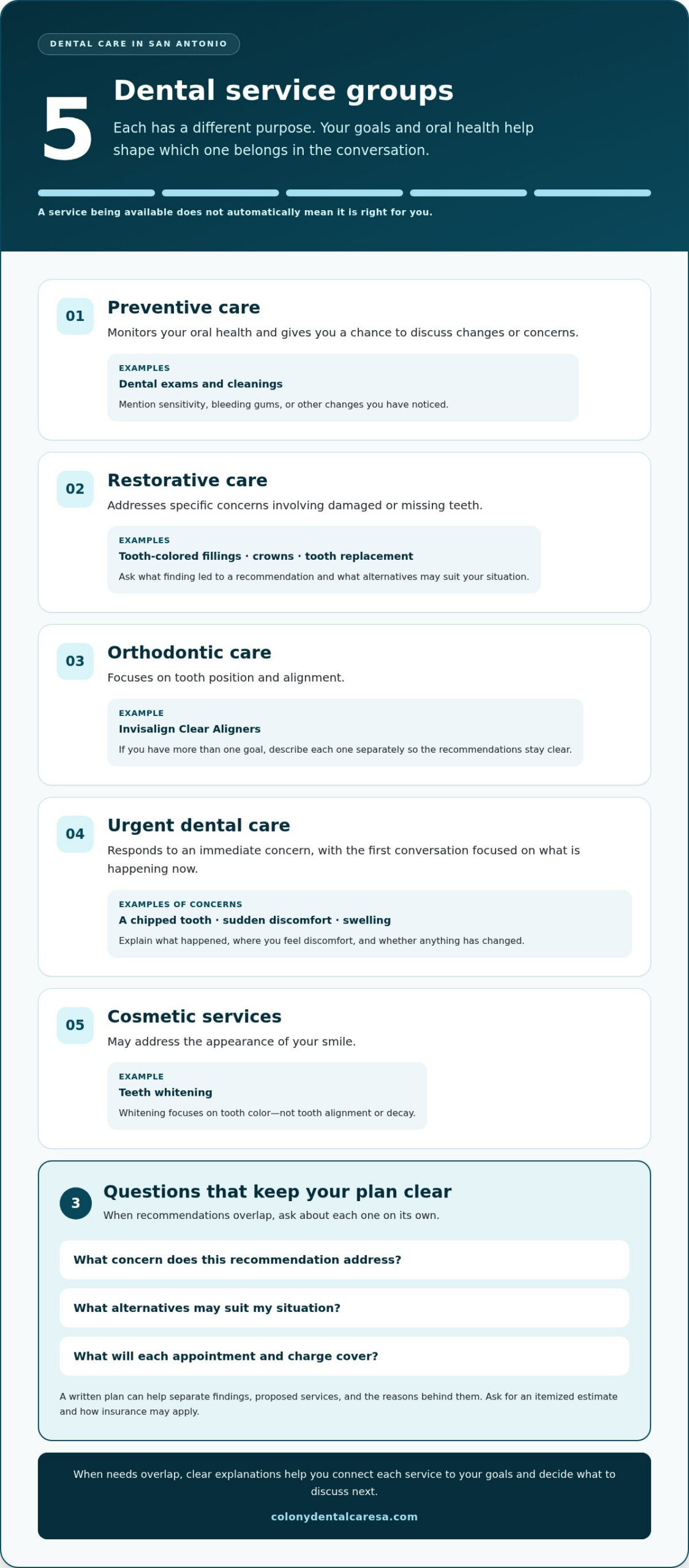
Services division
Dental services can be grouped by the needs they address. Preventive care monitors your oral health, while restorative care addresses damaged or missing teeth. Orthodontic care focuses on tooth position, urgent care responds to immediate concerns, and cosmetic services may address appearance. These categories can overlap. An exam, for example, may identify a tooth concern while you’re discussing alignment. Understanding the purpose of each service helps you connect recommendations to your goals instead of viewing the practice’s range as one package.
Preventive care is a useful starting point for discussing your oral health. During a dental exam and cleaning, mention concerns such as sensitivity, bleeding gums, or changes you’ve noticed. Describe when the issue occurs and what seems to affect it. Telling the dental team that a tooth feels sensitive when you drink something cold, for example, gives useful context. The exam can help identify what needs attention and whether another type of service should be discussed.
Restorative services address specific concerns with teeth. A tooth-colored filling may be discussed to repair a cavity, while a crown may be considered when a tooth needs more coverage. A missing tooth raises different questions about replacement. Ask what finding led to each recommendation and how the proposed care addresses it. You can also ask what alternatives may suit your situation. The answers help you understand the treatment choice rather than treating different procedures as interchangeable.
Orthodontic and cosmetic services support goals that differ from repairing a tooth. Invisalign Clear Aligners may be relevant if you want to discuss tooth alignment. Teeth whitening focuses on tooth color, not alignment or decay. If you have more than one goal, describe each separately. You might want to discuss both the appearance of your smile and the position of your teeth, for example. This distinction helps the dental team explain which service relates to each goal and what to expect from the discussion.
Urgent dental care starts with the problem that needs attention. A chipped tooth, sudden discomfort, or swelling may call for a different conversation than a routine appointment. Explain what happened, where you feel discomfort, and whether anything has changed. These details help the team understand your concern and discuss an appropriate next step. Follow-up care may also be discussed after the immediate issue has been addressed. This connects urgent attention with ongoing oral health while keeping the purpose of each visit clear.
Coordination matters when different recommendations relate to the same dental concern. If an exam identifies a cavity while you’re also considering aligners, ask how each recommendation fits your goals and which should come first. A written plan can separate the findings, proposed services, and next appointments, making it easier to keep track of decisions. If you’re in San Antonio and want to discuss how dental services can fit your needs, you can contact a local dental practice as a natural next step in planning your care.
- Name your goal: Separate concerns such as discomfort, damage, alignment, and appearance.
- Ask what connects: Find out what finding or goal each proposed service addresses.
- Clarify the plan: Understand the purpose of each appointment and how recommendations relate.
Service categories should help you understand your options, not limit how you describe your needs. A chipped tooth, for example, may raise questions about both repair and appearance. Explain which outcome matters most, then ask how the available services relate. When reviewing a plan, note which recommendations address prevention, repair, alignment, or appearance. This can help you follow the discussion, compare the options presented, and feel prepared to decide what to address next.
Colony Dental Care: Dental Cleanings and Exams
Colony Dental Care offers Dental Cleanings and Exams to help you understand your oral health and discuss practical next steps. If an exam identifies a cavity, Tooth-Colored Fillings may be part of the conversation. You can also discuss Invisalign Clear Aligners if tooth alignment is one of your goals, or Tooth Extractions when a tooth needs to be removed. Each service addresses a different need, so you can discuss why a service is recommended and how it fits your priorities.
For San Antonio residents seeking a familiar place to discuss preventive or restorative care, start with the concern you want addressed. Share your symptoms, questions, or goals, and ask for a clear explanation of your options. Contact Colony Dental Care to discuss your dental care needs.
Choose a Clear Next Step for Your Dental Care
Your next step doesn’t have to address every dental concern at once. Start with the question that matters most, whether it’s maintaining your oral health, addressing a tooth, or discussing alignment. For some San Antonio residents, a full service mix under one roof makes it easier to connect these conversations while keeping each recommendation focused on a specific goal.
Colony Dental Care offers Dental Cleanings and Exams, Tooth-Colored Fillings, and Invisalign Clear Aligners. Use an appointment to share your priorities, understand your options, and consider what feels right for you. A thoughtful conversation can turn a broad goal into a practical next step, without pressure to decide everything on the spot.
Whenever you’re ready to discuss your dental care, contact Colony Dental Care. A comfortable, informed next step can begin with a simple conversation.
Frequently Asked Questions
What does “full service mix under one roof” mean?
A full-service mix under one roof means one dental practice provides several kinds of care in a shared setting. It describes the range of services available, not necessarily a discounted bundle or a single appointment. In San Antonio, this can include preventive, restorative, and cosmetic dental care. Each recommendation should still relate to your goals and oral health needs.
Which businesses offer a full-service mix under one roof?
Dental practices that provide preventive, restorative, cosmetic, and urgent care can offer this range. In San Antonio, Colony Dental Care provides services across these areas, including dental exams and cleanings, tooth-colored fillings, Invisalign Clear Aligners, and emergency dental care. The mix varies by practice, so consider which services relate to your needs and what you want to discuss.
What services are typically included in an all-in-one service package?
There isn’t one standard dental package. An all-in-one practice may bring together preventive care, such as exams and cleanings, restorative care for damaged teeth, and cosmetic or alignment services. Some practices also provide urgent dental care. Think of these as service categories, not a promise that every treatment is bundled or completed together. Your needs determine which categories matter.
What are the benefits of getting multiple services from one provider?
Receiving different kinds of care at one practice can make it easier to keep your dental history and follow-up discussions connected. After a filling, for example, you can bring questions about ongoing prevention to a later visit in the same setting. A familiar team may also help you feel more at ease discussing concerns. Convenience is useful when it supports care that fits your needs.
How do I compare providers that offer a full-service mix?
Compare how clearly the practice explains treatment choices, appointment plans, and expected charges. Consider whether its services match the care you’re seeking and whether the team listens without rushing the conversation. Ask what insurance plans the practice accepts and how your plan may apply. In San Antonio, a clear, personalized discussion can help you decide whether the approach feels right for you.
What questions should I ask before choosing an all-in-one service provider?
Ask, “What does each recommendation address?” and “Which steps come first?” You can also ask for a plain-language explanation of expected charges and how insurance may affect your portion. If you’re considering more than one type of care, ask how the recommendations fit together and what follow-up to expect. These questions help you understand the plan and make decisions at a comfortable pace.

