
Modern technology is not defined by the newest device. It is defined by how new capabilities improve the way we get things done. Modern technology builds on existing tools with changes that make information easier to access, collect, and process. Many digital systems follow three basic phases: they take in data, process it, then produce an output or action.
It is natural to wonder what that means in everyday life, especially as digital tools become part of routine tasks. Understanding the basics helps you see both the convenience they offer and the changes they bring. This article explains how modern systems work, how adoption can replace manual methods, and what the shift means for education, healthcare, work, and communication. We also connect these ideas to dental care in San Antonio, where technology can support a clearer, more comfortable experience while personal attention remains central.
Key Takeaways
- Understand how digital systems turn input into processed information and useful actions.
- See how technology changes learning, healthcare, work, and communication in different ways.
- Recognize how adopting digital tools can replace manual methods while creating new learning needs.
- Weigh everyday benefits against privacy and security concerns, and see how dental exams and cleanings fit into the discussion.
Effects on education, healthcare, work, and communication
In education, digital libraries help learners find books and reference materials without searching physical shelves. By 1988, information technology had made significant inroads into paper-and-cardboard library systems. Students can search electronic catalogs, open sources, and compare explanations. In science lessons, simulations can illustrate processes that are difficult to observe directly. Digital language tools also let learners review unfamiliar terms at their own pace.
In healthcare, electronic systems can organize information care teams use when discussing a person’s needs. For example, a digital record can bring relevant details together for a conversation between a patient and a professional. This can make information easier to review, but clear explanations still matter. Technology supports communication; it does not replace the judgment and attention involved in personal care.
At work, a machine can handle repeated data-processing tasks, leaving people more time for decisions and communication. Networks also connect teams across different locations. The fifth generation of wireless communication, 5G, can support faster data speeds, lower latency, and greater network capacity than 4G. According to the International Telecommunication Union, 5G networks transport data faster, connect many devices reliably, and process high volumes of data with minimal delay.
Access to information and communication technologies can affect who participates in education, services, and public life. Online learning materials and digital networks can help people connect across social boundaries. Access depends on more than having a device: it also requires connectivity, useful content, and the skills to use it. Clear language and practical guidance make digital information easier to understand.
Local business clusters can help smaller firms overcome limits in size and develop their capabilities. In marginalized communities, nearby businesses may share specialized knowledge and support one another’s work. Specialization and division of labor can bring local benefits, including economies of scale and scope. For residents, stronger local firms can mean more opportunities to learn skills, exchange information, and participate in economic life. These effects show how technology shapes both individual tasks and connections across society.
Definition and basic operation of modern technology
A practical definition of modern technology is the use of newer tools or methods to improve how a task is done. The term describes what a tool helps you accomplish, not just its age or appearance. A digital thermostat, for example, lets you enter a preferred temperature and view the current setting on a screen. Its value lies in making information easier to set, read, or adjust than with a less direct method.
Many digital systems follow three stages: input, processing, and output or action. You provide input by entering a request, scanning an item, or selecting a setting. Software processes that information according to its design, then produces an output, such as a result on a screen or a saved record. In a household budgeting app, you enter purchases, the app sorts them into categories, and a summary helps you review spending.
This model helps explain devices without requiring knowledge of how they work internally. A digital map takes a destination as input, processes location and route information, then displays directions. If you change the destination, it processes the new request and presents a revised route. Each stage has a distinct role, so an unclear result may be caused by the information entered or the way the tool handles it.
Connected services also bring privacy and cybersecurity risks. Personal details may be exposed through compromised accounts, insecure networks, or careless sharing. Before using a service, consider what information it requests and who can access it. Strong passwords, two-factor authentication, software updates, and caution with suspicious links help protect accounts. For cloud services, use secure login methods and keep your credentials private. These habits help you benefit from digital tools while protecting personal information.
Technology adoption and changes to existing methods
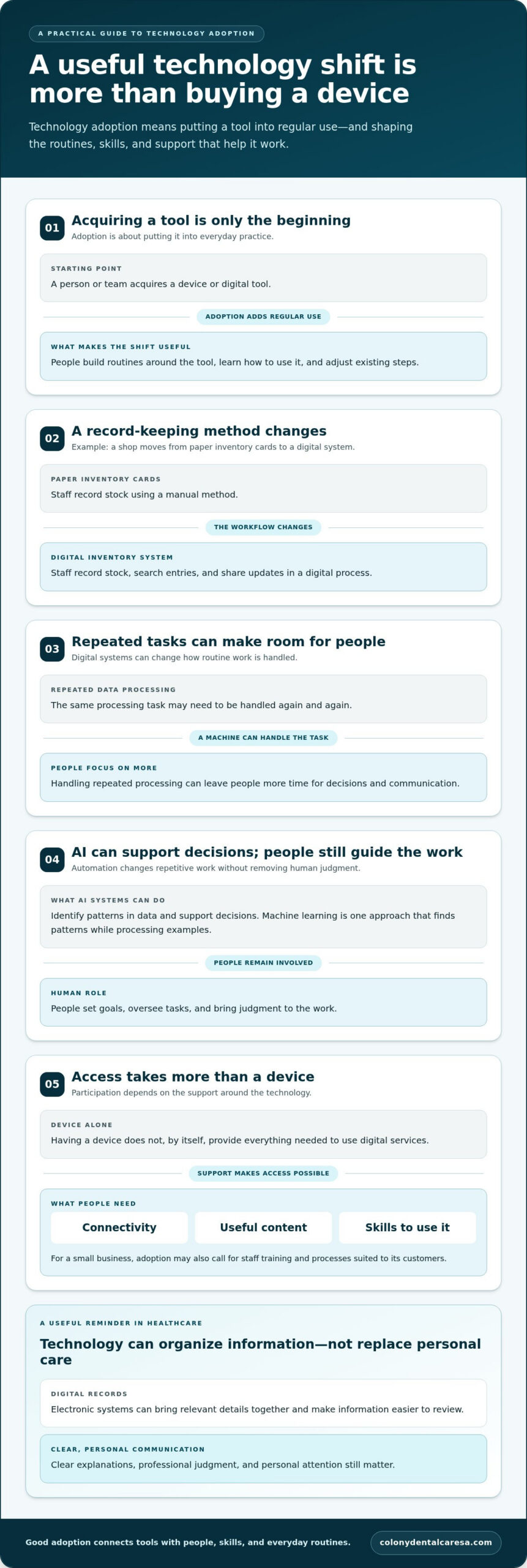
Technology adoption means putting a tool into regular use, not simply acquiring a device. A shop replacing paper inventory cards with a digital system changes how staff record stock, search entries, and share updates. Adoption includes both new equipment and the routines people build around it. For a useful transition, teams identify the task, learn the tool, and adjust existing steps. Digital processes can replace manual or mechanical methods when they make work easier to manage.
Artificial intelligence is changing digital tools by helping systems identify patterns in data and support decisions. Machine learning, one approach within AI, allows systems to find patterns as they process examples. In manufacturing, shipping, and warehousing, AI-powered robots and machines are used to improve productivity, streamline production lines, and reduce human error. In day-to-day business communication, content platforms like Post Pilot assist organizations with drafting social media and email messaging. People still set goals and oversee tasks; automation changes repetitive work without removing the need for human judgment.
At a community level, adoption depends on more than computing power. A small business may need staff training, reliable connectivity, and processes suited to its customers. Local business clusters can help small firms overcome size limits, advance technologically, and compete in local and global markets. Specialization can support economies of scale and scope, while nearby firms exchange skills and knowledge. These effects can strengthen a community’s ability to participate in digital markets.
For individuals, adapting is an ongoing practice. Online skills help people keep up as tools and workplace expectations change. A worker learning a scheduling platform, for example, needs to understand its screens and how information moves through the process. Start with the task the tool should improve, then practice common actions and learn to solve routine problems. Continued learning helps technology serve people instead of adding a disconnected layer of work.
What are the benefits and drawbacks of modern technology?
A useful tool can remove small points of friction from a familiar task. A shared digital document, for example, lets several coworkers edit the same project instead of passing separate drafts back and forth. A screen reader can read digital text aloud, giving some users another way to access written material. In each case, the benefit depends on whether the tool meets a real need and is easy for the user to work with.
There are trade-offs. Too many notifications can interrupt concentration, while a confusing interface can make a simple task harder. If a team depends on one scheduling system, an outage may disrupt planning until staff find another way to coordinate. These examples show why it is important to consider how a tool fits into everyday routines, not just what it can do under ideal conditions.
Digital systems can also produce inaccurate or incomplete results. A budgeting app, for instance, may categorize a purchase incorrectly if its details are entered in the wrong field. Review important outputs before acting on them, and involve a human decision-maker when the consequences matter. For any new tool, weigh the time it saves against setup, learning, maintenance, and the effort needed to correct mistakes.
In dental care, technology is most helpful when it supports clear explanations and a conversation about your needs. If you have questions about your oral health or care options in San Antonio, contact Colony Dental Care to discuss them. A thoughtful conversation can help you understand the next step and decide what feels right for you.
Modern PCs are over 1000 times faster than the original IBM PC. That increase can make demanding tasks feel more responsive, but speed alone does not guarantee that a tool is useful, accessible, or reliable. The practical benefit still depends on whether it serves the person using it and fits the task.
Colony Dental Care: Dental Cleanings and Exams
Colony Dental Care offers Dental Cleanings and Exams to help you maintain your oral health and discuss concerns in a comfortable setting. If a checkup is due or you have noticed a change in your teeth or gums, an exam gives you time to describe what you are experiencing and understand possible next steps. Cleanings support preventive care, while an exam helps identify areas that may need attention.
Depending on your needs, care may also include Tooth-Colored Fillings, Invisalign Clear Aligners, or Tooth Extractions. The right approach starts with understanding your goals and dental needs, then discussing suitable care clearly. Technology can support dental care, but thoughtful communication and personal attention remain essential.
If you are in San Antonio and would like to discuss your dental care, you are welcome to contact Colony Dental Care.
Make your next dental decision with confidence
Modern technology is most useful when it helps you understand your choices and take a practical next step. In dental care, that step can be a conversation about what you want to maintain, improve, or address. Your priorities and oral health needs should guide the discussion, not the appeal of a device or digital tool on its own.
Colony Dental Care offers Dental Cleanings and Exams, Tooth-Colored Fillings, and Invisalign Clear Aligners. These services address preventive, restorative, and alignment needs, giving you options to discuss based on your goals. You can talk through your concerns and learn what care may suit your situation in a calm, welcoming setting.
If you’re ready to discuss your dental needs in San Antonio, contact Colony Dental Care. A clear conversation is a helpful place to begin, and you can take the next step at your own pace.
Frequently Asked Questions
How is this kind of technology defined?
Modern technology refers to tools that use newer methods to make a task easier, clearer, or more efficient. The term can describe a small change, such as replacing a handwritten reminder with a calendar alert, or a larger digital system. To judge a tool, consider the task it supports and whether its results are useful to you.
What does modern technology include?
Modern technology includes both the physical equipment you handle and the software or services that run on it. A tablet paired with a note-taking app is one example; a phone connected to a payment service is another. These tools serve different needs, so consider how you use them rather than assuming every new device is an improvement.
What are examples in healthcare, education, and business?
A patient portal can let someone review appointment details, while a classroom presentation tool can help a student explain a project. In a small business, video meetings can help coworkers discuss plans without gathering in one room. These examples support communication and organization. Their value depends on whether people can access the tools and understand the information they provide.
How can people adopt technology safely and effectively?
Choose one clear purpose, then introduce a tool gradually. Learn its basic settings, practice with non-sensitive information, and review whether it actually helps. Before sharing personal details, read the service’s privacy information and limit permissions to what you need. Keep a familiar alternative available while learning. This measured approach helps you build confidence without relying on a new system before you understand it.

