
Real financing flexibility isn’t about taking on more debt. It means keeping monthly obligations manageable while preserving room to respond when life changes. Savings, cash reserves, and debt you can comfortably carry can all help. In San Antonio, understanding how dental care fits your budget can support thoughtful decisions without losing sight of other priorities.
A budget needs room for both expected bills and surprises. The challenge is balancing today’s needs with future goals, especially when an unexpected expense or opportunity shifts your priorities. This article explains financial flexibility, how it can help you manage debt and monthly obligations, and why it matters when considering dental care. Flexibility can create more options, but careful financial decisions still matter.
Key Takeaways
- Compare your recurring bills with your income to see how much room you have for savings and unexpected costs.
- Keeping obligations manageable can help you adjust when priorities change without losing sight of longer-term goals.
- When weighing borrowing options, look beyond the payment amount to the rate, repayment schedule, and other terms.
- Understanding your dental care needs can help you plan thoughtfully and make choices that fit your priorities.
Manageable debt and monthly obligations
Financial flexibility means keeping debt and recurring bills manageable while leaving room for savings. To assess your household budget, compare take-home income with rent, utilities, debt payments, and everyday costs.
Loan Terms and Repayment Options
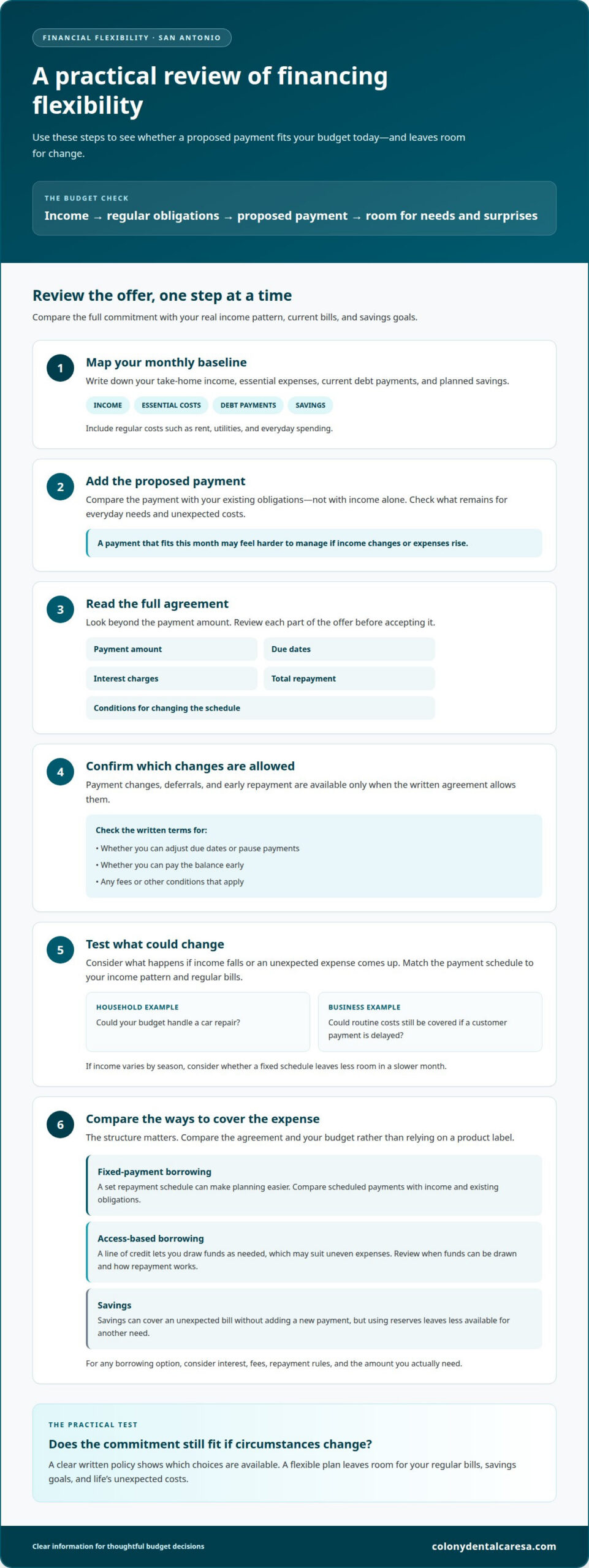
A loan’s term and repayment options set the payment schedule and describe what choices you have over time. A payment that fits this month may feel less manageable if income changes or expenses rise. Review the payment amount, due dates, interest charges, total repayment, and any conditions for changing the schedule. Compare those details with your existing obligations, not income alone. A business should also account for routine operating costs.
Payment Changes and Early Repayment
Payment changes, deferrals, and early repayment are available only when the written agreement allows them. Check whether you can adjust due dates, pause payments, or pay the balance early, and whether fees or other conditions apply. Read these terms before accepting an offer. If seasonal income varies, for example, a fixed schedule may leave less room during a slower month. A clear written policy shows which choices are available.
Assessing an Offer’s Flexibility
An offer is flexible when its terms can accommodate realistic changes without making your budget harder to manage. Compare the payment schedule with your income pattern, current debt, regular bills, and savings goals. Then consider what would happen if income fell or an unexpected expense came up. A household might test its budget against a car repair; a business might consider a delayed customer payment. These examples show whether obligations leave breathing room.
Start with a simple review: list monthly income, essential expenses, current debt payments, and planned savings. Add the proposed payment and check what remains for everyday needs and surprises. Financial plans often assume stable income and predictable expenses, but a job change or family event can shift priorities. The practical test is whether the commitment still fits when circumstances change, not just whether the first payment seems affordable.
Pursuing opportunities without immediate financial pressure
Financial flexibility can give you room to consider opportunities without making every change feel financially risky. It doesn’t remove challenges, but it can create more ways to respond while protecting your priorities. A job change, for example, may bring new costs before income settles. Savings and manageable obligations can help you weigh the move without immediately relying on high-interest debt or abandoning longer-term plans.
That room matters when an opportunity has lasting value but requires a short-term adjustment. You might consider training for a new role, moving closer to family, or taking time to support someone at home. A flexible budget helps you assess what can change, what must stay covered, and which goals can remain in place. The decision is less about avoiding every risk and more about understanding what you can reasonably absorb.
Timing can also shape how much room you need. A 25-year-old saving for retirement at age 65 may be able to save less each month than someone starting at age 35 who hopes to retire early or travel the world. The example shows why goals and timelines matter. A useful plan reflects your own priorities, rather than assuming everyone should follow the same savings schedule.
To assess an opportunity, compare its near-term demands with recurring obligations and savings goals. Consider a family event that changes travel plans or a period of uncertainty that calls for lower spending. Ask what you could adjust without interrupting essential bills or giving up a long-term goal. Real financing flexibility supports thoughtful choices: it helps you adapt spending, preserve options, and respond to change without treating one unexpected event as the end of your plan.
Flexibility can help people handle unexpected expenses without relying on high-interest debt. It won’t eliminate challenges, but it can create more paths forward when circumstances change. During uncertain periods, it may also help people adjust spending while keeping important choices open. The aim isn’t to prevent every disruption, but to retain options for responding.
What types of financing offer the most flexibility for borrowers?
No single type of financing suits every budget. Flexibility depends on how the terms fit your needs. A fixed-payment loan provides a set repayment schedule, which can make planning easier. A line of credit lets you draw funds as needed, which may suit uneven expenses. Each works differently, so compare the agreement rather than relying on the product label.
For a planned expense, such as replacing essential equipment, predictable installments may help you map payments against regular income. For expenses that arrive in stages, access to funds over time may be more useful. That access doesn’t automatically make borrowing affordable. Interest, fees, repayment rules, and the amount you actually need all affect the decision.
Cash reserves can provide flexibility without adding a new payment. They may help cover an unexpected bill while you consider whether borrowing is necessary. But using savings for one expense leaves less available for another. A balanced decision considers both the immediate need and what remains for future priorities.
- Fixed-payment borrowing: Compare scheduled payments with income and existing obligations.
- Access-based borrowing: Review when funds can be drawn and how repayment works.
- Savings: Consider what reserves remain after the expense.
Imagine a household facing a home repair while planning a career course. A fixed schedule may offer predictability, while access to funds in stages may better match repair bills that arrive over time. Savings might reduce borrowing, but keeping some in reserve could matter more. Financial flexibility means adapting when circumstances change, not predicting every outcome. Choose a structure that suits the actual expense and keeps other priorities manageable.
Before deciding, write down the expense, its timing, and your expected income. Then compare each option’s payment structure, access rules, and repayment conditions. A financing offer is useful only if its terms work through ordinary months and likely changes. This comparison helps you judge flexibility by the choices available, not by reassuring wording in an advertisement.
What are typical loan terms and repayment options for flexible financing?
A loan term sets how long repayment lasts, while the payment schedule explains when amounts are due. Monthly installments, for example, can be easier to match with a regular paycheck and other bills. The exact structure depends on the agreement, so read its terms rather than assuming every loan works alike.
Interest may be fixed or variable, depending on the contract. A fixed rate stays unchanged under its stated terms; a variable rate may change according to the agreement. That difference affects whether future payments remain predictable. Review how interest is calculated, when it can change, and what happens to your payment if it does.
Repayment may involve equal scheduled installments, payments that change over time, or a final amount larger than earlier payments. A lower initial payment can look manageable, but the later obligation still needs room in your budget. Compare every payment date with expected income, rent, utilities, and existing debt. Consider the total repayment obligation, not just the first installment.
- Payment frequency: Match due dates with your cash-flow schedule.
- Rate terms: Understand whether interest can change.
- Final balance: Check whether a larger payment comes later.
- Early payoff: Read whether extra payments reduce the balance or trigger conditions.
Some agreements allow extra payments or early payoff; others set conditions or fees. Someone who receives a work bonus, for instance, may want to reduce the outstanding balance. Confirm how additional payments are applied and whether the contract charges for early repayment. These details affect your choices and the cost of changing course.
Before signing, place the due dates and amounts beside your monthly budget. Then consider a realistic change, such as a delayed paycheck or an unexpected home repair. A repayment plan is more adaptable when its terms remain clear under that scenario. Understandable schedules, rate rules, and payoff conditions help you judge the commitment without focusing only on an appealing initial payment.
In research discussing financial flexibility, an alternative option-exercise definition uses net-investment rates above the 75th percentile, or 13.1%. This is a research measure, not a repayment term or a loan rate, so it should not be confused with the contract’s interest rate or scheduled payment requirements.
Colony Dental Care: Dental Cleanings and Exams
Colony Dental Care provides Dental Cleanings and Exams to help you understand your oral health needs and plan appropriate care. If you’re weighing dental treatment alongside other financial priorities, knowing what care you need can help you make an informed decision. Cleanings and exams support preventive care, while Tooth-Colored Fillings can address cavities. Invisalign Clear Aligners and Tooth Extractions are also available for different dental needs.
Consider booking an appointment when you’re due for a routine checkup or have a concern you’d like assessed. Discuss your goals and the care that may be appropriate, then consider how it fits your priorities. For personalized dental care in San Antonio, contact Colony Dental Care.
Make your next decision with clarity
Financial choices are easier to weigh when you understand your immediate needs and the commitments you can comfortably manage. Apply the same care to dental decisions: identify what you’d like addressed, consider how it fits your priorities, and take time to understand the next steps. Real financing flexibility means retaining choices as circumstances shift, not stretching your budget beyond what feels sustainable.
A conversation about your dental health can help you understand your options and decide what feels right for you. Colony Dental Care can discuss your needs with care and clarity, whether you’re considering preventive care or treatment for a concern.
Explore your dental care options and take the next step when you feel ready. A thoughtful decision can support both your smile and your wider priorities.
Frequently Asked Questions
What Is Financial Flexibility?
Financial flexibility means having enough room in your finances to respond to changing needs without losing sight of your priorities. If a household faces an unplanned expense, for example, it can consider adjusting discretionary spending while keeping essential bills covered. The idea applies to everyday budgeting as well as larger decisions: choices remain manageable as circumstances shift.
What does “real financing flexibility” mean?
Real financing flexibility means a borrowing arrangement gives you practical choices suited to your circumstances, rather than simply presenting a low starting payment. Consider how repayment works, what the agreement allows if your situation changes, and whether the commitment fits your broader plans. For a planned dental expense, assess how payments would fit alongside household bills and other care needs.

