
The most natural-looking dentures are designed around your smile and fitted to your mouth. In San Antonio, the right option depends on how many teeth you’re replacing: partial dentures fill selected gaps, while complete dentures replace all the teeth in an arch. Implant-supported dentures attach to implants for added stability. Dentures can also be shaped to complement your facial features, gum tone, and natural tooth shape.
It’s understandable to want dentures that look like you and feel secure when you speak or eat. Comfort matters as much as appearance, and changes in your mouth can make dentures feel loose over time. If yours shift, cause sore spots, or no longer feel right, a dental evaluation can help determine whether an adjustment, repair, or replacement is appropriate.
This guide covers the main denture types, what affects fit and appearance, and when repair or replacement may help. You’ll also learn what to consider when choosing natural-looking dentures in San Antonio, so you can make the decision with greater clarity and confidence.
Key Takeaways
- Compare partial, complete, removable, and implant-supported options based on how many teeth you’re replacing and the stability you want.
- Allow time to adjust to speaking and eating with dentures, and notice when discomfort or shifting may signal a fit issue.
- Understand how denture type, materials, and insurance coverage can affect your options and costs in San Antonio.
- Learn which changes in fit or comfort may point to an adjustment, repair, or replacement.
- Consider how a dental exam can help assess your oral health and support your next steps toward dentures.
What if my denture needs restoration, replacement, or repair?
Acrylic or porcelain dentures can be shaped and colored to complement your gums, facial features, and natural teeth. If your denture feels loose or uncomfortable, its fit and support may need attention.
Removable and Fixed Implant-Supported Dentures
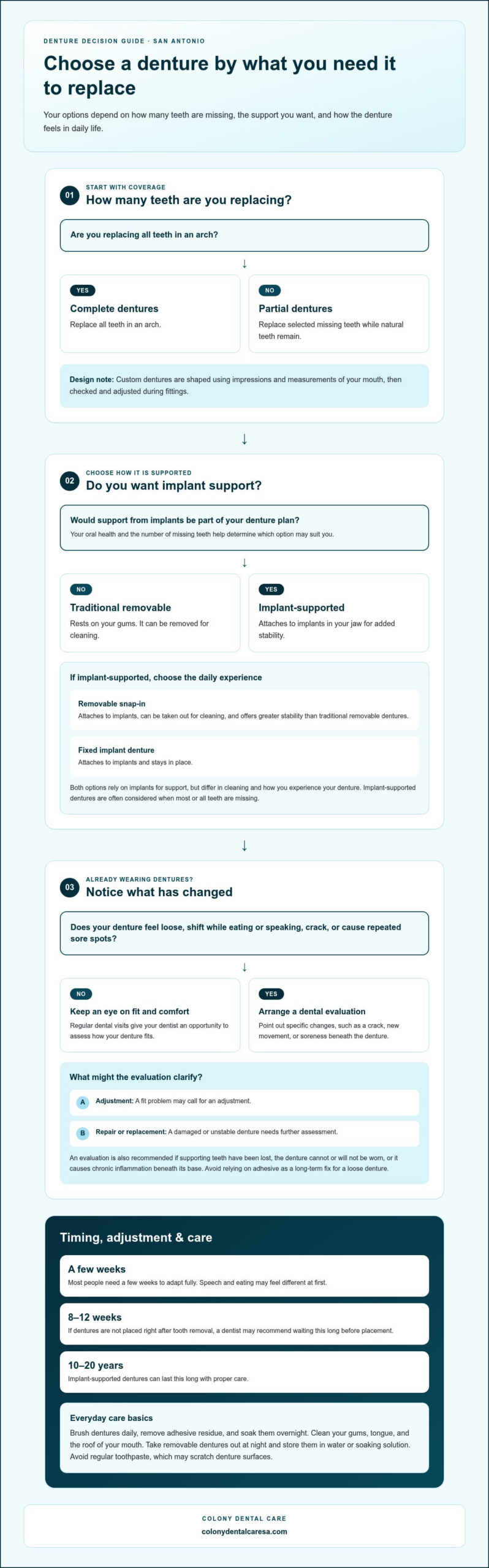
Implant-supported dentures attach to dental implants in your jaw. Removable and fixed options offer different ways to secure replacement teeth. Traditional removable dentures rest on your gums, while implant-anchored dentures gain support from implants. Snap-in dentures are removable but attach to implants, offering greater stability than traditional removable dentures. These differences matter if your denture shifts when you speak or eat.
Implant-supported dentures don’t all work the same way. A removable snap-in denture can be taken out for cleaning, while a fixed implant denture stays in place. Both rely on implants for support, but the choice affects daily cleaning and how you experience your denture. Your oral health and the number of missing teeth help determine which option may suit you.
Dental implants are placed in the jaw to secure a denture more firmly. Implant dentures are often considered for people missing most or all teeth. Implant-supported dentures can last 10 to 20 years with proper care. They require a different treatment process from traditional removable dentures, so discuss the time and care involved before deciding.
Materials and Tooth Shapes for a Natural Look
Dentures can be made from acrylic or porcelain, and tooth shape and color influence how natural they look. A customized design can reflect your facial features, gum tone, and natural tooth shape. A lifelike result depends on more than material: the form and shade should suit your smile, rather than look like a generic set of teeth.
If your denture feels loose, shifts while eating, or creates repeated sore spots, arrange a dental evaluation instead of relying on adhesive as a long-term fix. Poorly fitting dentures can affect comfort and function. Changes in your jaw can also alter how a once-comfortable denture sits. In San Antonio, dentures that initially fit well may become looser after a year or two.
Whether you need a repair, adjustment, or replacement depends on what has changed. A fit problem may call for an adjustment, while a damaged or unstable denture needs further assessment. The American College of Prosthodontists recommends evaluating dentures for replacement if supporting teeth have been lost. It also recommends an evaluation if a denture has become unstable, cannot or will not be worn, or causes chronic inflammation beneath its base.
Point out specific changes, such as a crack, new movement, or soreness beneath the denture. These details help clarify whether the problem involves the appliance or the tissues supporting it. A prompt evaluation can identify an appropriate next step and help protect comfort, stability, and everyday use.
What types of dentures are there: complete, partial, fixed, permanent, and removable?
Complete dentures replace all teeth in an arch; partial dentures replace selected missing teeth while natural teeth remain. Both removable and implant-supported options can affect how you speak, eat, and care for your mouth.
Custom dentures are made using impressions and measurements of your mouth, then checked and adjusted during fittings. Immediate dentures are placed after tooth removal, while implant-supported dentures attach to implants for added stability. These options differ in timing, support, and whether you remove the denture for cleaning.
From impressions to fitting, the process includes a consultation, mouth measurements, and try-ins or adjustments. Custom-fit dentures may take a few months to arrive after immediate dentures. If you don’t receive dentures right after tooth removal, a dentist may recommend waiting eight to 12 weeks before placement.
Adjusting to dentures takes practice. Most people need a few weeks to adapt fully, and speech or eating may feel different at first. Start with softer foods and smaller bites, and chew slowly using both sides of your mouth. Avoid very sticky or extremely hard foods while you get used to the appliance.
Speech can take practice, too. Reading aloud gives you a low-pressure way to notice difficult words and repeat them until they become easier. If a spot feels sore or your denture rocks while eating, arrange an evaluation. Repeated sore areas and looseness can signal that the fit needs attention.
Lower dentures may move more during speaking and chewing because the lower jaw has less surface area and moves more. Conventional dentures may need several adjustments as mouth tissues adapt. Regular dental visits, including annual or bi-annual appointments, give your dentist an opportunity to assess the fit.
Care supports comfort. Brush dentures daily, remove adhesive residue, and soak them overnight so they don’t dry out. Clean your gums, tongue, and the roof of your mouth, too. Take removable dentures out at night to let your gums rest, and store them in water or soaking solution to help prevent drying and warping. Avoid regular toothpaste, which may scratch denture surfaces.
Common adjustment problems include discomfort, sore spots, speech changes, and difficulty chewing. A denture that shifts or causes repeated soreness deserves professional attention rather than long-term adhesive use. If you’re comparing denture and partial options, consider how each design fits your daily routine and cleaning needs.
Which Dentures Are Best from a Dentist in San Antonio, TX?
The right denture depends on how many teeth are missing, your comfort, and your priorities. In San Antonio, compare options by fit, appearance, daily care, and overall treatment needs.
Denture Costs and Insurance Coverage
Denture costs depend on the type selected, materials, and the condition of your mouth. The price depends on your case and is given after a quote request, with denture type, material, and treatment needs shaping the estimate. Dental insurance plans commonly cover 50% of denture costs after the deductible, though coverage varies by plan. That difference makes reviewing your benefits part of planning.
Ask your insurer whether your plan covers full dentures, partial dentures, or both. Check the deductible, coverage limits, and any plan rules that affect replacement. For example, a policy may treat a partial differently from a full set. Reviewing the written benefit details can help you estimate your share before treatment begins.
A consultation connects your oral health with the type of denture you may need. The dentist considers which teeth remain, the condition of your gums, and whether a removable or implant-supported option may suit you. These details shape the treatment plan and cost. Bring your insurance information and a list of daily concerns, such as discomfort while eating.
Evaluating Denture Photos and Reviews
Before-and-after photos and reviews can help you assess appearance and everyday experience. Look for consistent lighting, clear views of the smile, and examples that resemble your needs, such as replacing several missing teeth. Reviews are more useful when they describe fit, speech, eating, or follow-up adjustments, rather than offering only a general compliment.
Photos can’t show how a denture feels during a meal or conversation. Look for specific details in reviews, such as whether someone needed adjustments or felt comfortable speaking. Consider whether an example involves full or partial dentures, since those designs address different patterns of tooth loss.
Ask your San Antonio dentist which denture type suits your remaining teeth, what materials are available, and how fittings and adjustments work. You can also ask how insurance benefits apply to your treatment and which costs depend on your specific needs.
Before choosing, discuss your priorities plainly: a natural appearance, easier eating, or a removable design you can clean yourself. Then compare the proposed denture with those priorities and review the written estimate. If you’re considering dentures and partials, these questions can help you prepare for a focused consultation.
Denture lifespan, repairs, and replacement
A denture’s material and condition help guide decisions about repair or replacement. Acrylic dentures typically last about seven years, while porcelain dentures are described as often lasting a lifetime with proper care. These are different expectations, not fixed deadlines. An appliance’s ability to function and remain in good condition matters alongside its material.
Maintenance can preserve a denture, but it can’t prevent every kind of wear. Handle it carefully during routine cleaning, and avoid bending or forcing parts that feel out of place. If you see a crack, chipped tooth, or rough area, note where it appears. Those details can help a dentist assess the damage.
Not every change means you need a new denture. A dentist can examine the appliance and your mouth to determine whether an adjustment, repair, or replacement addresses the problem. Damage in one area, for example, may call for a different response than widespread wear. The condition of your gums and remaining natural teeth also informs the assessment.
Replacement may be worth considering when an appliance no longer serves its purpose or has deteriorated. A temporary flipper denture is lightweight but not very durable, unlike an appliance intended for longer-term use. If you rely on a flipper, tell the dentist how you use it and whether damage affects your daily routine.
Pay attention to gradual changes, not just sudden breakage. A denture that once supported your usual meals may become less useful as your mouth changes. Describe specific effects, such as avoiding a familiar food or finding it harder to speak clearly. These examples connect the appliance’s condition to your everyday needs.
Bring your denture to an appointment if you notice a visible defect or change in function. The dentist can assess the appliance alongside your oral health, rather than judging the denture in isolation. This matters because the shape of your mouth and the condition of supporting tissues affect how a denture works.
Keep track of when you first noticed a change and whether it has progressed. For instance, note whether a chip appeared after cleaning or whether the denture’s function changed over time. A simple record gives the dental team a clearer picture and keeps the conversation focused on practical options.
Choose your next step based on the denture’s condition, material, and role in your daily life. A timely evaluation can clarify whether repair or replacement would better support continued use and comfort.
Dentists offering dentures in San Antonio
Choosing dentures is also about finding care that connects appearance, fit, and oral health. In San Antonio, a useful starting point is how a dentist evaluates your remaining teeth, gums, and everyday needs before recommending a design.
A denture recommendation should reflect what you need it to do. If you’re missing several teeth but retain healthy teeth, a partial may suit your situation. If you’re missing all the teeth in an arch, full dentures address a different need. Tell the dentist whether your main concern is chewing comfortably, speaking clearly, or keeping the appliance stable.
Ask how the fitting process accounts for your mouth’s shape and changes. Dentures are made using impressions and measurements, then checked during fittings. These appointments let the dentist assess pressure points, fit, and function. If a trial denture feels uneven when you bite, explain where you notice it so the dentist can consider an adjustment.
Ask for a clear explanation of support options. Traditional removable dentures rest on the gums, while implant-supported dentures attach to implants for added stability. A removable snap-in design can be taken out for cleaning; a fixed denture stays in place. These differences affect daily care, so ask how each option could fit your routine.
Your oral health matters beyond the appliance itself. A dentist evaluates gum tissue and remaining teeth because they affect how a partial denture is supported. For instance, a weakened tooth may change the plan for replacing nearby missing teeth. Mention any soreness, difficulty eating, or movement you’ve noticed with an existing denture.
Before agreeing to treatment, ask what the estimate includes and which factors could change it. Denture costs depend on the type selected, materials, and the condition of your mouth. Insurance coverage also varies by plan. Request a clear explanation of expected steps, fittings, adjustments, and how your benefits apply, so you can compare the full treatment plan rather than just the appliance.
Use your consultation to describe your priorities and ask how the proposed design addresses them. A natural look may involve tooth shade and shape, while comfort depends on fit and support. A suitable choice balances these goals with your ability to clean and wear the denture.
If you’re ready to discuss how dentures may support your comfort and daily function, schedule a denture consultation.
Colony Dental Care: Dental Cleanings and Exams
Colony Dental Care can help you take a clear next step with a dental exam and cleaning. If you’re considering dentures, an exam helps assess your oral health, including your remaining teeth and gum condition. You can discuss concerns such as discomfort while eating or teeth that may need attention.
Regular cleanings support gum health, while an exam can identify areas that may need care. Depending on your needs, Tooth-Colored Fillings or Tooth Extractions may be relevant options if a tooth is damaged. We’ll explain what we find and help you understand the next steps in a calm, personal conversation.
For a friendly conversation about your dental health in San Antonio, contact Colony Dental Care.
Take Your Next Step Toward a Smile That Feels Like You
Choosing natural-looking dentures in San Antonio is a personal decision, and your priorities can guide the conversation. Before your next dental visit, consider what matters most in everyday life: comfort while eating, speaking with ease, or a smile that suits your features. Bringing those preferences to an appointment can make the discussion more specific to you.
Colony Dental Care offers Dental Cleanings and Exams, Tooth-Colored Fillings, and Invisalign Clear Aligners as part of its broader dental care. A conversation about your oral health can help you understand which care fits your needs and goals. You deserve clear information and a thoughtful approach, without pressure to decide before you’re ready.
Contact Colony Dental Care to begin a conversation about your dental health. Your next step can be simple, and you can move forward at a pace that feels comfortable.
Frequently Asked Questions
How can I take care of my dentures?
Build denture care into a consistent daily routine, and handle the appliance gently. Before putting it in, check under good lighting for visible cracks, chips, or rough edges. Keep it away from hot water, which can change its shape. When traveling, pack a protective case so the denture stays secure rather than loose among other items.
How long do dentures last?
There isn’t one lifespan that fits every denture, so consider its condition and function as well as its age. Note when you received it and any repairs or adjustments since then. At routine dental visits, mention changes in how well it supports your usual activities. That record can help you and your dentist discuss whether continued use still suits your needs.
How much do dentures cost?
Denture costs vary, and your insurance benefits can affect what you pay out of pocket. Before treatment, ask your plan how it classifies the proposed appliance and whether coverage limits or replacement rules apply. You can also ask for an estimate that separates the denture from related treatment and follow-up care. This helps clarify expected charges before you decide.
Is getting dentures painful?
The experience varies, but the impressions and measurements used to plan dentures differ from tooth removal. If extractions are part of your treatment, discuss that procedure separately. Tell the dental team about past experiences, concerns, or sensitivities before an appointment. Clear communication helps them explain each stage and respond to your comfort needs as treatment progresses.
Do dentures feel uncomfortable?
Some unfamiliar sensations can occur as you get used to a new appliance, but don’t try to reshape it yourself. Trimming or bending a denture at home can damage it or change how it sits. If discomfort persists, describe where it occurs and what you were doing when it began. That gives the dental team a clearer starting point for evaluating the appliance.
Why Dentures – What Makes them the Go-to Option?
Dentures offer a removable way to replace missing teeth without an implant-supported design. This may suit someone who prefers an appliance they can take out for daily care. Dentures can also be designed to replace several teeth or a full arch. Compare options by how well they fit your preferences, oral health, and everyday routine.
Are dentures comfortable to wear?
Comfort depends partly on how your upper and lower teeth meet when you bite. If your bite feels uneven, mention which side contacts first or whether chewing feels balanced. The dentist can assess how the teeth meet and whether the denture needs attention. Describing a specific moment, such as biting into a familiar food, can make the concern easier to explain.
Which San Antonio dentists specialize in natural-looking dentures?
Colony Dental Care is a San Antonio practice led by Dr. James David Oei, who has over 30 years of experience in personalized oral healthcare. If you’re considering dentures, you can bring your goals for appearance and daily use to a dental visit. A direct conversation about your preferences and oral health can help you understand the choices that may suit you.

