
In 2024, about 42% of U.S. adults aged 30 and older had periodontitis. Daily prevention centers on brushing twice a day, flossing once a day, and getting professional cleanings twice a year. Learning how to prevent gum disease means keeping plaque from building up and noticing gum changes early.
It’s easy to assume gum problems only arise when something hurts, but bleeding gums, persistent bad breath, or receding gums can be warning signs. Early gum inflammation can often be reversed, while advanced disease needs professional care. You don’t have to change everything at once: a steady routine is a good place to start. This guide explains periodontal disease, how to brush and clean between your teeth, and which risk factors can affect your gums. You’ll also learn how tooth alignment can affect plaque removal and how regular exams and cleanings support healthy teeth and gums. For San Antonio neighbors, knowing what to watch for can make daily care clearer and more manageable.
Key Takeaways
- Recognize bleeding, tender gums, persistent bad breath, or gum recession as signs to pay attention to.
- Use gentle brushing along the gumline and clean between teeth to reach places a toothbrush can miss.
- Smoking, diabetes, some medications, and family history can affect gum health, so share relevant details at dental visits.
- Crowded or misaligned teeth may make plaque harder to remove, making careful cleaning especially useful.
- Professional exams and cleanings help find gum changes and remove tartar that home care can’t clear.
1. What is periodontal disease?
Periodontal disease affects the gums and tissues supporting your teeth. Plaque buildup is its leading cause: bacteria collect along the gumline when brushing and cleaning between teeth miss areas. In 2024, about 42% of U.S. adults aged 30 and older had periodontitis. This advanced form can damage the support around teeth and, without care, lead to tooth loss.
Gum disease develops in three stages: gingivitis, periodontitis, and advanced periodontitis. Gingivitis is early gum inflammation. Your gums may look swollen, feel tender, or bleed when you brush. This stage is reversible with effective daily care and professional attention. If untreated, it can progress to periodontitis, which damages the tissues supporting your teeth. Periodontitis cannot be reversed, but professional treatment can slow its progression and help manage it.
Watch for bleeding gums, persistent bad breath, or gum recession. Bleeding during brushing isn’t something to ignore: it can be an early sign of gum disease. A dental professional can examine your gums and identify concerns before you notice tooth movement or other changes. Early evaluation matters because advanced gum disease can cause lasting damage and tooth loss.
Routine dental exams and professional cleanings help identify gum changes and remove tartar, the hardened buildup that brushing can’t clear. Cleanings are recommended twice a year, though your dentist may suggest a different schedule based on your gum health and care needs. The American Academy of Periodontology recommends an annual comprehensive periodontal evaluation to assess gum disease risks and related oral health factors. During an exam, mention symptoms such as bleeding, changes in breath, or receding gums. Regular visits help your dental team track changes and discuss suitable next steps. Consistent check-ups are a practical part of how to prevent gum disease.
Does antiseptic mouthwash help prevent gum disease? It can support your routine by reducing plaque and washing away food particles brushing and flossing may miss. Mouthwash products with the ADA Seal of Acceptance have been tested for safety and effectiveness. Mouthwash supplements brushing and flossing; it doesn’t replace them. Which foods support healthy gums? Aim for a diet with vitamin C-rich foods, such as oranges and strawberries, and calcium-rich foods, such as milk and cheese. Eating 2-3 cups of vegetables a day can also support gum care. Crunchy choices like apples and carrots offer another practical addition to meals.
2. Daily brushing and flossing
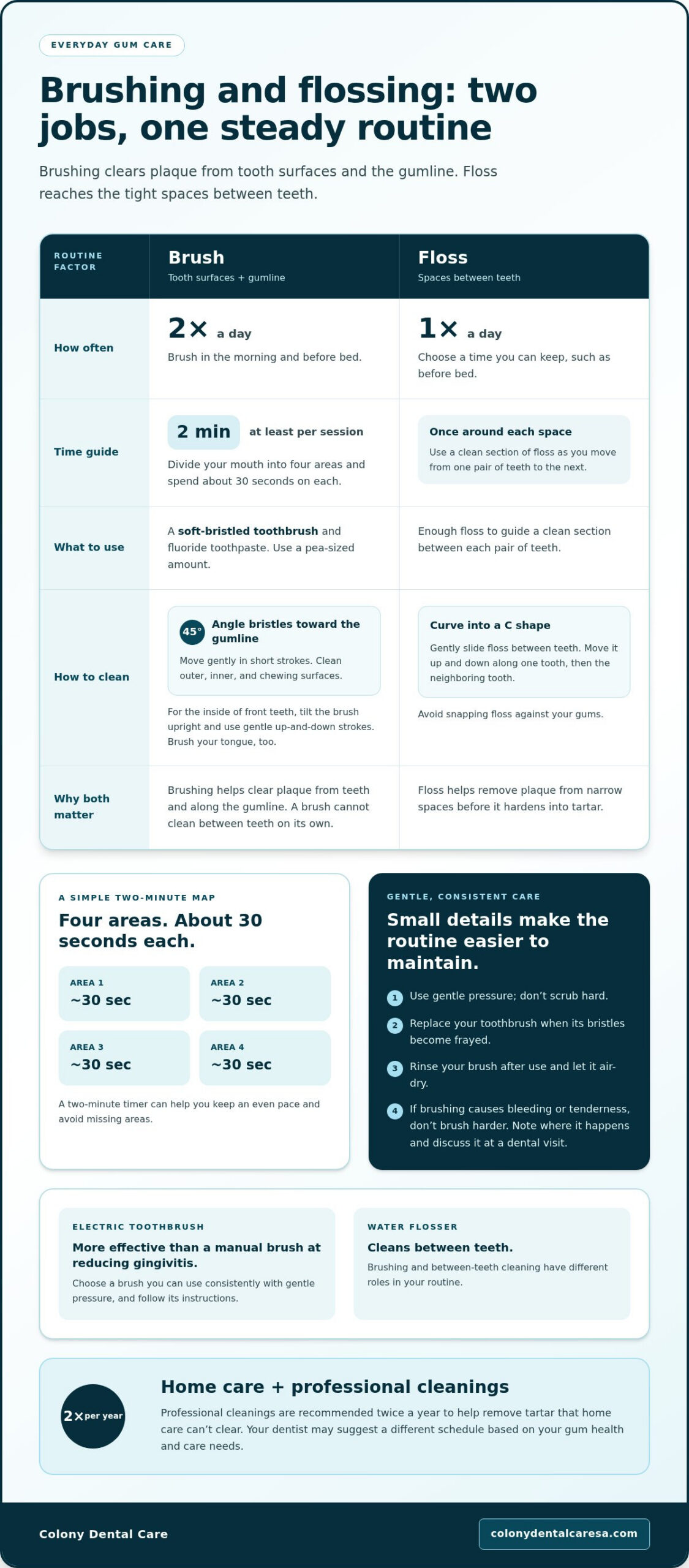
Brush twice a day to clear plaque from your teeth and gumline. Choose a soft-bristled toothbrush and fluoride toothpaste. A soft brush cleans without the harsh scrubbing that can irritate tender gums, while fluoride toothpaste helps protect tooth surfaces from decay. Use a pea-sized amount, then brush every surface, including the backs of your front teeth and the chewing surfaces of your molars.
Give each brushing session at least two minutes. Divide your mouth into four areas and spend about 30 seconds on each. This simple sequence helps you avoid rushing one side while missing another. Angle the bristles toward the gumline, where plaque can collect. With the BASS technique, the brush is positioned at 45 degrees to the gumline, then moved gently in short strokes. Don’t scrub hard or use broad, forceful back-and-forth motions.
Brush systematically: clean the outer, inner, and chewing surfaces of your teeth. For the inside of your front teeth, tilt the brush upright and use gentle up-and-down strokes. Brush your tongue, too, to clear surface debris and freshen your breath. If you lose track of time, use a two-minute timer. A consistent pattern makes it easier to spot places you often miss, such as the back molars or the gumline near crowded teeth.
Replace your toothbrush when its bristles become frayed, since worn bristles may not clean as well. Rinse your brush after use and let it air-dry. An electric toothbrush is more effective than a manual brush at reducing gingivitis. Choose a brush you can use consistently with gentle pressure, and follow its instructions. No brush can clean between teeth on its own, so pair brushing with daily interdental cleaning.
Are electric toothbrushes or water flossers more effective for gum health? Electric toothbrushes are more effective than manual brushes at reducing gingivitis. A water flosser cleans between teeth, while brushing clears plaque from tooth surfaces and along the gumline. Use each for its role in your routine.
Brush in the morning and before bed, even on busy days. After eating, rinsing with water can help remove food particles, but it doesn’t replace brushing. If brushing causes bleeding or tenderness, don’t scrub harder. Use soft bristles and gentle strokes, and note where symptoms occur. You can discuss your technique and fluoride needs during a dental visit. A focused conversation can help you adjust your routine and make daily cleaning more comfortable.
For personalized guidance on fluoride care, you can discuss fluoride treatments as part of your oral health routine.
3. Daily flossing
Floss reaches the narrow spaces a toothbrush may miss. Plaque can collect between teeth, where bacteria may irritate nearby gums. Cleaning these spaces helps remove plaque before it hardens into tartar. Flossing once a day is recommended to help prevent gum disease. Choose a time you can maintain, such as before bed, and make it part of your routine. Less than a quarter of the population flosses daily, so a simple, repeatable habit can help you stay consistent.
Use enough floss to guide a clean section between each pair of teeth. Gently slide it between your teeth instead of snapping it against your gums. Curve the floss around one tooth in a C shape, then move it carefully up and down along the tooth surface. Repeat against the neighboring tooth before moving to the next space. This clears sticky plaque from both tooth surfaces. Continue around your mouth, including behind your last molars.
Flossing cleans 40% of a person’s teeth, making between-teeth cleaning an essential partner to brushing. If standard floss feels difficult to handle, interdental brushes, wooden or plastic picks, and water flossers are other options. A dental professional can recommend a water flosser or another tool suited to your teeth and gums. The right fit depends on the spaces between your teeth and how easily you can reach them.
For crowded teeth, guide floss slowly through tight contacts rather than forcing it down. If a space is wider, an interdental brush may fit more comfortably. Clean each space in turn so you don’t skip the back teeth. A mirror can help you see where the floss enters and whether you’re reaching both sides. If you use a water flosser, follow its instructions and move along the gumline and between teeth. It may be useful where traditional floss is hard to maneuver.
Make your routine manageable. Keep floss near your toothbrush, or carry a floss pick for after a meal when brushing isn’t convenient. If your gums feel swollen or look irritated, note which areas are affected and how long the change lasts. Gingivitis can cause swollen, tender gums that bleed easily. Persistent symptoms deserve a dental assessment, because home cleaning alone may not address established gum disease. Daily flossing helps control plaque, while a dental professional can assess your gums and discuss appropriate care.
4. Gum disease risk factors
Plaque is the main cause of gum disease, but personal health can shape your risk. Poor oral hygiene lets plaque remain along the gumline, where it can trigger inflammation. Genes also matter because they can affect how your immune system responds to bacteria. A family history doesn’t make gum disease inevitable, but it’s useful context to share during a dental visit. Tell your dental team about changes in your health, medicines, and daily habits. That fuller picture can help them assess your gum health and discuss practical prevention steps.
Smoking can raise risk and make gum problems harder to manage. Smokers are up to twice as likely to develop gum disease as non-smokers. During 2009-2014, about 62% of U.S. adults aged 30 years or older who currently smoked had periodontitis. Quitting all forms of tobacco supports healthier gums and teeth. If you smoke, mention it during your next dental checkup. You can also ask for support with a quit plan; reducing tobacco exposure addresses a risk factor while routine oral care helps clear plaque.
Diabetes and periodontal disease can affect each other. Gum disease may make blood sugar levels harder to manage for people with diabetes. If you have diabetes, tell your dentist and share any changes in your gum symptoms. This connection makes communication between your dental and medical care teams useful. Keep track of bleeding, tenderness, or gum recession, and mention when you first noticed each change. Don’t wait for pain to be the only reason to seek an assessment.
Age can influence risk, too. During 2009-2014, about 60% of U.S. adults aged 65 years or older had periodontitis. Some medicines can cause dry mouth or gum inflammation, so give your dentist an up-to-date medication list. Don’t stop prescribed medicine on your own. Instead, describe symptoms such as persistent dryness or swollen gums, and discuss how they fit with your oral health routine.
Food choices and daily habits also play a part. Foods high in sugar, sodas, and sticky snacks can feed harmful bacteria and may worsen gum disease. Choose water after snacks when practical, and keep brushing and between-teeth cleaning consistent. At your next visit, mention tobacco use, diabetes, medicines, family history, and symptoms. These details help your dental professional consider more than plaque alone. If periodontitis is already present, professional periodontal disease treatment can help slow its progression and manage it. Discussing your risk factors can guide the next steps in your care.
5. Teeth alignment and cleaning
Tooth alignment affects the shape and visibility of spaces around your gumline. A rotated tooth, overlapping edges, or a narrow gap can make one area harder to inspect. That doesn’t tell you whether gum disease is present, but it can explain why a particular spot needs closer attention during oral care. Notice which areas are difficult to see in a mirror or consistently feel different while eating.
Look for patterns rather than trying to judge your alignment yourself. Food repeatedly catching near the same teeth, a gumline that looks different on one side, or an area that feels hard to reach are useful observations to share with your dentist. These details help focus an assessment on how your teeth sit together and whether their positions affect access to the gum margins. Your dentist can explain what those patterns mean for your mouth.
Teeth can also meet unevenly, changing where pressure falls during chewing. Mention discomfort when biting, a tooth that seems to have shifted, or a new difference in how your upper and lower teeth meet. These details give your dentist context for evaluating your bite and gum health together. Don’t assume a change in tooth position automatically means gum disease; it’s one piece of information to discuss alongside symptoms and oral health history.
For a more useful conversation, describe the exact location and when you notice the issue. For example, explain that a certain gap feels difficult to check or food tends to lodge beside a particular tooth. If you have a photo showing a visible change, bring it to your appointment. Clear examples help your dental team understand what you’ve observed and explain whether alignment, gum changes, or another factor may be involved.
Treat tooth position as a practical part of oral hygiene, not as a diagnosis. If one area remains difficult to monitor, ask your dentist to examine that spot and show you what to watch for. This focused discussion can help you understand your gumline and tailor daily care to your teeth. You’ll get clearer guidance about the areas that deserve your attention.
Colony Dental Care: Dental Cleanings and Exams
Colony Dental Care provides Dental Cleanings and Exams to help you monitor gum health and address concerns. If you notice ongoing bleeding, swollen gums, or changes in your gumline, an exam can help identify what’s happening. Professional cleaning removes tartar that brushing and flossing can’t clear. If an evaluation finds gum disease, Periodontal Disease Treatment can help manage it.
Bring questions about areas that feel difficult to clean or symptoms that keep returning. Your dental team can examine your gums, discuss the findings, and explain appropriate next steps in clear language. Colony Dental Care proudly serves the San Antonio community, with care that is respectful, comfortable, and personal.
Contact Colony Dental Care or visit colonydentalcaresa.com to arrange a visit.
Make your next step a personal one
A lasting oral care routine should fit your teeth, health, and daily life. If an area is difficult to clean or your gums keep changing, bring that specific concern to your next dental visit. The conversation can help you understand what needs attention and choose a manageable next step. That’s a practical part of learning how to prevent gum disease over time.
Colony Dental Care offers Dental Cleanings and Exams to assess your oral health. If an exam finds a cavity, Tooth-Colored Fillings are available. If tooth alignment makes cleaning challenging, ask about Invisalign Clear Aligners. Every concern is different, so clear explanations can help you decide what fits your needs.
Take the next step at your own pace. Contact Colony Dental Care today to discuss your dental care. Small, steady choices can help you feel more confident about caring for your smile.
Frequently Asked Questions
What is periodontal disease?
Periodontal disease affects the gums and the tissues that hold your teeth in place. During an assessment, a dental professional may measure the spaces between your teeth and gums to look for changes. Healthy pockets are usually 1 to 3 millimeters deep. These measurements help your dentist evaluate gum health alongside what they see during the exam, rather than relying only on whether you feel discomfort.
Can gum disease affect my overall health?
Gum disease is linked with overall health, so include dental care in conversations about your well-being. Tell your dentist about changes in your medical history, new diagnoses, or treatments that affect your health. This context can help your dental team consider your needs during an exam and discuss care that fits your situation. You can also share any questions you want addressed before the visit begins.
What causes gum disease?
Gum disease develops when bacteria in dental plaque irritate gum tissues. The amount of irritation can vary from person to person, partly because immune systems respond differently. Notice whether changes occur in one area or across your mouth. That observation gives your dentist a clearer starting point for assessing your gums and discussing what may be contributing to the problem.
Why Is Periodontal Health Important?
Periodontal health matters because the tissues around your teeth help support them. Changes can develop without sharp pain, so paying attention to how your gums look and feel gives you useful information to share at dental visits. If a tooth feels different while chewing or your gumline seems to have changed, mention the specific area. Your dentist can assess it and explain what the finding means for your oral health.
What daily oral hygiene habits help prevent gum disease?
Make your routine easy to repeat, and adapt it for areas that are harder to reach. Keep your cleaning supplies together and use a mirror to spot places you may overlook. If dental work or tooth position makes an area difficult to clean, note where it is and ask for guidance at your next visit. That turns a general routine into one shaped around your mouth.
How often should you brush and floss to prevent gum disease?
Brush twice a day and clean between your teeth once daily. To make these habits easier to maintain, tie them to predictable parts of your day, such as getting ready for bed or starting your morning routine. If you miss a session, return to your usual schedule rather than brushing forcefully to compensate. Consistent, gentle care is more useful than trying to make up for a missed routine all at once.
How often should you get dental cleanings and checkups?
Professional cleanings are recommended twice a year. At each visit, mention changes you’ve noticed since your previous appointment, such as an area that feels different or a new concern while eating. You can also ask what your dental team observed compared with your last exam. This ongoing conversation helps you understand your gum health and gives you a clear chance to discuss questions about next steps.
Which risk factors increase the chance of developing gum disease?
Risk factors include tobacco use, diabetes, family history, some medications, and differences in immune response. Certain rare primary immunodeficiency disorders can also raise gum-disease risk in children. If you or your child has an immune condition, mention its name during a dental visit. Sharing that detail helps the dental team understand relevant health context and consider it alongside your oral exam and any changes you’ve observed.

