
A temporary filling is a short-term repair, not one meant to stay in place indefinitely. Standard temporary fillings generally last 2 to 3 weeks; after root canal treatment, one usually remains until the permanent filling or crown is placed, often 1 to 2 weeks later. If your temporary tooth filling fell out, avoid chewing on that side, rinse gently with warm salt water, and contact a dentist in San Antonio promptly to protect the tooth.
It can feel worrying when a filling comes loose, but the tooth isn’t automatically in immediate danger. Learn how to keep the area clean, what foods and habits to avoid, and which symptoms need urgent dental attention. Leaving the tooth uncovered can lead to further problems, so take a calm, practical next step while arranging care in San Antonio.
Key Takeaways
- Use over-the-counter dental repair material only as a short-term cover, follow the package directions, and don’t pack the opening with household materials.
- Choose soft foods and avoid hard, sticky, very hot, or cold items that can irritate the exposed tooth.
- Watch for swelling, fever, worsening pain, or feeling unwell, which can signal a need for urgent dental attention.
- Brush gently around the area and slide floss out rather than lifting it toward the tooth to help protect a temporary filling.
- Leaving the tooth uncovered can allow further decay or damage, even if it doesn’t hurt at first.
Is It a Dental Emergency If a Temporary Filling Falls Out?
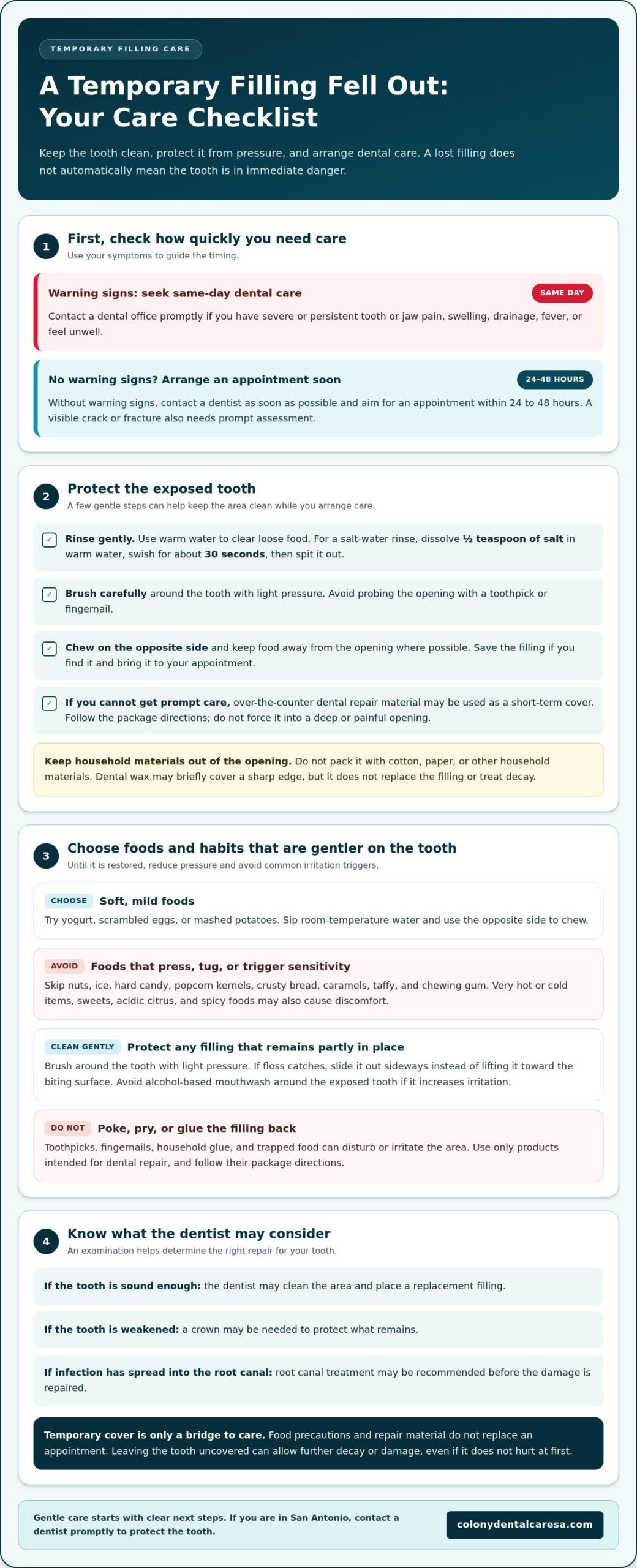
A lost filling needs urgent dental care if you have severe pain, swelling, fever with dental discomfort, or signs of infection. If your temporary tooth filling fell out, rinse gently, protect the opening, and arrange an appointment as soon as possible.
-
Check Whether Urgent Dental Care Is Needed
Contact a dental office promptly and describe your symptoms clearly. Severe, persistent tooth or jaw pain, swelling, drainage, fever, or feeling unwell calls for urgent attention. A visible crack or fracture also needs prompt assessment because weakened tooth structure may break further.
If you have these warning signs, seek same-day dental care. Without them, contact a dentist as soon as possible and aim for an appointment within 24 to 48 hours. A lost filling may not feel urgent, but an opening can expose the cavity to food and bacteria.
-
Protect the Exposed Tooth
Rinse gently with warm water to clear loose food, then brush carefully around the tooth. A salt-water rinse can help keep the area clean: dissolve 1/2 teaspoon of salt in warm water, swish for about 30 seconds, and spit it out. Avoid probing the cavity with a toothpick or fingernail.
Save the filling if you find it and bring it to your appointment. Don’t pack the opening with cotton, paper, or household materials, which can leave debris behind or irritate the area. Until a dentist examines the tooth, chew on the opposite side and keep the exposed area clean.
-
Use Temporary Repair Material or Dental Wax
Use over-the-counter temporary dental repair material only as a short-term cover if you can’t get prompt care. Read and follow the package directions, including how to prepare the tooth. If directed, gently dry the cavity with a cotton swab before placing the material. Don’t force it into a deep or painful opening.
Dental wax can cover a sharp edge or offer brief protection when repair material isn’t available. It won’t restore the filling or treat decay. Wax and temporary material are not substitutes for a dental appointment, because bacteria may continue damaging the tooth beneath the cover.
-
Review Treatment Options After Examination
Keep your appointment so the dentist can examine the cavity, assess the remaining tooth structure, and check for decay or infection. If the tooth is sound enough, treatment may involve cleaning the area and placing a replacement filling. A weakened tooth may need a crown to protect what remains.
If infection has spread into the root canal, root canal treatment may be recommended. The dentist will clean out the infection before repairing the damage. The examination determines which treatment is appropriate, so temporary material should bridge the gap to professional care, not delay it.
Foods and habits to avoid
Choose foods that put less pressure on the exposed tooth. Until a dentist restores it, careful food choices and cleaning habits can help limit irritation and protect the remaining tooth structure.
- Chew on the opposite side. After a filling falls out, keep food away from the open cavity when possible. Biting directly on it can aggravate sensitivity and put pressure on weakened tooth structure. For example, use the other side for a soft sandwich or cooked vegetables. If chewing triggers pain, stop and choose foods that need less biting.
- Skip hard, crunchy, and sticky foods. Nuts, ice, hard candy, popcorn kernels, and crusty bread can press against the exposed area. Caramels, taffy, and chewing gum can catch on a temporary filling that remains partly in place and pull it loose. Choose softer options, such as yogurt, scrambled eggs, or mashed potatoes, until your dentist can assess the tooth.
- Avoid temperature and flavor triggers. Very hot coffee, ice-cold drinks, sweets, acidic citrus, and spicy foods may cause discomfort when the cavity is exposed. Sip room-temperature water and choose mild foods instead. If a particular bite causes a sharp response, stop eating it rather than testing the tooth again. Mention food triggers at your dental appointment.
- Clean gently and change how you floss. Brush around the tooth with light pressure rather than scrubbing across the opening. If floss catches near a filling that is still partly in place, slide it out sideways instead of lifting it back toward the biting surface. This reduces tugging on the repair. Avoid alcohol-based mouthwash around the exposed tooth because it may increase irritation.
- Don’t poke, pry, or try to glue the filling back. Toothpicks, fingernails, and household glue can disturb the cavity or leave unwanted material behind. Don’t pack food into the opening to cover it. Bacteria can collect around trapped debris, and probing may make a sensitive tooth more uncomfortable. Temporary dental material differs from household cement. Use only products intended for dental repair and follow their package directions.
- Keep the next dental step in view. Food restrictions protect the area briefly, but they don’t repair decay or replace lost material. A dentist examines the cavity and remaining tooth structure before recommending treatment. A filling falling out does not automatically mean extraction; the tooth’s condition guides the options. Arrange care rather than waiting for pain to decide for you.
Temporary Fillings: Are They Meant to Last or Fall Out?
A temporary filling seals and protects a tooth while treatment is underway. A permanent filling is intended as the longer-term repair, while a temporary one bridges the gap to the planned restoration.
- Keep the planned restoration on your calendar. Temporary material protects the tooth between treatment stages, but it isn’t the final repair. Attend the follow-up visit even if the filling feels comfortable. The dentist can complete the restoration suited to the tooth, such as a permanent filling or crown.
- Ask what the temporary filling is protecting. It may cover a cavity during staged care or seal a tooth after root canal treatment. Knowing its purpose helps you understand why the next restoration matters. Before leaving the dental office, ask what changes to watch for and what step comes next.
- Notice changes at the filling’s edges. A rough margin, a gap, or movement while biting can mean the filling is no longer secure. Wear around the edges can affect how well it stays in place. Tell your dentist about these changes instead of trying to press the material back into position.
- Have dental repairs checked during regular visits. An examination lets the dentist assess the filling and surrounding tooth. If a repair appears worn, the dentist may replace it before it comes loose. Regular checks can also identify changes that aren’t obvious when you eat or brush.
- Remember that looseness doesn’t prove root canal treatment failed. A temporary filling can come loose while the tooth still needs its planned restoration. Report the change and follow the next treatment step rather than assuming the original care has failed.
- Protect the tooth until the final repair is completed. Follow the care instructions for your temporary filling and avoid testing it by biting hard foods. If it shifts or comes out, contact your dentist and explain what changed. A temporary seal is part of the treatment process, not a substitute for completing it.
What happens if you leave a lost filling untreated?
An exposed cavity can collect bacteria and allow decay or damage to progress, even without pain. Dental insurance coverage depends on your plan’s benefits and how it classifies the repair, so review your coverage for the specific treatment.
-
Recognize the Risks of Leaving a Filling Lost
Arrange dental care rather than waiting for discomfort. A missing filling leaves the tooth less protected, and decay can progress silently before sensitivity or aching begins. If the tooth had root canal treatment, a lost temporary seal can leave it vulnerable to reinfection.
Further damage may weaken the remaining tooth structure and complicate the original treatment. In advanced cases, the tooth may need retreatment or extraction. Pain relief can mask symptoms, but it doesn’t repair the cavity or stop the underlying damage.
-
Check for Emergency Care Needs
Seek same-day dental attention for severe, persistent tooth or jaw pain, worsening swelling, or fever alongside dental discomfort. Drainage, feeling unwell, a visible crack, or sensitivity that doesn’t ease with temporary protection also calls for prompt attention.
A lost filling without these symptoms is not always an emergency, but contact a dentist soon. A small, shallow cavity without significant discomfort or gum or jaw swelling may sometimes wait a few days when protected. Don’t use that possibility as a reason to delay arranging an examination.
- Ask what repair fits the tooth’s condition. During an examination, the dentist checks the exposed area and looks for further decay. If the remaining tooth is strong enough, a replacement filling may restore the damaged area. If the tooth structure is weak, a crown may be recommended for added coverage.
If infection is present, the dentist cleans it out before repairing the tooth. When infection has spread into the root canal, root canal treatment may be recommended. If the tooth cannot be restored and extraction is agreed upon, replacement options may include a bridge or implant.
- Bring useful details to your appointment. Tell the dentist when the filling came out, whether it was temporary, and what symptoms you’ve noticed. Mention any new sensitivity, pain when biting, swelling, or visible crack. These details help guide the examination and treatment discussion.
If you’re unsure whether your insurance covers the repair, review your plan’s benefits for the proposed treatment. Coverage may differ between replacing temporary material and restoring the tooth with a filling or crown. Keep the appointment even if the tooth feels normal; lack of pain doesn’t rule out decay or damage.
How long temporary fillings typically last
- Use the expected lifespan as a short-term guide. A temporary filling is intended to protect a tooth between treatment stages, not serve as a lasting repair. How long it holds depends partly on why it was placed and what treatment remains. Keep the planned permanent filling or crown, not the temporary material, in view as the endpoint.
- Consider why the filling was placed. A temporary filling may cover a cavity while the tooth awaits further care or seal a tooth after root canal treatment. After a root canal, the tooth still needs its planned final restoration. The dental team can explain how the filling fits into your treatment sequence and what the next appointment is meant to complete.
- Understand what can affect how long it stays secure. The size and position of the repair, the condition of the remaining tooth, and pressure from chewing can all affect how well the material holds. A filling on a tooth that takes strong biting forces may loosen sooner than one under less pressure. These factors explain why a calendar estimate isn’t a guarantee for every tooth.
- Pay attention to changes while eating or brushing. A new gap, a rough edge, or a shift in how your teeth meet can suggest the filling has moved. Sensitivity may also change as the tooth becomes less covered. Note what you were doing when you noticed the change, such as biting bread or brushing near the repair, and share that detail at your dental appointment.
- Keep the final restoration in your care plan. If a temporary filling remains comfortable, that doesn’t mean the tooth is ready to go without its planned repair. The dentist considers the tooth’s structure and treatment needs when selecting a permanent filling or crown. Staying on track helps avoid relying on temporary material beyond its intended role.
- Contact your dental office if the filling changes before your visit. Explain whether it feels loose, has partly broken, or has come out, and mention any new sensitivity. That information helps the team understand what has changed and guide your next step. If you need to arrange a dental filling appointment, contact the office rather than waiting for the temporary seal to fail completely.
Colony Dental Care: Dental Cleanings and Exams
Colony Dental Care can examine the tooth, assess the remaining structure, and explain the next step after a filling falls out. Dental Exams & Cleanings help identify changes around the tooth, while Composite Dental Fillings may restore it when the examination shows a filling is suitable. If you have severe pain, swelling, or signs of infection, seek prompt dental care rather than waiting for a routine cleaning.
You deserve clear explanations and a comfortable visit, with care guided by your needs. An examination can help distinguish a lost filling from damage that may call for another treatment approach. Contact Colony Dental Care to discuss an appointment and take the next step in caring for your tooth.
Take the Next Step Toward a Protected Tooth
If your temporary tooth filling fell out, use it as a prompt to keep your dental care moving forward. A timely conversation can help you understand what your tooth needs now and how to protect it while you await care. You deserve a clear explanation of your options and a comfortable, unpressured visit.
Colony Dental Care offers Dental Exams & Cleanings and Composite Dental Fillings to support preventive care and tooth repair. The practice also offers Invisalign® Clear Aligners for patients considering orthodontic care. Your immediate next step is to address the exposed tooth and plan for ongoing oral health, one concern at a time.
Reach out when you’re ready to discuss your next visit. Contact Colony Dental Care and take a steady step toward feeling more comfortable about your dental care.
Frequently Asked Questions
What should I do if my filling fell out and I can’t get to a dentist?
If you can’t get dental care promptly, keep the area clean and avoid biting with that tooth. Pharmacy-bought temporary dental repair material may cover the opening briefly; follow the package directions and don’t treat it as a replacement for professional care. If you develop swelling, fever, drainage, worsening pain, or feel unwell, seek urgent dental attention rather than waiting.
Can I use temporary dental cement at home?
You can use over-the-counter temporary dental repair material as a short-term measure, but it won’t restore the tooth or treat decay. Follow the package instructions carefully, and don’t use household glue or cement. If you’re unsure how to apply the product, don’t force material into the opening. Arrange dental care so the tooth can be examined and properly repaired.
How do I stop it happening again?
To help prevent another filling loss, keep the follow-up appointment for the planned restoration, even if the temporary material feels stable. Ask your dentist which foods and cleaning methods are safest for your tooth. If the filling feels loose, rough, or different when you bite, report the change rather than waiting for it to come out. These details can help guide the next step.
What can I do about my toothache until I can see my dentist?
For temporary relief, you can use over-the-counter ibuprofen or acetaminophen according to the package directions. A pharmacist can help you choose an appropriate option. Apply a cold compress to your cheek near the tooth for 15 minutes at a time. Don’t place aspirin directly on the tooth or gums, since it can irritate the tissue. Contact a dentist if pain worsens.
What do I do now?
Call a dental office and explain which tooth is affected, when the filling came out, and whether you have pain, swelling, or fever. Mention if the tooth recently had root canal treatment, since the temporary seal protects it during care. Keep the appointment details handy and avoid biting with that tooth while you wait. If severe symptoms appear, seek urgent care.
What should I do immediately if a temporary tooth filling falls out?
If your temporary tooth filling fell out, rinse gently with warm water and check for pain, swelling, or a visible crack. Don’t probe the cavity or try to glue the filling back. Save the piece if you find it, and note whether the tooth had root canal treatment. Then contact a dentist promptly to arrange an examination and describe any symptoms.
How soon should I see a dentist after a temporary filling falls out?
Contact a dentist as soon as possible and ideally arrange an appointment within 24 to 48 hours. Seek same-day attention for severe persistent pain, swelling, fever with dental discomfort, drainage, or a visible crack. A tooth without pain still needs assessment because damage or decay may progress quietly. If the filling followed root canal treatment, mention that when booking.
Can I replace a lost temporary filling at home with dental filling material?
You may use over-the-counter temporary dental repair material as a short-term cover if you can’t get prompt care, following the product directions. It isn’t a permanent replacement and doesn’t remove decay or treat infection. Don’t pack the opening with cotton, paper, or household materials. Arrange a dental examination even if the cover feels comfortable, so the tooth can receive appropriate treatment.

