
Receding gums don’t grow back, but careful daily cleaning can help protect your teeth and limit further recession. If you’re learning how to brush teeth with receding gums, use a soft-bristled toothbrush, make gentle circles along the gumline, and brush for about two minutes twice a day. Avoid forceful scrubbing, which can irritate sensitive tissue.
It’s understandable to worry that brushing might worsen gum changes. You don’t need to avoid cleaning the area: gentle brushing helps clear plaque while keeping pressure low. Daily flossing also reaches spaces between teeth that a toothbrush can miss. Together, these habits give you a practical foundation for caring for your mouth without making sensitivity the focus of every brush.
This guide explains how to organize brushing across your mouth, clean around the gumline, and notice changes that deserve attention. You’ll learn which signs to mention at a dental visit, why regular exams and cleanings matter, and how a dentist can assess recession and possible causes. With clear information, you can take the next step calmly and care for your smile with confidence in San Antonio.
Key Takeaways
- Brush twice a day for about two minutes with a soft-bristled toothbrush, using gentle pressure rather than scrubbing.
- Angle the brush toward the gumline and use small, controlled circles to clean without irritating sensitive tissue.
- Divide your mouth into four quadrants and spend about 30 seconds brushing each one so you can give every area attention.
- Floss once daily to clear debris between teeth, and keep mouthwash from replacing brushing or flossing.
- Arrange a dental visit if your gums bleed or hurt, look swollen, or continue to recede; an exam can help identify what’s causing the change.
Brushing and flossing prevention
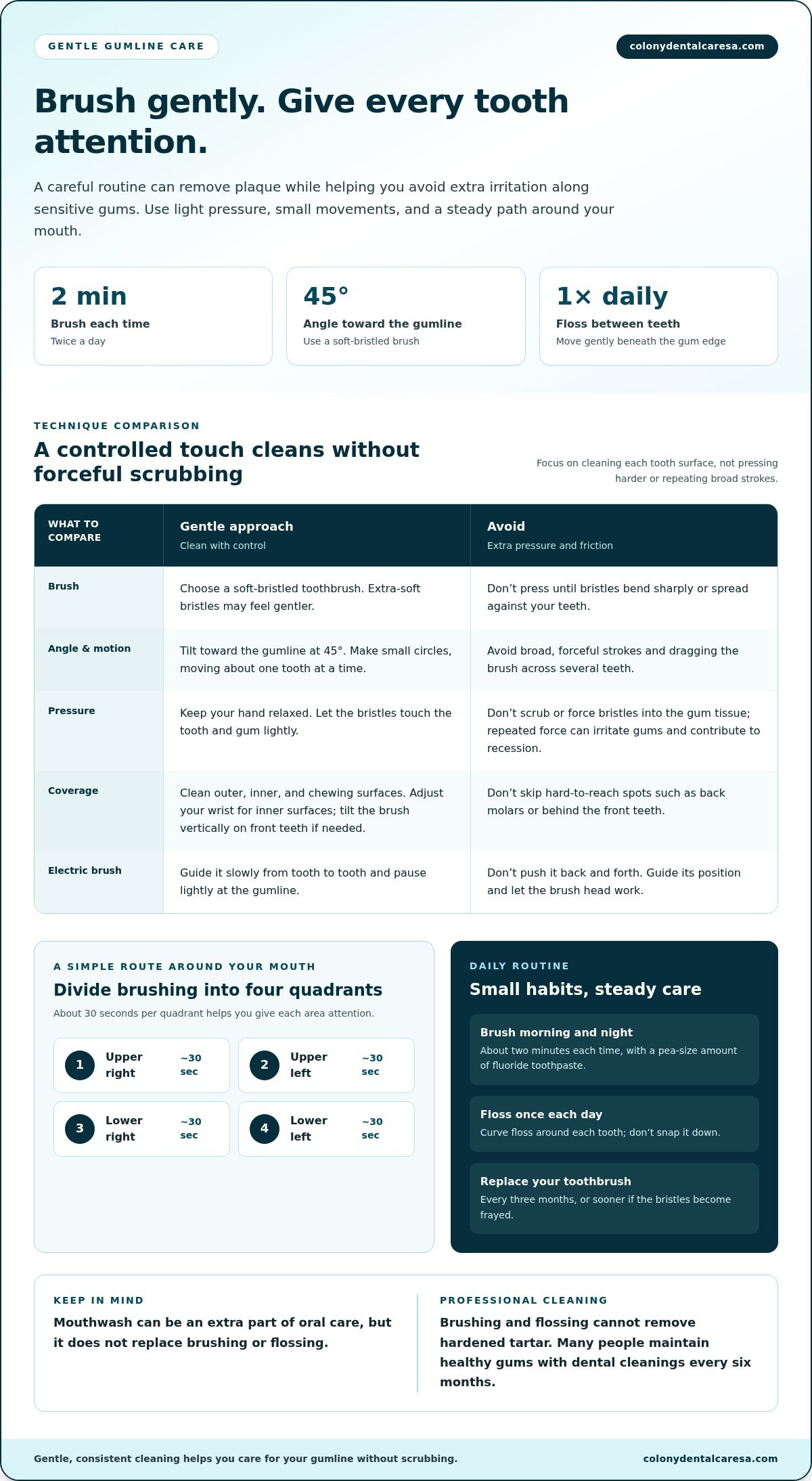
A reliable routine protects your gumline by removing plaque before it builds up. Brush twice daily for about two minutes, using a pea-size amount of fluoride toothpaste with the American Dental Association approval seal. If mornings feel rushed, set a timer or divide your brushing into planned sections. At night, brush before bed so food debris from the day doesn’t remain on your teeth while you sleep.
Floss once each day at a time you can stick to. Many people find evening flossing easier because it becomes part of the bedtime routine. Guide floss gently between neighboring teeth, curve it around each tooth, and clean just beneath the gum edge without snapping it down. If a space is tight, move slowly and use a clean section of floss as you continue. Daily flossing helps clear plaque from places a toothbrush cannot reach.
Mouthwash can be an additional part of oral care, but it doesn’t replace brushing or flossing. The American Dental Association distinguishes cosmetic mouthwash from medicinal mouthwash. Therapeutic mouthwash can help prevent gum disease, reduce tartar buildup, and clear food debris. An antimicrobial mouthwash used twice daily may also support gum health. Follow the product directions, and don’t treat mouthwash as a substitute for removing plaque with a toothbrush and floss.
After brushing, spit out the toothpaste instead of rinsing with water, which can wash away fluoride left on tooth surfaces. If brushing after a meal isn’t practical, rinsing your mouth with water can help clear food particles until your next regular brushing. This is useful after lunch at work or a meal away from home, but return to your normal brushing and flossing routine later.
Replace your toothbrush every three months, or earlier if its bristles become frayed. A worn brush is less effective for careful cleaning along the gumline. Plaque and food debris left on teeth can harden into tartar, which brushing and flossing cannot remove. Professional cleanings address that buildup; many people maintain healthy gums with dental cleanings every six months. Regular dental exams also help track gum changes and support your oral health routine.
Brushing angle and gentle circular motions
For receding gums, choose a soft-bristled toothbrush; extra-soft bristles may feel gentler, but soft is the recommended baseline. Hold the brush at a 45-degree angle toward the gumline and use small circles, moving about one tooth at a time.
Gentle Circular Brushing Technique
Small circular movements clean the tooth edge and gumline without broad, forceful strokes. Place the bristles where each tooth meets the gum, then make short circles before moving to the neighboring tooth. This tooth-by-tooth approach gives you control around sensitive areas and helps avoid dragging the brush across several teeth at once.
Follow the curve of each tooth rather than holding the brush head flat. Clean the outer surfaces first, then adjust your wrist to reach the inner surfaces. On the front teeth, tilt the brush vertically if its head feels too wide. Use the same careful motion around teeth with exposed roots, where sensitivity can make brushing uncomfortable.
Using Gentle Brushing Pressure
Use gentle pressure so the bristles touch the tooth and gum without forcing their way into the tissue. Think of brushing as a light massage, not a scrubbing task. This matters because pressure can irritate already sensitive gums, while a careful angle and steady circles still clean each tooth’s edge.
Keep your hand relaxed and let the toothbrush do the work. If the bristles bend sharply or spread against your teeth, loosen your grip. With an electric toothbrush, guide it slowly from tooth to tooth and pause lightly at the gumline. Don’t push it back and forth; let the brush head work while you guide its position.
Use a mirror to check your brush placement, especially along the gumline near the back teeth. If you can’t see an area clearly, change the angle of your head or brush rather than pressing harder. Short movements also make it easier to focus on one surface at a time. Following a consistent path around your mouth helps you notice spots you tend to miss.
After brushing, notice whether your gums feel newly sore or irritated. If a technique causes discomfort, adjust it, particularly around a sensitive tooth. You can demonstrate your routine at a dental appointment and ask for guidance on brush placement. Small changes to your angle, grip, or movement can make daily cleaning more comfortable while keeping the gumline in reach.
How aggressive brushing can contribute to gum recession
Brushing harder doesn’t make teeth cleaner; repeated force can irritate gum tissue and contribute to recession. As the gumline moves back, more of a tooth’s root may become exposed. That root is more vulnerable to cavities, and the space near the gum can collect bacteria. Gentle, thorough cleaning helps remove plaque without adding avoidable friction.
Technique matters because the same toothbrush can clean carefully or scrape tender tissue. A soft-bristled brush and short, controlled movements help you reach the gumline without pressing hard. Cover the outer, inner, and chewing surfaces of every tooth. Pay attention to areas that are easy to skip, such as the back molars and behind the front teeth. Thoroughness comes from cleaning each surface, not scrubbing it repeatedly.
Gum recession has several possible causes. Aggressive brushing may contribute, but gum disease is a major cause, and periodontitis can inflame and damage the tissues around teeth. Family history can increase susceptibility, even with consistent home care. Smoking may increase plaque buildup, while some medications can reduce saliva and leave gums more vulnerable to infection. More than one cause can affect the same area.
Watch for changes such as a gumline that appears lower, red or swollen gums, bleeding after brushing or flossing, bad breath, tooth sensitivity, or loose teeth. These signs don’t identify the cause on their own. Note whether one tooth or several are affected, and whether the change comes with pain or bleeding. Receded gums don’t grow back, but addressing the cause can help prevent further damage.
For advanced recession, a dental professional may consider a procedure such as the Pinhole Surgical Technique. It involves making a small opening in gum tissue above the affected area, then repositioning loosened tissue over the exposed root. It isn’t a brushing method or a solution for every degree of recession. The location and extent of the gum change, along with its underlying cause, guide treatment decisions.
Don’t try to compensate for a receding gumline by brushing harder. If you notice bleeding, sensitivity, swelling, or a visible change, arrange a dental evaluation. A dentist can assess gum health, look for signs of disease, and help you understand which steps suit your needs. Gentle daily cleaning remains useful, but it cannot remove hardened tartar or treat advanced gum disease on its own.
Dividing the mouth into quadrants
Splitting your mouth into four sections gives each area attention and helps prevent rushed, uneven cleaning. Spend 30 seconds brushing each quadrant, moving in a steady order so you don’t skip teeth near the back.
Picture an upper-left, upper-right, lower-left, and lower-right section. Start wherever feels easiest, then continue around your mouth in the same direction each time. For example, begin with the upper right and finish with the lower right. A familiar pattern makes it easier to notice when one area needs more careful attention.
Use the 30 seconds in each quadrant to cover the teeth’s outer, inner, and chewing surfaces. Move from the back teeth toward the front, then turn to the inner surfaces before finishing the chewing surfaces. The sequence is a guide, not a reason to scrub any spot repeatedly. Gentle, consistent coverage is the goal.
- Start at the back of your first quadrant and work along the outer surfaces toward the front.
- Move to the inner surfaces in that same section, including behind the front teeth.
- Brush the chewing surfaces of the molars before moving to the next quadrant.
- Repeat the same pattern in the remaining three sections, keeping each to 30 seconds.
Quadrants can also help you notice changes without turning brushing into an inspection. As you move through each section, watch for a tender spot, bleeding, or a gumline that appears lower around one tooth. These observations don’t diagnose gum disease, but they give you clear details to share at a dental appointment.
Receding gums may expose the root below the enamel-covered crown. Because exposed roots are more vulnerable to cavities, give the gumline and nearby tooth surfaces careful attention in each quadrant. Don’t mistake extra time for extra pressure. If one area feels sensitive, maintain a gentle technique and avoid repeatedly brushing that spot to “fix” the feeling.
A quadrant routine organizes home care; it doesn’t treat the causes of recession. Gum disease can damage supporting tissue, while aggressive brushing can also contribute to gum changes. If bleeding or a receding area persists across several brushing sessions, note the affected quadrant and arrange an evaluation. A dental professional can assess the tissue, identify the degree of recession, and discuss suitable treatment.
When to see a dentist about receding gums
Choose fluoride toothpaste with the American Dental Association approval seal; desensitizing formulas can take several weeks to work. Brush twice daily for two minutes, using gentle pressure. An electric toothbrush is safe when you guide it slowly from tooth to tooth and pause gently at the gumline.
Arrange a dental appointment if you notice bleeding after brushing or flossing, red or swollen gums, persistent bad breath, sensitivity, or a gumline that looks lower. Pain or bleeding alongside recession deserves particular attention. Note which teeth are affected and when symptoms occur; those details can help the dentist assess changes and possible causes.
A dentist can spot early signs of gum disease during checkups, before symptoms become more noticeable. Gum measurements help assess the tissue around teeth: healthy pockets measure 1 to 3 millimeters, pockets measure 4 millimeters with gingivitis, and measurements of 5 millimeters or higher occur with periodontal disease. These findings help show whether plaque and inflammation need attention below the gumline.
Book an evaluation rather than relying on brushing changes alone to resolve persistent symptoms. Gum disease is a leading contributor to recession, and periodontitis can damage the tissue supporting teeth. Aggressive brushing, family history, smoking, and dry mouth from some medications can also play a part. A dentist considers the gumline, bleeding, sensitivity, and pocket measurements together.
Professional cleanings remove tartar that brushing and flossing cannot clear. Many people maintain healthy gums with cleanings every six months, alongside regular exams and daily home care. If you have bleeding, visible recession, or a loose tooth, mention it rather than waiting for a routine cleaning. Untreated recession can eventually leave too little gum tissue to support tooth roots, raising the risk of tooth loss.
For advanced recession, a dentist may refer you to a periodontist, a specialist in gum health. A periodontist can assess whether a gum graft or pinhole procedure suits the affected area and severity. Treatment depends on the cause and extent of recession; addressing gum disease or brushing habits may also be part of care. Receded gums don’t grow back, but addressing the problem can help limit further damage.
If sensitivity continues, ask about desensitizing toothpaste ingredients such as potassium nitrate or stannous fluoride. A dentist can also apply fluoride varnish or another desensitizing agent. Schedule an appointment for a gum evaluation if bleeding, pain, or recession persists.
Colony Dental Care: Dental Cleanings and Exams
Colony Dental Care offers Dental Cleanings and Exams to help you monitor gum changes and maintain your oral health. If you notice bleeding, sensitivity, or a gumline that looks lower, an exam can help identify concerns that need attention. A professional cleaning removes tartar that brushing and flossing can’t clear, while an exam gives you a chance to discuss symptoms and home-care habits.
During your visit, share which teeth feel sensitive and when you notice bleeding. Those details help guide a focused discussion about your gums and next steps. You deserve clear information and care that respects your comfort, right here in the San Antonio community.
Contact Colony Dental Care to arrange Dental Cleanings and Exams and discuss your concerns.
Take the Next Step Toward Comfortable Gum Care
Make your brushing routine a steady habit, not a source of worry. If you’re unsure how to brush teeth with receding gums or have noticed changes in your gumline, a dental conversation can help you move forward with more confidence. Bring questions about sensitivity, bleeding, or areas that feel difficult to clean, so your concerns guide the discussion.
Colony Dental Care offers Dental Cleanings and Exams to support ongoing oral health. The practice also provides Tooth-Colored Fillings and Invisalign Clear Aligners as part of its dental care services. You can discuss what’s relevant to your needs and feel informed about the next step, without pressure.
For attentive care in the San Antonio community, contact Colony Dental Care. A gentle, consistent approach can help you care for your smile with greater ease.
Frequently Asked Questions
Can gums grow back?
No. Gum tissue that has receded doesn’t grow back on its own, but care can help limit further recession. If an exposed root feels sensitive, a dentist can discuss ways to ease discomfort, including desensitizing agents. For example, mention sensitivity when drinking something cold or brushing a particular tooth. That detail can help your dental team assess the area and discuss suitable next steps.
What is gum recession?
Gum recession happens when gum tissue pulls away from a tooth, exposing more of its surface or root. You might first notice a tooth looking longer, a darker area near the gumline, or new sensitivity. Recession can affect one tooth or several. The exposed root is more vulnerable to cavities, and spaces near the gum can collect bacteria, so changes are worth discussing during a dental exam.
When should I see my healthcare provider?
See a dentist if you notice ongoing bleeding, pain, swelling, sensitivity, bad breath, or a visibly changing gumline. A loose tooth also needs attention because it can signal damage to the tissues supporting it. If symptoms appear around one tooth, note when they started and whether chewing makes them worse. That practical information can help your dentist assess the change and plan appropriate care.
How should you brush teeth with receding gums without causing more damage?
Use a soft-bristled brush and guide it across each tooth rather than scrubbing back and forth. Clean the inside surfaces and the backs of your molars, not just the teeth you see in a mirror. If reaching behind a front tooth feels awkward, turn the brush vertically and use its tip gently. Stop pressing harder if an area feels tender.
What brushing technique and pressure help protect receding gums?
Keep your grip relaxed and make small, controlled movements so the brush cleans without forceful rubbing. An electric toothbrush can work with receding gums; move it slowly from tooth to tooth and pause lightly near the gumline. Avoid pushing the brush head into the tissue. If you’re unsure whether your technique irritates a sensitive spot, demonstrate your routine at your next dental appointment.
What brushing mistakes can worsen gum recession?
Scrubbing with medium or hard bristles can irritate gum tissue, and aggressive brushing can contribute to recession. Another common mistake is focusing on visible front surfaces while missing the backs of molars or the inner sides of teeth. Mouthwash shouldn’t replace brushing or flossing. If your toothbrush bristles look frayed, replace it rather than trying to compensate with more pressure.
Can receding gums grow back, and what treatments can stop further recession?
Receded gums don’t grow back naturally, but treating the cause can help protect remaining gum tissue. Care depends on the findings: a dentist may address gum disease with deep cleaning, while advanced recession may call for a gum graft or a pinhole procedure. A change in brushing habits can also help if brushing too hard contributes. Treatment focuses on the affected area and its underlying cause.
When should you see a dentist or periodontist for receding gums?
See a dentist for gum changes, especially if you also have bleeding or pain. A dentist can check the gumline and measure the spaces around teeth. Healthy periodontal pockets measure 1 to 3 millimeters; measurements of 5 millimeters or higher are associated with periodontal disease. For advanced recession, a dentist may refer you to a periodontist, a specialist who can assess options such as gum grafting.

