
Age alone doesn’t rule out a brighter smile: teeth whitening for seniors can be safe for adults of all ages, including people aged 65. The key detail is that whitening changes natural tooth color, but it doesn’t lighten crowns or tooth-colored fillings. That difference can affect how even your smile looks afterward.
If you’ve noticed more yellowing or sensitivity over time, it’s understandable to wonder whether teeth whitening for seniors can still be comfortable. Age-related enamel changes and gum health can influence which approach makes sense, so a dentist’s assessment can help guide your decision. Learn what may cause discoloration, how take-home options work, and what to consider if you have sensitive teeth, crowns, or fillings. Dental restorations can remain a different shade from natural teeth, so consider the likely outcome before choosing a whitening plan.
Key Takeaways
- Age alone doesn’t rule out whitening, but sensitivity, gum health, and existing dental concerns can shape a comfortable approach.
- Yellowing can reflect both surface stains and age-related changes, so the cause helps determine which options may be useful.
- Professional take-home trays are designed to fit your mouth and apply whitening gel gradually; follow the directions for your kit.
- Thinner enamel can expose yellowish dentin and increase sensitivity, making a dental assessment helpful before whitening.
- Crowns and tooth-colored fillings don’t change shade with whitening, so consider how they may look beside brighter natural teeth.
Can Senior Teeth Be Whitened Safely and Effectively?
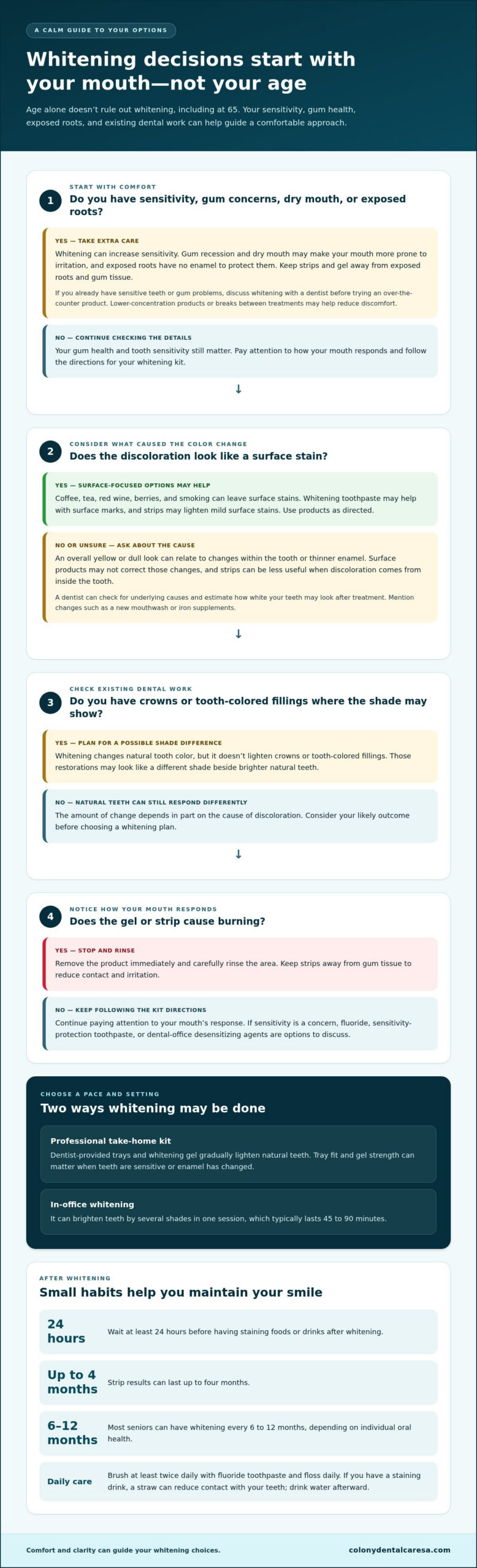
Teeth whitening can be safe for adults of all ages, including people aged 65. Your tooth sensitivity, gum health, and exposed roots help determine a comfortable approach.
Sensitivity and Gum Irritation
Tooth sensitivity is a short, sharp response to temperature or other triggers, and whitening can increase it. In older adults, gum recession and dry mouth can make the mouth more prone to irritation. Dry mouth, sometimes linked to medication side effects, can also encourage plaque and tartar buildup that makes teeth look more yellow.
Pay attention to how your mouth responds during treatment. If whitening gel or strips cause burning, remove the product immediately and carefully rinse the area. Whitening-related gum irritation can turn gums white for a day or two, and the tissue should heal quickly. Keep whitening strips away from gum tissue to reduce contact and irritation.
For sensitivity, lower-concentration products or breaks between treatments can help reduce discomfort. Dental-office desensitizing agents, fluoride, and sensitivity-protection toothpaste are other options. Fluoride toothpaste with potassium nitrate can help reduce sensitivity while helping prevent cavities. These steps can make whitening more manageable without overlooking a new or worsening symptom.
Exposed Roots and Whitening Sensitivity
Exposed roots are areas uncovered when gums recede. Unlike the crown of a tooth, they have no enamel to protect them. Whitening agents on these surfaces can irritate the root and trigger sensitivity. If you have visible roots, keep strips and gel away from them rather than treating every tooth surface alike.
For example, whitening strips that slide onto the gumline can expose a receded area to bleaching gel. Stop using a product that burns, then rinse carefully. If you already have sensitive teeth or gum problems, discuss whitening with a dentist before starting an over-the-counter product. Your gumline and root exposure matter as much as your desired shade.
Whitening Results and Maintenance
Whitening results aren’t permanent. Strip results can last up to four months, while most seniors can have whitening every 6 to 12 months, depending on individual oral health. Brushing at least twice daily with fluoride toothpaste and flossing daily help maintain your smile and limit new stains.
After whitening, wait at least 24 hours before having staining foods or drinks. If you drink something that can stain, use a straw to reduce contact with your teeth, then drink water. These practical habits help protect your results between treatments and support a confident smile.
Age-related tooth discoloration
As you get older, your teeth may look less bright, even with steady brushing. People in their 50s and beyond may notice this change. Some discoloration comes from stains that build up over time; other changes happen within the tooth. The cause matters because surface stains can respond differently from deeper color changes. The right approach to teeth whitening for seniors depends partly on telling these causes apart.
Coffee, tea, red wine, berries, and smoking can leave surface stains that build up with repeated exposure. Regular coffee drinkers, for example, may notice marks near the gumline or between teeth. These stains sit on the tooth surface, where cleaning and whitening products may help. Iron supplements and chlorhexidine mouth rinses can also contribute to discoloration, so mention them when discussing a change in tooth color with your dentist.
Age-related color changes can also occur when proteins become trapped in enamel, changing how light reflects from your teeth. This may make your smile look dull or yellow without a clear surface stain. Whitening toothpaste and rinses can remove surface stains, but they don’t correct discoloration associated with thin enamel. Noting whether the color looks like a surface mark or an overall shift can help guide your next conversation.
Whitening toothpaste may help with marks from tea or berries, but it isn’t the same as professional whitening. Follow the product directions instead of brushing harder or more often. Over-the-counter whitening strips may lighten mild surface stains, but they can be less useful when discoloration comes from inside the tooth. The source of the color change matters more than the product format, so choosing strips without considering the cause may lead to disappointing results.
Charcoal tooth-whitening products also deserve a careful look. The word “charcoal” doesn’t show whether a product can address your particular stains. Whitening toothpaste may help with surface marks, but surface-focused products won’t reach discoloration within enamel. Don’t assume a charcoal label means the product will restore a brighter shade. Read its directions and consider your dental needs before adding it to your routine.
A useful first step is to note when the color changed and which teeth look different. Mention examples such as daily coffee, a new mouthwash, or iron supplements during a dental assessment. A dentist can check for underlying causes and estimate how white your teeth may look after treatment. For teeth whitening for seniors, identifying the cause can help set a realistic goal. If you’re considering professional teeth whitening, knowing whether stains are on the surface or within the tooth can help guide your choice.
Professional take-home whitening kits
Professional take-home kits use dentist-provided trays and whitening gel to gradually lighten natural teeth. For seniors, tray fit and gel strength can matter when teeth are sensitive or enamel has changed.
In-office whitening and dentist-prescribed take-home kits differ in pace and setting. In-office treatment can brighten teeth by several shades in one session, which typically lasts 45 to 90 minutes. Take-home trays allow gradual whitening over several weeks, with use guided by the dentist’s instructions.
A personalized tray is made to fit your mouth and distribute gel evenly. Depending on the kit, you may wear it for thirty minutes per treatment, twice a day, or overnight. Some overnight products use carbamide peroxide at a concentration of 10 percent to 16 percent. Carbamide peroxide releases about half its whitening power during the first two hours and remains active for up to six additional hours. These details apply to the described products, not every whitening kit.
Over-the-counter whitening strips and trays offer another route, but they aren’t tailored to your teeth. A strip may shift or touch gum tissue, while a store-bought tray may not fit as closely as a personalized one. Follow the package directions exactly, and don’t extend wear time to speed up results. More exposure doesn’t mean a safer or brighter outcome.
Take-home whitening may suit you if gradual shade change and home use fit your routine. In-office whitening may suit you if you prefer treatment at the dental office. The right option depends on your discoloration, tooth sensitivity, gum health, and existing dental work. Whitening affects natural teeth, not crowns or tooth-colored fillings, so the final shade can vary across your smile.
Professional whitening costs depend on the method, treatment needs, and whether you choose office treatment or take-home trays. Medicare or dental insurance coverage depends on plan terms, so don’t assume cosmetic whitening is covered. Review your benefits for information about whitening and cosmetic care before budgeting.
Before whitening, a dentist can check for decay or other oral health concerns that may affect treatment. Tooth decay should be addressed first. The dentist can also assess enamel, identify sensitive areas, and adjust the whitening agent’s concentration. A fluoride treatment before or after whitening may help reduce sensitivity. These steps are especially useful if whitening toothpaste or strips have caused discomfort.
Use the kit only as directed, and pause if you feel burning or strong sensitivity. If gel causes a burning sensation, remove it and carefully rinse the area. A gradual plan, personalized tray, and clear instructions can help you work toward a brighter smile with comfort in mind.
Enamel thinning and dentin showing through
Enamel forms the outer layer of a tooth, while dentin lies beneath it. As enamel thins with age, the yellowish dentin can show through, changing your teeth’s appearance. This color shift isn’t the same as a coffee stain on the surface. That distinction matters because whitening toothpaste may remove surface stains but won’t correct discoloration caused by thin enamel.
Whitening treatments can also affect comfort when enamel is thinner. Overusing whitening agents, especially high-concentration products, can erode enamel over time. A stronger product or longer wear time isn’t a safe shortcut to a brighter shade. If you’ve noticed new sensitivity or visible enamel changes, pause before choosing an over-the-counter whitening product. Exposed dentin and your existing oral health both affect the decision.
A dentist can assess enamel thickness, identify areas that may be sensitive, and adjust the whitening-agent concentration during professional whitening. For example, a lower-concentration agent may be recommended when exposed dentin or sensitivity is a concern. A dentist may also suggest fluoride treatment before or after whitening to help reduce sensitivity. These adjustments are based on your teeth, not simply your age.
Before treatment, a dental assessment can look for decay and other oral health issues that affect whitening. Tooth decay should be addressed before whitening begins. Discoloration can also have an underlying medical cause, which a dentist can evaluate before treatment. Mention changes you’ve noticed, including whether one tooth has darkened or your overall shade has shifted. Those details help guide the assessment and avoid treating a symptom without considering its cause.
Use a whitening kit or tray exactly as directed. Following a dentist’s recommendations for whitening trays or a touch-up kit can help avoid enamel damage. Don’t add extra applications or leave gel on longer than instructed to speed up results. If a product causes discomfort, stop and discuss the reaction before restarting. Careful use matters because repeated exposure to strong whitening agents can wear enamel over time.
Ask what shade your teeth may reach before selecting a whitening treatment. A dentist can estimate the likely appearance, helping you set a practical goal when dentin contributes to yellowing. Professional whitening may brighten natural tooth color, but it cannot rebuild thinned enamel or change the underlying structure. For seniors considering teeth whitening, enamel condition, sensitivity, and oral health are central to choosing a gentler approach. Fluoride treatment may also be considered as part of preparation or aftercare.
Whitening effects on crowns and fillings
If you have tooth sensitivity or extensive dental work, start by having a dentist assess your teeth and restorations. A gentler method may include lower-concentration whitening or breaks between treatments, alongside fluoride or sensitivity-protection toothpaste. Crowns and fillings won’t lighten, so whitening natural teeth may create a shade difference.
Whitening gel changes the color of natural tooth structure, not the material in a crown or filling. For example, if your front teeth have crowns, those crowns will keep their existing shade while nearby natural teeth may brighten. Tooth-colored fillings also remain their original color. The result can be an uneven smile, especially when restorations sit beside visible natural teeth.
Consider where your dental work is before choosing a whitening method. A filling on a back tooth may be less visible when you smile, while a crown on a front tooth can make a shade contrast more noticeable. Bridges and dentures also don’t whiten like natural teeth. The number and placement of restorations can shape your expectations more than the whitening product itself.
Existing restorations can also affect when whitening makes sense. If you whiten natural teeth first, a crown or filling may no longer match afterward. Dental crowns and fillings may need replacement to match a new tooth color, so discuss the possible sequence and appearance before treatment. This is especially relevant if you’re already considering restorative work or have several visible fillings.
Surface stains from coffee or red wine may make natural teeth look darker beside a crown. Whitening toothpaste may help with surface stains, but it won’t change a restoration’s shade or produce quick, dramatic results on crowns. Whitening strips are also typically ineffective against deeper stains caused by aging, smoking, or dental restorations. Choosing a stronger product won’t make a crown respond differently.
For a safer alternative when sensitivity is a concern, focus first on comfort and an oral health assessment. A dentist can identify sensitive areas and consider fluoride or sensitivity-protection toothpaste before recommending any whitening for natural teeth. Taking breaks or using a lower-concentration product may reduce sensitivity. If you have extensive dental work, shade planning matters as much as the whitening method.
Before starting, note any visible crowns, fillings, bridges, and areas that feel sensitive. Bring those details to a dental exam, and discuss which natural teeth you hope to brighten. A clear plan can help you weigh possible shade differences before treatment. Schedule a dental exam to discuss how your restorations may affect your whitening choices.
Colony Dental Care: Dental Cleanings and Exams
Colony Dental Care provides Dental Cleanings and Exams in San Antonio to help you understand your oral health before deciding about whitening. If you have sensitive teeth, gum changes, or visible crowns and fillings, an exam can help identify factors that may affect your choices. A cleaning also removes surface buildup, helping your dentist assess your natural tooth shade and existing dental work.
If you have a cavity or a filling that stands out, discuss your options during your visit. Ask how your dental health and restorations may influence your whitening plan, and what results may look natural for your smile. We prioritize comfort and clear guidance for our San Antonio neighbors.
Contact Colony Dental Care or visit colonydentalcaresa.com to take the next step.
Choose a Whitening Plan That Fits Your Smile
A comfortable next step is to turn your whitening goal into a clear conversation about your oral health. For teeth whitening for seniors, start by identifying what you want to change and what matters most to you, such as comfort, shade, or existing dental work. That gives you a practical way to discuss your options without rushing into a product or routine.
Colony Dental Care offers Dental Cleanings and Exams to support that conversation, along with Tooth-Colored Fillings and Invisalign Clear Aligners for other dental needs. Discuss your priorities and learn which next steps fit your smile. Clear guidance can help you make an informed, manageable choice.
Whenever you’re ready, contact Colony Dental Care to talk about your dental goals. A thoughtful plan can help you move forward with confidence.
Frequently Asked Questions
Can whitening treatments help with stains from smoking?
Whitening may lighten some smoking-related stains on natural teeth, though the visible change depends on the type and depth of discoloration. Before choosing a product, note which teeth look darker and whether the color is uniform or concentrated in certain areas. Share that pattern and your smoking history during a dental visit. This helps the dentist discuss suitable options and what changes you can reasonably expect.
How long should seniors wait after whitening before eating or drinking?
Wait at least 24 hours before consuming foods or drinks that can stain teeth. Plan meals around that window and choose options that won’t leave strong color on your teeth. If you use a take-home kit, also follow its instructions for eating and drinking during treatment. Those directions may cover use between applications, which is separate from the waiting period after whitening.
Looking to Receive Teeth Whitening Near You?
Colony Dental Care offers teeth whitening and Dental Cleanings and Exams in San Antonio. If you’re comparing nearby options, consider whether you want guidance on discoloration, existing dental work, or comfort during treatment. Sharing those priorities can make your visit more focused. Contact Colony Dental Care through its website to discuss arranging a visit and what you’d like to address.
Why Do Teeth Turn Yellow As You Age?
Yellowing with age can reflect changes within the tooth as well as years of everyday exposure. Notice whether the color change appears across your smile or mainly affects one tooth. A single tooth that looks different from its neighbors is useful information to raise at a dental visit. The pattern can guide an assessment rather than assuming every change has the same cause.
Is teeth whitening safe for seniors, especially with gum recession or sensitive teeth?
Whitening can be safe for older adults, but gum recession and sensitivity call for careful product selection and application. If you take medications that cause dry mouth, mention them before treatment, since dry mouth can affect comfort. A dental assessment can also identify concerns that may need attention before whitening. Share any past reactions to whitening products so they can inform the discussion.
What causes tooth discoloration in older adults, and which stains can whitening treat?
Tooth color can change from surface stains, age-related changes, or other causes that need assessment. Whitening is intended to lighten natural tooth color, so it won’t change the shade of crowns, fillings, bridges, or dentures. If you have discoloration alongside dental work, point out which teeth have restorations and which look darker. That distinction helps clarify what whitening may change and where shade differences may remain.
What are the risks and side effects of teeth whitening for older adults?
Possible side effects include temporary tooth sensitivity and gum irritation. Follow product directions closely, and stop using the product if you feel burning or discomfort. If a symptom continues after removing the product and rinsing, arrange a dental assessment before trying another application. Also mention any existing tooth pain or oral health concern before treatment, since whitening is not a substitute for addressing the cause of discomfort.
Can seniors use over-the-counter whitening strips, toothpaste, or kits safely and effectively?
Over-the-counter products can help with some natural-tooth discoloration, but their suitability depends on your teeth and gums. Compare the product’s intended use with your needs, and avoid combining several whitening products unless a dentist advises it. For example, using strips alongside whitening toothpaste may make it harder to tell which product is causing discomfort. Follow one product’s directions and discuss concerns before changing your routine.

