
Swollen gums around one tooth often point to a local problem, such as trapped food, plaque buildup, brushing irritation, or infection. Gentle cleaning may help if food is caught, but persistent swelling or swelling with severe pain, pus, or fever needs prompt dental attention.
It’s understandable to worry when one spot becomes tender, red, or puffy. The cause may be minor irritation, but gum disease or an abscess can also require treatment. Noting how long the swelling lasts and what other symptoms appear can help you decide what to do next.
This article covers common causes, from trapped debris to gum disease, and explains safe ways to ease discomfort at home. You’ll also learn why untreated gum disease matters and when a dental evaluation can identify the cause and guide appropriate care.
Key Takeaways
- One swollen spot can have several causes, from food caught near the gumline to infection; how long it lasts and what symptoms accompany it can help guide your next step.
- Gently clean between the teeth and keep brushing with a soft-bristled toothbrush, but don’t poke, squeeze, or try to drain the swollen area.
- Severe pain, pus, fever, or swelling that spreads calls for prompt dental attention, as an abscess can affect nearby tissues.
- Plaque-related gum inflammation can worsen if it persists, while professional evaluation and care can help address the underlying cause.
- Learn how a dental exam can help distinguish temporary irritation from gum disease or another problem that needs treatment.
What Causes A Swollen Gum Around One Tooth?
Swelling beside one tooth often signals a localized problem, such as trapped food, gum irritation, decay, or infection. A dental abscess is a pocket of pus caused by a bacterial infection. It may cause throbbing pain, tooth tenderness, redness, or a salty taste. A cracked or fractured tooth can also let bacteria reach inner tooth tissues, causing pain and swelling near its root. These causes need different treatment, so the location alone cannot identify the problem.
An abscess can affect the gum, the tooth’s root, or the space around a tooth. The Mayo Clinic explains that a dentist may drain an abscess, treat the tooth with a root canal, or remove it. Antibiotics may also be prescribed for an abscessed tooth. An untreated dental abscess can spread to nearby teeth and bone, and in serious cases, other parts of the body. The Mayo Clinic notes that it can spread within 48 hours, so suspected abscess symptoms deserve prompt dental attention.
How do dentists diagnose swelling around one tooth? A dentist examines the gum and tooth, checks for tenderness or visible damage, and may take dental X-rays. MedlinePlus says X-rays and other tests can help identify which tooth or teeth are causing the problem. A root fracture may need closer assessment because the crack can be difficult to see directly.
How much does treatment for a dental abscess or gum infection cost in the United States? The cost depends on the exam, the cause and extent of the infection, and the treatment needed. Ask for an estimate based on those factors before treatment begins; there is no single price for every abscess or gum infection.
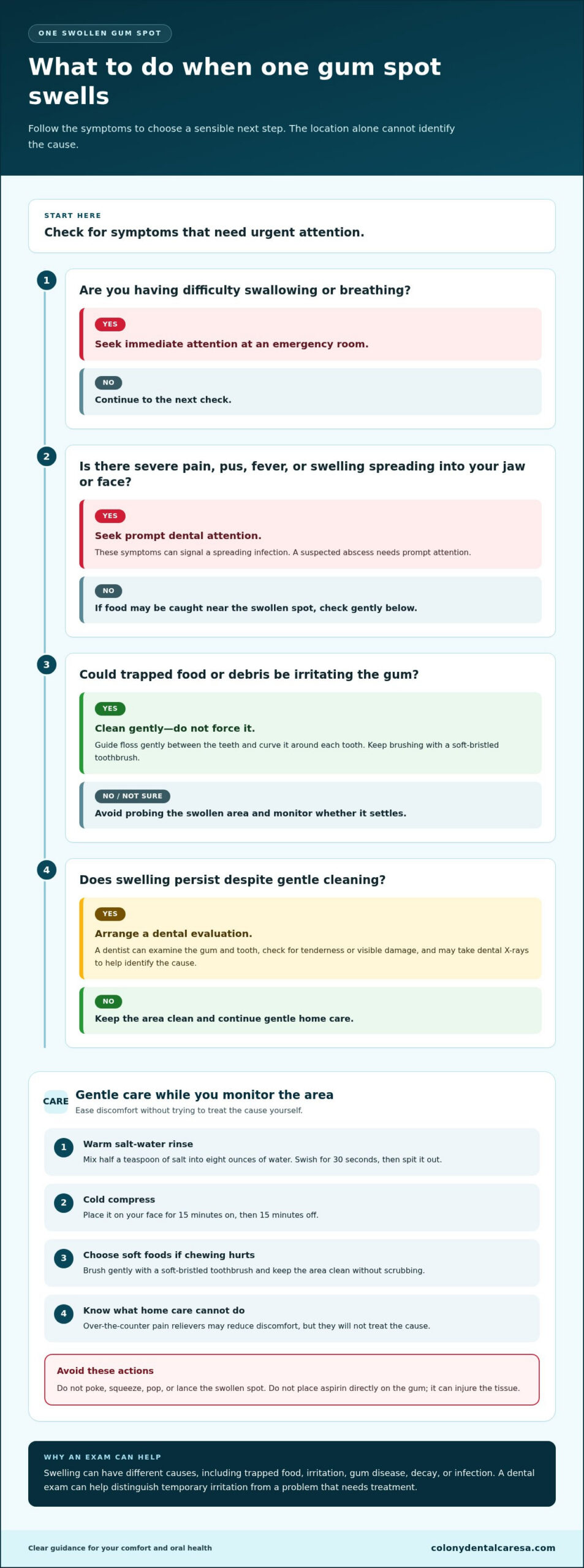
While waiting for an appointment, keep the area clean without scrubbing it. Brush gently with a soft-bristled toothbrush, and rinse with warm salt water made with half a teaspoon of salt in eight ounces of water. Swish for 30 seconds, then spit it out. A cold compress on your face for 15 minutes on and 15 minutes off may ease swelling. Choose soft foods if chewing hurts, and avoid poking or pressing the gum. Don’t try to pop or lance a swollen spot, and don’t place aspirin directly on the gum, as it can injure the tissue. Over-the-counter pain relievers may reduce discomfort but won’t treat the cause.
What treatments might a dentist recommend for swollen gums around one tooth? Treatment depends on the exam findings. A dentist may remove trapped debris, address plaque buildup, drain an abscess, prescribe antibiotics, or recommend a root canal or tooth extraction. Dental X-rays can help match treatment to the affected tooth, not just the visible swelling.
Seek urgent dental care for severe pain, pus, fever, or swelling in your jaw or face. Difficulty swallowing or breathing needs immediate attention at an emergency room. These signs can indicate spreading infection, not just a sore gum. If swelling persists despite gentle cleaning, arrange a dental evaluation rather than relying on home care alone.
What Are Swollen Gums?
Healthy gums fit closely around your teeth and usually feel firm, not puffy or sore. Swelling means gum tissue looks enlarged or feels tender, and redness or bleeding may appear during brushing. The change can affect one small area or several parts of your mouth. A dentist looks at the gumline and the space around each tooth to understand what the inflammation may mean for your oral health.
Plaque is a sticky film of bacteria that builds up on teeth throughout the day. When brushing and flossing miss the gumline, plaque can irritate nearby tissue and contribute to inflammation. Left in place, plaque can harden into tartar, which is harder to remove at home. Tartar can contribute to gum disease, and only a professional cleaning can remove it. Even careful oral hygiene can miss spots between teeth or behind the back molars.
A steady routine helps prevent plaque buildup. Brush at least twice a day for two minutes each time, using gentle pressure. Angle your toothbrush 45 degrees toward the gumline, then move it carefully across each tooth. A soft-bristled brush can help clean without rough scrubbing. Replace the brush when its bristles become worn, since bent bristles may not clean the gumline as well.
Clean between your teeth once a day with floss, an interdental brush, or a water flosser. Guide floss gently between teeth and curve it around each tooth instead of snapping it into the gums. If a space is difficult to reach, an interdental brush may fit more comfortably. Brushing alone cannot reach every surface between teeth, so this daily step helps remove plaque where a toothbrush misses.
Regular dental checkups and professional cleanings support prevention, especially when plaque has hardened into tartar. A dentist or hygienist can assess gum tissue and the pocket around each tooth. Healthy tooth pockets are usually 1 to 3 millimeters deep. Routine appointments twice a year allow the dental team to spot changes and discuss ways to improve your home care. If you’re unsure whether your brushing technique reaches the gumline, discuss your oral hygiene routine with a dentist and get guidance suited to your needs.
Could Trapped Food or Debris Be the Cause?
Yes. A food fragment caught between teeth or beneath the gumline can irritate nearby tissue and make one spot swell. Gentle cleaning may remove the trigger, but swelling that continues needs attention.
Food Trapped Between Teeth
Food trapped between teeth is a small fragment wedged in the narrow space where neighboring teeth meet. A popcorn hull or seed can press against the gum and cause localized tenderness. Bacteria can also collect around the fragment, adding irritation if it remains. You may notice soreness or bleeding while brushing near that spot, especially when the gum is already inflamed.
Gently guide floss between the teeth, then curve it around each tooth to clean its side. Avoid snapping floss into the gum or forcing it against a tight contact. If the fragment does not come free, stop rather than digging with a fingernail, toothpick, or other sharp object. Scraping can injure the gum and worsen the swelling.
Debris Beneath the Gumline
Debris beneath the gumline is food or another small particle lodged where the gum meets the tooth. This hidden spot can feel tender even when you can’t see what is causing it. Brushing may not dislodge material tucked below the edge, and repeated pressure can cause more irritation or bleeding. A dental professional can examine the area if gentle cleaning doesn’t help.
Food debris is one possible explanation, but it isn’t the only cause of swelling in one place. Plaque near the gumline, gum disease, or a tooth problem can look similar. If you’ve carefully cleaned around the tooth and swelling remains after a couple of days, arrange a dental evaluation. Persistent symptoms may mean debris is still lodged or another problem needs treatment.
Notice the pattern as you clean. Swelling that starts after a meal and improves after gentle flossing may fit irritation from trapped food. In contrast, swelling that persists, returns in the same spot, or comes with ongoing bleeding deserves a closer look. These clues can help you describe what you’ve noticed, but they don’t confirm the cause.
Keep brushing the area with light pressure while you monitor it. If flossing causes sharp pain, the gum bleeds repeatedly, or you can’t clear the food without force, stop trying to remove it yourself. A dentist can inspect the gumline and determine whether the source is debris or another dental concern. Don’t try to cut, lance, or push beneath the gum with a pointed tool.
Once the trapped material is gone, the tissue may still feel irritated for a short time. Continue gentle oral hygiene and watch whether the swelling settles or worsens. If it remains after a couple of days, seek a professional assessment instead of repeatedly flossing the same sore spot. Prompt attention can clarify the cause and help prevent ongoing irritation.
Gingivitis and periodontitis
Plaque buildup can inflame the gums beside one tooth, causing localized gingivitis. You might notice redness, tenderness, or bleeding when brushing that spot. Plaque contains bacteria, and if it stays along the gumline, it can harden into tartar. Irritation may appear around one tooth even when other areas feel comfortable. However, swelling alone cannot show how far inflammation has progressed or confirm gum disease.
Gingivitis is an early form of gum disease. Daily brushing and flossing can often reverse plaque-related gingivitis by disrupting plaque before it continues to irritate the tissue. Clean gently along the gumline, including the sides of teeth that are easy to miss. If the same area continues bleeding or swelling, a dental assessment can help determine whether plaque is the cause or another problem is present.
When plaque hardens into tartar, the buildup can contribute to ongoing gum disease. Brushing at home cannot remove tartar, so professional care may be needed. A dentist may recommend scaling and root planing, a deeper cleaning that removes plaque and tartar from around the teeth and below the gumline. This treatment addresses buildup in areas a toothbrush and floss can’t reach effectively.
Periodontitis is a more advanced form of gum disease. Unlike early gingivitis, it can damage the bone and connective tissue that hold teeth in place. As support around a tooth weakens, gums may bleed, become tender, or pull away from the tooth. Periodontal disease needs professional treatment; daily home care supports that treatment but doesn’t replace it. Advanced gum disease may require surgery.
The CDC reports that 42% of U.S. adults aged 30 and older have some form of periodontal disease. That figure describes a broad age group, not the cause of swelling in your mouth. A dentist considers gum changes and plaque around the affected tooth to assess what’s happening. Redness or bleeding can occur with gingivitis, but infection or trauma can also cause similar signs.
If your gums repeatedly swell in one location, note whether brushing triggers bleeding and whether the tooth feels tender. Share those details during an exam. A dentist can check for plaque-related inflammation and decide whether a routine cleaning or periodontal treatment is appropriate. Treating the underlying gum problem matters because periodontitis can harm the structures supporting teeth. Early attention can clarify the condition and the care your gums need.
Risks of untreated gum disease
Periodontal disease is an infection that inflames the tissues holding your teeth in place. If plaque remains along the gumline, it can harden into tartar, which brushing cannot remove. That buildup can keep irritating the gums and allow the disease to progress. The damage may extend beyond visible redness and affect the support beneath a tooth. That’s why ongoing swelling or bleeding deserves attention, even when the discomfort seems mild.
In its early stage, gum disease may cause redness, tenderness, or bleeding during brushing. Those symptoms can be easy to dismiss, especially if they come and go around one tooth. As the condition advances, periodontitis can damage the bone and connective tissue that support teeth. A tooth may be harder to keep healthy when that support is weakened. A dentist can assess changes in your gums and determine whether treatment is needed.
Risk can increase when plaque collects and stays near the gumline. For example, brushing may miss the back surface of a molar, while flossing may not reach the sides between teeth. Tartar can then form in areas your toothbrush cannot clean. These examples don’t prove gum disease is present, but they show how missed plaque can contribute to inflammation. Regular cleanings and careful home care help address buildup before it harms supporting tissue.
Untreated gum disease can affect more than one area. Inflammation around a tooth may persist, while damage to the bone and connective tissue can threaten that tooth’s stability. If an infection has damaged a tooth beyond repair, a dentist may extract it. Tooth extraction is not the outcome of every gum problem, but it can become necessary when the tooth cannot be saved.
Pay attention to symptoms that persist or return, such as swollen, tender, or bleeding gums. Note where they appear and whether brushing triggers bleeding; those details can help your dentist assess the condition. Don’t assume one swollen spot is harmless simply because your other gums feel normal. A professional exam can identify whether plaque, tartar, or another cause needs attention and guide appropriate care.
Prompt periodontal care can address gum disease and help limit further harm to the tissues supporting your teeth. If swelling or bleeding continues, arrange an evaluation and discuss periodontal disease treatment as part of your care.
Colony Dental Care: Dental Cleanings and Exams
Colony Dental Care provides Dental Cleanings and Exams in San Antonio, Texas, to help identify what’s causing gum swelling and what care may help. An exam lets the dental team assess the affected gum and tooth, while a cleaning addresses plaque and tartar that contribute to irritation. If swelling appears alongside signs of tooth decay, Tooth-Colored Fillings may be appropriate to repair a cavity.
Arrange an exam if swelling persists, returns in the same spot, or comes with bleeding or tenderness. Share when it began and what you’ve noticed while brushing or eating. Those details help keep the visit focused on your concerns and support a clear discussion of next steps.
Contact Colony Dental Care to arrange a dental exam and discuss your concerns.
Take the Next Step Toward Comfortable Care
If swelling lingers or returns, a clear assessment can help you choose your next step with confidence. The cause of swollen gums around one tooth isn’t always visible at home, and persistent changes deserve attention rather than guesswork. Share what you’ve noticed and discuss care that fits your oral health needs.
Colony Dental Care provides Dental Cleanings and Exams and Tooth-Colored Fillings, along with Invisalign Clear Aligners for patients seeking orthodontic care. The right service depends on your concern, so start with the question that brought you here and talk through your options with the dental team.
Contact Colony Dental Care to take a comfortable, informed next step. You deserve care that treats you with clarity and kindness.
Frequently Asked Questions
Can hormones cause gum swelling?
Yes. Changes in estrogen or progesterone can make gum tissue more reactive and contribute to inflammation. Note whether tenderness appears alongside a hormonal change and whether it affects one area or several. Share that pattern, any recent health changes, and medicines you take with your dentist. This context can help assess whether hormones may contribute or whether another oral health concern needs attention.
Could a Dental Abscess Be Causing the Swelling?
Yes, an abscess is one possible cause, but appearance alone can’t confirm it. A pimple-like bump near a tooth or drainage from the area is useful information to share. Don’t squeeze the bump to test it. Tell your dentist when you first noticed it, whether it has drained, and whether that tooth has had previous treatment. Those details can help guide an evaluation.
Can a dental abscess go away without treatment?
No. A change in pain or swelling doesn’t establish that the infection has cleared, so don’t cancel an evaluation because symptoms ease. A dentist needs to address the source of the abscess and determine the appropriate care. Keep track of changes while arranging treatment, and share whether symptoms have improved, returned, or shifted. This timeline can help the dental team understand how the problem has progressed.
Can a swollen gum heal on its own?
Minor irritation can settle after its trigger is gone, but ongoing swelling needs attention. Continue brushing gently rather than avoiding the area, since skipped cleaning allows more plaque to collect. Notice whether the gum returns to its usual appearance and whether tenderness changes during meals. If swelling stays, returns, or worsens, arrange an exam to identify what is preventing the tissue from settling.
Could It Be Gum Disease?
Yes, gum disease can affect the tissue around a single tooth, though swelling alone can’t establish that diagnosis. During an exam, a dentist can assess the gum’s condition and whether its attachment around the tooth has changed. Mention recurring tenderness or bleeding and any areas that are difficult to clean. That information helps the dental team decide whether periodontal care is appropriate.
Could Something Be Stuck Under the Gum?
Yes, a food fragment or other debris can lodge near the gum edge and irritate the tissue. If you can’t clear it with gentle everyday cleaning, don’t dig beneath the gum or use a sharp object. A dental professional can inspect the spot and remove material safely if needed. Describe what you ate and when the soreness began; those clues may help locate the irritated area.
What can cause swollen gums around one tooth?
A partly erupted or impacted wisdom tooth can inflame the gum tissue covering it, a condition called pericoronitis. The area may feel tender, and opening your jaw fully may become difficult. This differs from irritation around an ordinary tooth. If the swelling sits behind your last molar, mention that location and any jaw stiffness during your dental evaluation.
Can a dental abscess or gum infection cause swelling in one spot?
Yes. An abscess involves a pocket of pus from a bacterial infection, while gum inflammation affects the tissue around a tooth. These problems can look similar, so swelling alone can’t tell you which one is present. Avoid trying to diagnose the source by appearance or taste. A dental evaluation can distinguish the causes and identify the care that fits your tooth and gums.

