
The softest meal isn’t always the best choice after dental surgery. You may be wondering which soft foods to eat after dental surgery without irritating the treated area, and how to feel comfortably full when chewing is limited. The answer depends on the texture of the food and the recovery instructions for your procedure.
It’s understandable to feel unsure when familiar foods seem too firm, too hot, or difficult to manage. A gentle menu can still offer variety, using simple options you may already have at home. This guide covers practical food ideas, ways to put together satisfying meals, and common textures to avoid or adjust while your mouth heals.
Your dental team’s guidance should lead the way because recommendations can differ by procedure. If you’re healing in San Antonio, Colony Dental Care provides personalized care and can help you understand the instructions for your dental treatment.
Key Takeaways
- Choose soft foods to eat after dental surgery based on how easily they chew, rather than following a rigid menu.
- Familiar options such as yogurt, scrambled eggs, applesauce, mashed potatoes, and well-cooked pasta can make gentle meals easier to plan.
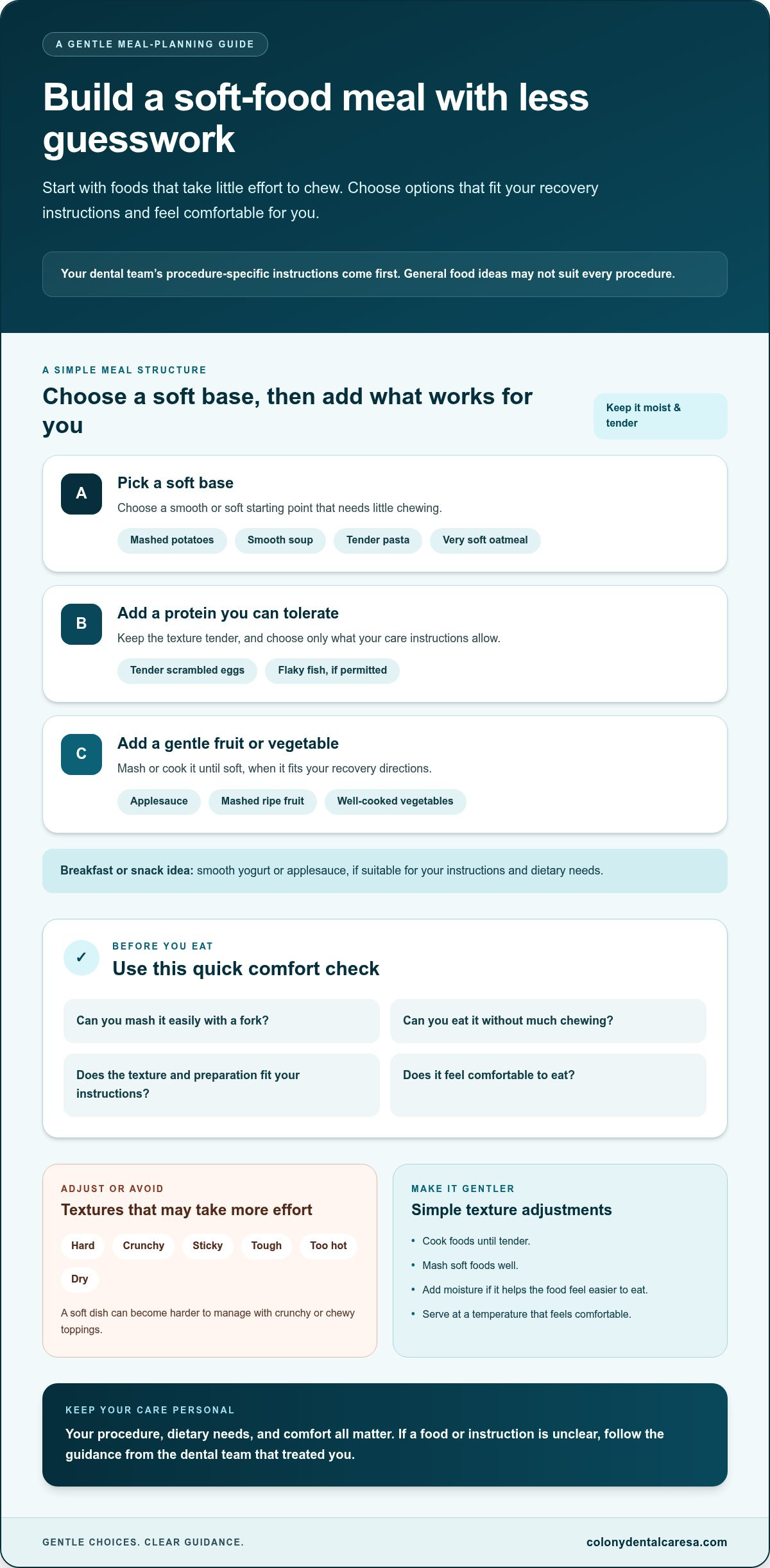
- Build a simple meal with a soft base, a protein you can tolerate, and a gentle fruit or vegetable.
- Consider texture, temperature, ingredients, and preparation, since each can affect how comfortable a food feels.
- Follow the instructions for your procedure, and seek personalized guidance if you’re unsure what to eat.
Why soft foods can help after dental surgery
After dental surgery, eating can feel unfamiliar, especially if chewing puts pressure near a tender area. A soft-food approach focuses on how much effort a food takes to chew, not on following one fixed menu. Smooth, moist foods that are easy to mash may feel more comfortable while your mouth recovers. Familiar ingredients can still be part of your meals when prepared to a manageable texture.
General food ideas can help you plan, but follow your dental professional’s instructions for your specific procedure. A food that feels soft to you may still not fit the directions you received.
What counts as a soft food after surgery?
A useful starting point is whether you can mash the food easily with a fork or eat it with little chewing. Yogurt, applesauce, and mashed potatoes are familiar examples of smooth or soft textures. Scrambled eggs or well-cooked pasta may also be manageable, depending on preparation and your instructions. A mechanical soft diet is another way to describe foods modified to require less chewing.
Texture matters as much as the food’s name. A moist, tender bite differs from something hard, crunchy, sticky, or tough, which can take more effort to chew or feel uncomfortable near a healing area. Preparation can change the texture: pasta cooked until tender may be easier to manage than pasta cooked firm. Let your comfort and your dental team’s guidance help you decide.
Why your procedure-specific instructions come first
Dental procedures don’t all involve the same area or require the same care afterward. Instructions following a tooth extraction may differ from those after dental implant treatment or another type of oral surgery. The dental professional who treated you can give guidance suited to your procedure and recovery.
If general food suggestions differ from the directions you received, follow your dental team’s instructions. They may explain which textures to choose, how to prepare certain foods, and when to adjust your choices. If you’re unsure how an instruction applies to a meal, contact the dental team that provided your care rather than relying on a general food list.
Before eating, consider these questions:
- Can you mash it easily with a fork?
- Can you eat it without much chewing?
- Does its texture or preparation fit the instructions you were given?
- Does it feel comfortable for you to eat?
Soft foods to eat after dental surgery are best chosen with both texture and your personal care instructions in mind. This flexible approach can make meal planning feel less uncertain without treating general examples as rules for every procedure.
Soft foods to eat after dental surgery: a useful checklist
Choosing from a short list can make meals easier to plan. Think in food groups and textures, then pick options that fit your appetite, dietary needs, and post-surgery directions. The ideas below are possibilities, not a guarantee that every item is right for every procedure. If your dental team gave you specific instructions, use those to guide your choices.
Gentle breakfast and snack ideas
For breakfast or a quick snack, look for foods that are moist and easy to manage. You can soften some options by cooking them longer or mashing them well. Keep ingredients simple, and skip anything that conflicts with your care instructions or dietary needs.
- Creamy choices: Smooth yogurt or applesauce, if suitable for your instructions and dietary needs.
- Warm breakfast options: Oatmeal cooked until very soft, or scrambled eggs prepared tenderly.
- Texture adjustments: Mash soft fruit or add moisture to a food if that makes it easier to eat.
Try a small amount first and notice how it feels. A familiar food can still be uncomfortable if it is too hot, dry, or difficult for you to manage.
Soft lunch and dinner options
For a main meal, combine a soft base with a tender food that needs little chewing. Smooth soups, mashed potatoes, and well-cooked pasta can be starting points when they fit your instructions. Prepare vegetables until soft, and choose fish that flakes easily only if your dental team’s directions allow it.
- Smooth and moist: Blended soups or mashed vegetables.
- Soft bases: Mashed potatoes or pasta cooked until tender.
- Tender additions: Flaky fish or well-cooked vegetables, if permitted.
- Fruit options: Ripe fruit mashed to a smooth texture, when suitable for your recovery directions.
Serve food at a temperature that feels comfortable, and avoid toppings or add-ins that make a soft dish crunchy or chewy. You can adjust recipes by cooking ingredients until tender, mashing them, or adding moisture. Follow any instructions you received about preparation or ingredients.
Use this checklist as a menu-planning aid, not a strict meal plan. Allergies, personal dietary needs, and the details of your procedure all matter. If an option raises questions, choose something else until you have guidance about your care. Planning a few alternatives in each category can make it easier to find a comfortable option if one food doesn’t work for you.
For procedure-specific food guidance in San Antonio, Colony Dental Care provides dental care that includes extractions, implants, and oral surgery. The team can help you understand instructions related to your treatment and recovery. Learn more about Colony Dental Care’s dental surgery care.
Build a satisfying soft-food meal without making it complicated
A short routine can take some guesswork out of meal planning. Rather than searching for a special menu, pair a soft base with a protein you can tolerate, then add a gentle fruit or vegetable if it fits your instructions. Change the combinations to suit your preferences and what feels comfortable to eat.
A simple checklist for putting meals together
Use these steps as a flexible guide, not a rulebook. Your dental team’s directions and your own dietary needs come first.
- Choose a soft base. Oatmeal cooked until soft, mashed potatoes, or well-cooked pasta can give a meal a familiar starting point.
- Add a suitable protein. Scrambled eggs, yogurt, or tender flaky fish may work for some people, if they fit your recovery instructions.
- Finish with a gentle fruit or vegetable. Applesauce, mashed ripe fruit, or a soft mashed vegetable can add variety when permitted.
You don’t need to include every part at every meal. If an ingredient doesn’t suit your diet or instructions, leave it out or choose another familiar option. The goal is a meal that’s manageable for you, not a perfect formula.
Make familiar foods easier to eat
Small preparation changes can soften foods you already enjoy. Cook oatmeal or pasta until tender, mash fruit or vegetables, and add moisture to a dish if it seems dry. Keeping food soft and moist may make it easier to manage than a crumbly or chewy version. Follow preparation guidance from your dental team, since what feels comfortable can depend on your procedure.
Let your comfort and your dental team’s instructions guide each meal. Start with a food that fits those directions, and pause if eating causes concerning discomfort. Don’t push through pain or uncertainty. Stop eating and seek professional advice about what to do next.
Sample day, just an idea: Breakfast could be soft oatmeal with applesauce. For lunch, try mashed potatoes with scrambled eggs and a well-cooked mashed vegetable. Dinner might be tender pasta with flaky fish, if both suit your instructions. Swap these choices around or select only the options that feel right. This isn’t a prescribed plan, and it doesn’t set portion or nutrition targets.
With a few flexible combinations, soft foods to eat after dental surgery can feel less like a long list and more like familiar meals adjusted to your needs. If you’re unsure how to adapt your meals after an extraction, implant, or oral surgery, Colony Dental Care offers personalized dental care in San Antonio and can help you understand your procedure-specific guidance.
Foods and textures to avoid or adjust during recovery
Some foods take more effort to chew or may feel irritating near a sensitive area. That doesn’t mean every food in a category is off-limits for everyone. Your procedure and the instructions from your dental professional should guide what you avoid, adjust, and reintroduce. Use the categories below as general prompts, not as a universal recovery schedule.
Hard, crunchy, sticky, and chewy foods
Notice how a food feels and how much chewing it requires. If it’s firm, brittle, tacky, or tough, choose a softer alternative when your instructions call for it.
- Hard or crunchy: Chips and nuts can take force to bite and chew.
- Sticky: Sticky candy may cling to teeth and be difficult to manage comfortably.
- Chewy or tough: Tough meats can require prolonged chewing, which may feel uncomfortable after treatment.
Preparation can change a food’s texture. A food cooked until tender may be easier to chew than the same food served firm, while a crunchy topping can make an otherwise soft dish harder to manage. Consider the whole dish, including ingredients mixed in, rather than judging it by its main component alone.
When to change texture or ask for guidance
There isn’t one return-to-regular-food date that fits every procedure. Follow your dental professional’s directions about when and how to adjust textures. If you’re unsure whether a food fits your instructions, pause and get clarification from the dental team that treated you instead of relying on a general list.
Temperature and ingredients matter, too. A very hot dish or one with ingredients that bother your mouth may be less comfortable than a mild, moist version. Let food cool to a comfortable temperature, and change its preparation only in ways that remain consistent with your care directions. The best soft foods to eat after dental surgery depend on both texture and your individual guidance.
If eating causes unexpected discomfort, stop and seek professional advice, particularly if the concern doesn’t settle or feels different from what you were told to expect. You don’t need to guess your way through recovery. Clear, procedure-specific guidance can help you decide what to eat and when to adjust your choices.
If your recovery involves dental implants, explore dental implant care in San Antonio for information related to implant treatment and personalized care at Colony Dental Care.
Personalized post-surgery food guidance in San Antonio
General meal ideas can help you plan, but the dental professional who treated you should provide instructions tied to your procedure. Colony Dental Care provides personalized dental care in San Antonio, including dental extractions, dental implants, and oral surgery. If you’re unsure whether a food or texture fits your directions, the team can help you understand your care instructions.
Why recovery guidance can differ by procedure
An extraction, an implant, and other oral surgery can involve different areas and aftercare needs. Advice that works for one person may not apply to you. The professional who treated you can explain which food instructions matter for your procedure and when to adjust them. Follow those directions if they differ from general suggestions about soft foods to eat after dental surgery.
Be specific when you ask for clarification. Tell the dental team what procedure you had and name the food or texture you’re considering. You might ask whether it should be mashed, cooked until tender, or avoided for now. If a meal feels difficult or causes unexpected discomfort, stop and contact your treating professional for guidance rather than trying to push through or follow someone else’s recovery plan.
Get clear, caring support from a local dental team
Colony Dental Care has provided trusted care to the San Antonio community for more than 30 years. Dr. James David Oei leads the practice, where personalized guidance is part of caring for you as a neighbor. The team also provides care in Spanish, helping local families feel more at ease discussing their dental needs.
Food questions are a reasonable part of recovery. You can ask your dental team to explain instructions in plain language, including how to handle a food that’s soft but still takes some chewing, or what to do if your comfort changes. Your guidance should reflect the procedure performed and the instructions you received, not a one-size-fits-all timeline.
If your concern feels urgent or you’re unsure what kind of dental help you need, the emergency dentist guide for San Antonio may help you understand where to start. For questions about your care or recovery, contact Colony Dental Care. The team is here to listen and help you find clear, personalized guidance at a pace that feels comfortable.
Take your next recovery step with confidence
Recovery is personal, and your food choices can change as your comfort and instructions evolve. Rather than trying to follow a perfect menu, let your dental professional’s directions guide what you choose. If a food or texture feels uncertain, pause and ask how it fits your procedure and recovery. Clear, personal guidance can make everyday decisions feel less stressful and help you avoid guessing.
As you continue healing, focus on meals that feel manageable and adjust your choices only as directed. Your needs may not match someone else’s, so seek clarification when your instructions leave you unsure. The soft foods to eat after dental surgery are one part of a recovery plan shaped around your care and comfort.
If you have questions about your dental care, request personalized guidance from Colony Dental Care. You deserve clear answers as you move through recovery, one meal and one step at a time.
Frequently Asked Questions
Is it normal to eat only soft foods after dental surgery?
Yes, a dental professional may recommend softer foods after some procedures, but your plan depends on the treatment and your personal instructions. Softer textures can be easier to manage if chewing feels uncomfortable. If a general food list conflicts with the directions you received, follow your dental team’s advice. Let them know if eating is difficult or your symptoms make it hard to follow the plan.
What soft foods can I eat after dental surgery?
Depending on your procedure and instructions, you may be able to choose yogurt, scrambled eggs, applesauce, soft-cooked oatmeal, mashed potatoes, smooth soup, or soft pasta. These are general ideas, not a universal menu. Think about whether a food fits your dietary needs and feels manageable for you. The soft foods to eat after dental surgery should be guided by the instructions from the professional who treated you.
Can I eat eggs after dental surgery?
Soft eggs, such as scrambled eggs, may be an option if they suit your procedure-specific instructions. Prepare them so they’re moist and easy for you to manage, and avoid adding ingredients that make the texture harder to chew if that conflicts with your care directions. If eggs cause pain or you’re unsure whether they fit your plan, stop eating and ask your dental professional for guidance.
How long should I eat soft foods after dental surgery?
There isn’t one timeline that applies to every procedure or person. How long you need softer foods depends on the treatment you had and how your recovery is progressing. Follow the instructions you received instead of relying on a general online schedule. Before adding firmer foods, check with your treating dental team if your directions don’t say when to make that change.
Can I drink a smoothie after dental surgery?
A smoothie may be suitable for some people, but your instructions should guide the ingredients, temperature, and way you drink it. Don’t assume every smoothie or drinking method is right for your recovery. Consider your dietary needs, and avoid ingredients that don’t fit your instructions. If you’re uncertain about a specific drink or how to consume it, ask your dental professional for advice.
What happens if I eat something hard after dental surgery?
A hard or crunchy food may feel uncomfortable or irritate a sensitive area, though the effect depends on your procedure and recovery. Stop eating if you notice pain or discomfort, and follow the directions you were given. If symptoms concern you or don’t settle, contact your dental professional rather than trying to judge the problem from a general food list.
Can I eat normally after a tooth extraction?
Your return to your usual foods depends on the extraction and your dental professional’s instructions. Don’t use a general timeline to decide when to eat hard, chewy, or crunchy foods again. If your directions don’t explain how to move toward your usual meals, ask the team that treated you. You can also describe a specific food you’re considering to get guidance that applies to your care.
Are soft foods enough to keep me nourished after dental surgery?
A soft-food menu can include choices from different food groups, but what works for you depends on your dietary needs, tolerance, and procedure-specific directions. If your menu feels too limited, write down the foods you can comfortably manage and share that list with your dental professional. They can help you consider suitable options for your recovery, especially if you have food allergies or other dietary concerns.

