The right tooth replacement isn’t always the most obvious one. If you’re exploring dental implants san antonio, you may be wondering whether an implant suits your oral health, what treatment and healing involve, and whether a bridge or denture could better match your goals. These are useful questions to consider because the right choice depends on your needs, not a one-size-fits-all promise.
With a personalized evaluation, you can understand your options and decide at a pace that feels comfortable. At Colony Dental Care, Dr. James David Oei brings over 30 years of clinical experience to care rooted in trust and community. This guide covers the implant process, what a dental evaluation may consider, and how implants compare with bridges and dentures. You’ll also find practical questions to ask about costs and insurance. Colony Dental Care accepts dental insurance, including Cigna PPO, and offers an in-house dental membership plan for patients without insurance. The goal is to help you feel prepared to discuss your health, comfort, and smile.
Key Takeaways
- Dental implants are one way to replace a missing tooth, but the right option depends on your oral health, needs, and goals.
- For dental implants san antonio, expect an individualized evaluation and a treatment plan shaped around your circumstances.
- Compare implants, bridges, and dentures by how each is supported, whether it can be removed, and what your dental evaluation finds.
- Discuss your health history, oral condition, goals, and treatment preferences to understand whether implants may suit you.
- Colony Dental Care provides dental implants in San Antonio, with personalized guidance from Dr. James David Oei, who has over 30 years of clinical experience.
Dental Implants in San Antonio: What Replacing a Missing Tooth Can Address
A missing tooth can affect more than your smile. Depending on its location and your oral health, you may notice changes in chewing, speech, or the way your upper and lower teeth meet. A gap can also change how pressure is distributed when you bite. These effects vary, so an evaluation can help you understand what the missing tooth means for you.
A dental implant is a support placed in the jawbone to hold a replacement tooth. It’s one option for replacing a missing tooth, but it isn’t automatically right for everyone. Your health, the condition of your mouth, and your goals all matter when weighing dental implants in San Antonio against other options.
What does a dental implant replace?
An implant restoration has parts with different roles. The implant sits in the jawbone and provides support. A connecting component, often called an abutment, links the implant to the visible restoration, such as a crown. The crown fills the space where the tooth is missing.
As healing occurs, bone tissue can join with the implant. This process is called osseointegration, and it helps create a stable foundation for the restoration. For a plain-language overview of what a dental implant is, you can also read about its components and the osseointegration process. An implant supports a replacement tooth, but it shouldn’t be described as preventing every kind of bone loss.
When might replacing a missing tooth matter?
You might find it harder to chew certain foods or notice that some words feel different to pronounce. A change in your bite may also affect how your teeth meet when you eat. These are possibilities, not inevitable results. The effects depend on which tooth is missing and your individual oral health.
A dental evaluation helps clarify the situation. Your dental team can consider the space, neighboring teeth, bite, and health history, then explain whether replacing the tooth may support your needs. Use the visit to share what matters most, whether that’s comfort, function, appearance, or a clear understanding of your options and costs.
At Colony Dental Care, this conversation reflects a total health philosophy: your oral health is considered as part of your overall well-being, without assuming that one treatment will address every concern. If you’re looking into dental implants san antonio, a personalized discussion can help you understand the role an implant might play in your care and whether another replacement option may better fit your circumstances.
How Dental Implant Treatment Works: From Evaluation to Restoration
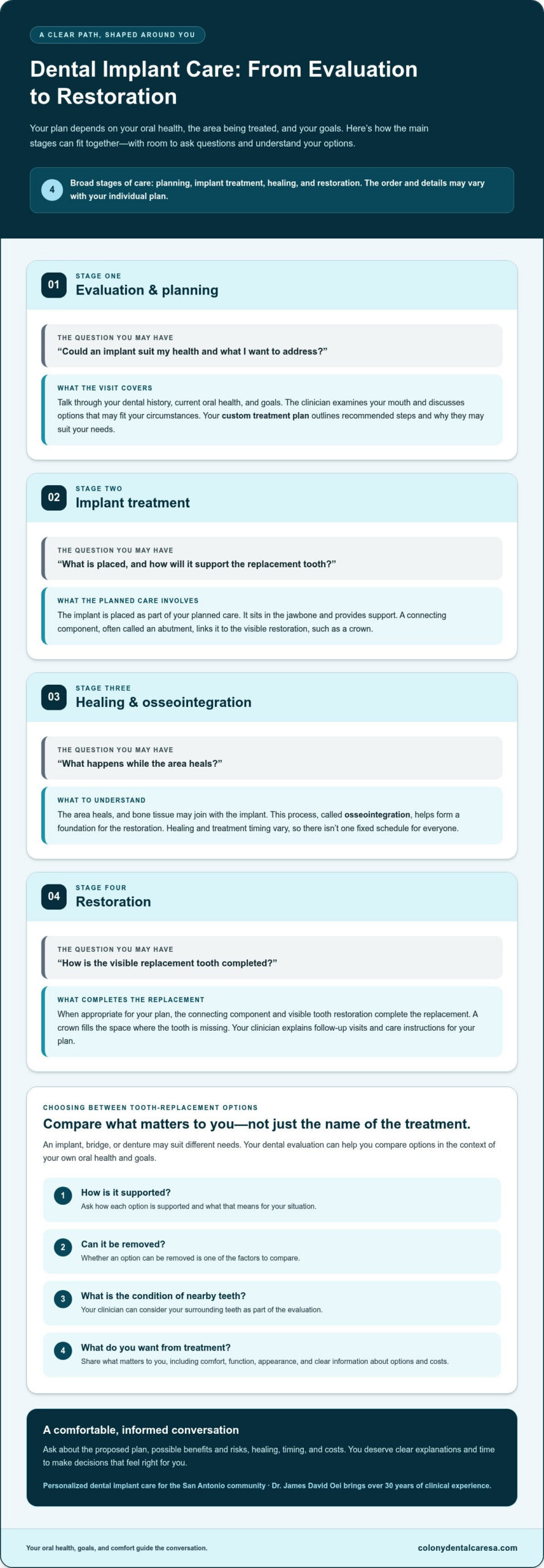
Dental implant care follows a series of broad steps, but your plan depends on your oral health, the area being treated, and your goals. An evaluation comes first so decisions about treatment and the final restoration are based on your needs rather than a standard template. You should have time to understand the proposed plan, ask questions, and talk through what to expect.
What happens during an implant evaluation?
Your visit starts with a conversation about your dental history, current oral health, and what you hope to address. The clinician examines your mouth and discusses which treatment options may fit your circumstances. Share any concerns about comfort and ask about the parts of care you’d like explained. A custom treatment plan outlines the recommended steps and why they may suit your needs.
Implants are one treatment option, and it’s helpful to understand both their potential advantages and considerations. The U.S. Food and Drug Administration offers information about the potential benefits and risks. Your dental team can discuss how general information relates to your health and treatment choices.
What are the main stages of implant care?
In general, care moves from planning to implant treatment, a healing period, and placement of the visible restoration. The order and details may differ based on your evaluation and individual plan. A common sequence is:
- Planning: Review your oral health and goals, then discuss the treatment approach and restoration.
- Implant treatment: The implant is placed as part of your planned care.
- Healing: The area heals, and bone may join with the implant through a process called osseointegration.
- Restoration: When appropriate for your plan, the connecting component and visible tooth restoration complete the replacement.
Osseointegration means bone tissue fuses with the implant, helping form a foundation for the restoration. Healing and treatment timing vary, so there isn’t one fixed schedule for everyone. Your clinician will explain follow-up visits and care instructions for your plan.
For dental implants san antonio, clear conversations at each stage can help you feel informed and comfortable as you make decisions. Colony Dental Care provides dental implant care for the San Antonio community. You can learn more about dental implant care as you consider your next steps.
Dental Implants vs. Bridges and Dentures: Which Option Fits Your Needs?
An implant isn’t automatically the best or only way to replace a missing tooth. A bridge, denture, or implant may suit different needs. Compare how each option is supported, whether it can be removed, the condition of your surrounding teeth, and what you want from treatment. This overview can help you prepare for a personalized conversation, but an exam is needed to assess which choices suit your mouth.
For another overview of how dental implant surgery works, Mayo Clinic explains the procedure and related considerations. Your evaluation is central to weighing your options.
| Option | How it’s supported | Removability | What an evaluation considers |
|---|---|---|---|
| Dental implant | A support placed in the jawbone holds a connecting component and tooth restoration. | Designed as a fixed restoration, not a removable denture. | Your oral health, the area being treated, and your goals. |
| Dental bridge | A replacement tooth is supported by neighboring teeth. | Typically fixed in place. | The condition of the teeth beside the gap and how they may support a bridge. |
| Denture | A removable replacement rests against the gums; the design depends on the teeth being replaced. | Removable. | Your pattern of tooth loss, oral condition, and preferences for daily use. |
How do implants and bridges differ?
An implant supports a restoration from the jawbone, while a bridge uses neighboring teeth for support. That difference makes the health and position of nearby teeth important to planning. A dental exam helps your clinician assess those teeth and explain the options in light of your bite and the specific gap. Compare how each option is supported and ask how the condition of your neighboring teeth affects the recommendation.
How do implants and dentures differ?
Dentures are removable replacements; implants offer a different, typically fixed approach to restoring a missing tooth. The number and location of missing teeth, your oral health, and what feels comfortable and manageable to you all shape the conversation. As you explore dental implants san antonio, note whether a fixed or removable option better suits your preferences, then discuss those priorities with your dental team. Colony Dental Care provides personalized care to help you consider tooth-replacement options in San Antonio. Learn more about dental implant care.
Are You a Candidate for Dental Implants? Questions to Discuss in San Antonio
There isn’t a simple checklist that can tell you whether an implant is right for you. Candidacy depends on your health history, the condition of your mouth, the location of the missing tooth, and what you hope treatment will accomplish. An in-person assessment is needed to determine an appropriate plan for your needs.
You don’t need to arrive with all the answers. The evaluation is a chance to share what matters to you and understand the options, including whether an implant, bridge, or denture may fit your circumstances. In San Antonio, a thoughtful conversation can make the decision feel clearer and less rushed.
What factors can shape an implant treatment plan?
Your clinician may consider your current oral health, the location of the missing tooth, and the condition of nearby teeth and gums. Your goals matter, too. For example, you may want to focus on replacing one tooth, restoring chewing comfort, or comparing fixed and removable options. Your evaluation guides the next steps in planning. No single factor determines the answer on its own.
Share your health history and any concerns that could affect care. This gives your dental team a clearer picture of your situation and helps them explain why a particular approach may or may not align with your needs.
How can you prepare for an implant consultation?
A little preparation can help you make good use of your visit. Bring a list of health conditions, medications, and questions, along with any concerns about comfort or healing. You might ask:
- What treatment stages would my plan include, and what might affect the timing?
- What should I expect during healing, and what follow-up care would I need?
- What type of restoration may be appropriate for me?
- What alternatives could address my needs, and how do they differ?
- What costs should I plan for, and how might my dental insurance or the in-house dental membership plan apply?
Ask your clinician to explain each recommended step in plain language. It’s reasonable to want clarity about comfort, follow-up, and costs before deciding. Colony Dental Care accepts dental insurance, including Cigna PPO, though coverage depends on your plan. The in-house dental membership plan is another option for patients without insurance. The team can explain how the plan applies to care.
If you’re considering dental implants san antonio, a personalized conversation can help you weigh your goals and options. Schedule an implant consultation with Colony Dental Care to discuss your oral health and next steps.
Dental Implants at Colony Dental Care: Personalized Next Steps in San Antonio
After learning about implant care and other tooth-replacement options, your next step can be a conversation focused on your needs. Colony Dental Care provides dental implants in San Antonio with personalized guidance from a local team. Dr. James David Oei brings over 30 years of clinical experience to your care. Your plan still begins with your health, your questions, and what you hope to address.
What can you expect from a local implant consultation?
You’ll have time to share your dental history, concerns, goals, and questions. The team can discuss your oral health and explain relevant treatment options and steps in clear language, so you understand what a proposed plan involves. If you have concerns about comfort or healing, bring them up. They belong in the conversation.
Rather than treating every smile the same, we work with you to shape a custom treatment plan around your individual needs. The aim is to make the process understandable, not to promise a particular result. Take the time you need to understand the recommendation and decide what feels right for you.
How can insurance and membership support planning?
Cost questions are a reasonable part of planning. Colony Dental Care accepts dental insurance, including Cigna PPO, but coverage depends on your specific plan and treatment. The team can explain the costs for your care and help you understand the details of a treatment estimate.
If you don’t have dental insurance, Colony Dental Care also offers an in-house membership plan. It’s another option to consider as you plan for care. Clear information about insurance and membership can help you make a decision that fits your circumstances.
Choosing dental implants san antonio starts with understanding your choices and feeling heard. You don’t need to decide everything before you talk with a dentist. A conversation can help you clarify questions, discuss comfort preferences, and learn which next steps may make sense for you.
If you’re ready to talk through your goals and questions, you’re welcome to schedule a conversation about dental implants with Colony Dental Care. We’re here to help you explore your options with care and clarity, at a pace that feels comfortable.
Take a Comfortable Next Step Toward Replacing a Missing Tooth
Choosing how to replace a missing tooth starts with understanding your needs, not assuming one option fits everyone. An implant, bridge, or denture may suit different circumstances, and an in-person evaluation helps clarify what your oral health and goals call for. If you’re considering dental implants san antonio, a clear conversation can help you understand the possible steps, ask about healing and follow-up, and compare options without feeling rushed.
At Colony Dental Care, Dr. James David Oei brings over 30 years of clinical experience to personalized care. The team accepts dental insurance, including Cigna PPO, and offers an in-house dental membership plan for patients without insurance. Coverage and plan details vary, so discuss them as part of your treatment planning to understand your options.
You deserve care that respects your questions and puts your comfort first. Schedule a conversation about your smile with Colony Dental Care and take the next step at a pace that feels right for you.
Frequently Asked Questions
What are dental implants?
A dental implant is a tooth-replacement option that supports a restoration. The implant is placed as part of a treatment plan, and the visible replacement completes the tooth. Your dentist can explain how the parts work together and whether this approach may suit your oral health, goals, and the location of the missing tooth. An evaluation also gives you a chance to discuss other replacement options that may fit your needs.
Are dental implants painful?
Comfort can vary from person to person, so your dental team is best placed to explain what to expect for your treatment. At Colony Dental Care, we prioritize your comfort and take time to discuss your concerns. Ask what each stage may involve, what follow-up care to expect, and how the team will support you. Clear, personal guidance can help you understand your plan.
How long does dental implant treatment take?
The overall process varies because planning, treatment, healing, and restoration depend on your individual needs. Osseointegration, the process in which bone tissue fuses with the implant, is part of the treatment journey. Your dentist can outline the expected stages for your custom treatment plan and explain what may affect timing. A general timeframe isn’t a promise for your case, since each person’s plan is different.
Who is a good candidate for dental implants?
Whether implants may suit you can only be determined through an individual dental evaluation, not an online checklist. Your dentist considers your oral health, dental history, goals, and the area being restored before discussing options. Dental implants San Antonio residents ask about still require this personal assessment. A consultation helps you understand whether an implant may fit your needs or whether another replacement approach could be considered.
Are dental implants better than bridges or dentures?
No single tooth-replacement option is automatically right for everyone. Implants, bridges, and dentures differ in how they support or replace teeth, and the right comparison depends on your oral health, missing-tooth pattern, and preferences. Your dentist can explain the trade-offs and discuss which options may fit your circumstances. A personalized evaluation is more useful than assuming one solution is best for every smile.
How much do dental implants cost in San Antonio?
The total cost depends on your treatment plan and the care your individual situation requires. Colony Dental Care discusses costs and payment considerations with patients rather than relying on a one-size-fits-all figure. Ask which parts of care are included in the estimate and whether your dental insurance or the in-house dental membership plan may apply. Coverage and plan details vary, so clear explanations can help you plan.
Can dental implants replace more than one missing tooth?
Dental implant treatment may be discussed for different patterns of tooth loss, but the right approach depends on an individual evaluation. Your dentist will consider your oral health, goals, and the restoration being planned. During a consultation, ask which replacement options may fit your needs, what stages your custom treatment plan involves, and how the recommended restoration would address the teeth you want to replace.