A September 2025 study in the Journal of the American Dental Association found that 72.6% of U.S. adults experience some level of dental fear, and often, that anxiety starts right at home with unexpected pain. If you’ve felt a sharp or throbbing sensation after cleaning between your teeth, you’ve likely asked yourself: Is It Normal for Gums to Hurt After Flossing? We want you to know that your discomfort is valid. It’s a common concern we hear from our neighbors here in San Antonio, and we’re here to help you navigate it with confidence.
We agree that it’s discouraging when a healthy habit feels like it’s causing harm instead of helping. While it’s normal to feel tenderness when you first start a routine, persistent pain shouldn’t be your everyday experience. Our goal is to help you find peace of mind and a path to a more comfortable smile. You’ll discover why flossing can cause discomfort, how to distinguish a simple adjustment period from a red flag, and the gentle C-shape technique we recommend to keep your gums healthy without the hurt. We’ll also clarify when it’s time to reach out for professional periodontal disease treatment or emergency dental care to ensure your smile stays vibrant and strong.
Key Takeaways
- Understand the “breaking-in” period for your gums and why initial soreness usually fades within three to seven days of consistent care.
- Learn to answer the question, “Is It Normal for Gums to Hurt After Flossing?” by distinguishing between a temporary adjustment and underlying conditions like gingivitis.
- Master the “C-Shape” blueprint to gently hug each tooth and avoid the mechanical irritation caused by a common sawing motion.
- Identify critical red flags, such as pain that keeps you awake at night, which signal it’s time to seek professional support.
- See how professional dental cleanings in San Antonio can make your at-home routine easier by removing the hardened tartar that often causes flossing discomfort.
Is It Normal for Gums to Hurt After Flossing? The ‘Breaking-In’ Period
If you have recently committed to a more thorough oral care routine, you might be surprised by how your mouth responds. It’s a question we hear often in our San Antonio office: Is It Normal for Gums to Hurt After Flossing? The short answer is yes, especially if you are just starting out. Think of your gums like any other muscle or tissue in your body. When you begin a new exercise program, your muscles feel sore as they adapt. Your gums are highly vascular tissues, meaning they are filled with tiny blood vessels that haven’t yet built up a tolerance to the physical action of cleaning between the teeth.
Most people experience a “breaking-in” period that lasts between three and seven days. During this week, you might notice minor tenderness or even a small amount of pink in the sink. While bleeding can feel alarming, it is often a sign that your body is sending blood to the area to help heal existing inflammation. Many patients worry they are “cutting” their gums with dental floss, but healthy gum tissue is surprisingly resilient. In most cases, the floss isn’t causing a wound; it’s simply disturbing the bacteria and plaque that have made your gums sensitive in the first place.
Why Gums React to New Cleaning Habits
When you haven’t flossed regularly, plaque and bacteria accumulate in the tight spaces between your teeth. This buildup triggers a low-level inflammatory response. The moment you introduce a cleaning tool, you disturb this colony of bacteria. Your body reacts by increasing blood flow to the area to fight off these microscopic invaders, which results in that familiar puffy or tender feeling. Gum adaptation is the natural process of tissue desensitization where your gums become firmer and less reactive as the underlying inflammation subsides.
The Difference Between Soreness and Injury
It helps to know what “normal” feels like so you don’t panic. Adaptation soreness usually feels like a dull, generalized ache that fades shortly after you finish your routine. In contrast, an actual injury or “floss cut” produces a sharp, localized sting that might linger or feel like a paper cut. If you feel a sharp zing, you might be using too much force or “snapping” the floss through the contact point too hard. If the pain is a dull ache, we encourage you to gently push through. However, if you notice a visible slice or if the pain is so intense it stops you from cleaning, take a 24-hour break to let the tissue rest before trying again with a lighter touch.
Common Reasons Your Gums Feel Sore or Throbbing After You Floss
While we’ve discussed the initial adaptation period, several specific factors can contribute to that uncomfortable throbbing sensation. Understanding these triggers helps you determine: Is It Normal for Gums to Hurt After Flossing? Often, the culprit isn’t the act of flossing itself, but rather how the floss interacts with your unique dental landscape. For instance, if you have older dental crowns or tooth-colored fillings, they may have developed “overhangs.” These tiny ledges of material can catch your floss, causing it to fray or pull sharply against the gum line, leading to localized inflammation.
Sometimes, the pain comes from what you leave behind. If you have a particularly stubborn piece of food trapped between your teeth, flossing might shift its position without fully removing it. This can cause a dull, throbbing pressure as the gums react to the displaced debris. We often see this with popcorn hulls or fibrous meats. If a quick rinse doesn’t help, our team at Colony Dental Care is always here to help you find relief through gentle professional guidance.
Technique Errors: The ‘Snap’ and the ‘Saw’
Many of our neighbors accidentally hurt their gums by using too much force. When you “snap” the floss through a tight contact point, it can slam into the delicate triangle of tissue between your teeth, known as the papilla. This creates a bruise that feels sore for hours. Similarly, moving the floss in a horizontal “sawing” motion can slice into the gum attachment. Instead, we recommend using a gentle “seesaw” back and forth motion just to pass the contact point, then switching to a vertical motion. Following a proper flossing technique ensures you are cleaning the tooth surface without traumatizing the soft tissue.
Gingivitis and Early-Stage Periodontal Disease
If your gums are consistently tender, it’s possible that pre-existing gingivitis is making the tissue fragile. When plaque sits along the gum line, it creates a constant state of irritation. This makes your gums feel like they are aching even with the lightest touch. It’s a bit of a paradox, but flossing is actually the primary way to resolve this discomfort. By removing the bacteria, you allow the tissue to heal and tighten. When you wonder, Is It Normal for Gums to Hurt After Flossing?, consider that the pain is often a signal of underlying inflammation. If the soreness persists, you might benefit from specialized gum disease treatment to clear away deep-seated tartar that a toothbrush simply cannot reach.
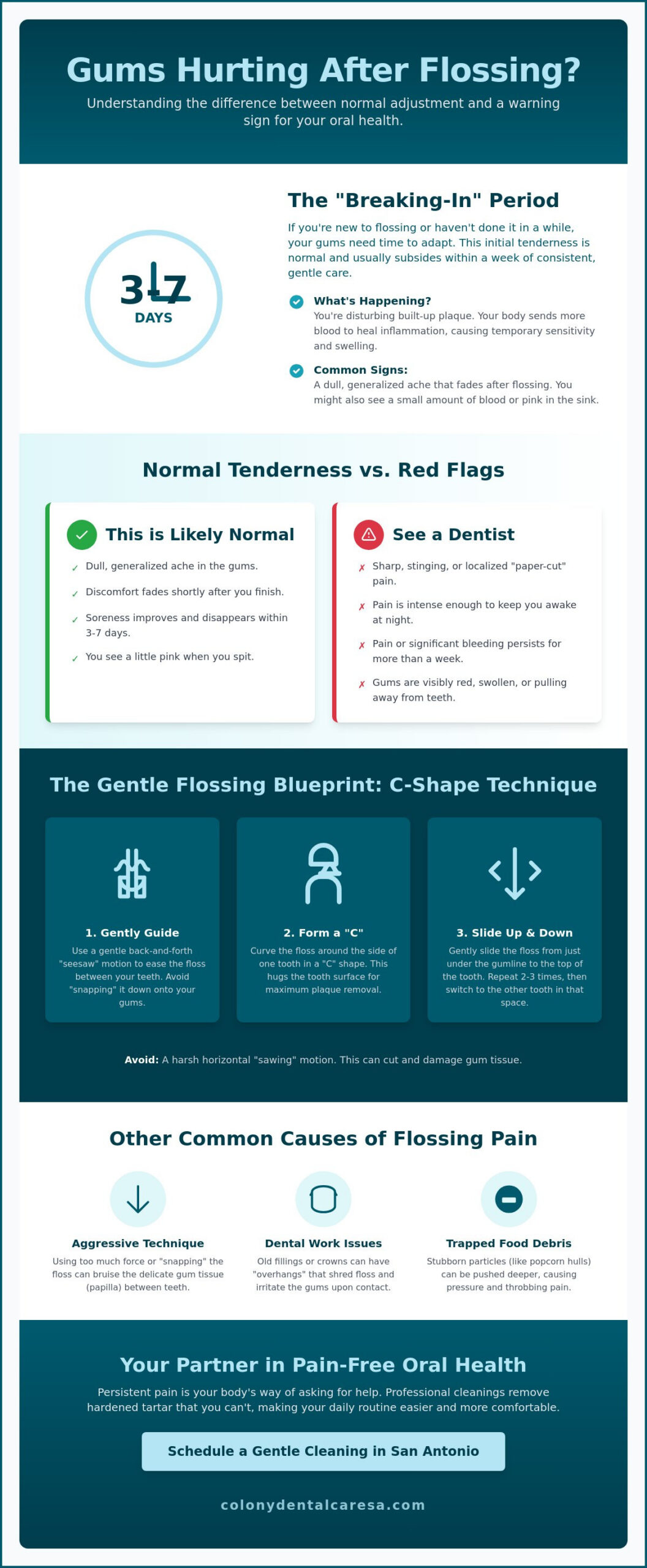
Normal Tenderness vs. Red Flags: When to Take Gum Pain Seriously
While we’ve explored the typical adjustment period, we want to help you distinguish between healthy progress and a signal that your mouth needs professional attention. When you ask, Is It Normal for Gums to Hurt After Flossing?, the answer depends on three main factors: duration, intensity, and accompanying symptoms. Mild soreness that disappears after a few days is usually part of the process. However, pain that keeps you awake at night or prevents you from focusing on your day is never considered normal. While the consequences of not flossing include the buildup of harmful bacteria, persistent pain after you start shouldn’t be ignored.
We often recommend our patients try the “Heartbeat Test.” If your gums throb in time with your pulse, it’s often a sign that an infection has reached a deeper level or created significant pressure. This type of rhythmic, pulsing discomfort usually indicates that your body is working overtime to fight an issue that requires a clinical look. For our neighbors in San Antonio, we provide dedicated emergency dental care to address these urgent concerns with the compassion and speed you deserve.
The ‘Red Flag’ Checklist
If you notice any of the following symptoms alongside your post-flossing soreness, please reach out to us for a reassuring evaluation:
- Persistent Bleeding: Any bleeding that doesn’t stop within 15 minutes of cleaning.
- Gum Abscess: A visible, localized swelling or a small, pimple-like bump on the gum tissue.
- Recession: Gums that appear to be pulling away from the teeth, exposing the darker, more sensitive root surface.
- Chronic Bad Breath: A persistent metallic taste or odor that doesn’t go away with brushing.
When Soreness Spreads to the Tooth
Sometimes, what feels like a gum ache is actually “referred” pain from the tooth itself. If you feel a sharp sting when the floss passes a certain point, you might be putting pressure on a hidden cavity located between the teeth. Similarly, a tiny crack in a tooth can flex under the pressure of flossing, causing a jolt of discomfort. It’s helpful to remember that flossing often “reveals” problems rather than creating them, acting as an early warning system for your overall health. By identifying these issues early, we can often use conservative treatments like tooth-colored fillings to restore your comfort before the problem grows.
The Gentle Flossing Blueprint: How to Clean Without the Pain
When our patients ask us, Is It Normal for Gums to Hurt After Flossing?, we often find that a simple adjustment in technique provides immediate relief. The goal is to remove plaque without traumatizing the soft tissue. The most effective way to achieve this is through the “C-Shape” technique. Instead of moving the floss straight up and down, you should wrap it around the side of the tooth. This allows the floss to “hug” the enamel and slide gently just beneath the gumline where bacteria love to hide. By following the natural curve of your tooth, you avoid the direct pressure that leads to bruising and soreness.
If traditional string feels like it’s “slicing” your fingers or your gums, you might prefer dental tape. This variety is flatter and wider than standard floss, which helps it glide more easily through tight contacts. For those who find manual flossing difficult due to dexterity concerns, interdental brushes or floss picks can offer better control. If your gums are exceptionally sensitive, a water flosser can serve as an excellent “bridge” tool. It uses a targeted stream of pulsating water to flush out debris, providing a thorough clean with zero physical friction against your delicate tissues.
Choosing the Right Tools for Your Smile
The type of material you use matters just as much as your technique. Waxed floss is typically the gentlest choice for sensitive San Antonio smiles because the light coating helps it slide between teeth without catching. Many of our neighbors enjoy “comfort” floss options that are infused with soothing ingredients like coconut oil or refreshing mint, which can make the routine feel more like a self-care ritual. If you have larger gaps between your teeth, look for “expanding” floss. This material is designed to fluff up once it’s between the teeth, filling the space to grab more plaque with less effort and less irritation.
Mastering the ‘Light Touch’ Rhythm
Control is the secret to a pain-free routine. We recommend the “2-inch rule,” where you only keep about two inches of floss taut between your fingers at any given time. This short length gives you maximum leverage and prevents the floss from having too much slack, which is usually what causes that painful “snap” into the gum tissue. Use your remaining fingers as anchors against your chin or cheeks to steady your hands. Take a slow, deliberate approach, focusing on quality over speed. If you would like a hands-on demonstration of these techniques, we invite you to schedule a dental cleaning and exam with our compassionate team today.
Professional Support in San Antonio: How Colony Dental Care Helps
At Colony Dental Care, we believe that your path to a healthy smile should be paved with comfort and clear communication. If you’re still wondering, Is It Normal for Gums to Hurt After Flossing?, after trying the techniques we’ve discussed, it might be time for a professional reset. Dr. James David Oei and our dedicated team prioritize your peace of mind, ensuring that every dental cleaning in San Antonio is as gentle as it is thorough. We focus on creating a partnership where you feel heard, helping you transition from a place of dental anxiety to one of total confidence.
A primary reason flossing becomes painful is the presence of tartar, or hardened plaque. Once bacteria mineralize on your teeth, they create a rough, sandpaper-like surface that catches and shreds floss. This friction irritates your gums regardless of how careful you are. Our professional cleanings safely remove these deposits, smoothing the way for your at-home routine. To make this essential maintenance more accessible, we offer an in-house dental membership plan. This plan provides our San Antonio neighbors with a predictable way to manage their oral health and periodontal disease treatment without the stress of traditional insurance hurdles.
The Role of Routine Exams in Pain Prevention
Routine exams allow us to identify specific “trap” areas where your unique tooth alignment might be catching food. We also take the time to inspect old dental crowns or tooth-colored fillings. Over time, these restorations can develop tiny rough edges or overhangs that pull on your gum tissue during flossing. Our comfort-first clinical philosophy means we listen to your experiences first. We don’t just see a set of teeth; we see a neighbor who deserves a pain-free life. By smoothing these edges and addressing inflammation early, we prevent minor soreness from turning into a larger issue.
Take the Next Step Toward a Comfortable Smile
If your gum soreness lasts longer than a week despite using a lighter touch, please don’t hesitate to reach out. We invite you to visit our warm, welcoming office for a personalized technique demonstration where we can help you find the tools that work best for your hands and your smile. Whether you need a simple cleaning or more involved care, we’re here to be your long-term partners in health. We take pride in being a local fixture where you’re treated with kindness and professional excellence. Schedule your gentle dental exam with Dr. Oei today and let us help you rediscover the ease of a healthy, comfortable smile.
Embrace a Path to Pain-Free Gum Health
Your journey toward a healthier smile doesn’t have to be defined by discomfort. As you’ve learned, while the answer to Is It Normal for Gums to Hurt After Flossing? is often a reassuring “yes” during your first week of a new routine, persistent soreness is your body’s way of asking for a little extra help. By refining your technique with the gentle C-shape method and choosing tools that suit your unique dental needs, you’re already taking significant steps toward a more comfortable daily routine.
We are here to ensure you never feel alone in this process. Led by Dr. James David Oei, who brings over 30 years of experience to our San Antonio community, our practice is built on a foundation of anxiety relief and personalized care. We believe that everyone deserves access to a vibrant smile, which is why we offer an in-house dental membership plan to keep regular maintenance affordable and stress-free. Whether you’re ready for a technique demonstration or a thorough evaluation to rule out underlying issues, we’re excited to partner with you.
Schedule a Gentle Cleaning and Gum Evaluation at Colony Dental Care today. We look forward to welcoming you into our office and helping you achieve the lasting comfort and peace of mind you deserve.
Frequently Asked Questions
Why do my gums bleed even when I floss every day?
While daily flossing is a fantastic habit, bleeding can persist if your technique isn’t reaching deep enough or if you’re using too much force. It can also indicate that plaque has already hardened into tartar, which only a professional cleaning can safely remove. We often find that switching to a gentle C-shape method helps reduce this irritation by hugging the tooth instead of snapping against the tissue.
How long should my gums stay sore after I start flossing again?
You should expect a brief adjustment period of about three to seven days when reintroducing floss to your routine. During this week, your vascular gum tissues are adapting and becoming less sensitive to physical contact. If you find yourself asking, Is It Normal for Gums to Hurt After Flossing? after ten days of consistent care, it’s a good idea to visit us for a quick evaluation to ensure there isn’t an underlying infection.
Is a water flosser better for sensitive gums than traditional string floss?
Water flossers are an excellent alternative for those with highly sensitive gums because they use pulsating water instead of physical friction. While traditional string floss is often more effective at scraping away sticky plaque, a water flosser serves as a gentle bridge for patients who find string floss too painful. We often recommend them for our neighbors in San Antonio who have bridges or dental implants.
Can flossing too hard cause my gums to recede permanently?
Yes, aggressive flossing or “sawing” into the tissue can lead to gum recession over time. When you snap the floss too hard, you can traumatize the delicate attachment between the tooth and the gum. Once gums recede, they don’t grow back on their own, which is why mastering a light, vertical touch is so important for your long-term comfort and the vitality of your smile.
What should I do if my gums are throbbing after flossing?
If you experience a throbbing sensation, start by rinsing with warm salt water to soothe the inflammation. This pulsing feeling often indicates that bacteria have been disturbed but not fully removed, or that the tissue is bruised. If the throbbing matches your heartbeat or lasts more than a few hours, please contact us for emergency dental care so we can check for a localized infection or abscess.
Why does it hurt to floss in one specific spot but not others?
Pain in a single location often points to a localized issue like a hidden cavity between teeth or a trapped piece of debris. It might also be the site of a “floss cut” from a previous cleaning. When patients ask, Is It Normal for Gums to Hurt After Flossing? in just one area, we usually look for specific triggers like a rough tooth surface or a deep periodontal pocket that needs professional attention.
Can an old filling cause flossing to be painful?
Absolutely, as old tooth-colored fillings can develop rough edges or “overhangs” as they age. These tiny ledges catch the floss and pull on the surrounding gum tissue, causing sharp pain or fraying. During your routine exam, we check the smoothness of all your restorations to ensure your flossing experience remains easy and pain-free. We can often smooth these areas down in a single, comfortable visit.
Is it okay to skip flossing for a few days if my gums are sore?
While a 24-hour break is fine if you’ve accidentally cut your gums, skipping multiple days can actually make the soreness worse. Bacteria begin to accumulate quickly, leading to the very inflammation that causes pain in the first place. Instead of stopping, try using a softer dental tape or a gentler touch to keep the area clean while the tissue heals. Consistency is the key to reducing sensitivity over time.