What if your daily routine could adapt to you, instead of asking you to manage the same steps in the same way every day? Arthritis, limited hand movement, dry mouth, or changes in your teeth can make oral hygiene tips for seniors harder to follow. If brushing or cleaning around dentures or implants feels confusing, you’re not alone.
Your daily care still matters, but it can be simple and suited to your needs. You may need an easier-to-hold toothbrush, help with a task, or guidance on cleaning dentures or implants. The goal is a routine that feels manageable and helps you care for your mouth with confidence.
This checklist covers practical steps for natural teeth, gums, dentures, and implants, along with gentle ways to address dry-mouth concerns. You’ll also learn which changes to bring to a dental visit. Colony Dental Care is proud to support our San Antonio community with personalized care and a welcoming dental home as your needs change.
Key Takeaways
- Use these oral hygiene tips for seniors to shape a routine around your natural teeth, dentures, or implants.
- A simple morning-and-evening checklist can help you remember core steps, including brushing and cleaning your tongue.
- If hand movement makes brushing or cleaning between teeth difficult, adjust your routine or ask for help rather than giving up on daily care.
- Bring concerns such as gum bleeding, ongoing soreness, dry mouth, or changes in denture fit to your dental visit.
- Choose one manageable improvement at a time, and work with your dental team to tailor care and visit timing to your needs.
Oral Hygiene Tips for Seniors: Why Daily Care Still Matters
Your oral care routine can change as your needs and abilities change. Whether you have natural teeth, dentures, implants, or a mix, you can care for your mouth with steps suited to your comfort. Age alone doesn’t make tooth loss or gum problems inevitable. Consistent daily care and regular dental guidance can help you respond to changes early.
Senior oral hygiene is the daily care of your teeth, gums, tongue, and dental restorations at home; professional dental visits provide an opportunity to assess your oral health and address changes. These parts of care serve different purposes. Your home routine supports daily cleanliness, while a dental team can examine areas that may be difficult to see or assess on your own.
What can change about oral care as you age?
Brushing or cleaning between teeth may take more effort if your hand strength or movement changes. You might also notice a dry feeling in your mouth, changes in gum comfort, or new challenges with dental work. These experiences don’t happen to everyone, and they don’t mean you’ve done anything wrong. Geriatric dentistry considers oral health needs that may arise as people age, including how existing health needs can shape dental care.
Health conditions and medicines may also be relevant to changes in your mouth. If you notice ongoing dryness, tenderness, or another new concern, mention it to your dentist or medical clinician. They can help you understand what may be contributing and discuss appropriate next steps. Don’t stop or change a prescribed medicine on your own.
Why caring for natural teeth and restorations matters
For natural teeth, aim to clean the tooth surfaces and along the gumline gently, without rushing or pressing hard. Gum care matters, too. If a step feels uncomfortable or difficult, tell your dental team so you can discuss an adjustment that suits your needs.
Dentures and implants need care suited to their type and design. A routine that works for natural teeth may not be right for every restoration, so follow the guidance provided for yours. Ongoing dental visits can help assess the fit and condition of dental work, along with gum changes you may not notice yourself. At Colony Dental Care, we support our San Antonio neighbors with personalized dental care as their needs change.
A Daily Oral Hygiene Checklist for Seniors
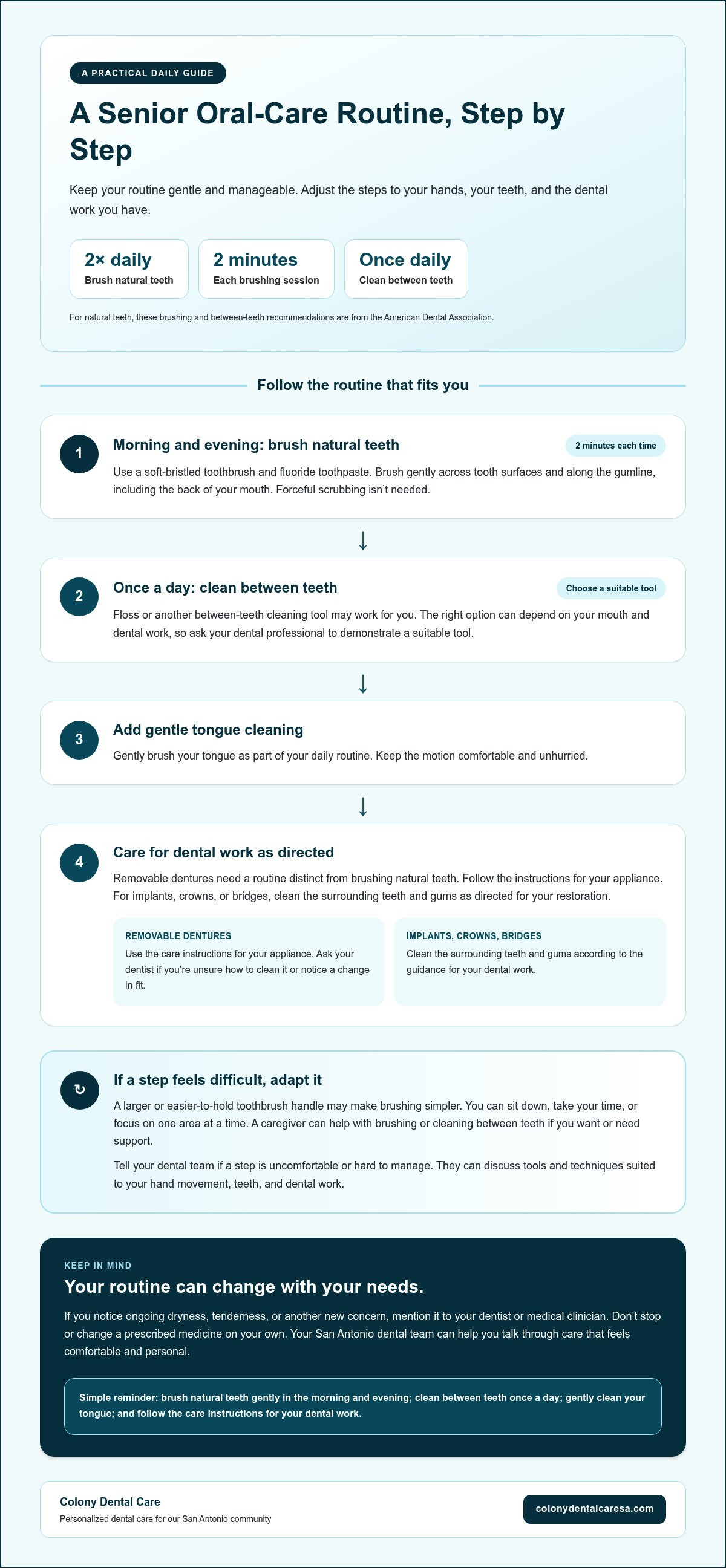
A steady routine can make daily care easier to remember. For natural teeth, the American Dental Association recommends brushing twice a day for two minutes with fluoride toothpaste and cleaning between teeth daily. Your abilities and dental work may affect how you follow these steps, so keep your routine gentle and ask your dental professional about adjustments. The ADA’s Aging and Dental Health resource offers more information about oral health needs that can arise with age.
Brushing and cleaning between teeth
Choose a soft-bristled toothbrush and fluoride toothpaste for natural teeth. Brush gently across the tooth surfaces and along the gumline, taking care to reach the back of your mouth. Forceful scrubbing isn’t needed. If holding a brush or reaching certain areas is challenging, ask your dental team about ways to make brushing more comfortable.
Clean between your teeth once a day where spaces allow. Floss or another tool for cleaning between teeth may suit you, but the best option can depend on your mouth and dental work. Your dental professional can demonstrate how to use an appropriate tool. You can also gently brush your tongue as part of your routine.
Caring for dentures, implants, and other dental work
Removable dentures need a care routine distinct from brushing natural teeth. Follow the instructions for your appliance, and ask your dentist if you’re unsure how to clean it or notice a change in fit. If you have implants, crowns, or bridges, clean the surrounding teeth and gums as directed for your restoration. For general questions about implant care, see our dental implants guide.
Save this simple reminder: In the morning and evening, brush natural teeth gently with fluoride toothpaste. Once a day, clean between teeth and gently clean your tongue. Care for removable dentures and fixed dental work according to the instructions for your appliance.
If you’d like help making your routine more comfortable or personal, our San Antonio dental team can talk through your oral care during a dental exam and cleaning.
When Oral Hygiene Feels Harder: Adapt Your Routine Without Giving Up
If brushing or cleaning between your teeth takes more effort than it used to, skipping the routine may seem tempting. Difficulty is a reason to adjust how you care for your mouth, not a sign that daily care no longer matters. A small change or a little support can help you keep going in a way that feels manageable.
If brushing or flossing is difficult
If gripping a toothbrush feels uncomfortable, consider whether a larger or easier-to-hold handle would make brushing simpler. You could also try sitting down, taking your time, or focusing on one area of your mouth at a time. These are ways to make the routine more manageable, not tests you need to pass perfectly.
A caregiver can help with brushing or cleaning between your teeth if you want or need support. Agree on the kind of help that feels comfortable, and let the person assisting you know if anything hurts or feels rushed. Your dentist can also discuss suitable tools and techniques for your hand movement, teeth, and dental work. Oral hygiene tips for seniors are most useful when they fit the person using them.
If your mouth feels dry or dentures feel uncomfortable
Dry mouth can have different causes, so it’s best not to guess what’s behind it or try to treat it on your own. If dryness continues, or you notice persistent soreness, tell your dental professional. Your medical clinician can also help consider whether your overall health or medicines may be relevant. Don’t stop or change a prescribed medicine without guidance from your healthcare team.
A denture that rubs, feels loose, or seems different from usual deserves attention, especially if it causes sore spots. You don’t need to tolerate ongoing discomfort. A dental professional can assess the fit and discuss care suited to your appliance.
A useful distinction: If the challenge is completing a familiar care step, a routine adjustment or assistance may help. If you have persistent dryness, soreness, bleeding, or a change in denture fit, seek personalized dental guidance rather than relying on a home adjustment alone. You deserve care that respects your comfort and abilities. Support from your dental and healthcare teams can help you find a practical path forward.
When Should Seniors Schedule a Dental Visit?
There isn’t one appointment schedule that suits every older adult. Your dentist can recommend visit timing based on your teeth, gums, dental work, and changing health needs. Regular exams and cleanings also give you a chance to discuss concerns before they interfere with eating, speaking, or your daily care routine.
A dental exam can assess your teeth, gums, and existing dental work, including dentures or implants. Keep a note of changes between visits so you can describe what’s new and when you noticed it. For a broader look at maintaining local dental care, read our San Antonio dentist care guide.
What to mention during a dental exam
Share anything that has changed, even if it seems small. Tell your dental team if brushing has become uncomfortable, chewing feels different, your mouth often feels dry, or a denture no longer fits as it used to. Mention relevant medicines or health changes, too. These details help guide a calm, personalized conversation about your care.
You can write down questions before your visit or bring someone you trust to help remember the answers. There’s no need to feel embarrassed about asking for an explanation or saying that a step is difficult. The goal is to understand what’s happening and discuss care that fits your needs and comfort.
Signs that deserve professional attention
Contact a dental professional for guidance if you have persistent pain, swelling, sores, bleeding gums, or a sudden change in your teeth, mouth, or dental work. These signs can have different causes and don’t automatically mean something serious is wrong. Still, personalized advice is more helpful than guessing or waiting through ongoing discomfort.
If a symptom is severe or changes suddenly, seek prompt professional evaluation. Describe what you’re experiencing and how it affects you, such as whether it makes eating or daily oral care difficult. Your dental team can help determine an appropriate next step.
- Bleeding gums or ongoing gum tenderness
- Persistent mouth soreness, pain, or dry-mouth discomfort
- A denture that feels loose, rubs, or has changed in fit
- A sudden change in your teeth, gums, or existing dental work
Good oral hygiene tips for seniors include knowing when a home routine isn’t enough. Colony Dental Care is part of the San Antonio community, and our team takes time to understand your concerns. Learn more about our dental exams and cleanings.
Make Your Senior Oral Hygiene Plan Personal and Sustainable
A useful plan is one you can follow most days, with support suited to your abilities and dental work. You don’t need to change everything at once. Start with the steps your dental professional recommends, then make one manageable adjustment that helps your routine feel more comfortable.
A simple plan you can follow or share with a caregiver
Use this short checklist to shape a routine for yourself or share it with someone who helps with your care:
- Choose a regular time and place. Pair oral care with a familiar part of your morning and evening routine.
- Keep supplies within comfortable reach. Arrange the items you need so you can begin without stretching or searching.
- Match care to your mouth. Follow guidance for your natural teeth, dentures, implants, or other dental work.
- Adapt as needed. If a step becomes difficult, consider what support might help and discuss suitable changes with your dental team.
- Save questions for your next visit. Note new discomfort, changes in fit, or anything that makes daily care harder.
If a caregiver assists, include them in the plan in a way that respects your preferences. Decide which steps you want help with, and let them know if you need more time or a gentler approach. Aim for steady, suitable care, not perfection. Trying one small adjustment at a time makes it easier to see what feels helpful.
Finding ongoing dental support in San Antonio
Regular dental exams and cleanings can complement your home routine. During visits, your dental team can assess your teeth, gums, and existing dental work, discuss concerns, and tailor guidance as your needs change. Keeping up with a dental home gives you a familiar place to bring questions over time.
Colony Dental Care has served the San Antonio community for over 30 years, and Dr. James David Oei brings more than 30 years of clinical experience. Our team welcomes your questions and focuses on personalized, comfortable care. If you’re ready to discuss exams and cleanings as part of your oral hygiene tips for seniors, schedule a visit with Colony Dental Care.
Keep Your Oral Care Routine Working for You
Your routine doesn’t have to be perfect to be worthwhile. The most helpful oral hygiene tips for seniors are the ones you can follow consistently, with adjustments for your comfort, abilities, and dental work. Choose a manageable daily routine, and seek dental guidance for ongoing dryness, soreness, bleeding, or changes in how dentures fit.
Regular dental exams and cleanings can help you keep up with changes in your teeth, gums, dentures, or implants. Colony Dental Care offers exams and cleanings, periodontal treatment, dentures, and implants in San Antonio. Our team brings over 30 years of clinical experience. We accept dental insurance and offer an in-house dental membership plan.
If you’re ready for personalized support, schedule a comfortable dental visit with Colony Dental Care. You deserve care that meets you where you are, and one small step can help you feel more confident about your oral health.
Frequently Asked Questions
How often should seniors brush their teeth?
Brush natural teeth twice a day for two minutes with fluoride toothpaste, unless your dental professional recommends a different approach for your needs. Use gentle strokes and reach the tooth surfaces along the gumline. If you have dentures, implants, crowns, or bridges, ask how to adapt your routine for your specific dental work. These oral hygiene tips for seniors can help you build a routine that feels clear and manageable.
Can seniors use an electric toothbrush if they have arthritis?
An electric toothbrush may be an option if arthritis makes brushing difficult, but comfort and ease of control matter. Some people find an easier-to-grip handle helpful; others prefer a manual brush. Choose an approach you can manage without pressing hard, and ask your dental professional to show you how to brush comfortably. If you want or need help, a caregiver can assist with your routine.
What should seniors do about dry mouth?
If your mouth often feels dry, tell your dentist or medical clinician, especially if the feeling persists or affects eating, speaking, or oral care. Dry mouth can have different causes, including health conditions or medicines, so avoid trying to diagnose it yourself. Share relevant medicines with your healthcare team, and don’t stop or change a prescription without their guidance. Your clinicians can discuss next steps based on your individual health needs.
How should seniors clean dentures every day?
Clean removable dentures daily according to the instructions for your appliance. Keep denture care separate from brushing any natural teeth, and gently clean your mouth as part of your routine. Recommendations can depend on the denture, so follow its care instructions. If you’re unsure how to care for it or notice a change in comfort or fit, ask your dental professional for guidance tailored to your appliance.
Do seniors still need dental checkups if they wear full dentures?
Dental visits can still be helpful if you wear full dentures. A dental professional can assess your mouth and check the condition and fit of your dentures, even when you no longer have natural teeth. If your dentures feel loose, rub, or make eating uncomfortable, mention it rather than trying to tolerate the problem. Your dentist can recommend visit timing based on your oral health, comfort, and individual needs.
What happens if an older adult has trouble flossing?
If flossing is difficult, you don’t have to manage it the same way as before or skip cleaning between teeth altogether. Ask your dental professional to suggest suitable tools and demonstrate a comfortable technique for your teeth and dental work. You can also discuss help from a caregiver if you want or need assistance. The right approach depends on your mouth and abilities, so personalized guidance can make daily care easier to maintain.
When should a senior call a dentist about bleeding gums?
Contact your dentist if your gums bleed repeatedly or the bleeding continues, especially if you also have soreness, swelling, or another change in your mouth. Bleeding can have different causes, so it doesn’t automatically mean a serious problem, but a dental professional can assess what’s happening. Share when you first noticed it and whether brushing or eating seems to trigger it. Seek prompt professional evaluation for severe symptoms or a sudden concerning change.