
Bleeding gums aren’t necessarily a reason to panic, but they aren’t something to ignore either. If you’re weighing gingivitis treatment at home vs dentist, it can be hard to know whether better brushing and flossing are enough, especially if you’re concerned about discomfort or cost.
Home care plays a real role: brushing gently and cleaning between your teeth each day can help control plaque, the sticky film that irritates gums. But it can’t remove tartar, hardened buildup that may need a professional cleaning. In this guide, you’ll learn what you can manage at home, which symptoms make a dental evaluation sensible, and what to expect from personalized gum care.
At Colony Dental Care, we approach gum concerns without judgment. Dr. James David Oei brings over 30 years of clinical experience to comfortable dental exams, cleanings, and periodontal disease treatment in San Antonio. Together, we can help you understand what your gums need and find a manageable path toward healthier oral care.
Key Takeaways
- Recognize common signs of gingivitis, including gums that look red, feel tender, or bleed during brushing.
- Build a steady home routine with gentle brushing and daily cleaning between your teeth to help manage plaque.
- Understand gingivitis treatment at home vs dentist, including what daily care can address and when professional assessment may help.
- Arrange a dental evaluation if gum changes persist, return, or worsen, even when you don’t have pain.
- Learn how an exam, cleaning, or personalized gum care plan at Colony Dental Care can support your needs in San Antonio.
What gingivitis looks like, and what home care can realistically do
Bleeding or tender gums can feel worrying, especially if you’re not sure what caused them. It isn’t a reason to blame yourself. Gum changes are a useful signal to pay attention to your oral health and, if they continue, get clear guidance.
Gingivitis is inflammation of the gums, often associated with plaque buildup along the gumline. Plaque is a sticky film of bacteria that forms on teeth. Consistent brushing and cleaning between your teeth can help control it, while a dental professional can assess your gums and explain what care may help. For a general overview of the condition and its relationship to more advanced gum disease, see Gingivitis.
Which signs can point to gingivitis?
Gums affected by gingivitis may look red or swollen, feel tender, or bleed when you brush or floss. Signs can be mild, come and go, or be easy to overlook. A small amount of blood doesn’t tell you exactly what’s happening, but it’s worth noticing. If gum symptoms persist, return, or concern you, an evaluation can help clarify what’s going on.
How is gingivitis different from more advanced gum disease?
Gingivitis affects the gum tissue, but those symptoms alone don’t mean you have periodontitis. Periodontitis is a more advanced form of gum disease that affects the tissues supporting your teeth. An exam helps assess your individual gum health; you can’t determine the full picture from symptoms alone.
That distinction matters when considering gingivitis treatment at home vs dentist. Home care may help improve early gum inflammation, but a dental professional can assess your gums and advise whether a cleaning or other care is appropriate. Gingivitis can often improve with consistent home care and professional guidance. If your gums bleed during brushing, don’t respond by avoiding the area. Gentle, regular cleaning helps you care for it while you monitor the change.
At-home gingivitis care: daily steps that help control plaque
A simple routine, repeated gently, is more useful than brushing hard or trying several remedies at once. Each day, clean the surfaces of your teeth and the spaces between them. This helps disrupt plaque before it builds up along the gumline.
How should you brush and clean between your teeth?
Hold your toothbrush gently and angle the bristles toward the gumline. Use small, careful movements rather than forceful scrubbing, which can irritate tender gums. Clean between your teeth daily with floss or another interdental cleaner that feels comfortable and works for your mouth. These spaces are easy for a toothbrush to miss.
If you’re unsure about your technique, ask your dental team to show you a comfortable way to reach the gumline and clean between your teeth. Follow the directions on any oral-care product you use. A routine you can keep up with is better than an overly forceful one.
Daily brushing and between-tooth cleaning help control plaque; a dental professional removes hardened tartar. Once plaque hardens into tartar, brushing and flossing at home can’t remove it. The American Dental Association’s patient resource on Gingivitis also explains why home hygiene and professional care both matter.
Can mouthwash or home remedies treat gingivitis?
Mouthwash may support your hygiene routine when used as directed, but it doesn’t replace brushing or cleaning between your teeth. Home remedies shouldn’t stand in for a dental evaluation or a professional cleaning when one is needed. If a product seems to irritate your mouth, or gum irritation continues, discuss it with your dental team rather than adding more products or scrubbing harder.
Think of home care as your daily way to manage plaque, not a substitute for assessing your gums or removing tartar. That’s the practical balance behind gingivitis treatment at home vs dentist: you maintain a gentle routine, while a dental professional can help identify what care fits your gum health. For support with your routine, Colony Dental Care’s dental cleanings are part of personalized care for the San Antonio community.
Home care vs. dentist treatment: what each can, and cannot, do
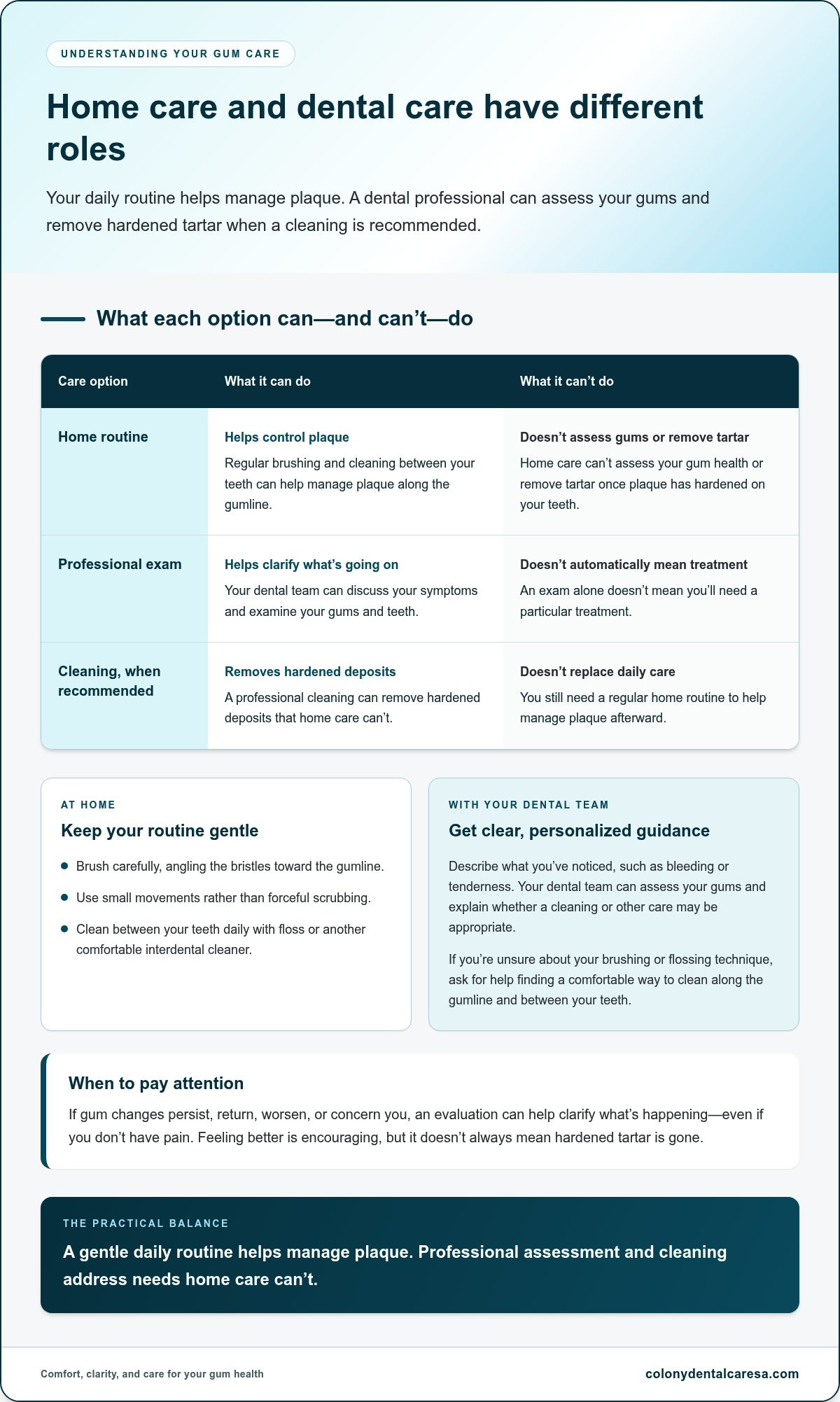
Home care and dental visits play different roles. Your daily routine helps manage plaque between appointments. An exam helps assess your gums and teeth, and a cleaning can remove hardened deposits that brushing and flossing can’t. Gingivitis treatment at home vs dentist isn’t an either-or choice: ongoing home care and professional assessment can work together.
| Care option | What it can do | What it can’t do |
|---|---|---|
| Home routine | Brushing and cleaning between teeth regularly can help control plaque. | It can’t assess your gum health or remove tartar that has hardened on teeth. |
| Professional exam | A dental team can discuss your symptoms and examine your gums and teeth. | An exam alone doesn’t mean you’ll need a particular treatment. |
| Cleaning, when recommended | A professional cleaning can remove hardened deposits that home care can’t. | It doesn’t replace the daily routine that helps manage plaque afterward. |
If bleeding or tenderness improves, that’s encouraging, but symptom relief doesn’t always mean every underlying concern has been addressed. Tartar may remain even when your gums feel better. A dental professional can help interpret changes and recommend care based on what they find. Mayo Clinic’s overview of professional gingivitis care also describes the distinct roles of dental treatment and home routines.
What happens during a dental evaluation for gum symptoms?
You can start by describing what you’ve noticed, such as bleeding, tenderness, or changes that come and go. The dental team examines your gums and teeth to understand your individual situation. Recommendations depend on those findings and your needs. An evaluation is a chance to get clear answers, not a reason for shame, and it doesn’t mean a specific procedure is automatically needed.
Will a professional cleaning hurt if your gums bleed?
Sensitive or inflamed gums may feel tender during care, and comfort can vary from person to person. Let your dental team know about your concerns before care begins. You can ask for guidance or a pause if you need one. At Colony Dental Care, we take a personalized, comfort-focused approach so your care can reflect your findings and concerns. Not every cleaning feels the same.
When to see a dentist for gingivitis symptoms in San Antonio
You don’t have to wait for gum pain to ask for advice. Bleeding, redness, swelling, or tenderness can be worth discussing even if you feel otherwise well. Arrange an evaluation if changes persist, return, worsen, or continue despite a consistent, gentle home-care routine. These signs don’t confirm a diagnosis on their own, but an exam can help clarify what’s happening.
Which gum changes should prompt an appointment?
Use this simple guide to decide on a next step:
- Bleeding that continues or keeps returning: Make a routine dental appointment to have your gums assessed.
- Ongoing redness, swelling, or tenderness: Arrange an evaluation, especially if these changes don’t settle with gentle daily care.
- Symptoms that worsen or concern you: Contact your dental team for guidance rather than trying to diagnose the cause yourself.
- A sudden or severe change: Seek prompt dental advice about what to do next.
No single symptom proves that you have gingivitis or more advanced gum disease. A dental professional can assess your gums and teeth and recommend care based on your individual findings. This is a practical part of understanding gingivitis treatment at home vs dentist: home care supports daily plaque control, while an exam helps determine whether further care is appropriate.
How can you prepare for a comfortable visit?
A little preparation can make it easier to explain what you’ve noticed. Note when the symptoms began, whether they come and go, and anything that seems to trigger or ease them. Bring questions about brushing, cleaning between your teeth, or your past dental care. Share relevant health changes and medications, too, since they can help your dental team understand your situation.
If you feel nervous, say so. At Colony Dental Care, we prioritize your comfort and clear explanations, and tailor care to your needs and findings. Dr. James David Oei brings over 30 years of clinical experience to the practice’s personalized approach. You deserve to be heard, not judged, when you ask about changes in your gums.
For a supportive evaluation of gum symptoms in San Antonio, schedule a dental exam with Colony Dental Care.
Gingivitis Care at Colony Dental Care in San Antonio
If gum changes have you unsure what to do next, a dental evaluation can give you a clearer picture. At Colony Dental Care, your exam and any recommended cleaning are guided by your gum health, concerns, and comfort. You don’t need to arrive with a diagnosis or a perfect home-care routine. The visit is a chance to talk through what you’ve noticed and understand your options.
What can you expect from a personalized gum-care plan?
Recommendations come after your gums and teeth are assessed, not from a one-size-fits-all checklist. Depending on the findings, the next step may be guidance for your home routine, a professional cleaning, or discussion of other care. Colony Dental Care provides periodontal disease treatment, but that doesn’t mean every person with bleeding gums needs it.
Home care and in-office care can support each other. Your daily routine helps manage plaque, while an exam helps the dental team assess your gums and identify whether professional care is appropriate. We explain what we find and why we recommend a next step, so you can make informed decisions without feeling rushed. If you have questions about insurance or feel nervous about dental care, bring those concerns into the conversation. Our team accepts dental insurance and can discuss your questions clearly.
How to take your next step in San Antonio
Persistent or recurring gum symptoms are a sensible reason to arrange an evaluation, even if they aren’t painful. A dental cleaning and exam can help you understand your gum health and what to focus on at home. Dr. James David Oei brings over 30 years of clinical experience to Colony Dental Care, serving the San Antonio community with a gentle, personalized approach.
Understanding gingivitis treatment at home vs dentist means knowing that you have a role in daily care, and you don’t have to figure out every gum change on your own. We’ll listen to your concerns, explain the findings, and talk through suitable options with your comfort in mind.
Schedule a comfortable dental visit at Colony Dental Care to discuss your gums and find a manageable next step.
Take a Comfortable Next Step for Your Gum Health
Daily brushing and cleaning between your teeth help manage plaque, but they can’t remove hardened tartar. Even if bleeding or tenderness improves, an exam can help assess your gum health and whether a cleaning or other care may be appropriate. That’s the key to understanding gingivitis treatment at home vs dentist: home care and professional guidance have different, complementary roles.
At Colony Dental Care in San Antonio, Dr. James David Oei brings over 30 years of clinical experience to dental cleanings, exams, and periodontal disease treatment. Your care can be guided by your findings, comfort, and questions. The practice accepts dental insurance, and the team can discuss your concerns clearly.
If gum symptoms persist or return, you don’t have to figure them out alone. Schedule a comfortable dental visit and take a calm, informed step toward healthier gums.
Frequently Asked Questions
Can gingivitis go away with treatment at home?
Early gingivitis can improve with consistent, gentle brushing and daily cleaning between your teeth. These steps help control plaque, a common source of gum irritation. Home care can’t remove tartar once plaque hardens, though, and symptoms alone can’t show the full state of your gum health. If bleeding or tenderness persists, returns, or worsens, arrange an evaluation to learn whether a professional cleaning or other care is appropriate.
Is a dental cleaning necessary if my gums bleed?
Not every instance of bleeding automatically means you need a cleaning, but recurring or ongoing bleeding is a sensible reason to have your gums assessed. A dental exam can help identify what may be contributing to the change. If hardened tartar is present, brushing and flossing can’t remove it, and a professional cleaning may be recommended. Your dentist can explain what they find and whether cleaning is right for you.
How long does it take for gingivitis to improve at home?
There isn’t one timeline that applies to everyone. Improvement depends on your gum health, how consistently you clean your teeth, and whether hardened deposits or another concern is present. Keep brushing gently and cleaning between your teeth rather than scrubbing harder. If symptoms don’t improve, keep returning, or get worse, arrange a dental evaluation. A dentist can assess your gums and help you understand a suitable next step.
Can brushing alone treat gingivitis?
Brushing helps remove plaque from tooth surfaces, but brushing alone may miss areas between your teeth. Clean between your teeth daily with floss or another suitable interdental cleaner, using a gentle technique. This routine helps manage plaque but can’t remove tartar that has hardened on teeth. For gingivitis treatment at home vs dentist, think of daily cleaning as ongoing care and a dental exam as a way to assess your gum health.
What happens if gingivitis is left untreated?
If gum inflammation continues without effective care, it may progress to periodontitis, a more advanced form of gum disease that can damage the tissues and bone supporting your teeth. Gingivitis symptoms don’t tell you on their own whether this has happened. Consistent home care and professional assessment can help address gum concerns. If bleeding, redness, swelling, or tenderness persists or returns, a dental evaluation can clarify your individual situation.
Is gingivitis treatment at the dentist painful?
Comfort varies, especially if your gums are sensitive or inflamed, so no one can promise that care will feel the same for everyone. Tell your dental team about tenderness or anxiety before treatment, and speak up if you need guidance or a pause. At Colony Dental Care in San Antonio, the team can explain recommendations and tailor care to your needs. Dr. James David Oei brings over 30 years of clinical experience.

