What if your daily habit of brushing is actually introducing more bacteria into your mouth than it’s removing? It’s a common concern we hear from our neighbors here in San Antonio, especially when life gets busy and that small task slips your mind. You might feel a bit of guilt looking at frayed bristles or worry about the environmental waste of frequent replacements. You aren’t alone in wondering, How Often Should You Replace Your Toothbrush? to keep your smile truly healthy. We understand that you want to protect your investment in dental crowns or fillings while maintaining a vibrant, clean feel every single morning.
We’re here to provide the peace of mind you deserve with a clear, easy to follow schedule. In this 2026 guide, you’ll discover the clinical reasons why the American Dental Association recommends a fresh start every three to four months. We’ll also show you how to care for high tech electric brush heads; studies show these can reduce plaque by 21% more than manual options. By the end of this article, you’ll have a simple plan to ensure your oral health routine is as effective and sustainable as possible, supporting your total well being for years to come.
Key Takeaways
- Learn why the 90-day clinical threshold is vital for your health and get a clear answer to How Often Should You Replace Your Toothbrush? to keep your smile bright.
- Identify the immediate warning signs, such as splayed bristles or recovering from an illness, that require an instant brush reset to prevent bacterial buildup.
- Explore the differences in wear between manual and electric brush heads so you can maintain your routine effectively without unnecessary environmental waste.
- Discover how a fresh, gentle brush preserves the integrity of your dental crowns, implants, and Invisalign clear aligners for a lifetime of comfort.
- Understand the essential link between your daily hygiene habits and professional dental cleanings to ensure your oral health partnership stays strong.
The Golden Rule: Why 3-4 Months is the Standard for Toothbrush Replacement
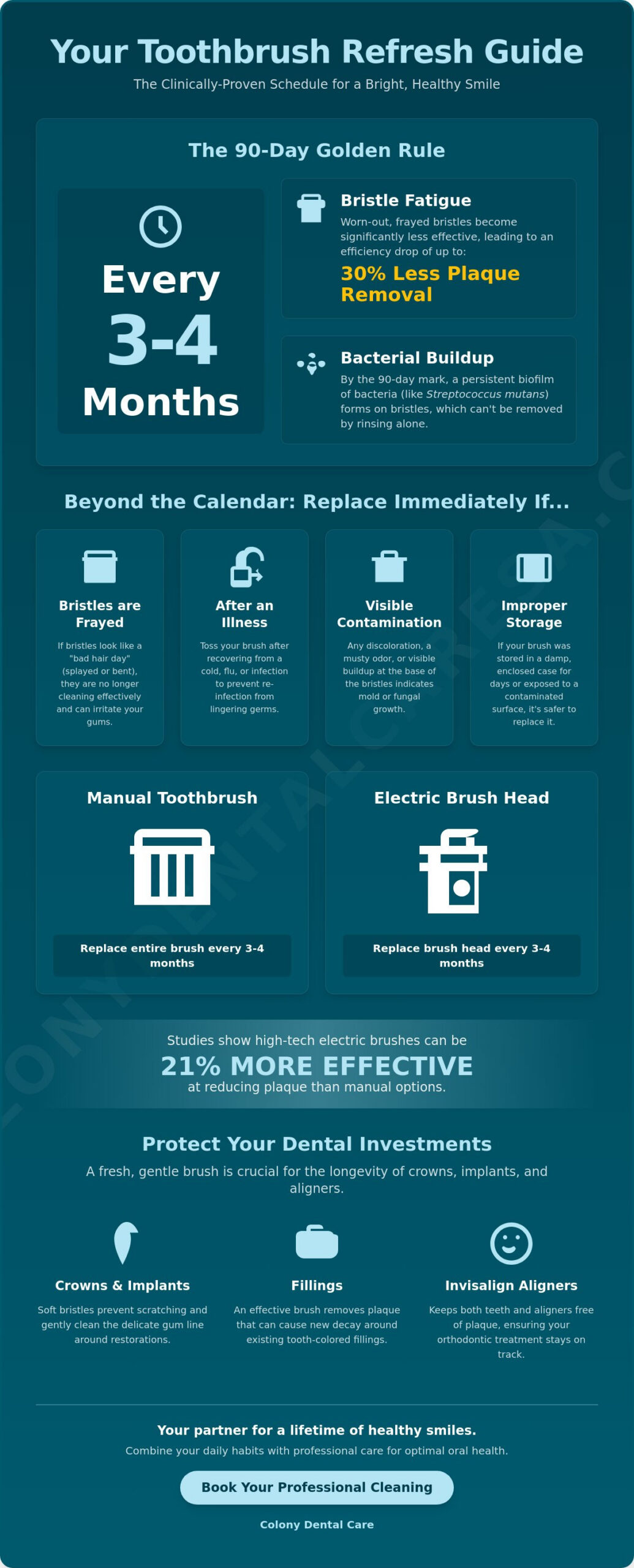
The American Dental Association recommends a change every three to four months. This isn’t just a suggestion; it’s a standard based on how materials behave in your mouth. When we talk to our neighbors about How Often Should You Replace Your Toothbrush?, we focus on the integrity of the tool. After about 90 days, nylon bristles reach a clinical threshold where they simply can’t do their job. Research suggests that “bristle fatigue” can reduce plaque removal efficiency by up to 30%. This means even if you’re brushing for the full two minutes, you’re leaving behind a significant amount of debris that can lead to cavities or the need for tooth-colored fillings. Beyond just being less effective, worn out bristles often become jagged. These sharp edges can cause accidental micro-trauma to your delicate gum tissue, leading to sensitivity and recession that we want to help you avoid.
Understanding the history and types of toothbrushes helps us see how far oral care has come, but even the most advanced modern designs are subject to the laws of physics and friction. We want you to feel confident that every minute you spend on your oral hygiene is working in your favor.
The Science of Frayed Bristles
As you use your brush, the bristles undergo constant stress. Over time, they develop microscopic abrasions. These tiny cracks act as perfect hiding spots for plaque and food particles. You’ll also notice the bristles lose their “rebound,” which is their ability to snap back into place. Without this flexibility, they can’t effectively reach into the tight spaces between your teeth or under the gumline. Mechanical wear is the primary reason for replacement. When you see those bristles splaying outward, it’s a clear sign they’re no longer protecting your smile.
The 90-Day Bacterial Threshold
Your mouth is home to a complex ecosystem, including microbes like Streptococcus mutans. While most are harmless, some can colonize your toothbrush head. By the 90-day mark, a persistent biofilm often forms on the base of the bristles. Simply rinsing your brush under the tap isn’t enough to break down this long-term buildup. We believe in the power of a “fresh start” for your oral microbiome every quarter. Replacing your brush regularly ensures you aren’t re-introducing old bacteria into your mouth during your morning routine. This simple habit supports your overall systemic health and keeps your breath smelling wonderful. It’s a small step that makes a big difference in how your mouth feels every day.
Beyond the Calendar: 5 Signs You Need a New Brush Immediately
Sometimes the calendar isn’t the best judge of when to move on. While we’ve discussed the general timeline for How Often Should You Replace Your Toothbrush?, your daily environment and health play huge roles. There are five clear signals that you need a replacement right now. First, look for splayed bristles. If they look like a “bad hair day,” they’re missing plaque and potentially irritating your gums. Second, check for discoloration or a musty odor near the base; these are signs of mold or fungal growth. Third, think about your recent travels. If your brush spent days in a damp plastic case or sat on a public counter, it’s likely contaminated. The final two signs involve your health and your home’s humidity, which we’ll look at more closely below.
We want you to feel confident in your home care routine. If you’re ever unsure about your oral health or just need a professional check-in, our team at Colony Dental Care is always here to help you stay on track with a gentle, personalized touch.
The Post-Illness Refresh
When you’ve finally kicked a cold or the flu, the last thing you want is a reminder of that illness in your bathroom. Viral and bacterial remnants can linger in the damp crevices of your brush head long after you feel better. We always recommend tossing your brush as soon as you recover. For families, this is even more critical. If one person in the house gets sick, we suggest replacing everyone’s toothbrushes to prevent germs from jumping between brushes in a shared holder. It’s a small clinical reset that offers a wonderful psychological boost, helping you feel truly clean as you move forward.
San Antonio Storage: Humidity and Hygiene
Living in South Texas means dealing with high humidity that can keep your bathroom damp for hours. This moisture prevents your brush from air-drying properly between uses. According to the American Dental Association guidelines, brushes should be stored upright and allowed to air-dry. In our local climate, you might need to be extra diligent. Try to keep your brush as far from the sink and toilet as possible. Storing your brush in a well-ventilated area, away from the moisture of the shower, ensures your routine stays hygienic. This simple step protects your systemic health and keeps your smile feeling fresh every single day.
Manual vs. Electric: Comparing Replacement Schedules and Costs
Many of our neighbors ask if investing in a high tech electric model means they can wait longer between changes. It’s a natural question; we often assume that premium technology offers a longer lifespan. However, the short answer is no. Even with the most advanced power handles, the question of How Often Should You Replace Your Toothbrush? remains anchored to the same three month standard. In fact, because electric brush heads often operate at thousands of strokes per minute, the nylon bristles can actually experience more rapid mechanical stress than those on a manual brush. While the global electric toothbrush market is projected to reach $4.8 billion in 2026, the clinical reality of bristle wear stays the same regardless of the price point.
Choosing between manual and electric often comes down to your personal comfort and goals. A standard manual brush typically costs between $2 and $8, making it a very affordable way to protect your oral health. On the other hand, replacement heads for electric models can cost between $10 and $45 per pack. While the annual cost is higher, the investment often pays for itself in prevention. Studies have shown that electric toothbrushes can reduce plaque by 21% more than manual brushes after just three months of use. This extra cleaning power helps ensure your professional dental work, like crowns and bridges, stays in beautiful condition for a lifetime.
Managing Electric Brush Heads
Electric brushes use high RPM oscillating heads or sonic vibrations to break up biofilm. This intense movement is wonderful for your teeth, but it leads to faster bristle degradation. Most modern heads include “fading” indicator bristles that turn from blue to white as they wear down. We encourage you to use these as a helpful visual guide rather than waiting until the bristles are completely flat. Replacing the head as soon as the color fades ensures you’re always getting that 21% boost in plaque removal efficiency that makes electric models so effective.
The Benefit of Pressure Sensors
One of the best features of modern electric brushes is the built in pressure sensor. Many of us accidentally brush too hard, which can wear down enamel and fray bristles prematurely. These sensors provide a gentle alert to let you know when to lighten your touch. Pressure sensors protect both your gums and your bristles by ensuring you use the optimal amount of force. By following these technological cues, you can maximize the life of your brush head while keeping your smile comfortable and safe. We’ve found that patients who use these features often have much healthier gum tissue during their regular dental cleanings and exams.
Protecting Your Investment: Brush Care for Crowns, Implants, and Invisalign
When you decide to enhance your smile, you’re making a lifelong investment in your confidence and daily comfort. We often see patients who are incredibly diligent about their hygiene but forget that the quality of their tools matters just as much as their technique. How Often Should You Replace Your Toothbrush? becomes a critical question when you have porcelain restorations or specialized orthodontic appliances. Degraded bristles don’t just miss plaque; they can actually lose the soft, rounded tips that protect your dental work from micro-scratches. Using a fresh brush ensures that your dental work stays as vibrant and healthy as the day it was placed.
We want to help you protect every detail of your beautiful smile through every stage of your health journey. If you’re ready for a personalized check-up to ensure your restorations are in top shape, schedule your visit with Colony Dental Care today.
Gentle Care for Restorative Work
A fresh, soft-bristled brush is absolutely essential for maintaining a dental implant. As bristles age, they become stiff and jagged, which can irritate the delicate gum tissue surrounding the implant site. We also emphasize this for our neighbors who have received cosmetic dentistry like veneers or crowns. To keep the polished luster of your porcelain, you should avoid “medium” or “hard” bristles entirely. These abrasive textures can create microscopic scratches over time, dulling your smile’s natural glow and making it easier for stains to stick. For those extra tight spaces around bridges, interdental brushes are wonderful additions. However, these small tools wear out much faster than standard brushes. Most people need to swap their interdental tips every 7 to 14 days to ensure they remain effective and hygienic.
Brushing with Invisalign
If you’re currently using Invisalign, your brushing frequency has likely tripled. Because you’re brushing after every meal and snack to keep your aligners clean, your toothbrush is working much harder than it used to. This increased use means the answer to How Often Should You Replace Your Toothbrush? might be closer to every two months rather than three. Fresh, flexible bristles are much better at cleaning around the small composite buttons or attachments on your teeth without fraying. This prevents bacteria from getting trapped under your clear aligners, which is the best way to protect your enamel from decay during your orthodontic treatment. Keeping a fresh brush in your travel kit ensures you’re always providing the best care for your teeth, no matter where your day takes you.
From Daily Brushing to Professional Care: Your San Antonio Dental Partners
Our team at Colony Dental Care believes that every individual deserves a customized path to wellness. We don’t just look at teeth; we look at the person behind the smile. By combining your consistent home care with our clinical expertise, we can catch small issues before they become uncomfortable or expensive concerns. It’s about creating a foundation of stability and reliability that lets you smile with total confidence every single day.
Why Home Care is Only Half the Battle
There is a vital difference between the soft, sticky plaque you brush away and the hard, calcified substance known as tartar or calculus. Once plaque mineralizes into tartar, no amount of brushing, even with a brand new toothbrush, will remove it. This is where a professional dental cleaning becomes essential. Our skilled hygienists use specialized tools to gently clear away these deposits from under the gum line and between tight spaces. This process doesn’t just make your teeth feel smooth; it protects you from periodontal disease and supports your overall systemic health. A professional exam in our welcoming office provides the peace of mind that comes from knowing every detail of your oral health is being monitored with a caring, expert eye.
Your San Antonio Home for Gentle Dentistry
At Colony Dental Care, Dr. James David Oei and our dedicated team bring 30 years of expertise to our San Antonio neighbors. We’ve built our practice on the values of thoroughness and individualization, ensuring you never feel like just another appointment. We understand that visiting the dentist can sometimes feel overwhelming, so we’ve designed an experience that prioritizes your comfort and peace of mind above all else. Whether you’re coming in for a routine exam or need to discuss tooth-colored fillings or Invisalign, you’ll find a supportive environment where you’re truly heard.
We also believe that high quality preventative care should be accessible to everyone in our community. That’s why we offer an in-house membership plan designed to make regular visits affordable and stress-free. This plan helps you stay on track with the professional cleanings and exams that complement your daily brushing routine. We invite you to join our dental family and experience a partnership that values your long-term health and community roots. Schedule your next visit with us today to ensure your home routine is supported by the very best in clinical prevention.
A Fresh Start for Your Healthiest Smile
Taking control of your oral health starts with the small, daily decisions you make at your bathroom sink. You now have a clear, reliable answer for How Often Should You Replace Your Toothbrush? whether you prefer a classic manual brush or a modern electric model. By refreshing your tools every three to four months and staying alert for signs of wear or recent illness, you protect your systemic well being and your beautiful dental work. We’re here to ensure that your dedicated home care is supported by the very best in clinical prevention.
Dr. James David Oei and our team bring over 30 years of San Antonio dental expertise to our neighborhood, providing the compassionate, anxiety-free care you deserve. Even if you don’t have insurance, our affordable in-house dental membership makes regular preventative visits simple and stress-free for your family. We invite you to experience a partnership that values your comfort and long term health above all else. Schedule Your Professional Cleaning at Colony Dental Care Today and let’s keep your smile vibrant together.
Frequently Asked Questions
How often should I change my toothbrush after being sick?
You should replace your toothbrush immediately after you recover from a cold, flu, or viral infection. Even though your body has built up antibodies, bacteria and viral remnants can linger in the damp bristles and potentially lead to reinfection or prolong your recovery. We recommend keeping a few spare brushes on hand so you can make a fresh start the moment you feel better.
Is it okay to use a toothbrush for 6 months if the bristles look fine?
It is best to stick to the three to four month replacement schedule even if the bristles still look straight. Over time, the nylon develops microscopic abrasions that harbor bacteria and plaque that you cannot see with the naked eye. By six months, the material has lost the flexibility needed to clean effectively under your gum line, which is why How Often Should You Replace Your Toothbrush? is such a vital question for preventative care.
Can a dirty toothbrush cause a sore throat or infection?
A brush that has been used too long or stored improperly can host colonies of oral microbes like Streptococcus mutans. These bacteria can contribute to gum inflammation, oral infections, and even persistent sore throats if the brush is re-introducing germs into your system daily. Replacing your brush regularly ensures you aren’t fighting an uphill battle against the very tool meant to keep you healthy and comfortable.
What is the best way to disinfect a toothbrush between uses?
Thoroughly rinsing your brush with warm tap water and letting it air-dry upright is the most effective method for daily care. Simply rinse it to remove all toothpaste and debris, then place it in a holder where it can dry completely without touching other brushes. We suggest avoiding closed covers or travel cases for daily use, as these trap moisture and encourage the growth of mold in our humid South Texas climate.
Should I replace my toothbrush head more often if I have braces?
Yes, patients with braces often find they need a new brush every six to eight weeks. Metal brackets and wires are naturally abrasive and can shred nylon bristles much faster than smooth tooth surfaces. If you notice your bristles look matted or frayed before the three month mark, it’s a clear sign that the brush is no longer cleaning effectively around your orthodontic work.
Is it better to use a manual or electric toothbrush for gum health?
Both can be effective, but electric brushes often provide superior results for gum health. Studies have shown that electric toothbrushes can reduce plaque by 21% and gingivitis by 11% more than manual brushes after three months of use. The consistent motion and built-in pressure sensors prevent you from scrubbing too hard, which protects your delicate gum tissue from recession and sensitivity.
How do I know if I am brushing too hard and ruining my bristles?
If your bristles splay outward within a few weeks, you are likely applying too much pressure. Take a close look at your brush after one month; if the bristles are already flattened or pointing in different directions, you’re scrubbing with too much force. This habit can wear down your protective enamel and cause gum sensitivity, so try using a lighter touch or a brush with a pressure sensor.
Does San Antonio hard water affect how often I should replace my brush?
Our local hard water in San Antonio contains minerals like calcium that can accumulate at the base of your bristles as the water evaporates. While this doesn’t necessarily make the brush less hygienic, it can make the bristles feel stiff or “crusty” over time. If you notice a white, chalky residue that doesn’t rinse away, it’s a good time for a fresh start to ensure your brushing experience stays gentle and effective.