What if that persistent, throbbing ache in your jaw is actually a signal that your body needs help beyond just a simple filling? We know how overwhelming it feels to balance dental anxiety with the fear of a medical emergency, especially since it’s projected that 1 in 4 adults in the U.S. will have untreated cavities by 2026. It’s completely natural to feel confused when you’re trying to figure out What Happens If a Tooth Infection Spreads? and whether your symptoms require urgent attention. You aren’t just a case to us; you’re a neighbor who deserves to feel safe and comfortable in your own health.
The good news is that even the most stubborn infections are fixable when we catch them early. We’ve put together this guide to help you understand the serious risks of untreated abscesses and, more importantly, how to spot the warning signs before they impact your overall wellbeing. We’ll provide a clear checklist of red-flag symptoms and explain how common treatments like root canal therapy or gentle extractions can restore your vitality. By the end of this article, you’ll have a step-by-step plan to regain your peace of mind and protect your smile.
Key Takeaways
- Understand why a tooth abscess cannot heal on its own and why your immune system needs professional help to reach the source of the infection.
- Learn exactly What Happens If a Tooth Infection Spreads? from the tooth root into the jawbone or bloodstream and how to prevent these systemic risks.
- Discover the specific “red flag” symptoms, such as persistent fever and facial swelling, that indicate it’s time to seek immediate dental attention.
- Find out why antibiotics alone are not a permanent solution and how treatments like root canal therapy or gentle extractions clear the way for healing.
- Explore how our compassionate team in San Antonio uses decades of experience to provide a calm, reassuring environment during emergency care.
What is a Tooth Abscess and Why Doesn’t It Heal on Its Own?
A Dental abscess is essentially a localized collection of bacteria and pus that forms a pocket near the root of a tooth or within the gum tissue. We often describe it to our patients as a hidden “fire” trapped inside a hard structure. While your body is usually excellent at fighting off germs in your skin or muscles, the inside of a tooth presents a unique challenge. The inner pulp chamber has very limited blood flow compared to other parts of your body. This lack of circulation means your white blood cells, which act as your body’s natural defense force, simply cannot reach the infection to neutralize it.
Because the infection is physically shielded by the hard enamel and dentin of the tooth, it remains protected from your immune system. At first, the infection is considered “localized,” meaning it is confined to a small area. However, bacteria are resilient and will eventually seek a way out of that confined space. This is when we begin to discuss What Happens If a Tooth Infection Spreads? and how it can move from a single tooth into the surrounding bone and soft tissues of your face.
Common Causes of Dental Abscesses
Bacteria are opportunistic. They look for any tiny opening to enter the sensitive inner layers of your smile. We typically see abscesses develop from three main sources:
- Deep-seated decay: When a cavity goes untreated, it eventually eats through the protective layers of the tooth and infects the pulp.
- Physical trauma: A crack or chip from a sports injury or an accidental fall provides a direct doorway for bacteria to enter.
- Advanced gum disease: Periodontitis can cause the gums to pull away from the tooth, creating deep pockets where infection can reach the supporting bone.
The Myth of the ‘Self-Healing’ Toothache
One of the most common misconceptions we hear is the idea that if a toothache stops hurting, the problem is gone. We want you to know that this is often a sign the infection has progressed. When the bacteria destroy the nerve inside your tooth, the pain signals stop, but the infection itself is still very much alive. In fact, bacteria continue to multiply even in the absence of acute pain.
Without professional intervention, such as root canal therapy, the infection will inevitably find a path out of the tooth. Understanding What Happens If a Tooth Infection Spreads? is vital because the “quiet” phase of an infection is often when it begins to move toward your jawbone or bloodstream. We are here to help you address these issues early, ensuring your comfort and long term health are protected through gentle, thorough care.
The Domino Effect: How an Oral Infection Reaches Your Body
Think of your mouth not as an isolated destination, but as a gateway to the rest of your body. When an infection stays localized within a tooth, it’s a dental problem. However, once that bacteria breaks through the hard barriers of the tooth, it begins a “domino effect” that can touch various systems. The first stop is often the surrounding jawbone. This condition, known as osteomyelitis, occurs when bacteria invade the bone tissue, potentially causing significant weakness and pain in the jaw area. We want to help you catch these issues long before they reach this stage.
The journey doesn’t always stop at the bone. As the infection progresses, bacteria can find their way into tiny, damaged blood vessels near the root of the tooth. Once in the bloodstream, this state is called bacteremia. From here, the bacteria have a “passport” to travel anywhere the blood flows. Understanding What Happens If a Tooth Infection Spreads? is about recognizing that your oral health is deeply connected to your vital organs. The Mayo Clinic notes that complications of a tooth abscess can become systemic if the source of the infection isn’t professionally removed.
Impact on Cardiovascular and Respiratory Health
When oral bacteria enter the bloodstream, they can settle on the inner lining of the heart or its valves. Endocarditis is a rare but serious heart complication from oral bacteria. This inflammation can cause lasting damage if not addressed quickly. Additionally, there is a strong link between your mouth and your lungs. If you accidentally inhale bacteria from a severe dental infection, it can increase the risk of developing respiratory issues like pneumonia. Maintaining a healthy mouth is a vital part of protecting your heart and your ability to breathe easily.
Ludwig’s Angina and Airway Safety
In some cases, a spreading infection can lead to a condition called Ludwig’s Angina. This is a rapid, aggressive infection that affects the floor of the mouth, usually under the tongue. It’s particularly concerning because it can cause the tongue and neck to swell significantly. If this swelling becomes severe, it can actually obstruct the airway and make breathing difficult. We encourage you to monitor for signs like neck tenderness, difficulty swallowing, or a change in your voice. These are signals that the infection is moving and requires immediate attention.
While these risks are serious, we want to reassure you that they are also entirely preventable. Modern dentistry is incredibly effective at stopping an infection in its tracks before it ever leaves the tooth. If you’ve been feeling a persistent ache or notice any unusual swelling, scheduling a comprehensive dental exam is the kindest thing you can do for your overall health. We’re here to guide you through the process with a gentle touch and expert care.
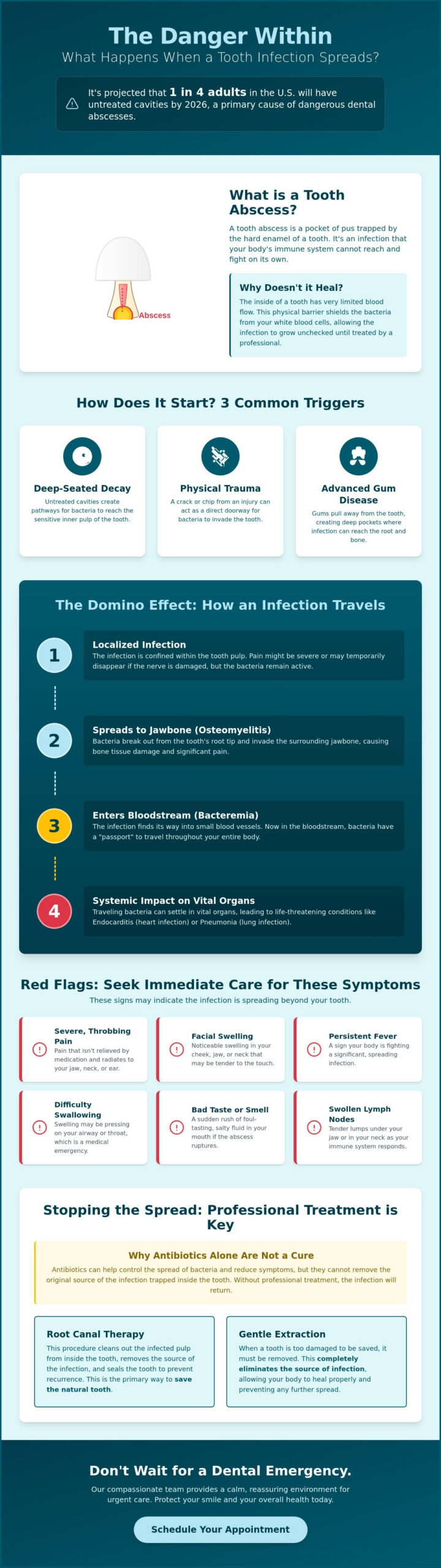
10 Red Flag Symptoms That Your Tooth Infection Has Spread
Recognizing the shift from a localized ache to a systemic concern is the most important step in your recovery journey. When we discuss What Happens If a Tooth Infection Spreads?, we’re looking for clear signals that the bacteria have moved beyond the tooth’s root and into the rest of your body. Clinical research on the dangers of untreated dental infections highlights that these “red flags” are your body’s way of asking for immediate, professional support. We want you to feel empowered to recognize these signs so you can act with confidence and peace of mind.
If your toothache is no longer just “in your tooth,” you might notice several of the following symptoms appearing at once:
- Persistent, high fever: A temperature above 101°F or recurring chills usually means your immune system is working overtime to fight a widespread infection.
- Visible facial swelling: New or worsening swelling in the cheeks, neck, or under the jawline suggests the infection is moving through soft tissues.
- Pounding headache and dizziness: Bacteria in the bloodstream can cause a heavy, rhythmic headache or a sense of lightheadedness.
- Dehydration: A dry mouth and a noticeable decrease in how often you urinate are signs your body is struggling to stay balanced.
- Rapid vitals: An unusually fast heart rate or shallow, quick breathing are significant indicators that the infection is impacting your systemic health.
Neurological and Systemic Warning Signs
Sometimes the signs are more subtle but equally vital to your well-being. You might experience confusion, disorientation, or extreme fatigue, which are often early indicators of sepsis. If you notice double vision, drooping eyelids, or a painful, swollen tongue, these suggest the infection may be moving toward the sinuses or brain. Difficulty opening your mouth, a condition called trismus, is another sign that the muscles and tissues in your jaw are under significant stress. We take these symptoms seriously because your total health is our priority.
When to Visit the ER vs. an Emergency Dentist
Deciding where to go during a crisis is stressful. If you’re experiencing difficulty breathing, trouble swallowing, or extreme facial swelling that makes it hard to see, please go to the nearest emergency room immediately. These are medical emergencies that require hospital-level stabilization. For severe localized pain, gum boils, or minor facial swelling, contacting an emergency dentist in San Antonio is your best path to rapid relief. We can treat the underlying cause through root canal therapy or a gentle extraction, stopping the problem where it started and helping you get back to your normal, healthy self.
Professional Treatment: Beyond Just Antibiotics
Many of our neighbors ask us if they can simply take a “Z-pack” or a round of amoxicillin and be done with their dental pain. We completely understand why that sounds like an easier path; it feels less invasive than a dental procedure. However, it’s vital to realize that while antibiotics are excellent for clearing bacteria out of your bloodstream, they cannot travel into the center of a dead or dying tooth. Think of a tooth like a hollow fortress. Once the blood flow inside the pulp chamber stops, the medicine has no way to reach the bacteria hiding inside that space.
This is a core reason why understanding What Happens If a Tooth Infection Spreads? is so important. If you only treat the symptoms with antibiotics, you leave the bacterial “reservoir” untouched. As soon as the medication leaves your system, the infection can flare up again or continue moving quietly into your jaw. Our approach is to remove that reservoir entirely, ensuring the infection is gone for good. We use a gentle dentistry perspective to prioritize your comfort, making sure you feel safe and relaxed throughout the entire process.
Root Canal Therapy: Saving the Natural Tooth
Whenever possible, we want to help you keep your natural smile. Root canal therapy is a routine and highly effective way to do just that. During the visit, we carefully clean out the infected interior canals and seal them to prevent any future bacterial growth. Thanks to modern technology and our focus on ease of experience, most patients find this process no more stressful than getting a standard filling. By saving the tooth, you maintain your natural jawbone structure and keep your smile looking and feeling its best.
Tooth Extraction: A Fresh Start for Your Health
In cases where an infection is too severe to save the tooth, a tooth extraction is often the kindest choice for your long term health. Removing the source of the infection provides immediate relief and prevents further systemic risks. We prioritize your peace of mind during this process, ensuring you are comfortable every step of the way. Once the area has healed, we can discuss restorative options like dental implants to fill the gap and restore your confidence.
If you’re experiencing persistent pain or swelling, we encourage you to reach out to us. Scheduling emergency dental care is the most effective way to stop an infection before it impacts your overall well-being. We are here to partner with you and guide you back to health with a steady, compassionate hand.
Compassionate Emergency Care at Colony Dental Care
We understand that the thought of a dental emergency can feel like a heavy weight on your shoulders. For over 30 years, Dr. James David Oei has been a trusted advisor in the San Antonio community, helping neighbors navigate these exact moments with a steady hand and a kind heart. Our goal isn’t just to fix a tooth; it’s to restore your peace of mind and ensure your total systemic health is protected. If you’re worried about What Happens If a Tooth Infection Spreads?, you don’t have to carry that anxiety alone. We’ve designed our practice to be a haven for those who may feel nervous about the dentist, prioritizing your comfort from the moment you walk through our doors.
Our team specializes in alleviating dental phobia by pairing clinical expertise with a deeply compassionate feel. We know that physical pain is often accompanied by emotional stress, especially when you’re unsure if a toothache has become something more serious. Dr. Oei personally reviews each emergency case to ensure your safety and to determine the most effective, gentle path forward. Whether you need root canal therapy to save a natural tooth or a comfortable extraction to remove a source of infection, we treat you as an individual with unique needs rather than just another case on the schedule.
A Neighborly Approach to Dental Crises
When you visit us, you’ll find an environment that feels more like a neighbor’s home than a clinical office. We believe that a warm, welcoming atmosphere is the first step in the healing process. By focusing on personalized care, we can tailor our treatments to your specific health history and comfort level. Dr. Oei’s three decades of experience allow him to handle complex situations with professional confidence, giving you the safety you deserve while managing What Happens If a Tooth Infection Spreads? in a timely, methodical way. This unhurried approach ensures that every question you have is answered and every concern is heard.
Next Steps: Reclaiming Your Oral Health
We also believe that quality care should be accessible to everyone in our community, regardless of their current situation. If you don’t have insurance, we offer an in-house dental membership plan to help make your treatment more manageable and predictable. You shouldn’t have to choose between your budget and your health. If you recognize any of the red-flag symptoms we’ve discussed, we encourage you to call us immediately for an emergency evaluation. We are committed to providing careful, supportive service that gets you back to your best self. Schedule your emergency dental exam today and let us help you reclaim your smile and your vitality.
Protecting Your Total Health and Peace of Mind
Your smile is a vital gateway to your total well-being, and keeping it healthy is one of the kindest things you can do for yourself. We’ve explored how a localized abscess can lead to systemic complications and identified the specific red flags that signal it’s time for professional help. Understanding What Happens If a Tooth Infection Spreads? gives you the clarity to act quickly, ensuring that a minor dental issue doesn’t transform into a complex medical situation. We believe that every neighbor deserves a path to healing that feels safe, manageable, and supportive.
At Colony Dental Care, we’re here to provide the steady, expert guidance you need to feel truly heard. Dr. James David Oei brings over 30 years of clinical expertise to every appointment, focusing on gentle dentistry that puts your comfort first. If you’re worried about costs, our in-house dental membership is designed to keep urgent care affordable for all our San Antonio neighbors. Don’t wait for the pain to worsen; contact our San Antonio emergency team now. We look forward to helping you reclaim your health and your confidence with a smile that feels as good as it looks.
Frequently Asked Questions
Can a tooth infection go away on its own with salt water rinses?
No, a tooth infection cannot heal itself with salt water rinses alone. While warm salt water is a wonderful way to soothe irritated gums and keep the area clean, it cannot reach the bacteria trapped inside the hard structure of your tooth. Professional treatment is the only way to remove the infection at its source. We use salt water as a supportive home care step, but it doesn’t replace the need for a clinical evaluation.
How long does it take for a tooth infection to spread to the body?
There is no set timeline for What Happens If a Tooth Infection Spreads? because every individual’s immune system reacts differently. Some infections stay localized for weeks or months, while others can move into the jawbone or bloodstream within just a few days. Because the timing is so unpredictable, we always encourage you to visit us at the first sign of persistent pain to prevent the infection from moving further.
Can a tooth infection cause a heart attack or stroke?
While a tooth infection isn’t a direct cause of a heart attack or stroke, the bacteria can enter your bloodstream and trigger systemic inflammation. This inflammation can place extra stress on your cardiovascular system. In rare instances, oral bacteria can settle on the heart’s inner lining, leading to a serious condition called endocarditis. Taking care of your dental health is a vital part of a heart-healthy lifestyle.
What does a ‘spreading’ tooth infection feel like in the neck?
A spreading infection often feels like a dull, heavy ache or significant tenderness along the jawline and down into the neck. You might feel your lymph nodes, which can become firm and sensitive to the touch. If you notice any redness on the skin of your neck or if the area feels warm and swollen, it’s a sign that the infection is traveling through the soft tissues and needs immediate attention.
Will my tooth have to be pulled if it is infected?
Not necessarily. Our primary goal is always to save your natural smile whenever it’s healthy to do so. In many cases, root canal therapy can effectively clear the infection and allow you to keep your tooth. We only suggest a tooth extraction as a last resort when the tooth’s structure is too compromised to be restored. We’ll always talk through your options to find the most comfortable path forward.
Is a tooth infection considered a medical emergency or a dental one?
It can be both. A localized toothache or gum boil is a dental emergency that we can handle right here in our San Antonio office. However, if you experience difficulty breathing, trouble swallowing, or extreme swelling that reaches your eyes, it has become a medical emergency. You should visit the nearest emergency room to stabilize your health before we address the dental cause of the problem.
Can I die from an untreated tooth abscess?
While it’s rare with modern dental care, an untreated tooth abscess can become life-threatening if the bacteria enter the bloodstream and cause sepsis. This systemic reaction can impact your vital organs. This is why we are so passionate about educating our neighbors on What Happens If a Tooth Infection Spreads? so you can seek gentle, effective care long before a situation becomes a threat to your life.
Does insurance cover emergency root canals in San Antonio?
Most dental insurance plans in the San Antonio area provide at least partial coverage for emergency procedures like root canals or extractions. Every policy has its own nuances, so our friendly team will help you review your benefits to see what is covered. For our neighbors without insurance, we offer an in-house dental membership plan to ensure that urgent care remains affordable and accessible when you need it most.