You might reach for a sparkling water or a healthy kombucha thinking you’re doing your body a favor, but your enamel might tell a different story. It’s often the “healthy” choices that surprise our patients the most during their routine checkups. If you’ve ever wondered, “What Drinks Are Worst for Your Teeth?” the answer usually involves a tricky combination of sugar and high acidity. We understand how frustrating it is to deal with sudden tooth sensitivity or yellowing that whitening treatments don’t seem to fix, especially when you’re trying to stay hydrated in the San Antonio heat.
Our team believes that a healthy smile shouldn’t mean giving up every beverage you enjoy. We’re here to help you understand the latest 2025-2030 Dietary Guidelines and how they impact your daily habits. You’ll discover which popular beverages are secretly eroding your enamel and learn professional tips to protect your smile while keeping your favorite drinks in your routine. We will also preview how we can work together to restore existing erosion, ensuring your teeth stay strong and comfortable for years to come.
Key Takeaways
- Understand how the pH scale impacts your enamel and why beverages with a level below 5.5 can start to dissolve your tooth’s natural protection.
- Identify exactly What Drinks Are Worst for Your Teeth? by looking at the combination of high sugar and phosphoric acid found in many sodas and energy drinks.
- Uncover the hidden dental risks in popular choices like sparkling water and local favorites like sweet tea that can lead to staining and erosion.
- Learn simple, effective habits like the “water rinse” rule and using a straw to protect your smile while still enjoying the beverages you love.
- Discover how professional treatments like tooth-colored fillings and regular exams can help restore your enamel and keep your teeth feeling strong and healthy.
The Science of Sipping: How Your Favorite Drinks Impact Enamel Health
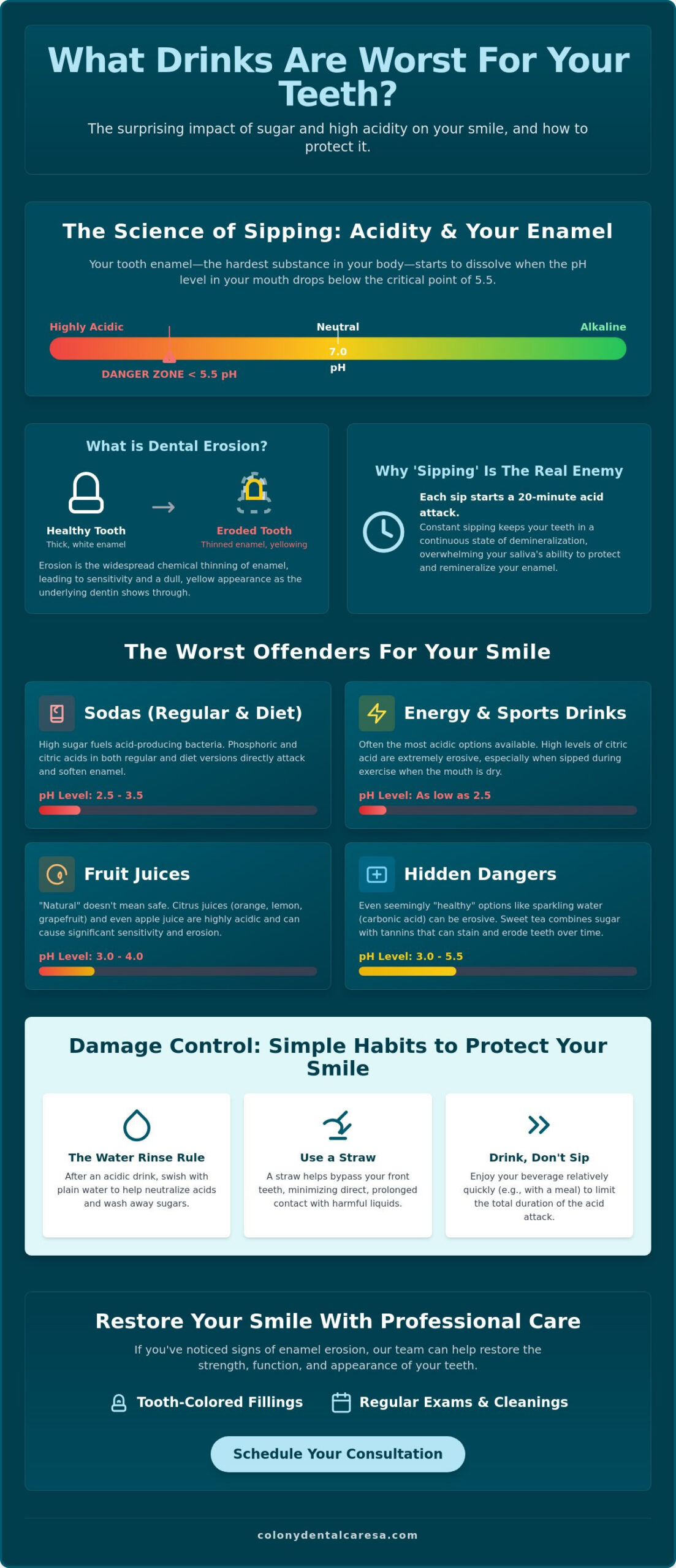
Think of your tooth enamel as a shimmering, protective suit of armor. It is the hardest substance in your body, yet it faces constant challenges from the beverages we enjoy every day. We want you to feel empowered by understanding how these liquids interact with your smile. The core of this interaction lies in the pH scale, which measures how acidic or alkaline a substance is. While a neutral pH is 7.0, your enamel begins to soften and dissolve once the environment in your mouth drops below 5.5. This process, known as demineralization, is the starting point for most dental concerns.
When we look at The Science of Sipping, we also have to consider the tiny residents of your mouth. Oral bacteria are incredibly efficient. When you consume a drink with added sugars, these bacteria feast on the fuel and produce liquid acid in mere seconds. This creates a localized acid attack that compounds the existing acidity of the drink itself. If you are trying to determine what drinks are worst for your teeth, you have to look at both the sugar content and the raw acidity of the liquid.
What is Dental Erosion?
Many of our neighbors in San Antonio come to us with tooth sensitivity, wondering why they feel discomfort even if they don’t have a cavity. It’s helpful to distinguish between the two. A cavity is a localized hole caused by bacterial decay, whereas erosion is a widespread thinning of the enamel across the entire tooth. Dental erosion is the chemical loss of tooth structure without bacterial involvement. You might notice your teeth looking slightly yellow as the white enamel thins, or the edges may appear transparent. In some cases, we see “cupping,” which are small, rounded dips on the chewing surfaces of your back teeth.
Why ‘Sipping’ is the Real Enemy
The way you enjoy your beverage often matters more than the drink itself. We often discuss the Stephan Curve with our patients, which illustrates how the pH in your mouth drops after a sip and takes about 20 minutes to recover. If you drink a soda in ten minutes, your teeth face one brief acid challenge. If you sip that same drink over two hours, your enamel stays in a constant state of demineralization. Your saliva is a natural hero that neutralizes acid and provides minerals to rebuild your enamel, but it needs “rest” periods to work effectively. If you suffer from dry mouth, or xerostomia, this damage accelerates because you lack the natural rinsing action saliva provides. We recommend enjoying your treats relatively quickly and giving your mouth plenty of time to recover between drinks.
The Worst Offenders: Sugary Sodas, Energy Drinks, and Acidic Juices
We often think of sodas as the primary culprit when considering What Drinks Are Worst for Your Teeth? While the high sugar content in regular soda is a major concern, the phosphoric acid used for flavoring is equally dangerous to your smile. This acid directly attacks your enamel, softening the protective surface of your teeth almost instantly. Even if you switch to diet versions to avoid sugar, you aren’t entirely out of the woods. Many people feel safe drinking sugar-free options, but diet sodas are still highly acidic. This means they can cause significant enamel thinning and sensitivity even without a single gram of sugar present.
The Danger of Sports and Energy Drinks
For our active San Antonio neighbors, sports and energy drinks are frequent companions at the gym or on the local trails. These beverages often contain high levels of citric acid to provide that signature “tang” we enjoy. Unfortunately, these are frequently the most acidic options on the market. When you’re exercising and breathing through your mouth, your oral environment becomes drier. This lack of saliva means your teeth have no natural defense against the acid. While pure water has a neutral pH of 7.0, some energy drinks drop as low as 2.5. Frequent sipping during a long workout keeps your teeth in a constant acid bath, which leads to permanent wear over time.
Fruit Juices: Not as Healthy as They Look
It’s a common misconception that “natural” products are always tooth-safe. Citrus juices like orange, lemon, or grapefruit are packed with vitamins, but their high acidity can be incredibly erosive. We often see patients who are surprised to learn that their healthy morning glass of juice is the source of their sudden tooth sensitivity. Apple juice is another hidden danger, especially for the younger members of your family. It contains high levels of natural sugar that oral bacteria turn into acid almost instantly. We always recommend choosing whole fruit instead of the liquid version. The fiber in a whole apple helps stimulate saliva and helps clean your teeth, making it a much kinder choice for your smile.
Understanding these risks is the first step toward effective Damage Control for your long-term health. If you enjoy these drinks frequently, we want to help you maintain your enamel without feeling like you have to give up every beverage you love. It’s a great idea to schedule a dental cleaning and exam with our team. This allows us to catch early signs of erosion before they turn into larger problems, ensuring you feel confident and comfortable every time you smile.
Hidden Dangers: From Sparkling Water to San Antonio’s Sweet Tea
We’ve discussed the obvious culprits like soda and energy drinks, but some of the most damaging liquids are those we consider healthy or cultural staples. When our neighbors ask us, “What Drinks Are Worst for Your Teeth?” they’re often surprised to hear about the subtle ways everyday favorites can erode enamel. It isn’t just about the sugar you can taste. Many modern health drinks and local favorites carry hidden acidic profiles that can catch you off guard during your next checkup.
Is Sparkling Water Bad for Your Teeth?
Sparkling water has become a go-to alternative for those looking to avoid sugary sodas, but it isn’t perfectly neutral. The carbonation process involves dissolving carbon dioxide into water, which creates carbonic acid. While plain, unflavored seltzer is much safer for your smile than a cola, flavored varieties often include added citric acid for a zesty taste. These additions can make the drink surprisingly erosive. If you enjoy bubbly water, we recommend looking for plain versions and avoiding those with “citrus” or “lemon” on the label to keep your enamel strong.
The Sweet Tea Dilemma in Texas
Here in San Antonio, sweet tea is more than just a beverage; it’s a part of our community life. However, it presents a unique “double-whammy” for your dental health. It combines high levels of refined sugar with tannins, which are natural compounds found in tea leaves. When you sip sweet tea, the sugar feeds bacteria that produce acid, softening your enamel. The tannins then “etch” into that softened surface, leading to deep stains that are much harder to remove than normal surface discoloration. Regular dental cleanings are essential for our tea lovers, as we can gently lift these stubborn stains and ensure your teeth remain bright and healthy.
We also see many patients who have switched to “wellness” drinks like kombucha or apple cider vinegar tonics. While these may offer digestive benefits, they are fermented liquids with very high acidity. Sipping these throughout the afternoon can keep your mouth in a constant state of demineralization. Similarly, our local love for margaritas can be tough on teeth. These cocktails combine high sugar, acidic lime juice, and alcohol, which dries out your mouth. Without enough saliva to neutralize those acids, your teeth are left without their natural defense system. Understanding these hidden risks helps us work together to protect your smile without asking you to give up the flavors you love.
Damage Control: Practical Ways to Enjoy Your Drinks Safely
We know that asking you to give up your favorite beverages entirely isn’t always realistic. Our goal is to help you enjoy life while keeping your smile vibrant and healthy. When we discuss What Drinks Are Worst for Your Teeth? with our patients, we focus on how you drink just as much as what you drink. Adopting a few practical habits can make a significant difference in preserving your enamel without requiring you to change your entire lifestyle.
Using a straw is a simple yet effective way to bypass your teeth. By directing the liquid toward the back of your throat, you reduce the time acid spends in contact with your enamel. Following up with the “water rinse rule” is another powerful tool. A quick swish with plain water after finishing an acidic beverage helps neutralize the pH in your mouth and washes away lingering sugars. This is especially helpful during our hot San Antonio summers when we’re constantly reaching for something cold and refreshing to stay hydrated.
Timing is everything. Try to enjoy these drinks during mealtimes rather than sipping them throughout the afternoon. As we mentioned earlier, your mouth needs rest periods to recover from acid attacks. When you eat, your mouth naturally produces more saliva to help digest food. This extra saliva acts as a protective shield for your enamel, helping to neutralize acids more quickly than if you were drinking a soda on its own.
Why You Should Wait to Brush
You might feel the urge to clean your teeth immediately after a soda or a glass of juice, but waiting is actually much safer. Brushing immediately after an acidic drink is like sandpapering wet wood; it does more harm than good. When you consume something acidic, your enamel temporarily softens. If you brush right away, you are scrubbing away that weakened layer of protection. We recommend waiting at least 30 to 60 minutes. This gives your saliva enough time to remineralize your teeth and harden the enamel before you clean them.
The Power of Cheese and Dairy
Nature provides some wonderful buffers for your teeth. Dairy products like cheese or a glass of milk are rich in calcium and phosphates, which help neutralize acids and strengthen your enamel. If you’re enjoying a glass of wine or a soda, having a small piece of cheese alongside it can make a big difference for your dental health. Additionally, chewing sugar-free gum with xylitol after drinking helps stimulate saliva production. This is your body’s best natural defense against the erosion caused by What Drinks Are Worst for Your Teeth?
If you’re concerned about how your favorite drinks have affected your smile, we are here to help. You can schedule a visit to Colony Dental Care for a personalized assessment and professional guidance on protecting your enamel.
Restoring Your Smile: Professional Care for Enamel Erosion
Even when you follow the best habits, existing wear from years of consuming what drinks are worst for your teeth can leave your enamel feeling thin and vulnerable. At Colony Dental Care, we prioritize your comfort by identifying the early signs of erosion during your routine dental exams. We look for subtle changes, such as slight transparency at the edges of your teeth or small dips in the chewing surfaces, which often signal that your protective shield is thinning. By catching these signs early, we can often suggest simple, non-invasive ways to strengthen your smile before more complex repairs are needed. We see ourselves as your long-term partners in health, guiding you through the process of restoring both the function and the bright, vital appearance of your teeth with a neighborly touch.
Repairing the Damage with Gentle Care
If you’ve noticed small areas of wear or sudden sensitivity, tooth-colored fillings and dental bonding are excellent modern choices. These materials blend seamlessly with your natural tooth, allowing us to rebuild the shape and protect the sensitive inner layers that have been exposed by acid wear. This not only improves the look of your smile but also alleviates that sharp twinge of sensitivity you might feel when drinking cold beverages. For teeth that have lost more significant structure, dental crowns provide a durable, beautiful shield that restores full strength to your bite and protects the tooth from further erosion. We also offer professional-grade fluoride treatments, which act as a powerful, reassuring way to harden vulnerable enamel and give your teeth a much-needed boost in their natural remineralization cycle.
Drinking with Invisalign Clear Aligners
Many of our neighbors choose clear aligners to improve their smiles, but this treatment requires a specific strategy when it comes to beverages. If you are wondering What Drinks Are Worst for Your Teeth? while wearing aligners, the answer is almost anything that isn’t plain water. When you sip a soda, a sweetened coffee, or even a flavored sparkling water with your aligners in, the plastic tray traps that sugary, acidic liquid directly against your enamel. This creates a stagnant environment where your saliva cannot reach the tooth to neutralize the acid. This can lead to rapid demineralization and staining that is difficult to reverse. It’s vital to remove your aligners for every drink except cool, plain water and to rinse your mouth before putting them back in. For more detailed advice on maintaining your smile during treatment, you can explore our Invisalign guide. Our team is here to ensure your journey to a straighter smile is as comfortable, safe, and successful as possible.
Protecting Your San Antonio Smile for Years to Come
Your smile is a vital part of who you are, and protecting it doesn’t have to feel like a chore. We’ve explored how small shifts in your daily routine, such as rinsing with water or using a straw, can significantly reduce the impact of acidic beverages. By being mindful of What Drinks Are Worst for Your Teeth? and giving your enamel time to recover, you’re investing in your long-term comfort and health. Whether you’re enjoying a morning juice or a local sweet tea, these simple strategies keep your teeth strong and your confidence high. We’re here to help.
Led by Dr. James David Oei, who brings over 30 years of local experience to our community, our team is dedicated to providing warm, neighborly care that truly alleviates dental anxiety. We want you to feel seen and heard every time you walk through our doors. If you don’t have insurance, our in-house dental membership ensures you still have access to the thorough, individualized care you deserve. We invite you to schedule your gentle cleaning and exam at Colony Dental Care today. Let’s work together to keep your smile bright, healthy, and full of vitality.
Frequently Asked Questions
Is coffee worse for your teeth than soda?
Coffee is generally less damaging than soda because it lacks the intense sugar and high phosphoric acid levels found in most carbonated drinks. While coffee can certainly stain your teeth and is slightly acidic, sodas pose a much higher risk for decay and erosion. If you are trying to determine What Drinks Are Worst for Your Teeth?, soda consistently ranks higher on the list due to its ability to soften enamel quickly.
Can I drink sparkling water while wearing Invisalign?
You should avoid drinking anything but plain, cool water while your clear aligners are in place. Even unflavored sparkling water is slightly acidic and can become trapped between the plastic and your teeth. This prevents your saliva from neutralizing the acid, which may lead to permanent enamel damage. We always recommend removing your trays for any other beverages to keep your smile safe and healthy.
Does adding lemon to my water harm my teeth?
Adding lemon to your water can harm your teeth because lemons are highly acidic. Frequent exposure to citric acid softens your enamel, making it easier for it to wear away over time. If you enjoy lemon water, try to drink it during a meal rather than sipping it throughout the day. Rinsing with plain water afterward is a great way to help your mouth return to a neutral pH.
Why do my teeth feel ‘fuzzy’ or sensitive after drinking soda?
That “fuzzy” or sensitive sensation is your body’s way of reacting to an acid attack on your enamel. The acid in the soda temporarily softens the hard outer layer of your teeth, while the sugar provides fuel for bacteria to create a sticky biofilm. This sensitivity often occurs because the thinned enamel allows temperature changes to reach the nerves more easily. We want to help you manage this discomfort through gentle, protective care.
Are sugar-free energy drinks safe for my enamel?
Sugar-free energy drinks are not entirely safe for your enamel because they remain some of the most acidic beverages available. Even without sugar, the high levels of citric or malic acid can cause significant dental erosion over time. When patients ask What Drinks Are Worst for Your Teeth?, we often point to these drinks because their low pH levels can be just as damaging as their sugary counterparts if consumed frequently.
How can I tell if my enamel is already eroded?
You might notice your enamel is eroded if your teeth appear slightly yellow or if the edges look transparent. Another common sign is “cupping,” which are small, rounded indentations on the chewing surfaces of your back teeth. If you experience sudden sensitivity to cold drinks, it could mean your enamel has thinned. During your next exam, we can perform a thorough assessment to see if any restoration is needed.
What is the best drink for my teeth besides plain water?
Milk is one of the best choices for your teeth because it is rich in calcium and phosphates. These minerals are essential for the remineralization process, which helps keep your enamel strong and resilient. Unsweetened green or black tea is another good option, as it contains natural compounds that can help fight oral bacteria. However, plain water remains the gold standard for staying hydrated without any dental risks.
Can professional teeth whitening fix acid-eroded teeth?
Professional teeth whitening cannot fix acid-eroded teeth because it is designed to remove stains rather than restore lost structure. In fact, applying whitening gel to thinned enamel can sometimes increase sensitivity and discomfort. If your teeth have been worn down by acid, we often suggest treatments like tooth-colored fillings or dental crowns. These options rebuild the tooth’s shape and provide a beautiful, protective layer for your smile.