
A denture that slips while you speak or eat, clicks during conversation, or leaves sore spots may need a reline. If you’re considering a denture reline in San Antonio, these changes are useful signs to discuss with a dentist, especially if you’re relying on more adhesive or finding it harder to chew. A reline adds new material to the denture’s base to improve how it fits against your gums.
You may notice when your dentures feel different, but it can be hard to tell whether they need an adjustment, reline, repair, or replacement. This guide explains signs to watch for, compares soft, hard, and temporary relines, and outlines what to expect at an appointment. You’ll also learn how a dental professional assesses fit and what factors inform the recommended option, so you can decide on a comfortable next step.
Key Takeaways
- Notice changes in how your dentures fit and feel, then consider whether the issue points to an adjustment, reline, repair, or replacement.
- Learn how soft, hard, and temporary relines differ so you can understand the options a dentist may recommend.
- See what happens during a denture assessment and why follow-up adjustments can help improve comfort.
- Find out which denture problems call for professional care and how an exam can help guide your next step.
Reline, Repair, or Replacement?
A reline changes the denture’s inner fit, while a repair addresses physical damage. Replacement may be appropriate when the denture is worn or its base has deteriorated.
Common Denture Repairs
Common repairs address a cracked denture base, a break, or a damaged denture tooth. A dental professional examines the damage and checks the fit before recommending a repair. Avoid gluing broken pieces yourself: household adhesives can interfere with a proper repair. Professional denture repair addresses damaged areas, while fit problems may need a different solution.
Signs for Repair or Adjustment
A visible crack, loose piece, or damaged tooth can signal a need for repair. If the denture feels uneven, presses on one spot, or causes soreness, an adjustment may help identify and ease the pressure. Bring the denture to your appointment and describe when the discomfort or damage began. That context helps guide the examination.
Choosing Relining, Repair, or Replacement
A reline adds new material to the denture base to improve how it rests against your gums. A repair addresses a break or damaged part, while replacement may be considered if the denture is worn or deteriorating. The American Dental Association says dentures typically last five to 10 years, and may recommend rebasing when the base begins to deteriorate. Texas dental insurance coverage depends on your plan’s terms and how it classifies a reline. DIY kits can worsen damage and lead to more costly repairs, so avoid using one as a lasting fix.
Finding a San Antonio Reline Provider
For a denture reline in San Antonio, choose a dental office that evaluates denture fit and explains whether you need a reline, repair, or replacement. Ask about the steps involved and what informs the recommended treatment. An examination can distinguish a fit issue from damage to the denture, helping you discuss an appropriate next step.
How do you know when your dentures need a reline?
A change in fit can become noticeable while eating, speaking, or smiling. Note when it happens and whether the problem involves your full or partial denture.
Signs of Poor Fit or Damage
Watch for dentures that slip while you speak or chew, click during conversation, or lift when you smile or yawn. Food collecting beneath the denture and needing more adhesive than usual can also point to a fit change. These signs can make daily activities less comfortable, even when the denture has no visible crack.
Sore or irritated gum areas deserve attention, especially if the same spot hurts during fitting or chewing. Changes in your gums, jawbone, or remaining natural teeth can affect how a denture sits. According to the American Dental Association, a dentist may recommend rebasing when the denture base begins to deteriorate.
Signs That Dentures Need Adjustment
A denture may need an adjustment if one area rubs, feels uneven, or causes discomfort when you bite. Note where the pressure occurs and whether it starts during eating or continues after you remove the denture. Slipping can also reflect a fit issue rather than a broken part, so describe the specific movement you notice.
If you wear a partial denture, watch for changes around your remaining teeth, too. If chewing becomes difficult or the appliance shifts during conversation, an examination can help distinguish an adjustment from a reline.
How Often Dentures Need Relining
Most people need a reline every one to three years. New denture wearers may need one within the first year of healing, as the gums and jaw change and the original fit can loosen.
The calendar is only one clue. Slipping, sore spots, and food collecting underneath can signal a fit change between routine visits. A dental professional can assess the denture and your mouth to determine whether relining or another adjustment fits the problem. If these signs apply to you, a denture and partial evaluation can help clarify the next step.
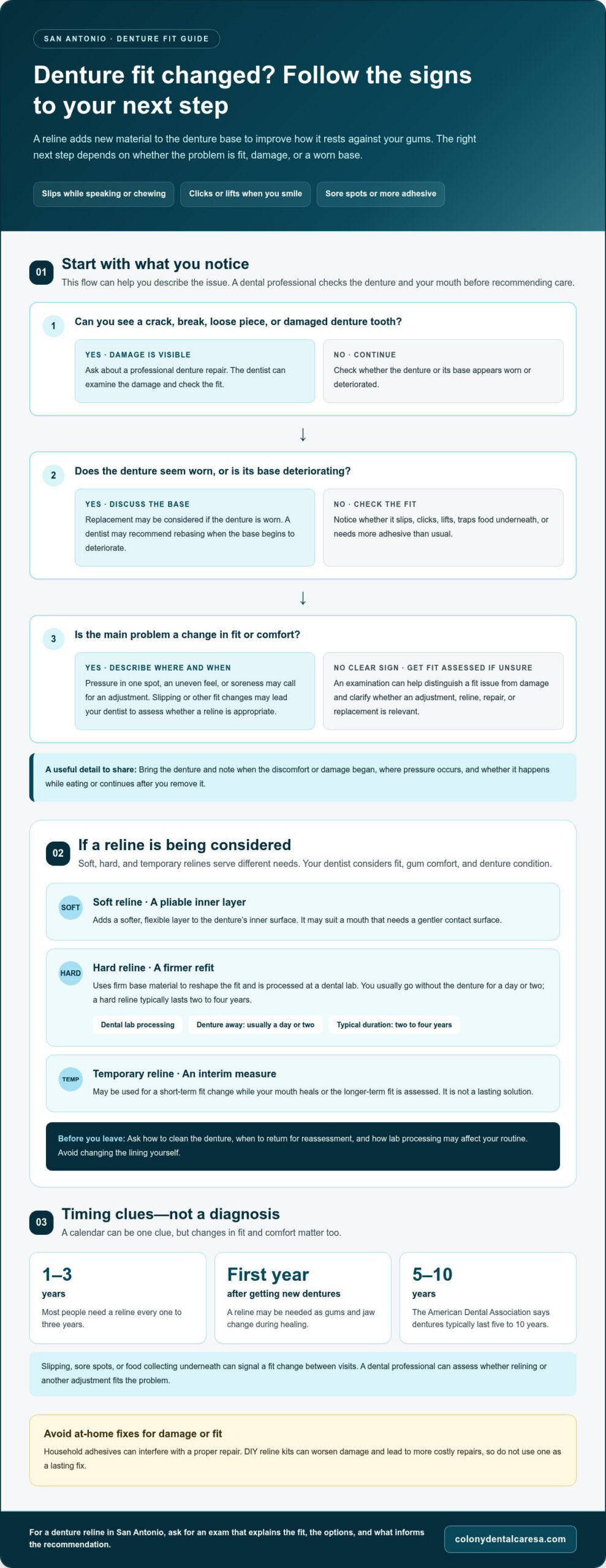
How do soft, hard, and temporary relines compare?
A dentist selects a reline based on your denture’s fit, gum comfort, and condition. Soft, hard, and temporary options serve different needs.
Soft and Hard Reline Options
A soft reline adds a pliable layer to the denture’s inner surface. It may suit a mouth that needs a gentler contact surface, while a hard reline uses firm base material to reshape the fit. Your dentist considers gum sensitivity, denture condition, and whether the appliance is full or partial.
A hard reline is processed at a dental lab, so you usually go without the denture for a day or two. A hard reline typically lasts two to four years. Ask how the lab step affects your routine and what arrangements may help while the denture is away. Cleaning and handling instructions also matter after either type of reline.
Relining applies to removable dentures, including partial dentures. A fixed implant restoration has a different structure and fit, so your dentist needs to assess what type of appliance you have.
Temporary and Medicated Relines
A temporary reline is an interim option, not a lasting solution. A dentist may use it when a short-term change in fit needs attention before a longer-term reline or other denture care. For example, a temporary approach may be considered while your mouth is healing or the denture’s long-term fit is being assessed.
A temporary medicated reline combines an interim lining with material selected for the condition of your mouth. Your dentist assesses irritated areas and the denture’s contact with them before deciding whether this approach is suitable. It doesn’t replace treating the reason for ongoing soreness or poor fit.
Before leaving your appointment, ask how to clean the denture and when to return for reassessment. Avoid changing the lining yourself, since home alterations can affect the fit and complicate professional care. The right option depends on your denture, gum comfort, and whether you need a short-term measure or a more lasting refit.
Denture adjustment process and appointment needs
An appointment can help identify what is affecting your denture’s fit and which next step may help. Bring the appliance and describe how it feels during everyday activities.
What Happens at a Reline Appointment
Your dentist reviews your concerns, examines your mouth, and checks the denture’s contact and bite. Be specific: mention whether pressure starts while eating, speaking, or wearing the appliance for a while. Those details help the dentist assess the fit and decide whether an adjustment, reline, or rebasing may address the problem.
For rebasing, the dental team assesses the denture’s base and the condition of its teeth before planning the work. Ask how the proposed change may affect your routine and what care instructions to follow afterward. Clear answers help you prepare for treatment without guessing.
Reline Timing and Duration
The time needed for a reline depends on the material and whether the work requires lab processing. A hard reline involves a dental lab, so it cannot be completed entirely during one appointment. Whether a reline can be completed the same day depends on the method used.
How long a reline lasts also varies with the material, denture condition, and changes in your mouth. Discuss these factors at your visit, along with any follow-up needs. The American College of Prosthodontists recommends that denture wearers visit a dentist at least once a year, which gives you an opportunity to discuss fit changes. Schedule a denture fit appointment to talk through your concerns.
Colony Dental Care: Dental Cleanings and Exams
Colony Dental Care provides Dental Exams & Cleanings, giving you a place to discuss changes in your mouth and denture comfort. If your dentures feel different or you have sore areas, share when the discomfort occurs and how it affects eating or speaking. An exam can help assess your oral health and clarify what type of care may address your concern.
Clear communication matters. Bring your questions about denture fit, adjustments, or next steps to your visit, and the team can discuss your needs with you. For a comfortable, neighborly dental experience in San Antonio, contact Colony Dental Care or visit colonydentalcaresa.com.
Take the Next Step Toward a More Comfortable Fit
A denture that no longer feels right can affect more than mealtimes. It may make everyday conversation and social moments less comfortable. If you notice a change, describe what happens and when, so your dental team can understand what matters most to you.
For a denture reline in San Antonio, start by discussing your fit concerns and the options that may address them. Colony Dental Care provides Dental Exams & Cleanings, Tooth-Colored Fillings, and Invisalign® Clear Aligners as part of its dental care. Your next step can be a conversation focused on your needs, comfort, and questions, so you understand the options before deciding on treatment.
Contact Colony Dental Care to take that first step. You deserve clear guidance and thoughtful care as you work toward a more comfortable day.
Frequently Asked Questions
What happens at your first denture appointment?
Your first denture appointment is a chance to discuss your goals and what you want from your dentures. Bring the appliance you currently wear and any questions you’ve noted. You might ask how to care for it, what changes to watch for, and what follow-up may involve. This can help you leave with clear, practical guidance for daily use.
What if my dentures feel loose or rub?
If your dentures feel loose or rub, avoid filing or bending them yourself. When cleaning them, handle them over a folded towel or another soft surface to reduce the chance of damage if they slip. Avoid biting hard foods with them, since that can damage the appliance. Note any changes to your routine that help or worsen the discomfort.
Why Does Denture Fit Change?
Denture fit can change because the appliance and the mouth supporting it don’t stay exactly the same over time. Dentures are shaped to rest against particular contours, so changes in those contact points can affect stability. A change in fit doesn’t automatically mean the denture is broken. Its contact and support may need assessment.
What is the difference between a soft reline and a hard reline?
A soft reline creates a more yielding contact against the gums, while a hard reline feels firmer. Your comfort, the denture’s condition, and how its surface meets your mouth help guide the choice. Ask how to clean the lining and whether your usual cleansing solution is suitable, since care instructions can depend on the material.
What are the signs that dentures need a reline?
Beyond movement or sore spots, notice whether your dentures seem to provide less facial support or affect your confidence in social situations. Increased adhesive use can also be a useful clue. Keep a short record of changes and bring it to your dental visit. Your observations can help clarify how the denture’s fit affects everyday comfort.

