What happens during an oral cancer screening, and what if your dentist notices something unusual? If you’re considering oral cancer screening San Antonio, it’s understandable to have questions or feel concerned about a change in your mouth or throat. A screening is an initial check, not a diagnosis. It gives you and your dentist a chance to discuss what you’ve noticed and whether anything needs further evaluation.
During a dental visit, your dentist may look at and gently feel areas in your mouth, throat, and neck. The check is typically brief, and you can share concerns or ask questions as you go. If something needs a closer look, that does not automatically mean cancer. Your dentist can explain what they observed and whether follow-up is appropriate. This guide covers what a screening may involve, which changes to mention, and how to discuss next steps. At Colony Dental Care, we take a personalized, comfort-focused approach to dental exams in San Antonio.
Key Takeaways
- An oral cancer screening is an initial check for changes that may need a closer look, not a cancer diagnosis.
- With oral cancer screening San Antonio, you can bring up a mouth or throat change and ask what your dentist observes.
- A mouth change can have many causes. Sharing your concern with your dentist can help you understand whether follow-up is appropriate.
- Ask what the screening found, what any recommendation means, and what the next step may involve.
- A dental exam at Colony Dental Care gives you a comfortable setting to discuss your concerns and receive personalized care in San Antonio.
Oral Cancer Screening in San Antonio: Why It Matters
Noticing a sore, patch, or other change in your mouth can feel unsettling. You do not have to decide what it means on your own. Mentioning it during a dental visit gives you a chance to describe what you’ve noticed and hear a clinician’s perspective. That conversation can help you understand whether the area needs attention and what to do next.
What does oral cancer screening mean?
Screening is an initial check for signs that may need further evaluation. During a clinical exam, a dentist may look for unusual changes and gently feel areas of the mouth, throat, and neck. The American Dental Association’s 2026 living guideline recommends visual and hands-on exams of these areas for adults at every visit. A general overview of oral cancer screening also explains its purpose and limitations.
If your dentist notices an area that needs attention, they can explain what they observed and discuss an appropriate next step. A recommendation for follow-up is a way to learn more about a finding, not a reason to assume the worst. Ask what the dentist noticed and what the suggested evaluation is intended to clarify.
Who should bring up screening in San Antonio?
You can raise a question during any dental visit, whether you’re there for a cleaning, an exam, or another concern. You do not need to decide whether a change seems serious before mentioning it. Your dentist can listen to what you’ve noticed, consider your health history, and address your questions without making assumptions about your risk.
To make the conversation more specific, describe when you first noticed the change, where it is, and whether it has changed over time. If you’re unsure how to explain it, use your own words or point to the area. These details help your dentist understand what concerns you and explain any recommendation.
For oral cancer screening San Antonio, a dental visit can be a comfortable place to discuss a concern and get clear guidance. At Colony Dental Care, we welcome your questions and take a personalized, neighborly approach to your dental care.
What Happens During an Oral Cancer Screening at a Dental Visit?
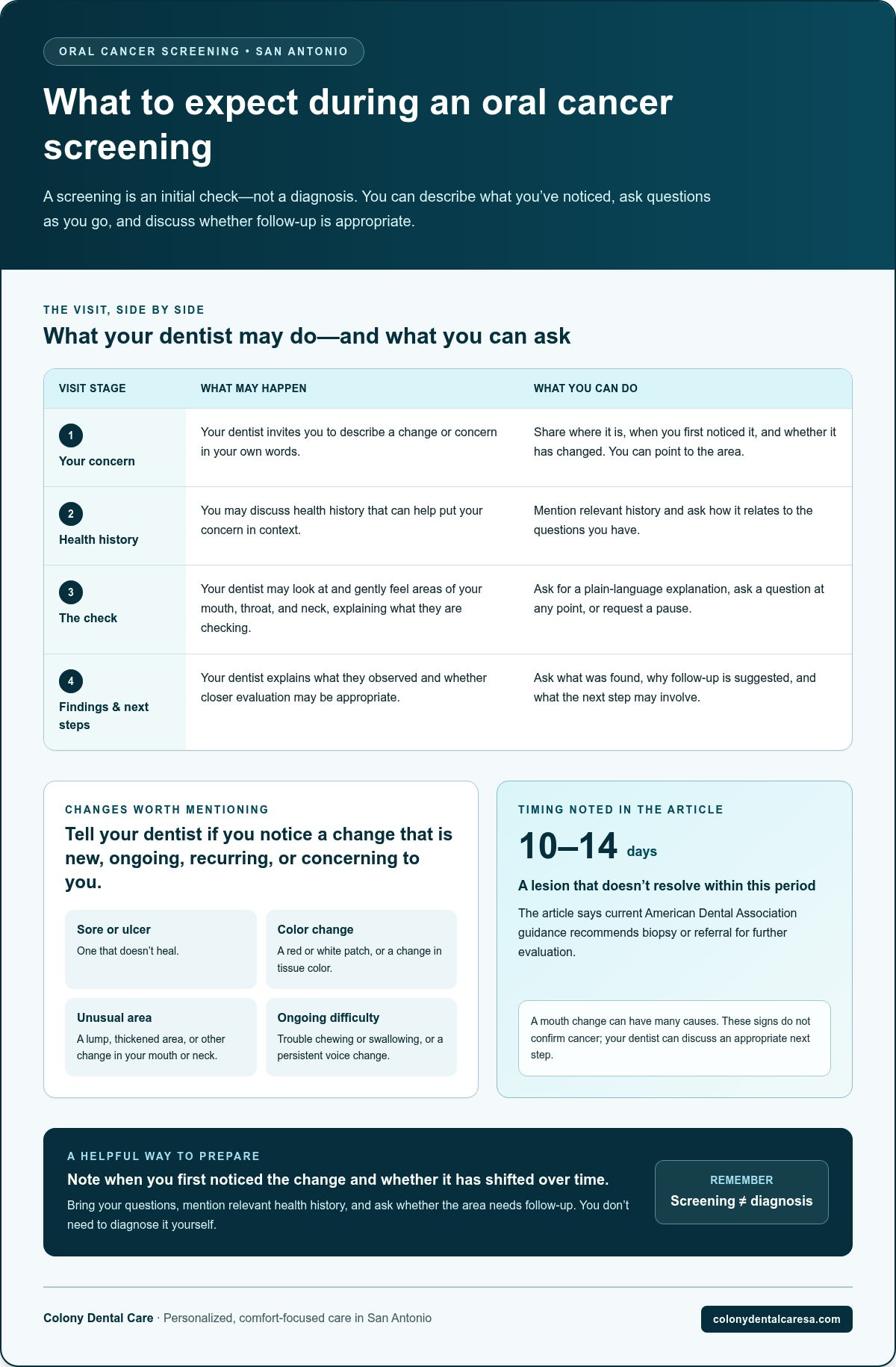
Knowing how to raise your concern and ask for explanations can help you feel more at ease. Your dentist may ask what you’ve noticed and about relevant health history, then explain the exam as it happens. You can ask a question at any point or request a pause. Before you leave, make sure you understand what was checked and whether your dentist recommends anything further.
The conversation and check may include these steps:
- Your dentist invites you to describe any change or concern in your own words.
- You discuss health history that may help put your concern in context.
- Your dentist examines areas relevant to the visit and explains what they are checking.
- You hear the findings and can ask about any suggested next steps.
The details can vary with your concerns and the clinical visit. If you’re unsure why an area is being examined or what a finding means, ask for a plain-language explanation. The National Cancer Institute’s information on oral cancer screening provides additional background on screening and its limitations.
How to prepare for the conversation
Before your appointment, note when you first noticed a change and whether it has shifted over time. Bring a short list of questions and mention relevant health history. You do not need to label or diagnose the change yourself. A simple description of where you noticed it or what feels different gives your dentist a useful starting point.
Think about what you most want to understand. For example, ask whether the area needs follow-up or what a recommended evaluation would involve. If you tend to forget details during appointments, ask whether you can write down the explanation or receive the next steps in writing.
What the screening can and cannot tell you
A screening gives your dentist information about what they observe during that visit. It can guide a discussion about whether an area needs closer attention, but it cannot provide a complete picture of every health concern. A recommendation for another evaluation is a step toward understanding a finding, not a conclusion about its cause.
If you’re preparing for oral cancer screening San Antonio, bring your questions to a dental exam and explain what you’ve noticed. Ask what the dentist observed, why a recommendation was made, and what you should do next. Discuss your concerns with our San Antonio dental team in a personalized, comfortable setting.
Mouth Changes, Risk Factors, and When to Seek an Evaluation
A change in your mouth can be easy to dismiss, especially if it doesn’t hurt. Mentioning a spot or sensation that persists, returns, or worries you gives your dentist a chance to assess it in context. Symptoms can have many causes, so avoid drawing conclusions from appearance alone.
Which changes should you mention to a dentist?
Bring up any change that is new, ongoing, recurring, or concerning to you. Examples include:
- A sore or ulcer that doesn’t heal
- A red or white patch, or a change in the color of tissue
- A lump, thickened area, or other unusual change in your mouth or neck
- Ongoing difficulty chewing or swallowing, or a persistent change in your voice
These signs do not confirm cancer and can result from other conditions. The American Dental Association’s current guidance says a lesion that doesn’t resolve within 10 to 14 days should be biopsied or referred for further evaluation. If you notice a change, describe what you see or feel and how it has changed over time. Your dentist can discuss an appropriate next step.
How screening differs from diagnostic follow-up
A screening observation is an initial finding, not a diagnosis. Your dentist may recommend a closer evaluation if an area needs more attention. That recommendation is a way to learn more about the finding, not proof that it is cancer. A biopsy, in which tissue is examined, is the only definitive way to diagnose oral cancer.
Risk factors can inform a conversation, but they do not determine what a mouth change means. Heavy tobacco and alcohol use and HPV infection are recognized risk factors for some oral and throat cancers. If any of these relate to your health history, you can share that information without feeling blamed. Your dentist can consider it alongside what you’ve noticed and the clinical exam.
For oral cancer screening San Antonio, an individualized discussion can help you understand whether a change needs attention and what a suggested follow-up is meant to clarify. Ask what was observed, why further evaluation may be recommended, and what the next step involves. You deserve an explanation that feels clear and unhurried. A concerning change deserves attention, but it is not the same as a confirmed cancer diagnosis.
How to Decide Your Next Step After an Oral Cancer Screening
Hearing that an area needs another look can leave you unsure what to do. You do not have to figure it out alone or assume the worst. Focus on understanding what your dentist observed, why follow-up may help, and what action is recommended for your situation. The next step depends on the finding, so discuss timing with your dentist rather than guessing at a timeline or outcome.
- Share your concern. Tell your dentist what you noticed, where it is, and what has changed since you first saw or felt it.
- Hear the findings. Ask what stood out during the screening and whether the area appears to need further evaluation.
- Clarify the recommendation. Find out what the proposed next step involves and how soon your clinician recommends taking it.
- Make a follow-up plan. Before you leave, confirm what you’re expected to do and how you’ll know when it’s time to follow up.
Questions to ask about a finding
It’s reasonable to ask for clear, plain-language answers. You might ask, “What did you notice?” “What are you recommending next, and why?” or “How soon should I act on that recommendation?” If you’re feeling overwhelmed, ask your dentist to repeat the explanation or write down the next steps. A clear plan can make it easier to remember what you discussed after your visit.
You can also ask what would change the plan and whom to contact if you have questions later. These questions help you understand your care and take part in decisions about it.
When a concern should not wait for a routine visit
If a mouth change persists, returns, or concerns you, arrange a professional evaluation rather than relying on appearance alone to judge it. A dental screening may be a helpful place to begin the conversation, but your dentist may recommend another evaluation based on what they observe. Follow that individualized guidance instead of applying a general timeline to every finding.
If symptoms feel severe or are rapidly worsening, seek prompt medical care rather than waiting for a routine dental appointment. A short symptom list cannot determine urgency for everyone, so use your judgment and get help if you feel seriously unwell.
For local context, the San Antonio dentist care guide offers an overview of the practice. If you have a concern after a screening, schedule a dental exam with Colony Dental Care to discuss your questions in a personalized, comfortable setting.
Discuss Oral Cancer Screening With Colony Dental Care in San Antonio
If you’ve noticed a mouth change or have questions about screening, bringing them to a dental visit can be a sensible next step. You do not need to arrive with a diagnosis or know exactly what to ask. Tell your dentist what concerns you, and let the conversation guide what happens next. A dental exam gives you time to discuss your oral health and understand any recommendations in a setting focused on your comfort.
At Colony Dental Care, we welcome your questions and aim to make care personal, clear, and comfortable. Dr. James David Oei brings more than 30 years of clinical experience to the practice. Your concerns and health history help shape the conversation, and our San Antonio team treats you like a neighbor, taking time to listen and explain.
A comfortable place to raise your concerns
Explain what you’ve noticed in your own words, even if you’re not sure how to describe it. Ask questions at your own pace, and let us know if you feel worried or need an explanation repeated. We’ll listen and discuss your concern as part of your dental visit, with personalized attention and a focus on helping you feel at ease.
It may help to bring a few notes, such as when you first noticed a change and what questions you want answered. You can ask what the dentist observes, whether anything needs follow-up, and what a recommendation means. Clear communication helps you understand the discussion without having to interpret a finding on your own.
Plan a dental visit in San Antonio
Your appointment is an opportunity to discuss the concern that brought you in as well as other oral health questions. If you have a specific change in mind, mention it when arranging your visit so it can be included in the conversation. Your dentist can explain the recommendation for your situation without assuming what a finding means in advance.
Choosing a dental practice for ongoing care is personal, too. You can learn more about Colony Dental Care and what to consider in our San Antonio dentist care guide. For oral cancer screening San Antonio, a calm conversation with a dental professional can help you feel more informed about your concern and any suggested follow-up.
If you’re ready to talk through your questions in a welcoming setting, schedule a dental visit with Colony Dental Care. We’ll listen, explain the discussion in clear language, and help you understand the next step for your oral health.
Take the Next Step With Confidence
You do not need to have every answer before making an appointment. Start with the concern that brought this to mind, and give yourself permission to ask for explanations in plain language. A thoughtful conversation can help you understand what your dentist observes and what, if anything, is recommended next.
If you’re considering oral cancer screening San Antonio, bring your questions to a dental visit and share what you’ve noticed. At Colony Dental Care, you can discuss your oral health concerns with a team that values a personal, comfortable experience. The goal is to help you feel heard and understand your options, one step at a time.
Schedule your dental visit with Colony Dental Care and take a calm, practical step toward addressing your concerns. You deserve care that makes room for your questions.
Frequently Asked Questions
Is oral cancer screening part of a dental exam?
A dental exam is a sensible time to ask about screening, though what your dentist checks depends on your visit and current clinical guidance. For oral cancer screening San Antonio patients can bring up a concern even if they came in for a cleaning or another reason. Ask what the check is intended to assess, what your dentist noticed, and whether follow-up is suggested. Screening is not a diagnosis, so ask for clarification if any finding is unclear.
Does oral cancer screening hurt?
Screening is a check, not a treatment, but the exact steps and sensations can vary. Before the exam, tell your dentist if you’re worried about discomfort, have a sensitive area, or need extra time. You can ask what will happen before each step and request a pause. If something feels uncomfortable, let the dental team know rather than trying to tolerate it silently. They can explain what applies to your visit.
Can a dentist tell if you have oral cancer during a screening?
No, a screening alone can’t confirm that you have oral cancer. If your dentist notices something that needs a closer look, ask what they observed and what further assessment is meant to clarify. A finding can have different causes, and a recommendation for follow-up isn’t itself a diagnosis. Keep any written notes or instructions handy so you can refer to them when arranging or attending the next evaluation.
What mouth changes should I ask a dentist about?
Mention any change that concerns you, especially if it persists, returns, or seems to be changing. For example, describe a sore, a patch with a different color, or a new area that feels unusual. Don’t rely on online images to identify the cause; similar-looking changes can have different explanations. Note when you first noticed it and share that detail with your dentist, along with any questions about what to watch for.
How often should I get an oral cancer screening?
The American Dental Association’s 2026 living guideline recommends a visual and hands-on exam of the mouth, throat, and neck for adults at every dental visit. Your questions and health history still matter, so ask your dentist how this guidance applies to your care and when to bring up a new concern. If you’re unsure whether a check was included in a visit, ask what was examined.
Should I wait for my next dental appointment if I notice a mouth change?
If a change worries you or continues, contact a dental professional rather than assuming it can wait for your next routine visit. Explain what you noticed and ask how to proceed; you do not need to decide what caused it first. A change doesn’t automatically mean cancer, but getting guidance can help you understand the appropriate next step. If you feel severely unwell or have urgent symptoms, seek urgent medical care.
Can oral cancer screening diagnose cancer?
No. Screening looks for signs that may need more evaluation; it does not provide a definitive cancer diagnosis. If further assessment is recommended, ask what the clinician is trying to learn and how the next step will be explained to you. You can also ask for the recommendation in writing or bring someone you trust to help remember the discussion. These practical steps can help you feel informed without treating a screening result as a final answer.