After implant surgery, is every bit of bleeding, swelling, or soreness a reason to worry? Some discomfort can be part of healing, but it’s understandable to want clear guidance, especially when online advice gives you different timelines. These post-op instructions for dental implants offer a practical checklist to help you care for your mouth, understand what to monitor, and know when to contact your dental team.
Your instructions may depend on the details of your procedure, so follow the directions from your dentist first. This checklist covers eating and drinking, protecting the surgical area, caring for stitches, and recognizing changes that call for personalized advice. Keep your written instructions close, and ask your dental team about anything that isn’t clear.
At Colony Dental Care, we believe clear communication and comfortable, individualized care matter throughout your recovery. Our San Antonio team provides dental implant care and guidance for our local community. Use this checklist as a reference, while following the specific directions your dental team gave you.
Key Takeaways
- Use your dental team’s instructions as your guide, since recovery can vary with your procedure and individual healing.
- For the first day, focus on rest, following written directions, and protecting the surgical area as instructed.
- Approach food, oral hygiene, and daily activities gently, and follow your personal care plan.
- These post-op instructions for dental implants can help you identify changes to monitor and symptoms that call for prompt professional advice.
- Keep follow-up appointments and ask your clinician about personal healing milestones and next steps.
What to expect after dental implant surgery: the first recovery checklist
It’s natural to wonder whether tenderness, a little bleeding, or swelling is part of healing, especially when online advice doesn’t match your instructions. Start with a simple checklist: read the directions from your dental team, notice how you feel, protect the surgical area as instructed, and ask for guidance if something is unclear. Your experience may differ from someone else’s because recovery depends on the procedure and your individual healing.
What the first stage of healing may involve
In the early stage, you may notice tenderness around the surgical area, mild bleeding, or swelling. The intensity and duration can vary from person to person and depend on your procedure. Another person’s recovery story isn’t a reliable forecast for yours. If you’re unsure whether a change is expected, compare it with your written directions and get personalized advice from the dental team that treated you.
Keep your instructions somewhere easy to find. Note any steps specific to your mouth, such as how to care for the area or what to avoid. If a direction is unclear, write down your question rather than relying on conflicting online advice. A general overview of the dental implant procedure and aftercare can provide background, but it can’t replace instructions tailored to your treatment.
Why your personal instructions take priority
Implant procedures aren’t identical. The treatment performed, the condition of your mouth, your health history, and any other care provided at the same time can affect your aftercare directions. Broad guidance may not apply to every detail of your recovery. Follow the plan your clinician gave you, even if a general online checklist suggests a different approach. If you received conflicting directions or can’t remember what to do, contact the dental team that treated you for clarification.
Early gum healing and longer-term implant integration are different stages: the gums may settle before the bone has finished joining with the implant. That joining process is called osseointegration. In plain language, it’s when bone grows around and bonds with the implant to help support it. You may feel better before that deeper healing is complete, so comfort alone doesn’t tell you when the implant is ready for every next step. Your clinician will guide you on healing milestones and any changes to your care.
As you follow the post-op instructions for dental implants, keep three reminders close: your recovery is personal, your written directions come first, and questions deserve a clear answer. For background on treatment options and planning, Dental Implants in San Antonio: Your Complete Guide for 2026 can help you understand the larger picture. For decisions during recovery, rely on the dental team familiar with your procedure.
Your first-day dental implant aftercare checklist
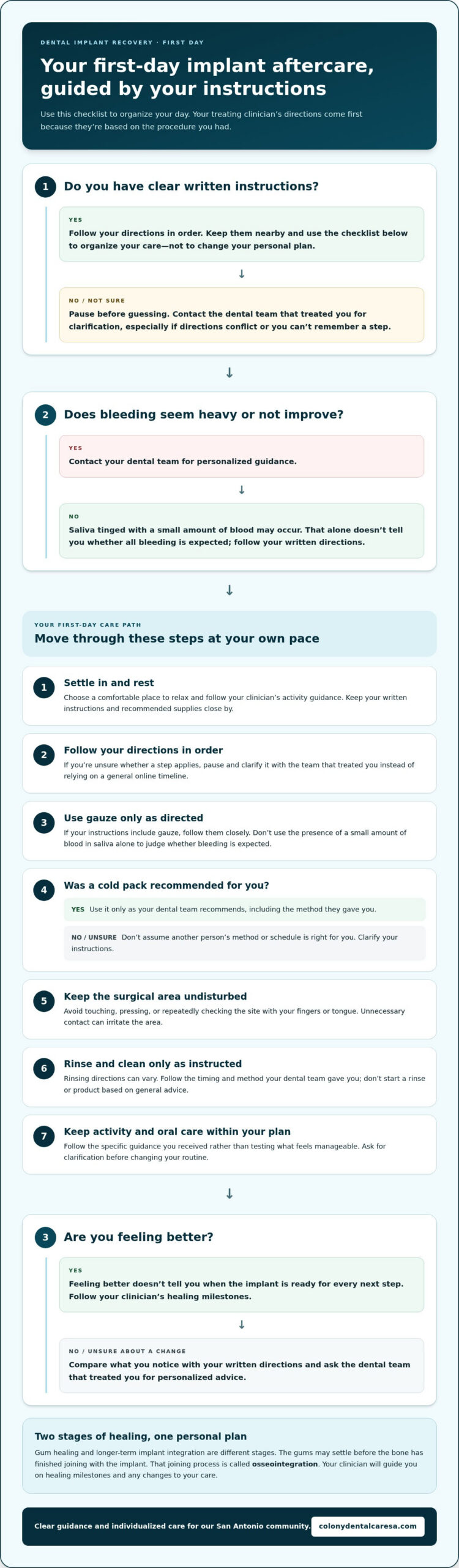
The first day can feel more manageable when you know what to focus on and what to leave alone. Your written directions are the best guide, since care for gauze, rinsing, cold packs, and activity can differ based on your procedure. Keep those instructions nearby and follow each step as your dental team recommends.
Your treating clinician’s directions take priority over general online aftercare advice because they’re based on the procedure you had. Use this checklist to organize your day, not to replace or change your personal plan.
- 1. Settle in and rest. Choose a comfortable place to relax and follow your clinician’s activity guidance. Keep your written instructions and any recommended supplies close by, so you don’t need to search for them or rely on memory.
- 2. Follow your written directions in order. Review what your dental team told you about caring for the surgical area. If you’re unsure whether a step applies, pause and clarify it with the team that treated you instead of relying on a general timeline online.
- 3. Use gauze only as directed. You may notice saliva tinged with a small amount of blood after surgery. That alone doesn’t tell you whether all bleeding is expected. If your directions include gauze, follow them closely. Contact your dental team if bleeding seems heavy or doesn’t improve.
- 4. Apply a cold pack only if your team recommends it. Your dental team can tell you whether a cold pack is appropriate and how to use it for your procedure. Don’t assume another person’s method or schedule is right for you.
- 5. Keep the area undisturbed. Avoid touching, pressing, or repeatedly checking the surgical site with your fingers or tongue. Unnecessary contact can irritate the area and makes it harder to leave the site undisturbed as it begins to heal.
- 6. Rinse and clean only as instructed. Rinsing directions may vary, so don’t start a rinse or use a particular product based on general advice. Follow the timing and method your dental team gave you.
- 7. Keep activity and oral care within your personal plan. Follow the specific guidance you received rather than testing what feels manageable. If a direction about movement or mouth care isn’t clear, get clarification before changing your routine.
Keep a short note of questions or changes you notice so you can describe them clearly if you call. If bleeding seems heavy or doesn’t improve, reach out to your dental team for personalized guidance. Colony Dental Care provides implant care for our San Antonio community, with attention to clear communication and your comfort. For guidance connected to your implant care, contact our dental team.
Eating, brushing, and daily habits while your implant heals
As you return to everyday routines, keep your dental team’s directions at the center of your choices. Food, mouth care, and activity can affect your comfort, but there isn’t one schedule that fits every procedure. These reminders can help you make thoughtful choices without guessing when to change your routine.
Choose foods that feel comfortable
Follow the diet directions you received, and choose foods that are easy to eat without irritating your mouth. Depending on your instructions, yogurt, eggs, oatmeal, or soft cooked foods may feel more comfortable than crunchy or chewy choices. These are general examples, not a required menu. Take your clinician’s advice over a general list, and don’t chew directly on the surgical area until your dental team says it’s appropriate.
There’s no universal date for returning to your usual foods or drinks. Follow your personal instructions rather than testing the area because it feels better. If you’re unsure whether a food or drink fits your plan, ask the team managing your implant. A quick clarification can help you feel more confident about meals and avoid unnecessary discomfort.
Care for your mouth gently and specifically
Keeping your mouth clean remains part of caring for your oral health, while the surgical area may need special attention. Follow your dental team’s directions for brushing near the implant, rinsing, and cleaning your other teeth. Don’t assume you should brush directly over the site or use a particular rinse unless your instructions say so. Your plan may also include guidance for a removable appliance. Follow those directions rather than changing how or when you wear it on your own.
If you’re uncertain about a step, check your written instructions and contact the dental team that treated you for clarification. The post-op instructions for dental implants you received are more useful for your situation than a routine meant for everyone. For more about the practice’s approach to patient care, Your Dentist in San Antonio, TX: A Guide to Our Care offers related context.
Let your instructions guide daily activity
Activity guidance can differ depending on your procedure and how you’re healing. Rather than applying a blanket rule to exercise, work, or household tasks, use the written directions from your clinician. If your plan says to modify an activity, follow that advice. If the directions are unclear, ask before making a change. This keeps your routine grounded in your care plan instead of someone else’s experience.
- Food: Choose comfortable options and keep chewing away from the surgical area until your dental team approves.
- Oral hygiene: Follow your personalized brushing, rinsing, and appliance directions.
- Activity: Use your written guidance to decide what to adjust as you heal.
Small, steady choices can make daily care feel more manageable. Your dental team can help you adapt these habits to your procedure and recovery, so you can care for your mouth with greater comfort and confidence.
Is Your Recovery on Track? Symptoms and When to Call
It can be hard to tell whether a change is part of healing or a reason to seek help. Some tenderness, swelling, or saliva tinged with a small amount of blood may occur after oral surgery, but these signs alone can’t confirm how your implant is healing. Your procedure and personal instructions matter. Compare what you notice with the directions your dental team gave you, and call if a symptom is worsening, severe, or concerning to you.
Changes that may be part of recovery
Recovery doesn’t follow one exact pattern. You may notice discomfort or swelling, and the amount or course can differ from another person’s experience. Rather than relying on a set number of days or online descriptions, track whether a symptom is improving, staying the same, or getting worse. A brief note of when it began and how it changes can help you explain your concern to the team that treated you.
The table below is a guide for deciding what to do next, not a way to diagnose a problem. Follow your own post-op instructions for dental implants, since they reflect the details of your care.
| Symptom | What to do | When to call |
|---|---|---|
| Light blood-tinged saliva | Compare it with your written instructions and follow any directions for caring for the site. | Contact your dental team if bleeding becomes heavy, continues without improving, or concerns you. |
| Tenderness or swelling that is not worsening | Use the comfort and care steps recommended for your procedure. Keep track of changes. | Call if discomfort or swelling grows worse, becomes severe, or doesn’t match the guidance you received. |
| Heavy or persistent bleeding | Follow your bleeding instructions and seek professional advice rather than changing your care plan on your own. | Contact the treating dental team promptly, especially if bleeding does not improve. |
| Worsening swelling, fever, or a new symptom | Note what changed and when, and avoid trying to diagnose the cause yourself. | Call your dental team promptly for advice tailored to your procedure. |
| Severe symptoms or an urgent concern | Seek appropriate urgent care. | Don’t wait for an ordinary follow-up appointment. |
When to contact your dental team promptly
Trust your concern if something feels significantly different from the instructions you were given. Heavy or persistent bleeding, symptoms that are getting worse, fever, or a change around the implant site are good reasons to contact the dental team that treated you. Describe what you’re noticing and how it has changed. If symptoms feel severe or urgent, seek appropriate urgent care instead of waiting for a routine visit.
If you’re unsure what a change means, you don’t have to decide alone. Contact our dental team for guidance about your implant recovery and next steps.
Follow-up care after dental implants in San Antonio
Your follow-up visits give your dental team a chance to assess healing and talk through what comes next. The timing depends on your procedure and your clinician’s plan, so use the schedule they provide rather than a general timeline. Healing milestones and decisions about the next stage of treatment should come from the clinician managing your implant.
Prepare for a clear, useful appointment
A little preparation can help you make the most of your visit. Keep appointment details, written care directions, and questions together in one place. If you’ve noticed a change, jot down what happened and how it has progressed. You can also mention any part of your aftercare plan that was difficult to follow, such as brushing near the site or managing meals. Clear details help your dental team understand your experience and offer guidance that fits your situation.
- Bring your questions. Note anything you’re unsure about, including changes to your daily care or activities.
- Describe symptoms clearly. Include when a concern began and whether it has improved, stayed the same, or worsened.
- Share what was challenging. If an instruction was hard to follow, explain why so your team can discuss practical next steps.
- Ask what comes next. Your clinician can explain your healing progress and any recommendations for ongoing care.
Use your visit to get answers specific to your mouth, not to compare your progress with someone else’s. Follow-up timing, healing milestones, and decisions about when to move forward can differ. There’s no single appointment schedule or restoration date that applies to everyone. Your dental team can assess your healing and explain the next step based on what they see.
Personalized implant guidance close to home
Colony Dental Care provides dental implant care in San Antonio, with a focus on comfortable, personalized guidance. Dr. James David Oei brings over 30 years of clinical experience, and our practice has served the local community for over 30 years. That experience supports thoughtful conversations about your care, while your treatment and follow-up remain tailored to your needs.
For a broader overview of treatment planning and implant care, Dental Implants in San Antonio: Your Complete Guide for 2026 can provide helpful context. Your own clinician’s advice remains the guide for decisions about your healing and follow-up.
If you’re considering dental implants or have questions about care after your procedure, reach out to Colony Dental Care to discuss your needs with our San Antonio team. We’ll help you understand your options and the guidance that applies to your situation.
Take your next recovery step with confidence
Your recovery is personal, and your questions deserve answers that account for your care. Keep your clinician’s directions close as you heal, and speak up if something feels unclear or changes in a way that concerns you. Personalized guidance can help you make decisions with confidence instead of relying on advice meant for someone else’s procedure.
If you’re planning implant treatment or want to learn more about care at Colony Dental Care, explore our dental implant services in San Antonio. Our team can help you understand your options and the guidance that applies to your situation. Learn about dental implant care at Colony Dental Care.
Keep your post-op instructions for dental implants handy, follow the plan made for you, and remember that asking for clarification is a positive part of caring for your health. You can take recovery one step at a time.
Frequently Asked Questions
Can I use a straw after dental implant surgery?
Avoid using a straw right after surgery unless your clinician tells you otherwise. Suction may disturb the healing area. Sip from a cup instead, and follow your post-op instructions for dental implants, since details can vary by procedure. If you’ve already used a straw, don’t panic or keep checking the site. Contact your dental team if bleeding increases, discomfort worsens, or you’re unsure what to do next.
How long do stitches stay in after dental implant surgery?
There isn’t one set time for stitches to remain. Some dissolve on their own, while others may need removal. Your dental team can tell you which type you have and what to expect based on your procedure. Don’t pull or cut a stitch yourself, even if it feels loose. If a stitch comes out unexpectedly or the area opens, contact the team that treated you for guidance.
Can I go back to work the day after getting a dental implant?
You may be able to return to work the next day, but it depends on your procedure, how you feel, and the activity your job requires. A quiet desk-based day may feel different from a physically demanding shift or a role that involves a lot of talking. Follow your clinician’s activity directions, and give yourself flexibility if you’re uncomfortable or your symptoms worsen. Ask your dental team for advice based on your treatment.
Is it normal to have a bad taste in my mouth after implant surgery?
A bad taste can have different causes, so it doesn’t confirm a problem on its own. Blood in your mouth, food, or medicines may affect taste. Follow your specific cleaning directions rather than scrubbing the surgical area or adding a rinse without guidance. If the taste persists, gets worse, or comes with fever, new swelling, or discharge, contact your dental team and describe what you’re noticing.
What should I do if my dental implant feels loose?
Contact the dental team managing your implant promptly if it feels loose. Don’t wiggle it to test the movement, press on it, or chew on that side while you wait for advice. A sensation of movement needs an individual assessment, and you can’t determine the cause by feel alone. Tell the team when you first noticed it and whether you have pain, swelling, bleeding, or another new change.
Can I smoke or drink alcohol while my dental implant heals?
It’s best to avoid smoking during healing and to ask your clinician when it’s appropriate to resume, since smoking can interfere with recovery. Alcohol may also be unsuitable, especially if you’re taking medicine that could interact with it. Follow the instructions provided for your procedure and medications rather than relying on a general timeline. If you’re unsure whether a specific medicine and alcohol can be combined, contact your dental team or pharmacist.