What if the back teeth that do the most chewing are also the hardest to clean thoroughly? If you’re wondering, “What Are Dental Sealants and Do You Need Them?” the answer depends on your teeth, cavity risk, and dental history. It’s natural to want extra protection while also wondering whether a preventive treatment is necessary or might hurt.
Sealants add a thin protective covering to grooves on chewing surfaces, where food and plaque can collect. They’re often considered for children and teens as permanent molars come in, but adults with deep grooves or a higher risk of cavities may benefit, too. Sealants don’t replace brushing, flossing, fluoride, or regular dental exams. They protect specific areas as one part of ongoing care.
In this guide, you’ll learn how sealants are applied, what they can and can’t do, and how they compare with fluoride. We’ll also explain which personal factors to discuss at your next exam. At Colony Dental Care, we offer dental sealants and make preventive recommendations based on your needs. Our San Antonio team explains your options in a calm, comfortable way, so you can make an informed choice for your smile.
Key Takeaways
- Dental sealants cover selected chewing surfaces that may be more vulnerable to decay.
- Your tooth condition, cavity risk, and dental history help shape a personalized recommendation.
- Sealants, fluoride, brushing, flossing, and routine exams support cavity prevention in different ways.
- Knowing the steps involved in sealant placement can help you feel more prepared for your visit.
- A dental exam in San Antonio can help you discuss preventive care for yourself or your child.
What Are Dental Sealants, and What Do They Protect?
A dental sealant is a protective coating placed over selected chewing surfaces, often on back teeth, to help shield their pits and grooves from food and plaque. These narrow dips and ridges can be harder to clean than smoother areas, even with careful brushing. Sealants cover only the surfaces chosen after a dental assessment. They don’t coat every tooth or replace daily care.
It helps to think of sealants as targeted protection. The dental sealants overview describes the basic idea: a barrier is placed on tooth surfaces that may be more vulnerable to decay. Your dentist can assess the shape and condition of your teeth and explain whether a sealant makes sense for you.
How do dental sealants help protect teeth?
The chewing surfaces of molars have grooves that can hold food particles and plaque. A sealant covers selected grooves, helping limit what collects in those spots and making the surface easier to keep clean. Molars are common candidates, but the recommendation depends on the individual tooth and your exam.
Sealants address one potential trouble spot, not every cause of cavities. Decay can still develop on other surfaces or around a tooth, so regular brushing, flossing, and dental visits remain part of your care. Your dentist can explain which teeth, if any, may benefit and what protection a sealant can reasonably provide.
How are sealants different from fluoride?
Sealants and fluoride serve different roles. A sealant covers particular pits and grooves; fluoride supports tooth enamel, the hard outer layer of a tooth. Because they help in different ways, they may complement each other rather than serve as substitutes.
Neither option replaces brushing and flossing, which help remove plaque from your teeth, or routine exams, which let your dental team assess your oral health. Your needs may vary with tooth condition, cavity risk, and existing preventive care. During an exam at Colony Dental Care, we can explain these options clearly and help you consider how they fit your care in San Antonio.
Who May Benefit From Dental Sealants?
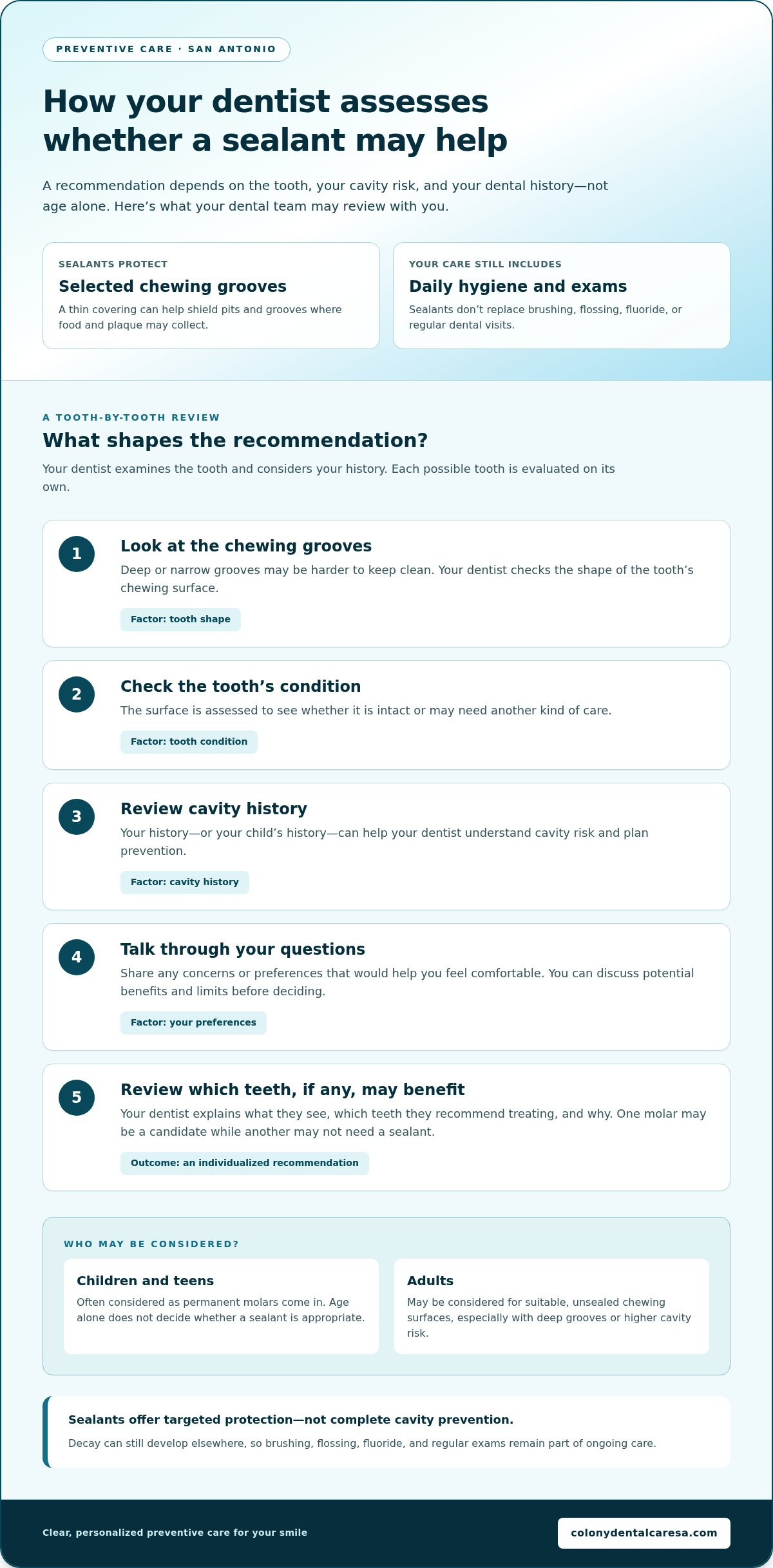
Sealants aren’t automatically needed for every child or adult. A recommendation depends on the condition of each tooth, your risk of cavities, and what your dentist sees during an exam. Children and teens are common candidates as their permanent molars come in, but age alone doesn’t determine whether treatment is appropriate. The goal is to consider your individual needs, not follow a one-size-fits-all rule.
The American Dental Association recommendations on sealants discuss their use for children and teens, as well as selected teeth in adults. Whether sealants may suit you starts with a careful look at your teeth and dental history, not simply your age.
What factors can shape a sealant recommendation?
Your dentist considers whether a tooth’s chewing surface has deep or narrow grooves that may be harder to keep clean. They’ll also assess whether the surface is intact and review factors that can affect your cavity risk, such as a history of cavities. These details guide a recommendation, but they don’t replace an exam or let you diagnose your own teeth.
Each possible tooth is evaluated on its own. One molar may have grooves that could benefit from added protection, while another may not need it. Your dentist can explain what they see, which teeth they recommend treating, and why. You can discuss the potential benefits and limits before deciding, so the plan feels clear and comfortable.
- Tooth shape: Are the chewing grooves deep or difficult to clean?
- Tooth condition: Is the surface intact, or does it need another kind of care?
- Cavity history: Have you or your child had cavities that may affect prevention planning?
- Personal preference: What questions or concerns would help you feel at ease?
Can adults benefit from dental sealants?
Yes, adults may be considered when an unsealed chewing surface is suitable for protection, especially if deep grooves or a higher cavity risk are concerns. Being an adult doesn’t automatically rule sealants out. A tooth that already needs restorative treatment may call for a different approach, so your dentist will examine the surface and explain which care fits its condition.
A routine exam is a practical time to mention a molar you’re concerned about or share relevant dental history. At Colony Dental Care, we can review your options calmly and tailor preventive guidance to your needs. If you’re due for a visit, you can schedule a dental exam in San Antonio to discuss sealants as part of your care.
Dental Sealants vs. Other Cavity-Prevention Options
Each preventive measure has a different job. Sealants protect selected chewing surfaces, while brushing and flossing help clean your mouth more broadly. Fluoride supports tooth enamel, and routine exams let your dental team check for changes and talk through care options. These approaches can work together. A sealant doesn’t replace daily hygiene or dental visits, and home care doesn’t make professional assessment unnecessary.
| Option | Main purpose | Its role in prevention |
|---|---|---|
| Sealants | Cover selected chewing surfaces | Add a barrier over specific pits and grooves that may be harder to clean. |
| Fluoride | Support tooth enamel | Helps protect the hard outer layer of teeth as part of preventive care. |
| Brushing | Clean tooth surfaces | Helps remove plaque and food from across your mouth. |
| Flossing | Clean between teeth | Reaches spaces a toothbrush may not clean well. |
| Routine exams | Assess your oral health | Give your dentist a chance to look for changes and discuss care suited to your needs. |
Sealants and daily brushing: why both still matter
Think of sealants as targeted surface protection, not whole-mouth prevention. A sealant may cover a selected molar’s chewing surface, but it doesn’t clean between teeth or protect every other surface. Brushing and flossing remain important parts of your daily routine. Regular dental exams also matter because your team can assess areas you may not be able to evaluate on your own.
Sealants and everyday care aren’t alternatives to one another. Your dentist can explain how sealants may fit alongside brushing, flossing, fluoride, and regular visits based on your teeth and oral-health needs.
When might a tooth need a filling instead?
A sealant is preventive care for a tooth surface that your dentist finds suitable for protection. It isn’t a do-it-yourself treatment for a cavity and shouldn’t be used to cover or repair tooth decay. If an exam finds decay or damage, your dentist will assess the tooth and explain whether restorative care, such as a tooth-colored filling, is appropriate. The right next step depends on what the exam shows.
At Colony Dental Care, we can review these choices with you in a calm, clear way during a dental exam. Understanding what each option is intended to do can help you make an informed decision without expecting one preventive step to do everything.
What Happens During Sealant Placement and Follow-Up?
Knowing what to expect can make a preventive visit feel more comfortable. Sealant placement follows a series of steps, and your dental team can explain what they’re doing as they go. The dentist first checks whether the tooth is suitable. If it is, the surface is prepared before the sealant is applied and set. You can ask questions or request a pause at any point.
What are the usual steps for applying a sealant?
The exact approach depends on the tooth, but the visit generally follows these stages:
- Assess the tooth. Your dentist examines the chewing surface and checks that a sealant is appropriate for its condition.
- Clean and prepare. The tooth is cleaned, conditioned, and dried so the surface is ready for the sealant.
- Apply the sealant. The dentist places the liquid material over the selected grooves.
- Set and check. A special light hardens the material. Before the visit ends, your dentist checks the covered surface.
Sealant placement doesn’t involve drilling. You may notice the dental team working in your mouth or ask you to keep still while they prepare the tooth. Everyone experiences dental care differently, so we won’t promise that every person will feel nothing. If you’re anxious or uncomfortable, let your team know. A calm explanation and clear communication can help you feel more at ease.
You can ask which tooth is being treated and what the sealant is intended to protect. Your dentist can explain the recommendation in plain language before proceeding.
How should you care for sealed teeth?
A sealant doesn’t change the basics of caring for your mouth. Continue brushing and flossing as part of your daily routine, and keep up with dental exams. At routine visits, your dentist can look at the sealant and the tooth underneath it. There isn’t one follow-up schedule that fits everyone; your dentist can advise you based on your oral health and regular exam schedule.
If a sealed surface starts to feel rough or different, make a note to mention it at your next visit. Your dentist can examine it and decide whether any attention is needed. Don’t try to fix or replace a sealant yourself. Follow-up is a chance to review how your teeth are doing and discuss next steps comfortably.
At Colony Dental Care, we can review sealant placement and follow-up as part of your preventive care. Schedule a dental exam to discuss your questions with our San Antonio team.
Deciding Whether Dental Sealants Are Right for You in San Antonio
There isn’t a single rule that makes sealants right for every person. Your dentist considers the condition of each tooth, your cavity risk, and whether a surface is a good fit for this type of protection. Age can be part of the conversation, especially for children and teens with developing permanent molars, but it doesn’t determine the answer on its own. Your preferences matter, too. You deserve to understand the recommendation before deciding what feels right for you or your child.
Use your dental exam to get specific. Rather than asking only whether sealants are a good idea in general, ask how they relate to your teeth and your current preventive-care routine. Clear answers can help you weigh the potential benefit alongside the limits and any other care a tooth may need.
Questions to discuss at your dental exam
A few focused questions can make it easier to understand your options. You might ask:
- Which specific teeth, if any, look suitable for sealants, and what makes them candidates?
- How would sealants fit alongside fluoride and the brushing and flossing habits I already follow?
- Does any tooth need a different kind of care before a sealant should be considered?
- What are the benefits and limits of sealing this particular surface?
These questions can help you take part in the decision without needing to diagnose a tooth yourself. If your dentist recommends another approach for a tooth, ask for a simple explanation of why. A thoughtful discussion should leave you with a clearer picture of what’s being recommended and what choices you have.
How Colony Dental Care can support your decision
At Colony Dental Care, dental exams and cleanings give us an opportunity to understand your oral health and discuss preventive options, including dental sealants. We look at your needs as an individual, explain recommendations in straightforward language, and make room for questions. Dr. James David Oei brings more than 30 years of clinical experience to care focused on comfort and clear guidance.
If you’re a parent weighing preventive care for your child, or an adult wondering whether a particular tooth could benefit, an exam can help clarify what your teeth need and how sealants may fit with your ongoing care. Our San Antonio team is here to treat you like a neighbor, with a calm conversation centered on your goals.
For a personal review of your preventive-care options, schedule a dental exam with Colony Dental Care.
Take the Next Step With Confidence
You don’t have to settle the question on your own or decide before you’ve had a chance to talk it through. Bring your questions about sealants to your next preventive-care conversation, and share what matters most to you. Understanding the recommendation can help you feel more confident about the choice you make for yourself or your child.
If you’re still wondering whether dental sealants may be right for you, let’s make the conversation about your needs. Colony Dental Care can help you consider your options with clear, personalized guidance, without rushing your decision.
Schedule a dental exam with Colony Dental Care to discuss sealants and other preventive care with our San Antonio team. We’re here to support healthy smiles in our community.
Frequently Asked Questions
Is getting dental sealants painful?
Sealant placement is generally a gentle process, though each person’s experience can differ. The dentist cleans and prepares the tooth, then applies the sealant without drilling as part of the procedure. You may notice pressure or the feeling of having your mouth held open. If dental visits make you nervous, tell your dentist beforehand so your comfort concerns can be included in the conversation.
Can dental sealants be placed over early tooth decay?
Sometimes, a dentist may recommend a sealant for an early area of decay that hasn’t formed a hole, but only after examining the tooth. This is different from covering a cavity that needs repair. The dentist will decide whether the surface is suitable and explain how it should be monitored. Don’t try to seal a questionable spot yourself or delay an exam if you’re concerned about decay.
Are dental sealants visible when you talk or smile?
Sealants are placed on the chewing surfaces of teeth, often toward the back of your mouth, so they’re usually not prominent when you speak or smile. Their appearance can depend on the material and the tooth’s position. If visibility matters to you, mention that before placement. Your dentist can explain what to expect for the specific tooth and help you feel comfortable with the decision.
Can adults get dental sealants?
Yes, adults can be candidates if a tooth has an unsealed chewing surface that’s suitable for protection. For example, your dentist may consider the grooves on a back tooth along with its condition and your history of cavities. Age alone doesn’t settle the question. An exam can help determine whether sealants may suit your teeth in San Antonio.
What should you do if a dental sealant feels rough or seems chipped?
Let your dentist know if a sealed tooth feels rough, uneven, or different when you bite. Don’t try to smooth or replace the sealant yourself. Your dental team can examine the tooth and determine whether the sealant has changed or whether another issue may be causing the sensation. If you also have pain or sensitivity, contact your dental office for guidance rather than waiting for a routine visit.
Does dental insurance cover sealants?
Coverage depends on your dental plan. Some plans cover sealants for children’s permanent molars, while adult coverage can vary or may not be included. Plans can also set limits based on age, tooth, or coverage terms. Review your plan documents or ask your insurer about the specific tooth and service. Before treatment, you can request an estimate so you understand your expected out-of-pocket cost.