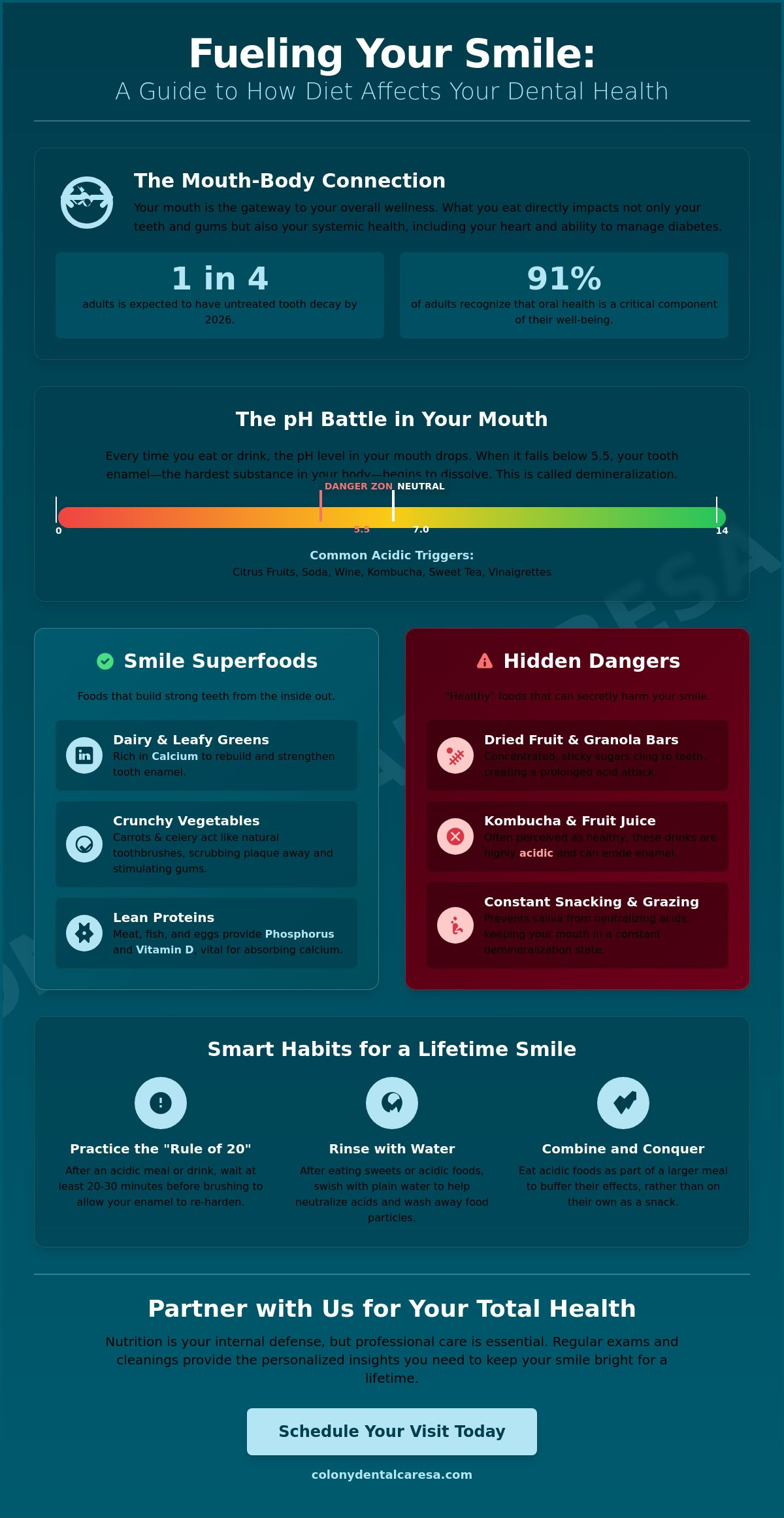
What if your favorite “healthy” snack is actually doing more damage to your smile than a piece of chocolate? It’s a common worry for many of our neighbors here in San Antonio who want the best for their health. We know it’s frustrating to brush and floss diligently, only to feel a pang of anxiety about cavities or gum disease. With 1 in 4 adults expected to have untreated decay by 2026, it’s clear that understanding how diet affects your dental health is more important than ever. It’s easy to feel confused when trendy items like kombucha or dried fruit actually contribute to enamel erosion despite their healthy reputation.
We’re here to help you move past the uncertainty and toward a plan that protects your teeth for life. This guide will show you exactly how your food choices impact your gums and enamel, providing you with professional expertise you can trust. We’ll provide a clear list of the best teeth-friendly foods and offer practical nutritional habits designed for your local lifestyle. Together, we can ensure your daily meals support a bright, healthy smile and your overall systemic well-being.
Key Takeaways
- See why your mouth serves as the front line for your overall health and how your daily meals impact your systemic well-being.
- Discover the science behind How Diet Affects Your Dental Health, including how to spot hidden sugars in snacks that appear healthy.
- Identify the essential minerals and vitamins, like Vitamin D and calcium, that work together to rebuild and strengthen your tooth enamel.
- Learn the “Rule of 20” and other simple timing tricks that help your saliva naturally neutralize harmful acids after you eat.
- Find out how regular dental exams and cleanings provide the personalized insights you need to keep your smile bright and healthy.
The Gateway to Wellness: How Your Diet Shapes Oral Health
We often think of our mouths as separate from the rest of our bodies, but they’re actually the entry point for our entire digestive and systemic health systems. Every meal you enjoy passes through a complex ecosystem called the oral microbiome. These tiny bacteria help process your food, but they also react instantly to the nutrients you choose. Understanding how diet affects your dental health is the first step in protecting your smile and your vitality. In fact, many nutrient deficiencies show up in your mouth long before they manifest elsewhere in your body. Pale gums or small cracks at the corners of the mouth can be early signals that your body needs more vitamins or minerals.
Think of your diet as a form of internal care. While we focus on what we see in the mirror, your body is busy using the fuel you provide to maintain your gums and bone structure. A diet rich in whole foods helps manage the way your mouth handles bacteria, preventing the buildup that leads to discomfort. This is why we view your nutritional choices and our professional care as a team effort. We’re not just looking at your teeth; we’re looking at your total health.
The Mouth-Body Connection
Your oral health is a vital piece of your overall wellness puzzle. Clinical research continues to show that gum health is deeply linked to heart health and effective diabetes management. By choosing a balanced diet, you’re actively reducing systemic inflammation that can affect your gums and your heart. To explore how professional holistic therapy can further enhance your wellness journey, you can read more about these supportive sessions. At Colony Dental Care, our philosophy is rooted in treating you as an individual. We want our San Antonio neighbors to feel cared for and heard, knowing that we prioritize your comfort and peace of mind. A 2026 report found that 91% of adults recognize oral health as a critical component of their well-being, and we’re here to help you bridge that gap between your plate and your dental checkup.
Why Brushing Isn’t the Only Answer
Brushing and flossing are essential habits, but they only clean the surfaces we can reach. Nutrition builds your teeth from the inside, creating an internal defense against decay. While a toothbrush removes plaque, the right vitamins strengthen your enamel and help your immune system fight off oral bacteria. The Role of Diet in Oral Hygiene demonstrates how certain foods can either support or sabotage your hygiene efforts. We believe that the synergy between professional dental cleanings and high-quality daily nutrition provides the ultimate protection for your smile.
The Hidden Dangers: Sugar, Acid, and the pH Battle
While we often focus on calories or protein for our waistlines, there’s another invisible battle happening in your mouth: the fight for a balanced pH level. Understanding how diet affects your dental health requires a quick look at the science of enamel. Your tooth enamel is the hardest substance in your body, but it has a specific weakness. When the environment in your mouth becomes acidic, specifically dropping below a pH of 5.5, your enamel begins to demineralize. This softening of the tooth surface is the first step toward cavities and sensitivity.
Frequent snacking is often the silent culprit behind this acid damage. Every time you eat, your mouth’s pH level drops. If you graze throughout the day, your saliva never gets the chance to neutralize those acids and return your mouth to a safe, neutral state. In San Antonio, we love our sweet tea and tangy BBQ sauces, but these local favorites are often loaded with liquid sugars. These sugars don’t just pass through; they coat your teeth, providing a feast for bacteria that produce even more acid. Even “healthy” choices like granola bars or dried mango can be deceptive. These concentrated sugars cling to the grooves of your teeth, creating a prolonged acid bath that wears down your natural defenses.
Enamel Erosion and Acidic Foods
It isn’t just sugar that causes trouble; direct acidity from our food can be just as aggressive. Citrus fruits, vinegars, and carbonated beverages are common triggers that can lead to enamel erosion. Many people experience a “halo effect” with fruit juices or kombucha, believing they’re making a better choice for their body. However, the high acid content in these drinks can be just as damaging to your enamel as a traditional soda. To protect your smile, try rinsing your mouth with plain water after enjoying something acidic. This simple habit helps wash away lingering acids and encourages your saliva to do its job. For a deeper look at protecting your smile, you can read about specific Nutrients for Strong Teeth that help counteract this daily wear and tear.
The Role of Sticky Sugars
The texture of what you eat matters just as much as the ingredients. Sticky candies, dried fruits, and even starchy foods like chips or white bread are particularly risky. Starches quickly break down into simple sugars and have a tendency to get stuck between teeth, providing a long-term food source for plaque. If this plaque isn’t managed through a balanced diet and good hygiene, it can lead to more serious concerns. If you’ve noticed your gums are tender or bleeding, it might be time to discuss periodontal disease treatment with our caring team. We want you to feel confident in your choices, and a quick checkup at Colony Dental Care can help us catch any diet-related erosion before it becomes a bigger issue.
Superfoods for Your Smile: Nutrients That Build Strong Teeth
While we’ve explored the challenges posed by acid and sugar, it’s equally important to look at the positive side of the plate. Your teeth are living tissues that require specific nutrients to stay resilient against daily wear. Understanding how diet affects your dental health isn’t just about avoiding damage; it’s about actively providing the building blocks for a stronger smile. This process is called remineralization, where your body uses minerals to repair enamel that has been softened by acids.
Calcium and phosphorus are the primary materials your body uses for this internal repair. Without them, your enamel would gradually thin, leading to sensitivity and a higher risk of cavities. However, these minerals can’t do the job alone. Vitamin D acts as the essential key that allows your body to actually absorb calcium from your food. We also look closely at Vitamin C, which is a powerful defender of your gum tissue health. It helps maintain the collagen that keeps your gums firm and snug against your teeth. For those focused on a holistic approach, Vitamins A and K2 are often overlooked heroes. Vitamin A supports healthy saliva production, while Vitamin K2 helps guide minerals into your bones and teeth rather than letting them accumulate in soft tissues.
Top Foods for Remineralization
Adding these nutrient-dense options to your meals can make a noticeable difference in your oral vitality. We recommend focusing on these three categories:
- Dairy products: Cheese, yogurt, and milk are excellent sources of calcium. Cheese also contains casein, a protein that helps stabilize and repair tooth enamel.
- Leafy greens: Kale, spinach, and collard greens offer high calcium content. Their fibrous texture also provides a gentle scrubbing effect while you chew.
- Lean proteins and nuts: Chicken, turkey, and almonds provide the phosphorus necessary for the enamel repair process to take place.
Crunchy Vegetables: Nature’s Toothbrushes
We often suggest incorporating “detergent foods” into your daily routine. These are crunchy, high-fiber raw vegetables like carrots and celery, or fruits like apples. When you bite into these, they stimulate a healthy flow of saliva, which is your mouth’s natural way of washing away debris and neutralizing acids. The mechanical cleaning action of these fiber-rich foods helps sweep away loose plaque before it can harden. We encourage our San Antonio neighbors to visit local farmers markets for peak nutrition. Fresh, locally grown produce often contains higher nutrient levels, giving your smile the best possible support for long-term health. It is a simple, refreshing way to care for yourself while enjoying the best of our community’s harvest.
Smart Eating Habits for a Lifetime of Dental Health
Changing what you eat is a wonderful start, but the way you time your meals is just as vital for your long-term comfort. When we discuss how diet affects your dental health, we often focus on the “Rule of 20.” Every time you take a bite of food, especially starches or sugars, your mouth enters what we call an “acid attack” cycle. It takes your saliva approximately 20 minutes to neutralize these acids and begin the natural remineralization process we mentioned earlier. If you graze on snacks throughout the day, your teeth remain in a constant state of vulnerability because the pH never has a chance to recover. This is why we suggest enjoying sweets or acidic treats as part of a larger meal. During a full meal, your mouth produces a significantly higher volume of saliva, which helps wash away debris and buffers the acid much more effectively than if you ate that same snack alone.
For our busy San Antonio neighbors commuting along the 1604 or working in the Medical Center, staying “dental-safe” on the go is all about simple, effective strategy. Instead of sipping on a soda or sweet tea over several hours, it’s much better for your enamel to finish it in one sitting. This shift limits the total time your teeth are exposed to sugar. Hydration is also one of your best defenses. Drinking plain water throughout the day maintains your saliva volume and physically rinses away bacteria between meals. We also recommend keeping sugar-free gum made with Xylitol in your car or desk. Unlike regular sugar, Xylitol is a natural sweetener that bacteria cannot ferment, which actually helps fight cavities by preventing plaque from sticking to your tooth surfaces.
Timing and Frequency
While 72% of American adults are expected to brush twice daily by 2026, brushing alone isn’t always enough to stop the cumulative effects of frequent snacking. Grazing throughout the day keeps your mouth in a state of constant acidity, which can lead to sensitivity even if you have a great hygiene routine. By sticking to three square meals and limiting snacks, you give your body the time it needs to repair itself. For those with a fast-paced lifestyle, carrying a small bottle of water to rinse after every meal can be a game-changer for your oral vitality.
The Power of Saliva
Think of your saliva as your body’s natural mouthwash and remineralization fluid. It is a mineral-rich substance that constantly works to bathe your teeth in the calcium and phosphorus they need to stay strong. You can encourage a healthy flow by choosing sugar-free dairy or crunchy, water-rich plants like cucumbers. However, if you find yourself struggling with a persistently dry mouth, it can lead to rapid decay or sudden discomfort. In cases where pain or decay accelerates quickly, you may need emergency dental care to protect your smile. Understanding how diet affects your dental health means recognizing when your body’s natural defenses need a little extra support from our professional team. If you’re ready to ensure your habits are supporting your smile, contact us at Colony Dental Care to schedule a thorough checkup.
Partnering with Colony Dental Care for Your Total Health
At Colony Dental Care, we believe that your oral health is a shared journey between your daily habits and our professional support. Understanding how diet affects your dental health is a powerful tool, but you don’t have to navigate those choices alone. Dr. James David Oei and our dedicated team take the time to listen to your concerns and provide personalized nutritional counseling during every visit. We aren’t just here to check for cavities; we’re here to understand your lifestyle and help you find realistic ways to protect your smile. Whether you’re curious about the acidity of your favorite local coffee or need advice on teeth-friendly snacks for your family, we’re your trusted advisors right here in San Antonio.
Regular visits are the best way to catch diet-related erosion before it progresses into something more serious. By identifying thinning enamel early, we can often recommend simple changes or preventative treatments that save you from needing more complex procedures, such as dental crowns, in the future. We prioritize your comfort and peace of mind above all else, ensuring that every conversation about your health feels like a supportive partnership rather than a clinical lecture. Our goal is to help you maintain your natural teeth for a lifetime through thorough, individualized care.
Preventative Care at Colony Dental
Our approach to wellness is holistic, linking your oral health to your overall systemic well-being. During our comprehensive dental exams, we look for the subtle, early signs of nutritional deficiencies that often manifest in the mouth first. To give your healthy diet an extra boost, we offer professional fluoride treatments that strengthen your enamel and provide an added layer of defense against acid attacks. We also understand that many of our neighbors worry about the cost of staying healthy. To help, we provide an in-house dental membership that makes affordable preventative care accessible for everyone, even without traditional insurance. It’s our way of ensuring our community stays vibrant and healthy.
Start Your Journey to a Healthier Smile Today
Our San Antonio office is built on the foundation of long-term relationships and a warm, neighborly feel. We want you to feel seen and heard from the moment you walk through our doors. It’s never too late to begin a new chapter for your health or to restore the brilliance of your smile. We provide a steady, calm environment where your peace of mind is our highest priority. If you’ve been feeling anxious about how diet affects your dental health or confused by conflicting advice, let us guide you through a step-by-step plan tailored just for you. Schedule your compassionate dental exam with Colony Dental Care today and experience a total health partnership that prioritizes your comfort and vitality.
Take the Next Step Toward a Lifetime of Radiant Health
Your daily food choices are more than just fuel; they are the foundation of your oral vitality and systemic well-being. We have explored how balancing your mouth’s pH and choosing nutrient-dense superfoods like calcium and Vitamin D can rebuild your enamel from the inside out. Understanding how diet affects your dental health empowers you to make small, thoughtful changes that lead to lasting results for your teeth and gums. By adopting smart habits like the Rule of 20 and staying hydrated, you are actively protecting your smile between your professional visits.
You don’t have to navigate these nutritional choices alone. Dr. James David Oei brings over 30 years of clinical experience to our neighborly San Antonio practice, providing a compassionate and anxiety-free environment where you’ll always feel seen and heard. If you are looking for affordable preventative care without the stress of insurance, our in-house membership plan is designed to prioritize your peace of mind. We are here to be your dedicated partners in total wellness. Schedule Your Gentle Dental Exam and Cleaning in San Antonio Today and let’s work together to keep your smile bright and healthy for years to come.
Frequently Asked Questions
Is sparkling water bad for my teeth?
Sparkling water is generally safe for your teeth, though it is slightly more acidic than flat water due to the carbonation process. While it doesn’t contain the harmful sugars found in traditional soda, frequent sipping can still soften your enamel over time. We recommend choosing plain varieties over citrus flavored ones to keep your mouth’s pH levels as neutral as possible. It’s a refreshing choice that’s much kinder to your smile than sugary alternatives.
Can I reverse a cavity through diet alone?
You cannot reverse a fully formed cavity through diet alone once the decay has reached the dentin. However, you can remineralize very early “white spots” on your enamel by increasing your intake of calcium and phosphorus. Once a physical hole has formed in the tooth, you’ll need a professional treatment like a tooth-colored filling to restore the structure. We can help you identify these early spots during a routine exam to prevent the need for more complex care.
Why do my gums bleed even though I eat healthy and brush?
Bleeding gums often signal early periodontal disease, even if you maintain a balanced diet and brush regularly. Plaque can still accumulate in hard to reach areas, leading to inflammation that requires professional attention. It’s also possible that a deficiency in Vitamin C or K is affecting your gum tissue’s natural ability to heal. We’ll help you find the exact cause during a gentle checkup to ensure your gums stay firm and healthy.
Is fruit sugar just as bad for teeth as white sugar?
Fruit sugar is less concentrated than white sugar, but it still feeds the bacteria that cause decay. The fiber in whole fruit helps scrub your teeth, making it a much better choice than fruit juice or sticky dried fruit. Understanding how diet affects your dental health means recognizing that even natural sugars require a quick rinse with water to keep your enamel safe. It’s all about enjoying nature’s treats in a way that supports your oral vitality.
What is the best thing to drink for dental health besides water?
Unsweetened milk is the best beverage for your teeth besides water because it’s rich in calcium and phosphorus. These essential minerals help strengthen your enamel and neutralize harmful acids in the mouth. If you prefer something else, unsweetened green tea is a wonderful alternative. It contains natural polyphenols that help reduce the growth of bacteria that cause cavities and gum disease. Both choices provide excellent support for your long term dental wellness.
How does coffee and tea affect my dental health beyond staining?
Coffee and tea impact your oral health by increasing acidity and potentially causing dry mouth. Most people focus on the surface stains, but the tannins and caffeine can also reduce your saliva flow, which is your mouth’s primary defense against decay. If you enjoy these drinks, try to finish them in one sitting rather than sipping all morning. This habit gives your saliva the time it needs to neutralize acids and protect your enamel.
Can a vitamin deficiency cause tooth loss?
Yes, a severe vitamin deficiency can eventually lead to tooth loss by weakening the bone and gum tissue that support your smile. For example, a lack of Vitamin C can lead to scurvy, which causes loose teeth and bleeding gums. We look for these early nutritional warning signs during our comprehensive checkups to help you stay healthy. Our goal is to help you keep your natural teeth for life by identifying these concerns before they become serious.
Does chewing gum really help prevent cavities?
Chewing sugar-free gum definitely helps prevent cavities by stimulating saliva production after you eat. This increased flow washes away food particles and neutralizes the lingering acids that lead to decay. When you choose a gum containing Xylitol, you’re adding an extra layer of protection because bacteria cannot ferment this natural sweetener. This is a practical and easy way to manage how diet affects your dental health when you’re busy or on the go.