Did you know that a 2021 poll by the American Dental Association found that more than 70% of dentists saw a significant increase in patients clenching and grinding their teeth? If you’re waking up with a dull, nagging headache or wondering, “Can Stress Cause Tooth Pain or Jaw Issues?” you’re certainly not alone. It’s common to feel confused by sharp, radiating jaw pain or “phantom” toothaches that seem to appear out of thin air, especially when you’ve been taking good care of your smile.
We understand how unsettling this discomfort can be, and we want to validate that what you’re feeling is a real physical response to the pressure of daily life. Our bodies often hold onto emotional tension in the muscles of the face and neck, leading to very tangible dental concerns. In this article, we’ll help you understand the deep connection between your mind and your oral health. You’ll discover practical, gentle ways to reduce jaw tension at home and learn how we can partner with you to find a reassuring path back to total comfort and peace of mind.
Key Takeaways
- Understand how your body’s “fight or flight” response physically impacts your smile by increasing muscle tension and affecting blood flow.
- Discover how nocturnal habits like clenching and grinding provide a physical answer to the question, Can Stress Cause Tooth Pain or Jaw Issues?
- Learn why managing emotional pressure is a vital part of protecting your gums and preventing the development of uncomfortable canker sores.
- Explore gentle, effective strategies for relieving jaw tension at home while knowing when to seek professional care for lasting comfort.
- See how Dr. James David Oei and our San Antonio team use 30 years of experience to provide the gentle, individualized care you deserve.
The Mind-Body Connection: How Stress Manifests in Your Mouth
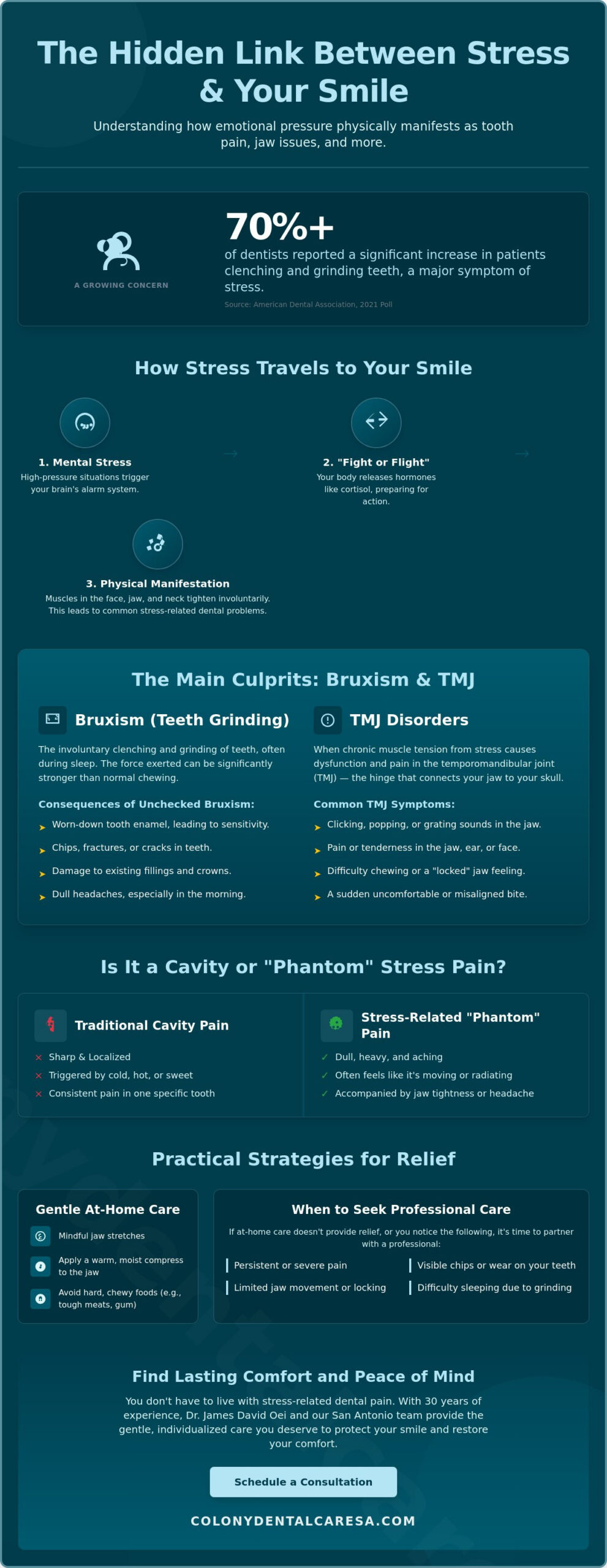
Your body is an incredibly interconnected system where your emotional state and physical health constantly influence one another. When you experience a high-pressure week or a difficult personal season, your brain triggers the “fight or flight” response. This ancient survival mechanism releases a flood of hormones that redirect blood flow to your vital organs while tightening your muscles to prepare for action. The muscles in your face and jaw are often the first to react to this internal alarm. If you’ve been wondering, “Can Stress Cause Tooth Pain or Jaw Issues?” you’re seeing the physical evidence of this mental strain manifesting in your smile.
This persistent tension often leads to Bruxism, or the involuntary clenching and grinding of your teeth. Over time, this constant pressure creates what we call referred pain. This happens when the nerves in your jaw become so overstimulated that the discomfort radiates to other areas. Stress in your mind translates into a physical sensation that feels like it’s coming directly from your molars, even if the teeth themselves are perfectly healthy. We want you to know that this pain is valid and it’s a very common medical concern that many of our neighbors face.
The Role of Cortisol and Your Nervous System
When stress becomes chronic, your body stays in a state of high alert. This keeps your cortisol levels elevated, which can trigger subtle inflammation in your gums and the delicate ligaments holding your teeth in place. One of the most overlooked aspects of this connection is how stress actually lowers your overall pain threshold. Because your nervous system is already overtaxed, it becomes hypersensitive to every sensation. A minor muscle twitch or slight pressure that you might usually ignore can suddenly feel like a major, throbbing toothache. Referred dental pain is essentially a physical response to systemic tension that travels through the complex nerve pathways of your face.
Why Tooth Pain Doesn’t Always Mean a Cavity
It’s natural to worry that a sharp pain in your tooth must mean a cavity or an infection. However, tension-based discomfort often presents differently than traditional decay. While a cavity usually causes sharp, localized pain when you bite down or eat something cold, stress-related “phantom” toothaches often feel like a dull, heavy ache that seems to move around. You might feel it in your upper teeth one day and your lower jaw the next. We encourage you to view your oral health as a vital part of your total systemic well-being. Taking a holistic approach helps us distinguish between a simple repair and a need for deeper relaxation and care. We’re here to help you navigate these sensations with confidence and ease.
Bruxism and TMJ: When Stress Puts Your Jaw in a Vise
When the weight of a long day follows you to bed, your jaw often carries the burden. This physical response is known as bruxism. It involves clenching or grinding your teeth, usually during the night when you aren’t aware it’s happening. If you’ve been wondering, “Can Stress Cause Tooth Pain or Jaw Issues?” this nocturnal activity is a leading cause. The force exerted during sleep can be significantly stronger than any pressure you’d apply while awake. This puts your teeth and jaw in a virtual vise, leading to significant strain that affects your entire facial structure.
Leaving this habit unchecked can lead to lasting damage that goes beyond simple discomfort. Constant grinding wears down your protective enamel, making your teeth more sensitive to temperature and touch. You may even begin to see small chips or cracks that weren’t there before. This intense pressure is particularly hard on restorative work. It can jeopardize the longevity of your fillings or custom dental crowns. We want to help you protect these important investments so your smile stays strong and vibrant for years to come.
Identifying the Signs of Sleep Bruxism
Many of our neighbors don’t realize they are grinding their teeth until we point out the signs during a comfortable, thorough checkup. You might wake up with a tight, sore jaw or notice “scalloped” edges on your tongue. This happens when the tongue is repeatedly pressed against the teeth during sleep. Sometimes, a spouse or partner is the first to hear the grinding sounds during the night. Recognizing these early signs is the first step toward finding relief and preventing future wear on your beautiful smile.
TMJ Disorders: Beyond Just a Clicking Jaw
Your temporomandibular joint, or TMJ, is the complex hinge that allows your jaw to move smoothly. When stress causes the surrounding muscles to tighten and spasm, it creates a cycle of pain and dysfunction. This can lead to clicking or popping sounds when you eat or speak. In some cases, you might even feel a “locked” sensation in your jaw. This discomfort rarely stays in one place; it often radiates into your ears, neck, and even your shoulders. If these symptoms feel familiar, scheduling a dental cleaning and exam is a gentle way to start your journey toward a more relaxed, pain-free life.
The Hidden Impact: Stress, Gums, and Soft Tissues
While we often focus on the hard structures of the mouth, like your teeth and jawbone, your soft tissues are equally sensitive to the effects of emotional pressure. When your body is under constant strain, it produces hormones that can actually suppress your immune system. This makes it much harder for your body to naturally defend itself against the bacteria that cause infections. If you’ve asked yourself, “Can Stress Cause Tooth Pain or Jaw Issues?” it’s helpful to realize that the answer often starts with your gums. A weakened immune response allows minor irritations to escalate more quickly than they would during calmer times.
This biological shift means that your mouth becomes more vulnerable to inflammation and slow healing. We see this often in our community, where the physical toll of a demanding lifestyle shows up as sensitive or bleeding gums. Understanding this connection is the first step toward reclaiming your comfort. We’re here to help you navigate these changes with a gentle, supportive approach that prioritizes your peace of mind. If you notice your gums acting differently during a stressful week, it’s your body’s way of asking for a little extra care and attention.
Stress and the Progression of Gum Disease
During high-pressure seasons, it’s easy to let your daily habits slip. You might skip a nightly floss or rush through your morning brushing routine because you’re focused on a looming deadline. This neglect, combined with the body’s heightened inflammatory response, creates a perfect storm for your periodontal health. Systemic stress acts like fuel for inflammation, causing gums to become red, swollen, or prone to bleeding. We’ve found that maintaining your regular dental cleaning in San Antonio is one of the best ways to protect your foundation when life feels overwhelming. If a flare-up does occur, our team provides compassionate gum disease treatment to get your health back on track.
Canker Sores and Dry Mouth: The Silent Irritants
Stress is also a notorious trigger for aphthous ulcers, commonly known as canker sores. These small, painful spots can make eating and speaking uncomfortable, adding even more frustration to your day. Additionally, many of our neighbors experience “dry mouth” or xerostomia. This can be a direct physical symptom of anxiety or a side effect of medications used to manage it. Saliva is your mouth’s natural protector; it rinses away food particles and neutralizes acids. When your mouth is dry, the risk of tooth decay and enamel erosion increases significantly. These symptoms are manageable with the right partnership, and we’re dedicated to finding solutions that help you feel like yourself again.
Practical Strategies for Relieving Stress-Related Dental Pain
Finding relief starts with acknowledging that your mind and body both need a little extra kindness during difficult seasons. When you find yourself asking, “Can Stress Cause Tooth Pain or Jaw Issues?” you’ve already taken the first step toward healing by identifying the source of your discomfort. We believe the best path forward is a balanced one. It combines simple, neighborly self-care routines you can do at home with the steady guidance of professional expertise to protect your long-term health.
Managing daytime clenching is often about building small, mindful habits. Try incorporating gentle jaw-stretching exercises into your day, such as slowly opening your mouth while keeping your tongue resting against the roof of your mouth. This helps reset the muscles and reminds your body to let go of stored tension. Balancing these small moments of relaxation with regular checkups ensures that your smile remains resilient, even when life feels a bit hectic.
Immediate At-Home Relief Techniques
If you’re experiencing acute soreness, there are several steps you can take right now to find a sense of ease:
- Apply warm compresses: Place a warm, damp cloth against your jaw joints for ten minutes. The gentle heat helps relax overworked muscles and improves circulation to the area.
- Practice “lips together, teeth apart”: This is a simple mantra to help you stay mindful. Your teeth should only touch when you’re chewing; at all other times, try to keep a small space between them to prevent clenching.
- Consult your doctor about anti-inflammatories: Over-the-counter options can help manage temporary swelling and soreness. Always check with a medical professional to ensure they’re right for your specific health needs.
The Professional Solution: Custom Nightguards
While store-bought “boil-and-bite” guards are widely available, they often lack the precision needed to provide true relief. These generic options can be bulky and may actually cause more jaw strain because they don’t align with your unique bite. A custom-fit nightguard from a trusted dentist in San Antonio is designed specifically for the contours of your mouth. This precision allows the guard to redistribute pressure evenly, acting as a protective cushion that saves your teeth from fractures and wear.
At Colony Dental Care, we make the process of getting a nightguard simple, unhurried, and focused entirely on your comfort. We take the time to ensure the fit is perfect so you can sleep soundly without the worry of morning jaw pain. If you’re ready to wake up feeling refreshed and pain-free, we invite you to schedule a dental cleaning and exam with our compassionate team today.
Compassionate Care at Colony Dental Care in San Antonio
If you’ve been searching for answers to the question, “Can Stress Cause Tooth Pain or Jaw Issues?” you deserve a dental home that treats you with the kindness and respect you’d expect from a neighbor. At Colony Dental Care, Dr. James David Oei has spent 30 years building a practice rooted in the San Antonio community. His philosophy is simple: we provide gentle, individualized care that looks at the person, not just the procedure. We understand that life can be demanding, and we’re here to ensure your dental visits are a source of relief rather than another item on your stress list.
Our commitment to your well-being extends beyond the clinical chair. We believe that a total health partnership means making high-quality care accessible and worry-free. We work closely with various insurance providers and offer in-house plans to help you maintain your oral health without added financial pressure. By prioritizing your peace of mind and comfort, we help you protect your smile from the physical toll of a busy life. It’s about more than just fixing teeth; it’s about supporting your vitality and ease through every season.
A Reassuring Environment for Anxious Patients
We know that many of our neighbors feel a sense of unease when visiting the dentist, especially when they’re already dealing with the physical symptoms of stress. Our office is designed to be a stable, reliable fixture in the San Antonio area where you can feel truly heard. We take the time to listen to your concerns about jaw tension or “phantom” toothaches without rushing you through your appointment. This unhurried, methodical approach allows us to create a calm atmosphere where your anxieties can finally rest. You aren’t just a case on a chart to us; you’re a valued member of our local community.
Your Next Steps Toward a Pain-Free Smile
Taking the first step toward relief is often as simple as booking a gentle exam. Even if you suspect your discomfort is “just stress,” the physical effects on your enamel and jaw joints are very real and deserve professional attention. We’ll work with you to rule out underlying issues and create a personalized plan to manage tension and protect your teeth. Whether you need a routine dental cleaning and exam or more specialized care like periodontal disease treatment, we’re here to guide you. We invite you to reach out to our San Antonio team today to experience a different, more compassionate kind of dental care. Let’s work together to bring the comfort and confidence back to your smile.
Your Path to a Relaxed and Healthy Smile
We’ve explored how your nervous system directly impacts your jaw muscles and how chronic tension can affect your gum health. Understanding that “phantom” toothaches are often physical responses to stress helps remove the mystery and anxiety surrounding your pain. If you’ve been wondering, Can Stress Cause Tooth Pain or Jaw Issues? you’ve now got the tools to identify these symptoms and begin simple at-home relief. It’s about recognizing the signal your body is sending and responding with kindness.
Dr. James David Oei and our team bring over 30 years of gentle dental experience to our San Antonio community. We prioritize your comfort above all else and offer an in-house dental membership to keep your care affordable and straightforward. We invite you to schedule your gentle, stress-relieving dental exam with Dr. Oei today. You don’t have to carry the weight of stress in your jaw alone. We’re here to partner with you for a lifetime of vibrant, pain-free health.
Frequently Asked Questions
Can anxiety cause my teeth to feel loose or sensitive?
Yes, high levels of anxiety often lead to chronic clenching, which can make your teeth feel temporarily sensitive or even slightly loose. This happens because the intense pressure strains the periodontal ligaments that hold your teeth in place. While it’s usually not a sign of permanent tooth loss, it is a physical response to the question, Can Stress Cause Tooth Pain or Jaw Issues? we can help evaluate these sensations during a gentle exam to ensure your smile remains stable.
How do I know if my jaw pain is from stress or a dental emergency?
Stress-related jaw pain is typically a dull, aching sensation on both sides of the face, whereas a dental emergency often involves sharp, localized pain or visible swelling. If you experience a fever, a persistent bad taste in your mouth, or throbbing pain that keeps you awake at night, you should seek emergency dental care right away. We’re always here to help you distinguish between muscle tension and an urgent infection so you can find peace of mind.
What does a stress-related headache feel like compared to a toothache?
A stress-related headache often feels like a tight band pressing around your forehead or temples, while a toothache is usually a localized, throbbing sensation. Tension from your jaw can radiate upward, causing what many people describe as a “heavy” feeling in the face. If the discomfort is concentrated in a specific tooth or worsens significantly when you eat, it’s more likely a dental issue rather than a tension headache.
Is it possible to damage my dental implants by grinding my teeth?
Yes, chronic grinding can put significant pressure on your dental implants and the surrounding bone. While implants are incredibly strong, the repeated force of bruxism can lead to complications or wear on the restoration over time. Protecting your investment with a custom nightguard is a wonderful way to ensure your implants remain a healthy, permanent part of your smile for many years to come.
How much does a custom nightguard cost in San Antonio?
The cost of a custom nightguard in San Antonio varies depending on your specific dental needs and the type of material used for the guard. We recommend checking with your insurance provider or asking our friendly team about our in-house dental membership to see how we can make this protective care affordable for you. Our team is happy to provide a personalized estimate after a comfortable consultation to ensure you get the perfect fit.
Can stress cause my gums to bleed even if I brush and floss?
Stress can indeed cause your gums to bleed by raising cortisol levels and weakening your immune system’s ability to fight off oral bacteria. Even if you maintain an excellent brushing and flossing routine, systemic inflammation can make your soft tissues more sensitive and prone to bleeding. This is why we focus on a holistic approach to care, looking at how your overall well-being impacts your need for periodontal disease treatment.
Are there specific foods I should avoid when my jaw is stressed?
When your jaw is feeling stressed, it’s best to avoid hard, crunchy, or excessively chewy foods that require a lot of muscle effort. Items like ice, hard candies, tough steaks, or even chewy bagels can aggravate tired jaw joints and muscles. Opting for softer foods for a few days gives your temporomandibular joints a much-needed rest and helps the inflammation subside more quickly.
What should I do if I think I am grinding my teeth at night?
If you suspect you’re grinding your teeth at night, the best first step is to schedule a dental cleaning and exam with a trusted professional. We can look for specific wear patterns on your teeth that confirm bruxism and discuss the biological link behind your symptoms. Understanding Can Stress Cause Tooth Pain or Jaw Issues? allows us to create a compassionate plan, like a custom nightguard, to protect your smile while you sleep.