Imagine you are enjoying a refreshing glass of cold water when a sharp, unexpected flash of pain zings through your tooth. It is a jarring experience that can leave you feeling anxious about what is happening beneath the surface. You might worry about complex procedures like root canals, especially when your teeth look perfectly healthy to the naked eye. Understanding What Causes Sudden Tooth Sensitivity and How to Fix It is the first step toward reclaiming your peace of mind. Since approximately 1 in 8 Americans experience this same discomfort, you are certainly not alone in your search for relief.
We understand how unsettling it feels when a sudden ache disrupts your day or makes you hesitate before a favorite meal. You deserve to feel confident and comfortable every time you smile. Our goal is to help you discover exactly why your teeth are reacting this way and provide a gentle, clear path toward lasting relief. We will explore simple home care adjustments and professional solutions, such as protective dental sealants or tooth-colored fillings, to ensure your smile feels as good as it looks. Let’s look at how we can restore your comfort together.
Key Takeaways
- Understand the anatomy of a “zing” and why thinning enamel or exposed roots cause that sudden, sharp flash of discomfort.
- Identify the most common culprits, including aggressive brushing habits, to learn What Causes Sudden Tooth Sensitivity and How to Fix It.
- Learn how to use the “Duration Test” to distinguish between minor sensitivity and a deeper issue that might require emergency dental care.
- Discover a range of gentle solutions, from simple desensitizing toothpaste to professional fluoride treatments, designed to protect your smile and restore your comfort.
- Gain peace of mind by seeing how a personalized, neighborly approach to dental care in San Antonio can help you address concerns without the usual anxiety.
Understanding the Sharp Jolt: What is Sudden Tooth Sensitivity?
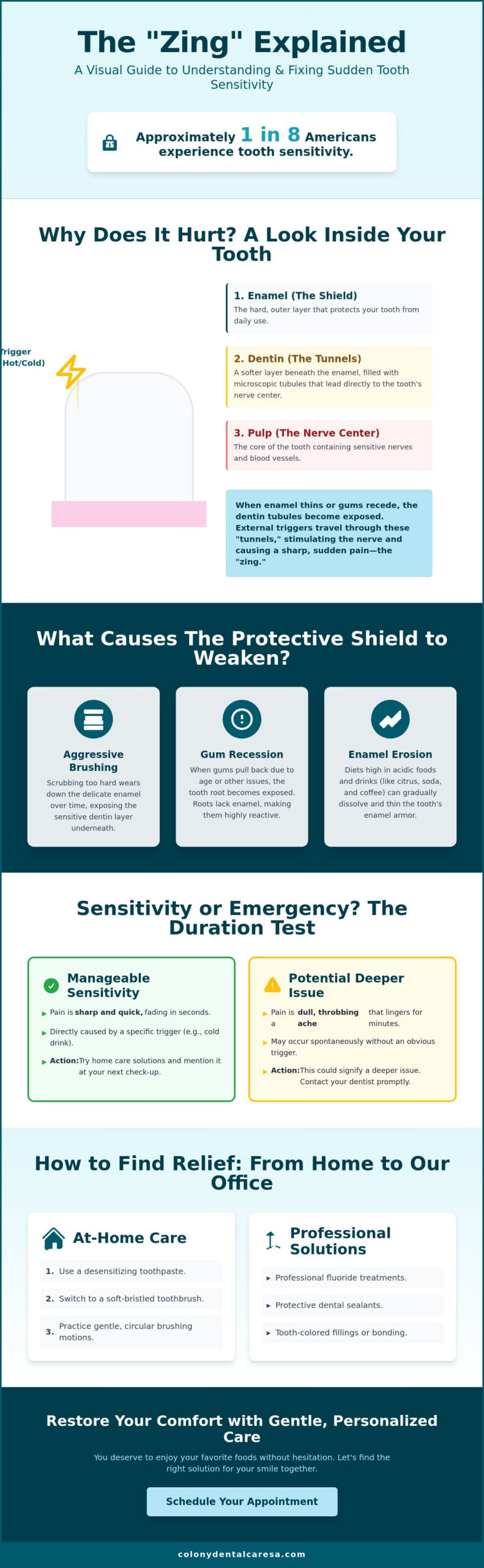
That sudden flash of pain can feel like a bolt of lightning in your mouth. Whether it is a sip of iced tea or a bite of ice cream, that sharp “zing” is actually your tooth’s way of sending an urgent message. At our practice, we see this often; it is one of the most common reasons neighbors visit us here in San Antonio. If you are wondering What Causes Sudden Tooth Sensitivity and How to Fix It, you can start by looking at how your teeth are built. Your teeth are not solid blocks; they are sophisticated structures with three distinct layers. The hard, white outer shell is your enamel, which acts as a sturdy shield. Beneath that is the dentin, a softer layer that contains the pathways to the tooth’s center. At the very heart lies the pulp, which is home to the sensitive nerves and blood vessels that keep the tooth alive.
When that protective enamel thins or your gum line begins to shift, it often leads to dentin hypersensitivity. This is simply the clinical term for tooth sensitivity. It means your tooth’s internal alarm system has become a bit too exposed to the outside world. While the sensation can be startling, we want to reassure you that it is a manageable condition. It is a sign from your body that your smile needs a little extra protection, rather than a signal of a permanent problem. We are here to help you understand these signals so you can return to enjoying your favorite foods without the fear of a sudden jolt.
How Your Teeth Communicate with You
Think of your tooth like a cozy home during a hot Texas summer. When the doors and windows are sealed tight, you stay perfectly comfortable inside. However, if a window is left slightly ajar, the outside elements can rush in. Your dentin is filled with thousands of microscopic tubules, which function like tiny tunnels leading directly to the nerve in the pulp. When your enamel shield is compromised, external stimuli travel through these tunnels at lightning speed. This triggers the nerve and creates that familiar sharp sensation. This sensitivity is often a protective warning sign. It is your tooth’s way of telling you that the protective layers are thinning, but it does not always mean the tooth is “broken” or beyond repair. It is simply a request for a bit of neighborly care and attention.
Common Triggers You Might Be Noticing
Living in San Antonio means our teeth encounter plenty of environmental triggers throughout the year. Understanding What Causes Sudden Tooth Sensitivity and How to Fix It involves recognizing what sets off your specific reaction. You might notice discomfort during several everyday activities:
- Temperature extremes: A glass of ice water on a 100-degree afternoon or a steaming cup of morning coffee can cause fluid to move quickly within those microscopic tubules.
- Sweet or highly acidic treats: Refreshing lemonade, citrus fruits, or sugary snacks can change the pressure inside the tubules, leading to a quick reaction from the nerve.
- Physical triggers: Even the cold air from a “blue norther” blowing against your teeth or brushing a little too firmly can be enough to cause a “zing.”
By identifying these triggers, we can work together to create a personalized plan that restores your comfort and protects your long-term dental health.
5 Common Culprits: What Causes That Sudden Zing?
While that sharp jolt is surprising, understanding What Causes Sudden Tooth Sensitivity and How to Fix It starts with looking at your daily habits and environment. There are many causes for this discomfort, and most of them are quite common and treatable. Here are the five most frequent culprits we see in our San Antonio community:
- Aggressive Brushing: It’s easy to think that a vigorous scrub is the best way to clean, but your enamel is actually quite delicate. Over time, “scrubbing” too hard can wear down this protective shield and expose the sensitive dentin underneath.
- Gum Recession: Your gums act like a protective blanket for the roots of your teeth. If the gum tissue pulls back due to age or periodontal issues, the root becomes exposed. Unlike the crown of your tooth, the root doesn’t have an enamel coating, making it highly reactive to temperature changes.
- Enamel Erosion: Diets high in acidic foods and drinks can gradually thin your tooth’s armor. When the enamel thins, the pathways to your nerves become much shorter.
- Cracked or Chipped Teeth: Even a tiny, invisible crack from biting something hard can create a direct highway for bacteria and temperature to reach the nerve.
- Recent Dental Work: It is perfectly normal to feel some “settling” sensitivity after receiving a new filling or crown. This is usually temporary as the tooth’s pulp adjusts to the new restoration.
If you notice these symptoms persisting, a gentle dental cleaning and exam can help us identify the exact source of your discomfort and provide a clear path to relief.
The Role of Stress and Teeth Grinding (Bruxism)
Life can be busy, and many of us carry that stress in our jaws. If you wake up with a dull ache or notice your sensitivity is worse in the morning, you might be grinding your teeth at night. This habit, known as bruxism, puts immense “micro-pressure” on your dental nerves. It also tends to wear away enamel right at the gum line. A custom-fitted nightguard is often a simple, life-changing fix that protects your smile while you sleep.
San Antonio Factors: Hard Water and Local Diets
Our local environment plays a unique role in our oral health. San Antonio is known for its hard water, which is rich in minerals like calcium and magnesium. While these minerals aren’t harmful, they can contribute to faster tartar buildup, which eventually irritates the gums. Additionally, our love for citrus-heavy marinades and spicy salsas adds an acidic element to our diets that can speed up enamel wear. Even our seasonal allergies, like the famous “cedar fever,” can cause sinus pressure that mimics tooth pain in your upper teeth. Understanding these local factors helps us provide care that truly fits your lifestyle.
Is It Temporary Sensitivity or a Dental Emergency?
When a new pain appears, it is natural to feel a sense of worry. You might wonder if that sharp flash is just a passing annoyance or the start of a much larger problem. Distinguishing between routine sensitivity and a true dental emergency helps you act with confidence rather than fear. Most of the time, that quick “zing” is a result of the dentin exposure we discussed earlier. It is a manageable signal, not a catastrophe. However, if you notice a deep, persistent throb or a dull ache that radiates into your jaw, this could indicate an infection or an issue with the tooth’s internal pulp. Understanding What Causes Sudden Tooth Sensitivity and How to Fix It involves knowing when your body is asking for a little extra help.
We often recommend the “Duration Test” to our neighbors here in San Antonio. Pay close attention to how long the discomfort lasts after a trigger, such as a sip of cold water, is removed. If the sensation disappears within a few seconds, it is likely standard sensitivity. If the pain lingers for several minutes or occurs without any trigger at all, it’s time for us to take a closer look. You should also check for visual cues in the mirror. Look for any new swelling in the gums, bleeding that doesn’t stop, or visible dark spots on the enamel. While most sensitivity is not an emergency, catching these signs early prevents a small concern from becoming a more complex issue later on.
When to Call Your San Antonio Dentist Immediately
There are a few “red flags” that mean you should reach out to us right away. If your tooth pain is accompanied by a fever, facial swelling, or a persistent throbbing that prevents you from sleeping, please do not wait. Additionally, if you notice a chipped or cracked tooth, even if it doesn’t hurt yet, it needs a professional evaluation. A small crack provides a direct path for bacteria to enter the tooth, which can lead to larger problems if left unaddressed. For these urgent situations, our emergency dentist San Antonio team is ready to provide the swift, compassionate care you need to feel better.
The Peace of Mind of a Professional Exam
Choosing to have a professional exam is the kindest thing you can do for your smile. Dr. Oei uses gentle, advanced diagnostics to pinpoint exactly which microscopic tubule or tiny crack is causing your discomfort. These check-ups are entirely non-invasive and designed with your comfort in mind. We believe in a partnership approach to your health. While maintaining proper oral hygiene at home is a vital foundation, a professional eye can spot issues before they become painful or expensive. Catching a small cavity early might only require a simple tooth-colored filling, keeping your care easy, affordable, and stress-free.
How to Fix Sensitive Teeth: From Home Remedies to Professional Care
Finding relief from that sharp zing is often simpler than you might think. Once you understand What Causes Sudden Tooth Sensitivity and How to Fix It, you can take proactive steps to restore your peace of mind. One of the most effective tools is desensitizing toothpaste. These products contain potassium nitrate, which works by calming the nerve inside your tooth. It essentially quiets the signals that travel through those microscopic tubules we discussed earlier. It is a gentle way to dial down the volume on your tooth’s alarm system so you can enjoy your morning coffee again.
The “Soft Brush” method is another powerful change. Switching to extra-soft bristles protects your enamel from further wear. Think of it as switching from a coarse scrub brush to a soft cloth for a delicate surface. In our San Antonio office, we can provide professional fluoride treatments that act like a liquid shield, strengthening your enamel far more effectively than over-the-counter options. For more specific areas of exposure, we might suggest dental sealants or bonding. These treatments involve applying a protective resin over the sensitive dentin to physically block out triggers. If a crack is the culprit, a dental crown can provide the structural support needed to stop the pain and protect your tooth’s long-term health.
Immediate Steps You Can Take at Home
While you wait for long-term relief, there are several things you can do today. Saltwater rinses help balance the pH in your mouth and soothe any minor gum irritation. If you enjoy cold drinks, try using a straw to bypass the sensitive areas of your teeth entirely. We also recommend pausing any teeth whitening treatments, as these can temporarily open those dentin tubules and increase sensitivity. These small adjustments can provide a surprising amount of comfort as your teeth begin to settle.
Long-Term Solutions for Lasting Comfort
Addressing the root cause often leads to the most lasting results. For small areas of decay or wear, tooth-colored fillings seal the tooth and prevent further irritation from food or temperature. If your sensitivity stems from uneven wear or grinding, exploring Invisalign can help align your bite and reduce the pressure on your nerves. Our team is here to help you schedule a gentle exam to discuss fluoride treatments and find the right path for your unique smile.
Gentle, Compassionate Care at Colony Dental Care in San Antonio
Dr. James David Oei has served our San Antonio community for over 30 years, building a practice rooted in trust and long-term relationships. We believe that truly understanding What Causes Sudden Tooth Sensitivity and How to Fix It requires more than just technical skill; it requires a neighborly touch. When you visit us, we treat you as an individual with unique needs and goals. We don’t just look at teeth; we care for the person behind the smile. Our team is dedicated to providing a high standard of service that makes you feel seen, heard, and completely at ease.
Our commitment to “gentle dentistry” is the heartbeat of our practice. We prioritize your comfort and peace of mind above all else, especially when you are dealing with the anxiety of sudden dental pain. Whether we are applying protective fluoride treatments or placing precise tooth-colored fillings, our methods are intended to be careful, methodical, and unhurried. We also believe that quality care should be accessible to everyone in our community. To support this, we offer an in-house dental membership for our neighbors without insurance, ensuring you can receive the care you need without financial stress.
Your First Visit for Sensitivity
When you join us for your first visit, you can expect a warm welcome and an environment that feels like home. We begin with a thorough but gentle exam to pinpoint exactly why your teeth are reacting to triggers. Dr. Oei provides a clear, straightforward explanation of his findings, so you always know what is happening with your health. We focus on conservative treatment, meaning we only recommend the solutions you truly need to restore your comfort. In our office, your comfort is our primary metric of success, and we guide you through every step of your journey with a supportive cadence.
Join Our San Antonio Dental Family
It is time to move from the frustration of searching for answers to the relief of solving your dental pain. You deserve to enjoy your favorite local foods and drinks without the fear of a sudden “zing” interrupting your day. We invite you to experience a modern practice that maintains a deep, human touch and values its community roots. Let us help you reclaim your confidence and your quality of life through a dedicated health partnership. Schedule your gentle exam at Colony Dental Care today and take the first step toward a comfortable, healthy smile.
Restore Your Comfort and Smile with Confidence
You shouldn’t have to hesitate before enjoying a refreshing glass of water or a warm cup of coffee. We have looked at What Causes Sudden Tooth Sensitivity and How to Fix It, uncovering how thinning enamel and local environmental factors can trigger that sharp flash of pain. Remember that this discomfort is often a manageable signal from your body rather than a permanent dental problem. Most issues can be resolved with simple, gentle adjustments to your daily routine or professional care that respects your needs.
Our team at Colony Dental Care is here to provide the steady, inviting support you need to restore your peace of mind. With over 30 years of San Antonio dental expertise, Dr. Oei offers compassionate, gentle care specifically designed for anxious patients. We also provide an affordable in-house dental membership to ensure that professional solutions remain within reach for everyone in our community. You deserve a smile that feels as good as it looks, supported by a team that treats you like family.
Schedule Your Reassuring Sensitivity Exam at Colony Dental Care today. We are ready to help you rediscover a life free from dental discomfort.
Frequently Asked Questions
Can sudden tooth sensitivity go away on its own?
Sudden tooth sensitivity can sometimes resolve on its own if it was caused by a minor, temporary irritation. For instance, if you recently had a new filling placed, the tooth might just need a few days to settle into its new shape. However, if the underlying cause is thinning enamel or receding gums, the discomfort usually persists until we provide a protective solution. We recommend monitoring the pain for a few days to see if it naturally lessens.
Why is my tooth sensitive to cold but not hot?
Cold sensitivity is frequently a result of exposed dentin tubules, whereas heat sensitivity can be a more serious warning sign. While cold triggers are common and often related to thinning enamel, pain from hot coffee or soup often suggests that the nerve inside the tooth is inflamed or infected. Recognizing these differences is a key part of understanding What Causes Sudden Tooth Sensitivity and How to Fix It. We can help you determine the exact cause during a gentle exam.
Is it normal for teeth to be sensitive after a professional cleaning?
It is quite normal to experience mild sensitivity for a few days after a professional dental cleaning. During your visit, we remove tartar and plaque that may have been shielding sensitive areas near the gum line. Once this buildup is gone, your teeth are temporarily more reactive to air and temperature. This sensation is actually a sign of a thorough cleaning and typically fades quickly as your gums and teeth adjust to their healthy, clean environment.
Can whitening my teeth at home cause permanent sensitivity?
Home whitening products typically do not cause permanent sensitivity, but they can certainly cause temporary discomfort. The bleaching agents used in these kits can temporarily make your enamel more permeable, allowing temperature triggers to reach the nerves more easily. This effect usually disappears shortly after you stop using the product. We often suggest using a fluoride treatment or desensitizing toothpaste to keep your smile comfortable while you brighten it to your desired shade.
What is the fastest way to stop tooth sensitivity pain at home?
The fastest way to find relief at home is to use a desensitizing toothpaste containing potassium nitrate. For a more direct approach, you can rub a small amount of the paste directly onto the sensitive tooth and leave it there overnight. This helps block the pathways to the nerve more effectively. Pairing this with a saltwater rinse can also soothe any minor gum inflammation that might be contributing to your discomfort until you can visit us.
Does pregnancy cause sudden tooth sensitivity?
Pregnancy can indeed lead to sudden tooth sensitivity due to significant hormonal shifts. These changes can make your gums more sensitive and prone to inflammation, which sometimes exposes the more reactive parts of your teeth. We see this as a holistic connection between your overall health and your smile. It is perfectly safe and highly recommended to continue with your regular dental cleanings and exams to ensure your comfort and well being during this special time.
How do I know if my tooth sensitivity is actually a cavity?
Cavity pain is usually localized to one specific tooth and often reacts sharply to sugary foods or pressure when biting down. General sensitivity, on the other hand, tends to involve multiple teeth and responds mostly to temperature changes. If you notice a dark spot or if the pain lingers long after you finish eating, it might be a cavity. We can use gentle diagnostics to provide a clear answer and a simple, tooth colored filling if needed.
Can sinus infections cause my top teeth to feel sensitive?
Yes, a sinus infection can frequently make your upper teeth feel sensitive or even painful. Because your upper tooth roots are located very close to your sinus cavities, any pressure or inflammation in the sinuses can press against the dental nerves. This often feels like a dull ache or sensitivity in several top teeth at once. We often see this in San Antonio when seasonal allergies are at their peak and causing increased sinus pressure.