
What if a tooth that doesn’t hurt still needs attention? After a filling falls out, you may feel sensitivity when eating or drinking, or you may notice no discomfort at all. Either way, replacing a lost filling promptly can help protect the exposed tooth. Contact a dental practice to arrange an examination, even if the tooth feels fine.
Until your appointment, rinse gently with water, choose soft foods, and avoid chewing on that side. Temporary dental filling material from a pharmacy may help cover the area, but don’t use household glue. These steps can offer short-term protection, not a lasting repair.
In this guide, you’ll learn what to do now, why an examination matters, and what your dentist may recommend. At Colony Dental Care in San Antonio, we’ll assess the tooth and explain a personalized repair, which may include a tooth-colored filling or another option if the damage calls for it. Our team brings more than 30 years of community dental experience and aims to make care feel clear and comfortable.
Key Takeaways
- Replacing a lost filling starts with finding out why it came loose and whether the tooth needs more than a new filling.
- Keep the area clean, avoid probing it, and save the filling only if you can retrieve it easily.
- Your dentist’s examination helps determine whether a filling, crown, or another treatment may suit the tooth.
- Worsening pain, swelling, or trouble eating are reasons to seek dental guidance promptly.
- At Colony Dental Care in San Antonio, you can discuss your symptoms, examination findings, and suitable repair options before treatment.
What Does Replacing a Lost Filling Involve, and Why Does It Matter?
A filling is material placed in a tooth to repair an area damaged by decay or injury. If that material comes out or shifts from its original position, part of the tooth may be exposed. Replacing a lost filling begins with an examination. What feels like a missing filling could have another cause, and the right repair depends on the tooth’s condition.
A dental filling restores a tooth and covers an area that would otherwise be open. When some or all of the material is gone, the surface may feel different, and the exposed area can react to pressure, hot or cold temperatures, or food. The change can be subtle. You might notice it with your tongue before you see anything in the mirror.
What signs may suggest your filling has come out?
You may notice a rough, uneven, or sharp-feeling spot where the tooth once felt smooth. Sensitivity to hot, cold, sweet foods, or chewing can also be a clue. These sensations don’t prove that a filling is missing; other tooth changes can feel similar. A gap may be hard to see, especially toward the back of your mouth, so an examination can provide a clearer answer.
Pay attention to what has changed, such as a new edge you feel with your tongue or discomfort when biting. Share those details with your dentist. Avoid probing the area or trying to pull at any material. That can irritate the tooth and won’t reveal what repair is appropriate.
Why should a lost filling be checked even if it does not hurt?
No pain doesn’t necessarily mean the tooth is still protected or problem-free. If an area is exposed, food and everyday pressure from chewing may irritate it, even when you don’t feel discomfort at rest. The amount of damage and the condition of the tooth aren’t always clear from symptoms alone, so an assessment can help identify what’s going on.
A lost filling doesn’t automatically mean you’re facing an emergency or that the same repair will suit every tooth. Still, arranging an appointment gives your dentist a chance to check the area before recommending care. At Colony Dental Care, we can assess your tooth and discuss a repair suited to its condition, with clear guidance to help you feel informed and comfortable.
What Should You Do First After Losing a Filling?
A lost filling can catch you off guard, but a few calm steps can help protect the area while you arrange dental care. Keep the routine simple:
- Stay calm. Avoid poking the tooth with your tongue, fingers, or an object to test the opening.
- Rinse gently. Swish with water to clear away loose food, then spit it out.
- Keep the area clean. Brush carefully around the tooth without pressing hard on the exposed spot.
- Call your dental practice. Describe what happened and any sensitivity so the team can guide you about arranging an examination.
If you can retrieve the filling easily, save it and bring it with you. Don’t dig around for it or try to pull at material that remains in the tooth. Until you’re evaluated, chew on the other side and avoid foods that trigger discomfort. Very hot, cold, sticky, or hard foods may bother the area. Avoid placing aspirin directly on the tooth or gums, as this can irritate the tissue.
How can you keep the area comfortable while waiting?
Gentle cleaning is enough; you don’t need to scrub or repeatedly check the tooth. Choose softer foods if chewing feels uncomfortable, and let your symptoms guide what you avoid. For example, skip a cold drink if it causes a sharp twinge, or choose food that doesn’t require biting down on that side. These are short-term comfort measures, not a substitute for an examination or repair.
Are temporary filling materials or dental wax appropriate?
Some people use temporary filling material sold at a pharmacy or dental wax as a short-term cover. If you choose a product, follow its directions and use it only as intended. Don’t force material into the tooth or treat a temporary cover as a lasting repair. It can’t show whether the tooth needs a different treatment, so don’t let it delay arranging dental care.
Replacing a lost filling starts with a dentist assessing the tooth, rather than relying on a temporary patch to solve the problem. If you’re in San Antonio, arrange a dental assessment with Colony Dental Care so you can get guidance on the next step. We’ll help you understand the findings and discuss care with your comfort in mind.
How Does a Dentist Decide Between a New Filling and Other Treatment?
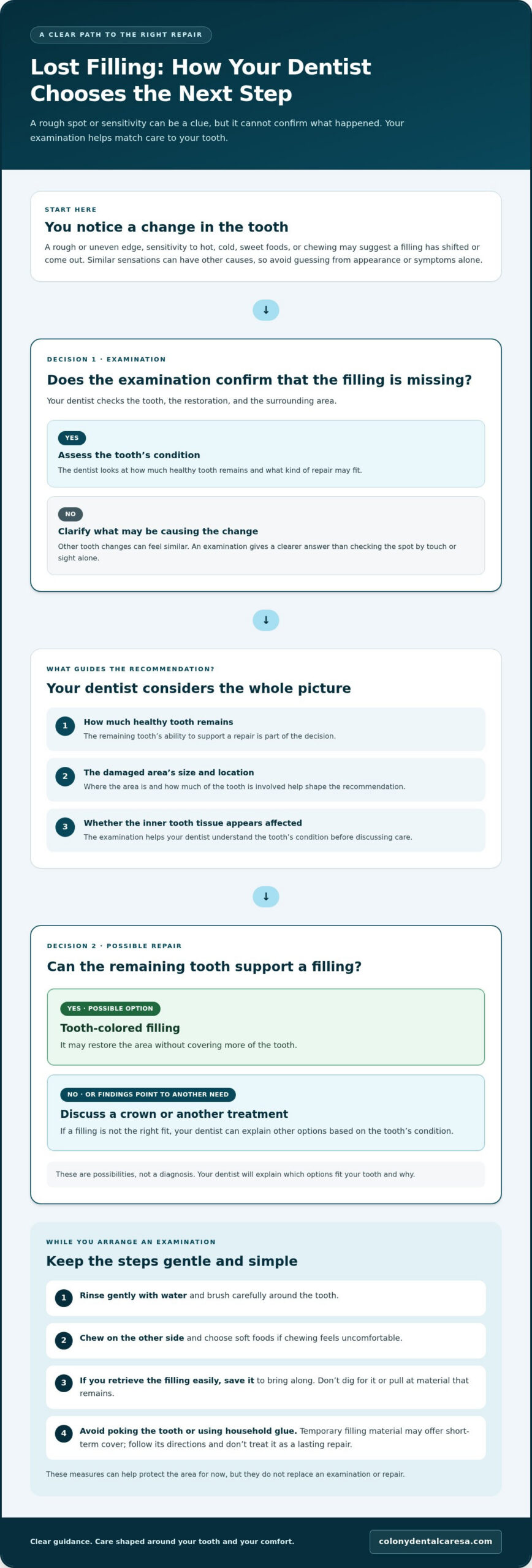
A lost filling doesn’t always mean the tooth needs the same kind of repair again. Your dentist first examines the tooth and the area where the filling came out. The amount of healthy tooth left, the size and location of the damaged area, and whether the inner tooth tissue appears affected all help guide the recommendation. The goal is to match treatment to what the examination shows, rather than assume a new filling will be enough.
Here’s how different findings may shape the conversation. These are possibilities, not a diagnosis. Your dentist will explain which options fit your tooth and why.
| Tooth condition | Possible treatment | Why it may be considered |
|---|---|---|
| The remaining tooth can support a filling | Tooth-colored filling | To restore the area without covering more of the tooth than needed. |
| The tooth needs more support than a filling can provide | Dental crown | To cover and support a more extensively damaged tooth. |
| The inner tooth tissue is affected | Root canal therapy, sometimes with a crown | To address the affected tissue and consider how the tooth can be restored afterward. |
| The tooth cannot be restored | Tooth extraction | To remove a tooth that can’t be repaired. |
When might a replacement tooth-colored filling be considered?
Your dentist will assess how much sound tooth remains and how large an area needs repair. If the tooth can be restored with a filling, tooth-colored material may be an option. Colony Dental Care offers Composite Dental Fillings. The examination comes first, because it helps determine whether a filling can address the damage and support the tooth appropriately.
When might a crown, root canal, or extraction enter the discussion?
If a filling alone won’t provide enough support, your dentist may discuss a crown. If the inner tissue is affected, root canal therapy may be considered. Extraction may enter the conversation if the tooth can’t be restored. These options don’t automatically follow a lost filling. Your dentist explains the findings and discusses which treatment, if any, is appropriate for your situation.
It’s reasonable to ask what the examination revealed, what each suggested option is meant to address, and what the next step involves. Clear answers help you weigh the recommendation without feeling rushed. At Colony Dental Care, we can assess your tooth and talk through an individualized repair in a calm, comfortable way. Understanding why a treatment is being considered can make the plan feel more manageable, whether it’s replacing a lost filling or discussing another approach.
How Urgent Is a Lost Filling, and How Can You Protect the Tooth?
There isn’t one timing rule that fits every lost filling. How soon you need care depends on your symptoms and what an examination shows. Even if discomfort is mild or absent, arranging dental guidance can help you understand what the tooth needs. If symptoms worsen, contact your dental practice promptly.
Use these cues to decide what to do next:
- New or mild sensitivity: Contact your dentist to arrange an assessment and ask how to protect the area until then.
- Severe or worsening pain, swelling, or difficulty eating: Request prompt dental guidance. These changes may need timely professional attention.
- Trouble breathing or swallowing: Seek urgent medical help. These symptoms need medical attention rather than waiting for a routine dental visit.
Colony Dental Care’s San Antonio emergency dentist guide explains how to think about urgent dental concerns and when symptoms call for medical attention instead.
Which symptoms should move a dental call higher on your list?
Pay attention to changes, not just how the tooth feels at rest. Pain that becomes stronger, swelling around the area, or difficulty eating are good reasons to seek prompt dental guidance. If you suspect infection, tell the dental team what you’re noticing. They can help direct you toward an appropriate assessment based on your symptoms.
What should you avoid until the tooth is examined?
Protect the tooth from extra pressure. Avoid chewing hard, sticky, or crunchy foods with it, and don’t use fingers or sharp tools to inspect or clean inside the opening. Gentle brushing around the area is safer than probing. Avoid placing aspirin directly on the tooth or gums, as it can irritate the tissue.
While you wait for professional guidance, choose foods that are comfortable to eat and keep the area clean without disturbing it. These steps can reduce irritation, but they can’t show whether the tooth is damaged or what kind of repair is appropriate. The timing and treatment depend on an examination, so contact your dental practice if you’re unsure what to do.
If you’re in San Antonio and symptoms are concerning, contact Colony Dental Care for dental guidance. We can listen to what you’re experiencing and help you take a clear, comfortable next step.
Replacing a Lost Filling in San Antonio: What to Expect at Colony Dental Care
A dental visit after losing a filling begins with hearing what you’ve noticed. The team can ask about changes such as sensitivity, pain, or discomfort when chewing, then the dentist examines the tooth. Sharing when the filling came out and what makes the area feel different gives the dentist helpful context for the assessment.
After the examination, the dentist explains the findings and discusses suitable options before treatment. A tooth-colored filling may be considered if the tooth can be repaired that way. If it needs more support, a crown may be discussed; if the inner tooth tissue is affected, root canal therapy may be an option. You’ll have a chance to ask questions and understand the proposed next step.
How does an individualized assessment guide your repair?
The dentist considers your symptoms, the tooth’s condition, and how much healthy structure remains. The fact that a filling fell out doesn’t determine the treatment on its own. Replacing a lost filling may be appropriate, but examination findings guide whether a new filling or another approach is suitable. We’ll explain the options in clear language and keep your comfort in mind during the conversation.
Colony Dental Care provides Composite Dental Fillings, crowns, and root canal therapy. These are possible options, not automatic steps. Your dentist will explain how any recommendation relates to the tooth’s condition and what the treatment involves. If a term or recommendation isn’t clear, ask us to explain it. Knowing why an option is being considered can help you feel more prepared to make a decision.
How can you arrange care with a local dental team?
For emergency appointments, call 210-904-0940 and describe what happened, including any pain or swelling. Colony Dental Care offers prompt assistance and tries to accommodate same-day emergency appointments. A helpful local dental experience includes clear explanations of your examination findings and options, topics addressed in our guide to finding a dentist in San Antonio.
When you’re ready, contact Colony Dental Care to discuss your next step. We’ll listen to your concerns and help you understand how to arrange care. You can take things one step at a time.
Take the Next Step Toward a Clear Plan
Uncertainty can make a dental concern feel harder to manage. You don’t need to decide on a repair by yourself or assume what the tooth needs. An individual assessment can help turn questions about replacing a lost filling into a clearer conversation about your options and what to expect next.
If you’re in San Antonio and would like to talk through your situation, get in touch with Colony Dental Care. Share what you’ve noticed and what’s worrying you. The team can help you discuss a practical next step without pressure, so you can make an informed decision about your dental care.
Taking that first step can bring more clarity. You deserve care that treats your concerns with patience and respect, and you can move forward one conversation at a time.
Frequently Asked Questions
Can a filling fall out without causing pain?
Yes, a filling can come out without causing immediate pain. You may notice a change in your bite or a rough spot instead of a toothache. No pain doesn’t confirm that the tooth is protected, though. If you’re unsure whether the filling is missing, arrange an assessment and describe what you’ve noticed. A dentist can determine whether the tooth needs repair or another kind of care.
How long can I wait before replacing a lost filling?
There isn’t one safe waiting period for every tooth, so contact a dental practice for guidance about replacing a lost filling. Tell the team if the tooth is becoming more sensitive or if you’re having trouble chewing. Worsening pain or swelling also deserves prompt attention. If your symptoms change after you’ve called, update the dental team so they can advise you about your next step.
Can I replace a lost filling myself at home?
No, home care can’t provide a lasting replacement or show why the filling came out. A temporary filling product from a pharmacy may offer short-term protection when you follow its directions, but it doesn’t replace a dentist’s assessment. Don’t push material into the tooth or try household glue. If the temporary material shifts or causes discomfort, stop using it and contact a dental practice for advice.
What if the tooth with a lost filling does not look damaged?
A tooth can appear normal even if there’s a small opening or crack you can’t easily see. The visible surface alone may not show whether the tooth or its existing restoration needs attention. If you notice a new change in how your teeth meet when you bite, mention it during your dental assessment. Until then, avoid testing the spot with objects or repeatedly pressing it with your tongue.
How much does replacing a lost filling cost?
The cost depends on what the dentist finds and which treatment is appropriate; a filling and a crown involve different care. Colony Dental Care accepts many dental insurance plans, and the team can discuss your benefits and payment options. These include CareCredit®, Cherry Financing, Sunbit, and the in-house membership plan. Ask for an explanation of the recommended treatment and how your coverage may apply before proceeding.
What happens if the filling in a root-treated tooth comes out?
A root-treated tooth still needs a restoration to help protect and support it. If its filling or another restoration comes out, arrange an assessment rather than assuming the tooth is intact because it has had root canal therapy. Tell the dentist that the tooth was previously treated and whether you’ve noticed a change in chewing or the restoration. The examination will guide discussion of an appropriate repair.

