What if bleeding gums are a reason to book an exam, not a reason to panic? Changes like bleeding, tenderness, or swelling are easy to dismiss, but they don’t automatically mean you’re facing tooth loss. If you’re looking for gum disease treatment San Antonio residents can discuss in a calm, welcoming setting, Colony Dental Care is here to help you understand your options.
It’s natural to wonder what’s causing a change in your gums or whether treatment will be uncomfortable. A gum evaluation gives your dental team a clearer picture of your health and helps shape care around your needs. You’ll have the chance to talk through the findings, ask questions, and understand possible next steps.
In this guide, you’ll learn about common warning signs, what to expect during a gum evaluation, and how treatment may be planned. Dr. James David Oei brings over 30 years of clinical experience to personalized, comfort-focused care in San Antonio. We’ll also explain how dental insurance and Colony Dental Care’s in-house membership plan may help you plan for costs.
Key Takeaways
- Notice changes such as bleeding, tenderness, swelling, persistent bad breath, or receding gums, and bring them up at an exam.
- Learn how a dental professional considers your symptoms and oral-health history when assessing your gums.
- See why gum disease treatment San Antonio care may include different approaches based on your evaluation and individual needs.
- Use steady brushing and cleaning between your teeth to support gum health, and follow your dentist’s guidance.
- Explore how Colony Dental Care’s personalized periodontal care and Dr. James David Oei’s experience can help you plan your next steps.
Gum Disease Treatment in San Antonio: Which Signs Should You Notice?
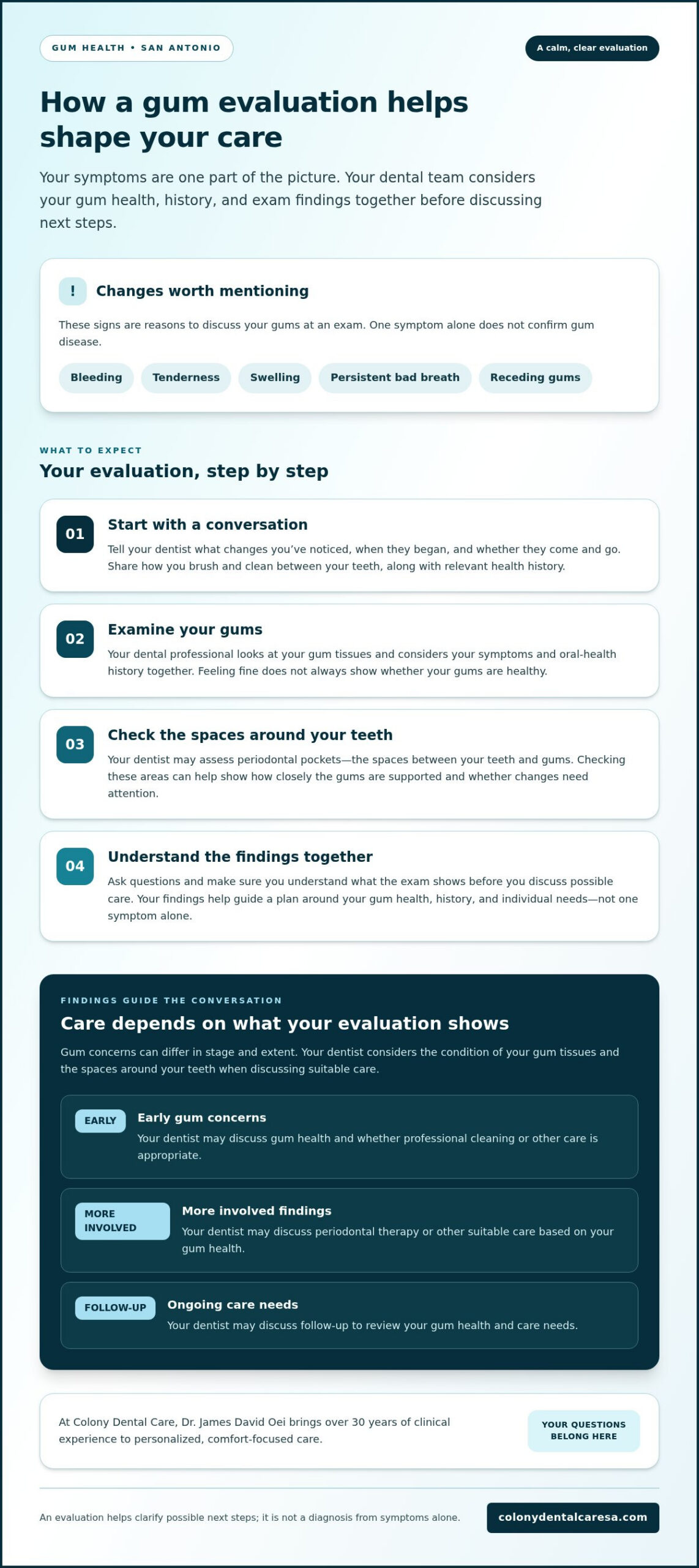
Changes in your gums are worth discussing, but they don’t reveal the cause on their own. Bleeding, tenderness, swelling, ongoing bad breath, or gums that appear to be receding are all reasons to arrange an evaluation. These signs don’t automatically mean you have gum disease. If you’re considering gum disease treatment San Antonio, a dental professional can assess your gum health and help you understand what to do next.
What are common early signs of gum disease?
You may notice blood on your toothbrush or when you floss. Your gums might look red or puffy, feel tender, or seem to pull away from your teeth. Persistent bad breath can also be worth mentioning, especially if it continues despite your usual brushing and cleaning routine.
Symptoms vary. Some gum problems cause little or no discomfort, so feeling fine doesn’t always tell you whether your gums are healthy. At the same time, one symptom alone doesn’t confirm gum disease. A dental evaluation is needed to assess your gums and help identify what may be behind a change.
For a general overview of gum conditions and how they can affect the tissues around your teeth, see Periodontal disease.
When should you arrange a gum health evaluation?
Consider booking an appointment if bleeding, tenderness, swelling, bad breath, or other gum changes keep returning. You don’t need to wait for pain before bringing up a concern. If a symptom is new or getting worse, professional attention can help your dental team assess what’s happening and discuss next steps with you.
Recurring gum changes deserve attention because an evaluation can show what your gums need. You can discuss your concerns as part of dental exams and cleanings in San Antonio, where a dental professional can consider your symptoms and overall oral health. Sharing when the change began and whether it has worsened can make the conversation more useful. There’s no need to feel embarrassed; your dental team is there to listen and help you move forward calmly.
How San Antonio Dentists Assess Gum Disease and Its Progress
Gum disease describes inflammation or infection affecting the tissues around your teeth. It can begin as gum inflammation and, if it progresses, affect deeper supporting tissues. Symptoms can help explain what you’re experiencing, but they can’t establish the cause by themselves. A dental professional considers your gum health, symptoms, and oral-health history together.
What happens during a gum disease evaluation?
Your evaluation starts with a conversation. Share what changes you’ve noticed, when they began, whether they come and go, and how you brush and clean between your teeth. Your dentist may also ask about relevant health history, since your overall health can be part of understanding your oral health.
Next, the dental professional examines your gums and may assess the spaces around your teeth. These spaces, called periodontal pockets, are areas between the teeth and gums. Checking them can help show whether the gums are closely supported or whether changes need further attention. The exam is also a chance to ask questions. You should understand what the findings mean before discussing possible care.
The American Academy of Periodontology’s information on gum disease explains common signs and why a professional assessment matters. A symptom may be a reason to book an evaluation, but the dentist’s findings help distinguish possible gum concerns from other causes.
Why does the stage of gum disease matter?
Not every gum concern is at the same stage, and care isn’t one-size-fits-all. Early inflammation may call for a different response than a more advanced problem involving the tissues that support your teeth. The dentist uses what they observe during the exam, including the condition of your gum tissues and the spaces around your teeth, to guide recommendations. You won’t receive a care plan based on one symptom alone.
Your evaluation findings help shape a treatment plan around your gum health, history, and individual needs. That personalized discussion can clarify which types of care may be appropriate, what you can do at home, and whether follow-up may be useful. If you’re considering gum disease treatment San Antonio, understanding the assessment is a helpful first step toward informed care.
At Colony Dental Care, we take time to listen and explain findings in a calm, neighborly setting. If you’d like to discuss a gum concern, learn about periodontal care at Colony Dental Care.
Gum Disease Treatment Options: What Shapes Your Care Plan?
There isn’t one gum disease treatment that fits everyone. Your dentist considers the evaluation findings, the health of your gums, your symptoms, and your individual needs before discussing care. Professional cleaning and periodontal therapy are broad categories that may be considered, but they aren’t automatic recommendations for every person. Colony Dental Care provides periodontal disease management based on your needs and evaluation.
This comparison can help you understand how findings may shape the conversation. It isn’t a diagnosis or a treatment recommendation for you.
| What an evaluation may find | How it may guide the discussion |
|---|---|
| Early gum concerns | Your dentist may discuss gum health and whether professional cleaning or other care is appropriate. |
| More involved findings | The dentist may discuss periodontal therapy or other suitable care based on your gum health. |
| Ongoing care needs | Your dentist may discuss follow-up to review your gums and adjust guidance to your needs. |
Can gum disease be treated before it causes lasting problems?
An earlier assessment can help identify concerns and guide care suited to what the dentist finds. It can’t guarantee that damage will be reversed or prevented, and outcomes vary. Ask your dentist to explain your findings, the care options they recommend, and what each option is intended to address. Clear answers can help you make decisions without feeling rushed.
Gum disease doesn’t automatically mean you’ll lose a tooth. The outlook depends on your individual gum health and other evaluation findings, so it’s best not to assume the worst or expect a particular result before an exam. With gum disease treatment San Antonio care, the focus is on understanding your situation and discussing realistic next steps.
Will gum disease treatment be uncomfortable?
It’s understandable to feel uneasy about dental treatment, especially if you’re unsure what to expect. At Colony Dental Care, we emphasize your comfort and clear communication. Share your concerns and ask the team to explain what they’re recommending before care begins. We’ll talk with you about your needs and approach your care thoughtfully, without promising that treatment will be painless.
What You Can Do Between Gum Disease Treatment Visits
Daily habits can support your gum health between appointments, but they don’t replace a dental evaluation or care recommended for your needs. Keep your routine gentle and consistent, and follow your dentist’s instructions if they differ from general guidance. If brushing or cleaning between your teeth feels uncomfortable, ask your dental team how to adapt your routine rather than avoiding those areas or trying to treat symptoms on your own.
How can you care for your gums at home?
A simple routine can help you stay consistent without adding unnecessary steps:
- 1. Brush regularly and gently. Clean your teeth and along the gumline without scrubbing forcefully.
- 2. Clean between your teeth. Make this part of your routine using an approach that feels manageable for you.
- 3. Follow your dentist’s guidance. Ask which brushing and between-teeth cleaning habits suit your mouth and comfort.
- 4. Keep track of changes. Note recurring bleeding, tenderness, swelling, or other concerns, along with questions you want to discuss.
These steps are general habits, not a substitute for a professional assessment. Your dentist can offer guidance that takes your gum health and individual needs into account. Avoid relying on home remedies to resolve symptoms, especially if they keep returning or change over time.
How can you stay on track after treatment?
Your follow-up recommendations depend on your evaluation findings and how your gums respond to care. Keep planned dental visits, follow the instructions your dentist gives you, and mention any symptoms that return or feel different. Your notes can help you explain what you’ve noticed and raise questions during your appointment.
Daily habits support professional care, and professional guidance helps you care for your gums in a way that fits your needs. If you’re receiving gum disease treatment San Antonio, staying in touch with your dental team can help you understand your next steps and keep your care plan on track.
For ongoing guidance and preventive visits, explore dental care in San Antonio at Colony Dental Care. We’ll listen to your concerns and help you understand how to support your oral health between visits.
Gum Disease Treatment at Colony Dental Care in San Antonio
If you’re concerned about changes in your gums, Colony Dental Care provides periodontal disease management in San Antonio in a welcoming, comfort-focused setting. Share what you’ve noticed, talk through your concerns, and learn what your gum health evaluation shows. We’ll help you understand your options and the next steps that fit your needs.
What can you expect when discussing gum concerns?
Your visit begins with a conversation about your symptoms, oral-health goals, and anything that may affect your comfort. Tell us what’s worrying you or ask questions at any point. Dr. James David Oei brings over 30 years of clinical experience to these discussions, supporting a thoughtful approach that considers your individual needs rather than assuming the same care is right for everyone.
Recommendations follow your evaluation. Your dentist will explain the findings and discuss care options that may suit your gum health. If something isn’t clear, ask us to explain it in simpler terms. You can also share concerns about treatment so the team can keep your comfort in mind throughout the visit. There’s room for a calm conversation, not pressure to make a decision before you understand the plan.
How can you take a comfortable next step?
If recurring or concerning gum symptoms have you unsure what to do, arranging an evaluation can give you a clearer picture. You don’t need to arrive with a diagnosis or know which treatment you may need. Bring your questions and describe what you’ve noticed. Together, you and your dental team can talk through the findings and possible next steps.
We understand that cost is part of planning care. Colony Dental Care accepts dental insurance and offers an in-house membership plan as an affordability option. Coverage and plan details vary, so you can discuss your situation with the team and understand the choices available to you rather than relying on a one-size-fits-all estimate.
For gum disease treatment San Antonio, we’re here to help you approach your oral health with care and clarity. Learn about care at Colony Dental Care.
Take the Next Step Toward Healthier Gums
Bleeding, tenderness, swelling, or other recurring gum changes are worth discussing, even if they don’t hurt. These signs don’t confirm gum disease, but an evaluation can help your dental team understand your gum health and discuss care that fits your needs. Gentle daily brushing and cleaning between your teeth can support your care, while planned dental visits help you stay informed about changes.
If you’re considering gum disease treatment San Antonio, Colony Dental Care provides periodontal disease management with a calm, personalized approach. Dr. James David Oei brings over 30 years of clinical experience to care, and you’re welcome to ask questions and talk through your concerns. The practice accepts dental insurance and offers an in-house membership plan as affordability considerations.
You don’t have to figure out what your gum symptoms mean on your own. Learn about periodontal care at Colony Dental Care and take a comfortable next step toward understanding your oral health. We’re here to help you feel heard and supported.
Frequently Asked Questions
Is gum disease reversible?
Early gum inflammation may improve with appropriate care, while changes from more advanced gum disease may not fully reverse. Your outcome depends on what a dental professional finds and how your gums respond to recommended care. Because signs alone can’t show the full picture, arrange an evaluation rather than trying to judge the stage yourself. Your dentist can explain the findings and discuss realistic options without promising a cure.
Can gum disease go away on its own?
Ongoing bleeding, swelling, or tenderness shouldn’t be assumed to resolve without care. Consistent brushing and cleaning between your teeth support gum health, but these habits can’t identify what’s causing symptoms or replace an evaluation. If you notice recurring gum changes in San Antonio, discuss them with a dental professional. An exam can help clarify what may be happening and whether care is appropriate for your needs.
How is gum disease diagnosed?
A dental professional assesses your gums through an exam and a review of your symptoms and relevant health history. The dentist may examine the gum tissues and check the areas around your teeth for signs that help explain your concerns. This evaluation helps determine whether gum disease is present and what care may be appropriate. Online descriptions can’t diagnose your individual condition, and recommendations depend on examination findings.
What happens if gum disease is left untreated?
Persistent gum disease can worsen and may affect the tissues that support your teeth. The course varies from person to person, so ongoing symptoms don’t mean tooth loss is inevitable, and not every case progresses in the same way. If you’re noticing continuing changes, arrange an evaluation and share your concerns with your dentist. The exam can help you understand your gum health and discuss possible next steps.
Does gum disease treatment hurt?
Gum treatment can feel stressful, especially if dental visits make you anxious. Your experience depends on your needs and the care your dentist recommends, so it’s helpful to discuss what to expect before treatment. At Colony Dental Care, we emphasize your comfort and clear communication, but we can’t promise a pain-free visit. Let the team know what concerns you, and you can talk about comfort throughout your care.
How much does gum disease treatment cost in San Antonio?
The cost depends on your evaluation findings and the care recommended. Colony Dental Care accepts dental insurance and offers an in-house membership plan as options to consider when planning care. Coverage and plan details vary, so discuss your recommended treatment and payment considerations with the practice to understand the costs relevant to your care.
Can brushing and flossing treat gum disease?
Consistent brushing and cleaning between your teeth support gum health, but home care alone may not address every stage or cause of gum disease. A dental evaluation helps identify what’s happening and whether professional care may be appropriate. Follow the guidance your dentist gives you, since your needs may differ from someone else’s. If symptoms continue, don’t rely on home care to diagnose or treat them on your own.