You take a refreshing sip of iced tea on a warm San Antonio afternoon, only to feel a sudden, sharp jolt shoot straight through your smile. When ordinary meals or morning brushing trigger painful twinges, it’s easy to worry that you’re dealing with deep decay or a cracked tooth. You aren’t alone in that anxiety, and you don’t have to simply tolerate the ache. Learning how to reduce tooth sensitivity starts with understanding why your nerves react and how gentle daily care can bring lasting comfort.
Wading through endless specialty pastes and rinses often leaves people confused about what actually works. You deserve clear, neighborly guidance that puts your peace of mind first. In this guide, you’ll discover proven at-home methods and gentle professional dental steps to ease tooth sensitivity and protect your enamel. We’ll explore practical brushing adjustments, soothing ingredients, and clear signs for when it’s time to visit your local dental home for a comforting checkup.
Key Takeaways
- Understand how exposed microscopic dentin tubules trigger nerve pain and why ordinary temperature changes cause sudden discomfort.
- Discover practical brushing adjustments and active ingredients like potassium nitrate to learn how to reduce tooth sensitivity gently at home.
- Protect your enamel by adopting simple timing habits, including waiting to brush after enjoying acidic meals and beverages.
- Recognize the clear warning signs that distinguish mild, temporary sensitivity from deeper dental concerns like cracked teeth or decay.
- Explore soothing in-office dental solutions, from professional fluoride treatments to gentle bonding, designed to seal exposed tubules and restore lasting comfort.
What Causes Tooth Sensitivity and Why Does It Hurt?
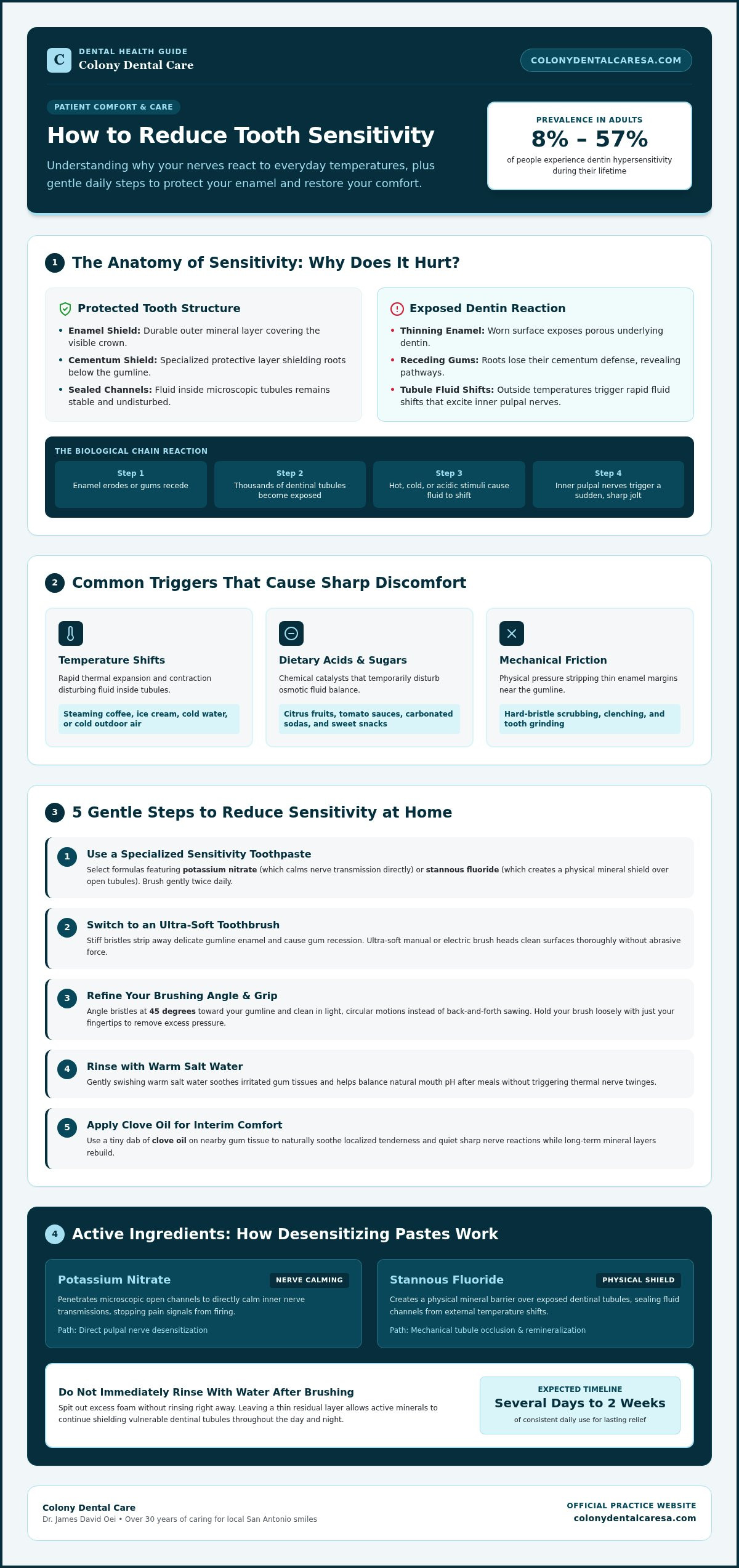
That sudden, sharp jolt you experience while eating or drinking is clinical nerve irritation, often diagnosed as dentin hypersensitivity. While it feels alarming, this reaction is remarkably common among adults. According to observational dental research, dentin sensitivity affects anywhere from 8% to 57% of people. Fortunately, it is entirely manageable once you understand how your teeth are built and what sets off the reaction.
A healthy tooth relies on two protective shields. Durable enamel covers the visible crown, while a specialized layer called cementum shields the roots beneath your gumline. When either layer thins or pulls back, microscopic channels become exposed. Learning how to reduce tooth sensitivity starts by uncovering why these open pathways trigger such quick, uncomfortable nerve responses.
Understanding Your Enamel and Exposed Dentin
Underneath protective outer enamel sits dentin, a softer, porous structure filled with thousands of fluid-filled channels called dentinal tubules. When enamel erodes or gums recede, these tubules lose their defensive cover. Outside stimuli cause the microscopic fluid inside them to shift rapidly, directly exciting the inner pulpal nerves. Catching this early protects your remaining natural structure, stopping minor twinges before they grow into chronic discomfort.
Common Triggers That Cause Sharp Discomfort
Sensitivity twinges rarely happen without an external catalyst. Knowing your specific triggers helps you identify how to reduce tooth sensitivity through simple daily adjustments. The most frequent culprits include:
- Temperature shifts: Steaming coffee, spoonfuls of ice cream, cold water, or even breathing in crisp outdoor air.
- Dietary acids and sugars: Fresh citrus fruits, tangy tomato sauces, carbonated sodas, and sweet snacks that temporarily disturb the fluid balance inside open tubules.
- Mechanical friction: Scrubbing aggressively with hard bristles or unconsciously clenching and grinding your teeth, which creates micro-cracks near the gumline.
Experiencing these sensations does not automatically mean you have severe decay. In most cases, it simply means your teeth are asking for gentler daily habits and restorative care to rebuild comfort.
How to Reduce Tooth Sensitivity at Home: 5 Gentle Steps
Calming your sensitive teeth does not require complex routines or harsh products. Small, intentional shifts in your morning and evening oral care make a dramatic difference in how your smile feels. By choosing ingredients that soothe reactive nerves and shielding delicate gumlines from friction, you can restore ease to everyday meals. Following the American Dental Association’s guidance on sensitive teeth, these five gentle steps show you how to reduce tooth sensitivity effectively right at home.
- Use a specialized sensitivity toothpaste: Select formulas featuring potassium nitrate or stannous fluoride.
- Switch to an ultra-soft toothbrush: Protect vulnerable enamel margins from physical wear.
- Refine your brushing angle: Clean along the gumline with light, circular motions instead of scrubbing back and forth.
- Rinse with warm salt water: Ease irritated gum tissue and balance natural mouth pH after eating.
- Apply clove oil for interim comfort: Use a tiny dab on nearby tissue to naturally quiet localized tenderness.
Switch to a Desensitizing Toothpaste
Active ingredients in desensitizing pastes target discomfort through two distinct paths. Potassium nitrate penetrates open microscopic channels to calm inner nerve transmission directly, while stannous fluoride creates a physical mineral layer over exposed tubules. Brush gently twice daily with your chosen paste. After brushing, spit out the excess foam without immediately rinsing your mouth with water. Leaving a thin residual layer allows active minerals to continue shielding vulnerable spots. Relief builds gradually, typically bringing noticeable comfort within several days to two weeks of consistent use.
Adopt a Gentle Brushing Technique
Scrubbing your teeth with stiff bristles strips away thin gumline enamel and pushes tender tissue backward. Switch to an ultra-soft manual or electric brush. Angle the bristles at 45 degrees toward your gums, guiding the brush in tiny, gentle circles. A helpful trick is holding the handle loosely with just your fingertips. This simple change removes excess physical force while still cleaning surfaces thoroughly.
Soothe Sensitivity with Home Rinses and Clove Oil
For days when temperature changes feel especially sharp, simple home remedies offer soothing interim peace of mind. Swishing gently with warm salt water (half a teaspoon of salt in eight ounces of warm water) calms surrounding gum tissue without stinging. When you need targeted relief, applying a tiny drop of diluted clove oil with a cotton swab provides natural comfort thanks to its active eugenol compound.
While these steps quiet daily twinges, lasting wellness comes from knowing your smile is fully protected. If you want reassurance that your enamel is thriving, partnering with a trusted dental home for a gentle exam ensures complete comfort and personalized care.
Daily Habits That Protect Your Enamel from Ongoing Wear
Stopping sharp twinges in the moment brings welcome relief, but keeping those aches away requires guarding your enamel against everyday wear. Tooth enamel is remarkably tough, yet daily physical friction and acidic exposure slowly erode its protective minerals over time. As noted in the Johns Hopkins Medicine guide to sensitive teeth, chronic surface erosion is one of the main pathways leading to long-term dentin exposure. By making minor adjustments to when you brush and how you protect your bite, you can preserve your enamel effortlessly.
Understanding how to reduce tooth sensitivity over the long haul means viewing daily oral care as proactive preservation. Simple changes to your mealtime routines and sleep habits keep your smile comfortable and strong for years to come.
Managing Acidic Foods and Beverages
You don’t need to eliminate citrus fruits, morning coffee, or tangy vinaigrettes from your diet. What matters most is how you handle acidic meals. Citrus juices, sodas, and wines temporarily soften outer enamel minerals. Swishing thoroughly with plain tap water immediately after eating helps neutralize acid levels and supports natural saliva flow. Most importantly, wait at least thirty to sixty minutes before brushing your teeth. Brushing softened enamel immediately after an acidic snack scrubs away microscopic mineral layers before your saliva has time to naturally reharden the surface.
Addressing Nighttime Grinding and Clenching
Physical friction damages enamel just as quickly as dietary acids. Clinical dental surveys show teeth grinding (bruxism) contributes to roughly 32% of sensitivity cases. When you clench or grind during sleep, enormous pressure causes microscopic flexing near the gumline, creating tiny wedge-shaped defects that expose open dentin tubules. Proper bite alignment plays an essential part in distributing these biting forces evenly across your mouth.
If you wake with tired jaw muscles or notice heightened morning sensitivity, consider these protective steps:
- Wear a custom nightguard: A personalized dental appliance cushions heavy clenching forces while you sleep, preventing enamel chips and fractures.
- Evaluate bite balance: Uneven tooth contact concentrates excessive pressure onto individual teeth, accelerating localized gum recession.
- Practice daytime jaw relaxation: Keep your lips closed with teeth slightly apart during waking hours to ease resting muscle strain.
Protecting your teeth from nighttime wear ensures that your daytime efforts to learn how to reduce tooth sensitivity aren’t undone while you rest.
When to See a Dentist for Persistent Tooth Sensitivity
Most mild twinges respond well to home care, but some sensations point to deeper concerns that a new toothpaste cannot solve. Understanding the boundary between routine dentin exposure and an underlying structural flaw gives you total peace of mind. Knowing how to reduce tooth sensitivity involves recognizing when home habits are sufficient and when professional eyes are needed to safeguard your smile.
A typical sensitivity reaction lasts only a brief second or two once you swallow that iced drink or hot soup. When discomfort lingers, throbs, or appears without any temperature trigger at all, the inner pulp of the tooth may be inflamed. You never have to feel embarrassed or anxious about getting these symptoms checked. A gentle visit is simply a reassuring step toward restoring total comfort.
Signs Your Sensitivity Needs Professional Attention
Certain red flags mean you should set aside over-the-counter remedies and schedule a clinical evaluation:
- Lingering pain: Discomfort that pulses or aches for minutes after you finish eating or drinking.
- Biting tenderness: Sharp pain that occurs specifically when chewing or releasing biting pressure, which frequently indicates a cracked tooth.
- Spontaneous throbbing: Unprovoked aches that wake you up in the middle of the night.
- Visible structural changes: Dark spots, chipped enamel edges, or loose margins around an older restoration.
- Gum swelling: Puffy tissue, tenderness along the jawline, or an elevated temperature.
If you experience sudden, severe discomfort or facial swelling, seeking prompt evaluation from an emergency dental care provider ensures you receive rapid relief before minor complications escalate.
How a Thorough Exam Identifies the Real Root Cause
A comprehensive assessment at your dental home takes the guesswork out of oral pain. Using clear digital imaging and gentle diagnostics, your dentist evaluates your enamel thickness, checks the margins of older tooth-colored fillings, and examines your bite alignment. This thorough review pinpoints whether your ache stems from early gum recession, hidden decay, or micro-cracks that aren’t visible to the naked eye. Catching these concerns early allows for simple, conservative care that preserves your natural tooth structure and keeps your dental experiences relaxed, comfortable, and stress-free.
Professional Dental Treatments for Lasting Sensitivity Relief
When home remedies only bring partial relief, in-office care provides gentle, lasting comfort. Professional dental steps focus on sealing exposed dentinal tubules so you can sip cold drinks and enjoy meals without anticipating pain. If you’re exploring how to reduce tooth sensitivity once and for all, conservative in-office treatments offer fast, soothing results designed around your peace of mind.
In-Office Fluoride Treatments and Dental Sealants
During a routine visit, concentrated fluoride treatments can be applied directly to sensitive enamel surfaces within minutes. This gentle varnish remineralizes softened areas and rapidly crystallizes inside open tubules, shutting down temperature shock. For vulnerable grooves or exposed margins, dental sealants provide a clear, protective coating. Sealants act as an instant physical barrier against acids and bacteria, blocking external stimuli without causing discomfort.
Restorative Care: Tooth-Colored Fillings and Bonding
When gum recession exposes root surfaces or enamel has worn away at the gumline, dental bonding offers an immediate solution. Using tooth-colored fillings and tooth-matching composite resin, your dentist covers exposed dentin, creating a smooth shield that blends seamlessly with your natural smile. These gentle restorations insulate underlying nerves from hot and cold temperatures. With a custom treatment plan, your dental team tailors every repair to your specific bite and anatomy, ensuring durable comfort and natural aesthetics.
Partnering with Your Local Dental Team for Total Health
Consistent preventive care forms the foundation of lifelong oral comfort. Regular dental exams and cleanings support a total health philosophy, recognizing that a pain-free mouth directly benefits your overall well-being. At Colony Dental Care in San Antonio, Dr. James David Oei brings over 30 years of clinical expertise focused on gentle, anxiety-free care. Having helped over 5,000 local patients smile with ease since 1994, we treat you like a neighbor rather than just a case.
Discovering how to reduce tooth sensitivity is simple when you have a compassionate team by your side. A quick, comforting checkup can pinpoint the exact source of your pain, restore your everyday eating ease, and protect your smile for years to come.
Reclaim Everyday Comfort and Protect Your Smile
Sudden dental twinges shouldn’t keep you from savoring your morning coffee or favorite cold treats. Everyday adjustments like brushing with mineral-rich desensitizing toothpaste, easing up on physical brushing pressure, and waiting after acidic meals form a protective foundation for your enamel. Knowing how to reduce tooth sensitivity empowers you to take charge of your daily comfort and prevent minor irritation from growing into persistent pain.
When at-home habits need an extra boost, personalized professional care restores total peace of mind. At Colony Dental Care in San Antonio, Dr. James David Oei brings over 30 years of clinical expertise focused on gentle, reassuring treatments. We treat you like a neighbor, prioritizing your comfort every step of the way with soothing solutions tailored to your unique smile. Schedule your gentle dental exam with Colony Dental Care today and discover how easy lasting relief can be.
Frequently Asked Questions
Can sensitive teeth heal on their own without dental treatment?
Enamel cannot regrow once lost, but mild sensitivity can subside on its own if the cause is temporary. Saliva naturally deposits minerals back into exposed areas, and irritated nerves often calm down after minor disruptions like aggressive brushing stop. However, if your dentin remains exposed or gum tissue continues receding, learning how to reduce tooth sensitivity requires active remineralization habits or gentle clinical treatments to seal open channels permanently.
How long does desensitizing toothpaste take to work?
Most desensitizing toothpastes provide noticeable relief within several days to two weeks of consistent, twice-daily use. Formulations containing potassium nitrate work gradually by desensitizing the nerve endings inside your dentinal tubules, while stannous fluoride builds a physical mineral barrier across microscopic openings. For the best results, avoid rinsing with water right after brushing so the active ingredients have ample time to protect your teeth.
Why did my teeth suddenly become sensitive to cold drinks?
Sudden sensitivity to cold liquids usually points to newly exposed dentin, recent enamel erosion, or tiny micro-cracks in a tooth. Changes in diet, such as consuming acidic snacks, can strip away mineral layers quickly. It can also stem from nighttime teeth clenching or a loose filling. If a sharp zinging sensation appears overnight and doesn’t fade within a few days, a quick, gentle dental checkup can pinpoint the root cause.
Does professional teeth whitening cause permanent tooth sensitivity?
Professional teeth whitening causes only temporary sensitivity, never permanent nerve damage. Bleaching agents temporarily open microscopic pores in your enamel to lift deep stains, allowing temperature changes to reach underlying dentin more readily. This mild sensitivity typically fades completely within 24 to 48 hours after treatment. At Colony Dental Care in San Antonio, we prioritize your comfort by tailoring whitening strengths to keep your experience completely gentle and relaxed.
What is the difference between tooth sensitivity and a cavity?
Routine tooth sensitivity produces a brief, sharp twinge that disappears seconds after contact with hot or cold foods. A cavity, by contrast, is structural tooth decay that causes lingering aches, spontaneous throbbing, or localized pain when chewing. While sensitivity often responds well to gentle habits showing how to reduce tooth sensitivity at home, active decay requires a gentle tooth-colored filling to remove infection and permanently protect your tooth structure.
Can receding gums cause permanent sensitivity along the gumline?
Receding gums can cause ongoing sensitivity because exposed root surfaces lack protective enamel, but the discomfort does not have to be permanent. While gum tissue doesn’t grow back naturally, you can easily protect the exposed cementum and dentin. Applying professional fluoride varnishes, practicing ultra-soft brushing, or placing discreet composite bonding shields sensitive roots, ensuring your gumline remains completely comfortable during everyday meals.
What should I do if only one single tooth hurts when biting?
If only one tooth hurts specifically when you bite down or release pressure, you should schedule an evaluation with your local dental team promptly. This targeted biting pain usually signals a cracked tooth, uneven bite alignment, or an older filling that has started to fail. Avoid chewing on that side of your mouth and seek gentle care before everyday chewing forces cause the crack to deepen.