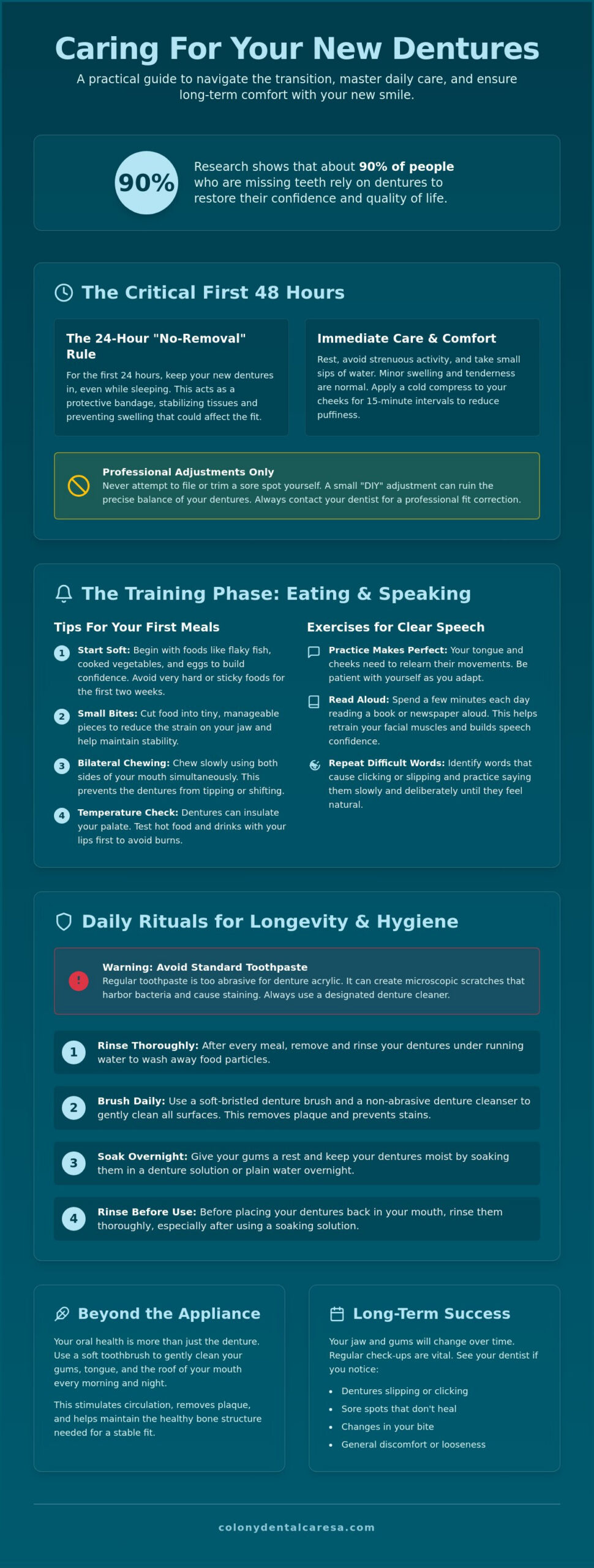
Imagine sitting down at your favorite San Antonio cafe, ready to enjoy a meal with friends, but instead of focusing on the laughter, you’re worried your new smile might slip while you’re talking. It’s a common fear, and if you’re feeling a bit of anxiety about sore spots or which cleaning products are actually safe, you aren’t alone. In fact, research shows that about 90% of people who are missing teeth rely on dentures to restore their confidence. We understand that this transition is about more than just dental hardware; it’s about reclaiming your quality of life and feeling like yourself again.
We’re here to walk beside you as you learn the art of caring for your new dentures with ease. This guide is designed to help you master the critical first 48 hours, find relief from initial discomfort, and perfect a cleaning routine that protects your investment. You’ll learn how to regain clear speech and return to the foods you love without hesitation. We’ve gathered our best expert advice—similar to what you might find in a dental post-treatment instruction library—to ensure your journey toward a natural, pain-free smile is as smooth and reassuring as possible.
Key Takeaways
- Understand why the first 48 hours are the most critical period for ensuring your long-term comfort and a perfect fit.
- Learn how to retrain your facial muscles during the “training phase” to regain clear speech and enjoy your favorite meals again.
- Master the safest daily rituals for caring for your new dentures, including why standard toothpaste can actually damage your investment.
- Discover the importance of continuing oral hygiene for your gums to maintain healthy bone structure and overall well-being.
- Recognize when it’s time for professional adjustments or relines to keep your smile feeling natural as your jaw changes over time.
The First 48 Hours: Navigating Your New Denture Transition
The first day with your new smile is a significant milestone. It marks the beginning of a fresh chapter for your confidence and health. While you might feel a bit of “fullness” in your mouth or notice more saliva than usual, these are very normal parts of the adjustment process. Your brain is simply learning that this new appliance is a permanent guest, not a piece of food. Understanding the basics of caring for your new dentures will help you feel more in control during these early hours.
The first 24 hours are the most critical for your long-term fit. During this window, your gums begin to settle into their new shape. We often ask patients to follow the “No-Removal” rule, which means keeping your dentures in even while you sleep for that first night. This might feel counterintuitive, but the appliance acts as a protective bandage. It stabilizes the tissues and prevents swelling from making it difficult to put the dentures back in later. You can find more details on the history and mechanics of this process in this comprehensive guide to dentures.
Immediate Post-Insertion Care
Caring for your new dentures begins with patience and rest. We recommend keeping your movements soft and avoiding any strenuous activity on your first day. When you’re ready for a drink, take small, controlled sips of water. You might find that swallowing feels slightly different at first. This is because your tongue is learning to move around the new acrylic. Most discomfort during this time is manageable, but if you experience sharp pain that doesn’t fade, please reach out to our San Antonio office. We’re here to ensure your transition is smooth.
Managing Discomfort and Swelling
It’s natural to see some minor swelling in your cheeks or feel tender spots on your gums. Dr. Oei typically suggests using over-the-counter relievers to keep you comfortable as you heal. A cold compress applied to the outside of your face for 15 minutes at a time can also work wonders for reducing external puffiness. One golden rule we share with every neighbor who visits us: never attempt to trim or file a sore spot yourself. Even a tiny “DIY” adjustment can ruin the precise balance of your dentures. If a spot feels particularly bothersome, let us handle the professional adjustments for you. We want your fit to be perfect, not just “good enough.”
Mastering the Art of Eating and Speaking with Dentures
Moving past the initial adjustment period means entering what we call the training phase. This is where the real magic happens. Caring for your new dentures involves more than just hygiene; it’s about retraining your body to function in a new way. Your tongue and cheeks have spent years working with your natural teeth. Now, they need to learn a new dance. It’s completely normal to feel a bit self-conscious as you find your rhythm again. Patience is your best ally during this transition.
Eating is one of life’s greatest pleasures, especially when you’re surrounded by the incredible food scene in San Antonio. We want you to get back to enjoying a tender slice of brisket or your favorite local enchiladas without a second thought. However, eating with dentures isn’t an immediate instinct. It takes time to learn how to balance pressure. By following the ADA guidelines on denture care, you can ensure you’re supporting your mouth’s health while you adapt to these functional changes.
Tips for Your First Meals
Success starts with the right strategy at the dinner table. We recommend starting with soft, forgiving foods like flaky fish, well-cooked vegetables, or scrambled eggs. This helps you build confidence before moving on to tougher textures. Avoid sticky candies or very hard nuts for the first two weeks while your gums are still toughening up.
- Small bites: Cut your food into tiny, manageable pieces to reduce the work your jaw has to do.
- Bilateral chewing: Try to chew slowly using both sides of your mouth at the same time. This keeps the dentures stable and prevents them from tipping or shifting.
- Temperature checks: Dentures can insulate your palate. Always test the temperature of hot coffee or soup with your lips first to avoid accidental burns.
Speech Exercises for Clear Enunciation
The fear of dentures slipping or clicking while you talk is a common concern for many of our neighbors. Clear speech comes from muscle memory, which you can sharpen with a few simple daily habits. If you ever feel like your speech isn’t progressing as expected, a quick visit to Colony Dental Care can help us ensure your fit is exactly where it needs to be for optimal comfort.
- Read aloud: Grab the morning paper or a favorite book and read out loud for ten minutes. Focus on words with “S” and “F” sounds, which are often the trickiest for new wearers.
- The mirror technique: Practice speaking while looking in a mirror. This helps your brain coordinate your lip movements with the new position of your teeth.
- Bite and swallow: If you feel your dentures shifting while you talk, gently bite down and swallow. This reseats them naturally and discreetly.
Building social confidence takes time. Don’t let the fear of a minor slip keep you from the community and people you love. Most people won’t even notice the small adjustments you’re making. With each passing day, you’ll feel more like yourself, and soon, caring for your new dentures will feel like a natural part of your daily routine.
Daily Cleaning Rituals for Longevity and Hygiene
Maintaining a fresh, sparkling smile is one of the most rewarding parts of caring for your new dentures. Just as you would take care of a fine piece of jewelry, your dentures require a gentle touch to stay in peak condition. Many people are surprised to learn that their favorite brand of standard toothpaste is actually a hidden enemy for their new smile. While those pastes work wonders on natural enamel, they are far too abrasive for the delicate acrylic used in modern dental appliances. Over time, gritty toothpaste creates microscopic scratches that act as magnets for food particles and plaque, dulling that natural shine we worked so hard to create for you.
Safety is just as vital as the cleaning itself. We always recommend the “Sink Safety” rule to our neighbors here in San Antonio. Before you begin your routine, place a soft towel in the sink or fill the basin with a few inches of cool water. Dentures can become quite slippery when wet. If they happen to slip from your fingers, a cushioned landing prevents the acrylic from cracking or a tooth from chipping. If you wear partial dentures, pay extra attention to the metal clasps. These are precision-engineered to fit your anchor teeth perfectly. Avoid gripping them too tightly or trying to bend them during cleaning, as even a slight change in shape can affect how comfortably they sit in your mouth.
Choosing the Right Cleaning Tools
A standard soft-bristled toothbrush is better than nothing, but a dedicated denture brush is a far superior tool for the job. These brushes feature two different heads: one for the flat surfaces and a smaller, tapered one designed to reach into the deep grooves that sit against your gums. When it comes to cleansers, stick to products specifically labeled for dentures. These non-abrasive solutions break down film without scratching the surface. Never use bleach or boiling water to sanitize your appliance. High heat can warp the custom-molded shape, and bleach will eventually turn the natural-looking pink acrylic white, ruining the aesthetic of your smile.
Overnight Care and Storage
Your dentures need to stay moist to keep their shape. When they aren’t in your mouth, they should be resting in a glass of water or a mild soaking solution. This prevents the material from becoming brittle and losing its precise fit. More importantly, your gum tissues need an “overnight break.” Constant pressure from dentures can restrict blood flow and lead to irritation or infections. Giving your mouth six to eight hours of rest each night keeps your gums healthy and resilient. Always remember to rinse your dentures thoroughly under running water before putting them back in. This simple step ensures you don’t transfer any lingering cleaning chemicals to your sensitive mouth tissues, preventing potential “chemical burns” or irritation. Caring for your new dentures this way ensures they remain a comfortable, beautiful part of your life for years to come.
Beyond the Appliance: Caring for Your Gums and Mouth
Even if you no longer have your natural teeth, your oral health remains a top priority. Your gums are the foundation for your smile, and keeping them healthy is a vital part of caring for your new dentures. When you take your dentures out at night, it’s the perfect time to give your mouth some extra attention. Stimulating the gum tissue helps maintain healthy blood flow, which is essential for preserving the bone structure that supports your appliance. Without this stimulation, the jawbone can naturally change shape more quickly, leading to a loose fit.
We also want to help you avoid common issues like “Denture Stomatitis,” which is a mild yeast infection often called thrush. This condition can cause redness, swelling, or soreness under the denture area. It typically occurs if the appliance isn’t cleaned thoroughly or if the mouth doesn’t get enough “breathing room” overnight. By keeping your mouth clean and giving your tissues a rest, you’re protecting your systemic well-being and ensuring your smile stays comfortable for years to come.
The Daily Gum Massage
We recommend a gentle daily massage for your gums using a soft-bristled brush or a clean, damp washcloth. Gently wipe the roof of your mouth, your tongue, and the ridges where your dentures sit. This simple ritual does more than just feel good; it removes the microscopic bacteria that cause bad breath, or halitosis. A clean, healthy mouth environment also creates a much better suction-fit. When your gums are firm and free of debris, your dentures can stay securely in place during your favorite San Antonio social gatherings.
If you use adhesive, be sure to remove any residual cream or strips from your gums every night. Using a soft brush with warm water is the most effective way to clear away old adhesive without irritating the sensitive soft tissues. Caring for your new dentures means ensuring the surface they sit on is just as clean as the appliance itself.
Recognizing and Treating Sore Spots
As your mouth adapts, you might notice some minor “settling” discomfort. There’s a difference, however, between a little tenderness and a fit issue that needs a professional touch. If you have a persistent sore spot, a warm salt water rinse can provide immediate, soothing relief. Just dissolve half a teaspoon of salt in a cup of warm water and swish gently for about 30 seconds.
If the irritation doesn’t clear up within a day or two, it’s time to see us. A helpful tip: please wear your dentures for at least three to four hours before your appointment at Colony Dental Care. This allows the sore spot to be visible so we can identify exactly where the appliance needs a precision adjustment. If you’re feeling uneasy about a new sore spot, please reach out to our friendly team so we can get you back to feeling your best.
Long-Term Success and Professional Adjustments in San Antonio
Your journey with a new smile doesn’t end after the first few weeks of adjustment. It’s the beginning of a long-term partnership between you and our team. One thing many people don’t realize is that your jawbone naturally changes over time. This process, known as bone resorption, happens because the bone no longer receives the stimulation once provided by natural tooth roots. As the ridges of your gums gradually shrink, the fit of your appliance will shift. Caring for your new dentures means staying ahead of these biological changes so your comfort never wavers.
We offer several ways to refresh your fit as your mouth evolves. A professional reline adds a fresh layer of material to the underside of your denture to match your new gum contours. If the base is worn but the teeth are still in good shape, a rebase might be the answer. Eventually, usually every five to seven years, the acrylic teeth will naturally wear down and you’ll need a completely new set. Regular visits to our San Antonio office allow us to monitor these changes and recommend the best path forward before you ever experience significant discomfort.
When to Schedule a Professional Adjustment
You shouldn’t have to rely on excessive amounts of adhesive to get through a lunch at the Pearl or a family gathering. If you notice your dentures are slipping more often, or if you see tiny cracks and “pitting” in the acrylic surface, it’s time for a professional look. These small imperfections can harbor bacteria and lead to gum irritation. Whether you have traditional dentures or dental implants in San Antonio, our goal is to ensure your restorative work feels completely natural. We use modern techniques to refine your bite and restore the stability you need for a worry-free life.
Why Annual Exams Still Matter
Even if you no longer have natural teeth, an annual dental exam is essential for your total well-being. During these visits, we perform professional ultrasonic cleanings to remove stubborn tartar that regular brushing cannot reach. More importantly, we conduct thorough oral cancer screenings and evaluate the health of your jawbone and “bite” alignment. We want to make sure your smile continues to reflect the vibrant, healthy life you lead here in Texas. Just as we focus on your dental comfort, specialized clinics like Coral Way Disc Center help patients manage other physical challenges like back or neck pain. Caring for your new dentures is a team effort, and we’re proud to be your local partners in health. We’ll work together to ensure you can speak, eat, and laugh with absolute confidence for years to come.
Embrace Your New Smile with Confidence
Transitioning to dentures is a journey of patience and gentle care. You’ve learned how to navigate the critical first 48 hours, the importance of non-abrasive cleaning, and why keeping your gums healthy is just as vital as the appliance itself. Mastering the art of caring for your new dentures ensures that your smile remains a source of joy rather than a point of worry. We want you to feel empowered as you return to the conversations and meals that make life in San Antonio so special.
We’re here to support you every step of the way with over 30 years of personalized dental experience. Our team focuses on creating a compassionate, anxiety-free environment where your comfort is always the priority. From comprehensive restorative solutions to simple cosmetic adjustments, we’re your dedicated local partners in oral health. Schedule your denture fitting or adjustment with Dr. Oei today to keep your smile looking and feeling its absolute best. Your brightest, most comfortable days are just beginning.
Frequently Asked Questions
How long does it take for new dentures to feel normal?
It typically takes about 30 days for your mouth to fully adapt to the new appliance. During these first few weeks, your brain and facial muscles are working hard to learn how to coordinate with the new shape and size of your teeth. You might experience some minor soreness or increased saliva during this transition, but these symptoms usually fade as you settle into a comfortable daily routine of caring for your new dentures.
Can I sleep with my dentures in?
You should generally remove your dentures every night to give your gum tissues a necessary chance to rest. While we may ask you to wear them overnight during the very first 24 hours to stabilize your gums, long-term health requires a six to eight hour break. This practice prevents irritation and keeps the blood flowing freely through your gums, which is essential for maintaining your healthy bone structure over time.
Why do my new dentures make me gag?
A mild gag reflex is often just your brain’s natural reaction to a new object it mistakenly identifies as food. This sensation is quite common during the early stages of caring for your new dentures and usually subsides as your nerves become desensitized. If the feeling persists for more than a few days, please let us know so we can check the length of the upper plate and ensure it isn’t sitting too far back.
What is the best way to remove denture adhesive from my gums?
The most effective way to clear away residual adhesive is by rinsing your mouth with warm water and gently brushing your gums with a soft-bristled toothbrush. You can also use a clean, damp washcloth to wipe away any stubborn bits from the roof of your mouth. This daily habit prevents old cream from building up, which can cause tissue irritation or an unpleasant taste if left behind overnight.
How often should I have my dentures professionally adjusted?
We recommend scheduling a professional adjustment at least once a year to ensure your fit remains precise as your jawbone naturally changes. You should also reach out if you notice any slipping, clicking, or persistent sore spots that don’t go away within a day or two. Regular checkups allow us to perform minor tweaks that prevent larger issues, ensuring your smile stays stable and comfortable for your San Antonio lifestyle.
Do I still need to see a dentist if I have full dentures?
Yes, regular dental visits are still vital for monitoring your overall oral health and conducting essential oral cancer screenings. Even without natural teeth, we need to examine your tongue, cheeks, and the floor of your mouth for any signs of infection. These appointments also allow us to professionally clean your dentures and verify that your bite alignment is still protecting your jaw joints and overall comfort.
Can I use regular toothpaste to clean my dentures?
You should avoid using regular toothpaste because it contains abrasive ingredients that can create microscopic scratches on the delicate acrylic. These tiny scratches act as magnets for bacteria and food particles, which can lead to stubborn stains and unpleasant odors. It’s much better to use non-abrasive cleansers specifically designed for dentures to keep the surface smooth, shiny, and easy to maintain without causing any damage.
What should I do if my dentures break or chip?
If your dentures break or chip, please call our office immediately to schedule a professional repair rather than trying to fix them yourself. Over-the-counter glues aren’t safe for oral use and can permanently ruin the appliance’s precise fit. We have the specialized tools and materials needed to restore the strength and appearance of your smile safely, often much faster than you might expect.