Did you know that over 80 million Americans currently struggle with chronic bad breath, even when they maintain a strict oral hygiene routine? It’s a common frustration that often leads to the nagging question: Why Do I Have Bad Breath Even After Brushing? We understand how discouraging it feels to do everything right and still worry about your breath during a close conversation. You aren’t alone in this, and it doesn’t mean you’re failing at your self-care. Most cases of persistent odor actually stem from areas a standard toothbrush just cannot reach.
We’re here to help you find peace of mind by looking beyond the surface of your smile. You’ll discover the hidden causes of halitosis, from microbiome imbalances to the 90 percent of cases that start deep within the oral cavity. As your dedicated dental partners, we will walk you through a clear plan for at-home improvements and help you recognize when it’s time for professional care, such as a specialized dental cleaning or periodontal disease treatment. By understanding the science of your breath, we can work together to restore your confidence and achieve the lasting freshness you deserve.
Key Takeaways
- Understand why your toothbrush often misses the “shag carpet” of bacteria on your tongue and the deep pockets where odor-causing germs hide.
- Explore how systemic factors like dry mouth and specific dietary habits can contribute to persistent odor despite a consistent hygiene routine.
- Learn the proper technique for using a tongue scraper and other simple hydration strategies to maintain a fresh environment in your mouth all day.
- Find a clear answer to the question “Why Do I Have Bad Breath Even After Brushing?” by identifying hidden decay or failing restorations that require a professional eye.
- Discover how a professional dental cleaning and a personalized care plan can effectively remove calcified odor sources and restore your social confidence.
Beyond the Brush: Why Brushing Doesn’t Always Stop Bad Breath
We often meet neighbors who feel deeply frustrated because they brush three times a day yet still worry about their breath. It’s a common and valid concern to ask: Why Do I Have Bad Breath Even After Brushing? While most people think of bad breath as a temporary “morning breath” issue, chronic halitosis is a different clinical challenge. It is a persistent condition that doesn’t just disappear after a quick rinse. For a comprehensive overview of halitosis, it’s helpful to see it as a biological puzzle rather than a personal hygiene failure. We want you to know that your diligence is appreciated, but the anatomy of the mouth sometimes works against a standard toothbrush.
The primary culprits behind that lingering scent are Volatile Sulfur Compounds, or VSCs. These are gases produced by specific bacteria when they break down proteins in your mouth. Most commercial toothpastes are formulated to mask these smells with strong flavors like peppermint or cinnamon. This provides a temporary cover, much like using a room spray to hide a spill. It doesn’t actually remove the bacterial source. When the minty flavor fades, the VSCs remain, which is why the odor returns so quickly.
The Science of Oral Biofilm
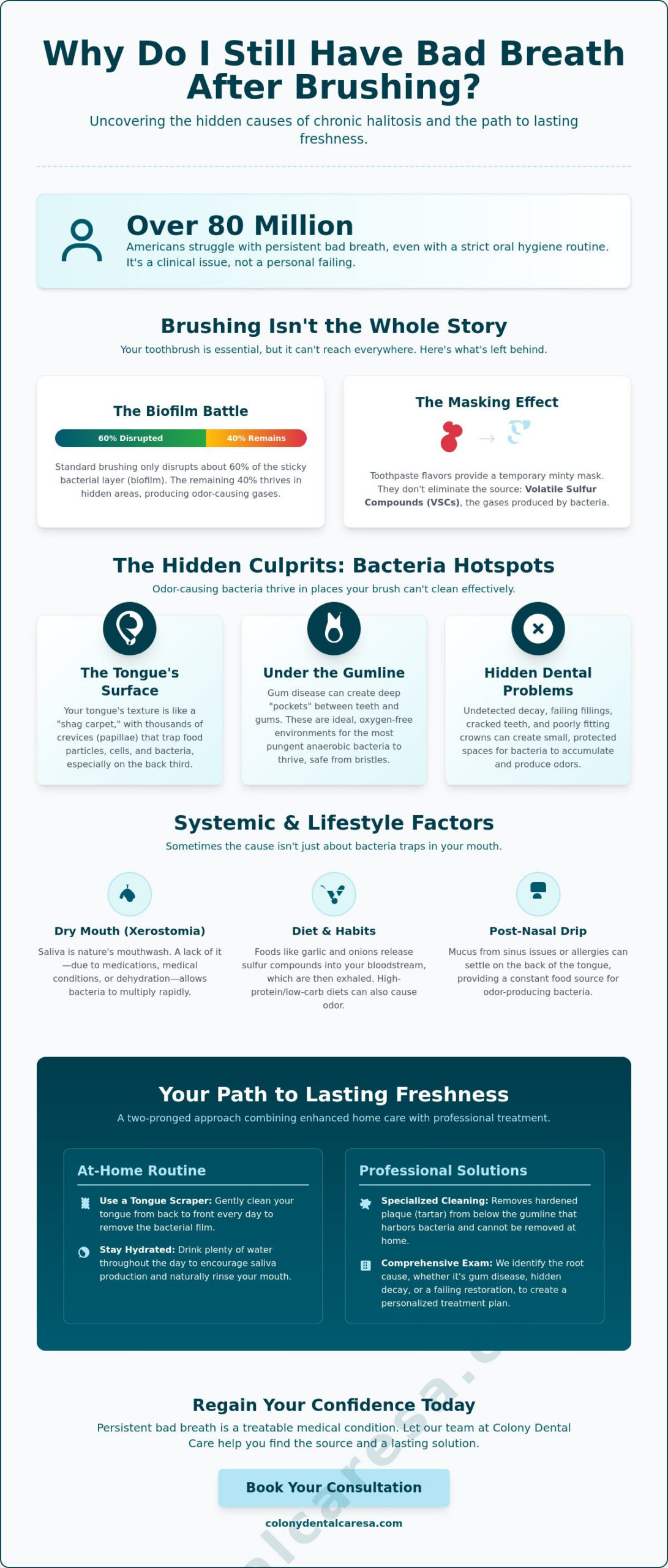
Bacteria in your mouth don’t just float around independently. They organize into a sticky, protective layer called biofilm. This structure acts like a shield, making the bacteria much harder to reach and remove. Research suggests that standard brushing only disrupts about 60 percent of the bacteria in your mouth. The remaining 40 percent continues to thrive in hard-to-reach areas, producing the gases that cause persistent odor. Chronic halitosis occurs when these colonies become established and outpace your daily cleaning routine. We see this often, and it’s simply a sign that your mouth needs a little extra partnership to stay balanced.
Why Brushing Alone Leaves Pockets of Odor
Your mouth is a complex landscape of tiny crevices, deep grooves on the back of the tongue, and tight spaces between the teeth and gums. A toothbrush is a wonderful tool, but its bristles are often too large to reach into these microscopic hiding spots. Odor-causing bacteria are often anaerobic, meaning they thrive in environments without oxygen. They tuck themselves deep into the “shag carpet” of your tongue or just under the gumline. This is why we focus on a total health approach. While your home routine is the essential foundation, professional intervention like a thorough dental cleaning is necessary to reach the areas your brush cannot. We are here to help you identify these hidden traps so you can breathe easily again.
The Hidden Culprits: Bacteria Traps You Might Be Missing
When you’re doing everything right at the sink but still feel self-conscious, it’s time to look at the hidden corners of your mouth. We often find that the answer to Why Do I Have Bad Breath Even After Brushing? isn’t about your effort, but about the specific places where bacteria hide. Your mouth is full of microscopic “pockets” and irregular surfaces that act as natural traps. These areas protect bacteria from the bristles of your brush, allowing them to produce odors undisturbed. Understanding these physical traps is the first step toward regaining your peace of mind and lasting freshness.
One major area we often overlook is the gums. If you have early stages of gum disease, the small space between your tooth and gum tissue can deepen into a “pocket.” These pockets are perfect environments for anaerobic bacteria, which thrive without oxygen and produce the most pungent odors. Since your toothbrush can’t reach into these deep spaces, the bacteria remain even after a thorough cleaning. This is one reason why we prioritize thoroughness in our diagnostic exams; we want to catch these hidden traps before they affect your confidence or your health.
The Tongue and the Back of the Throat
Your tongue isn’t a smooth surface; it’s more like a deep-pile shag carpet. It’s covered in tiny bumps called papillae that create thousands of crevices where food particles, dead skin cells, and bacteria collect. The back third of the tongue is especially prone to this buildup because it doesn’t rub against your palate as much as the front. According to an authoritative medical source, this area is a primary site for odor production. Additionally, if you struggle with post-nasal drip, mucus can settle on the very back of the tongue and throat, providing a constant food source for bacteria. In some cases, you might even develop tonsil stones, which are small, hardened clusters of debris in the crevices of your tonsils that emit a strong, sulfur-like scent.
Aging Crowns, Fillings, and Bridges
This is a common cause that many people don’t consider when they wonder, Why Do I Have Bad Breath Even After Brushing? Dental work is durable, but it doesn’t last forever. Over time, the seal between a filling and your tooth can weaken, a process we call marginal leakage. This creates a microscopic gap where bacteria and food particles get stuck. Because the gap is so small, no brush or floss can get inside to clean it. We also see this with aging dental crowns or bridges. If the fit has shifted even slightly, it creates a “micro-gap” that harbors bacteria right at the gumline. If you have older dental work, we can gently evaluate these restorations to ensure they’re still smooth, sealed, and easy for you to keep clean at home.
Systemic and Lifestyle Factors: When the Cause Isn’t Just Your Teeth
Sometimes, your oral hygiene routine is absolutely perfect, but your body is sending a signal that something else needs attention. If you have ever felt discouraged and asked, Why Do I Have Bad Breath Even After Brushing?, the answer might lie in your systemic health or daily habits. We believe in looking at the whole person, not just the teeth, because your oral health is deeply connected to your overall well-being. From the medications you take to the way you breathe at night, various factors can influence the freshness of your breath in ways a toothbrush simply cannot address.
Your diet also plays a surprisingly direct role in how your breath smells. For example, the “Keto Breath” phenomenon occurs when your body enters a state of ketosis to burn fat. This process releases chemicals called ketones, which are actually exhaled through the lungs. Because the scent originates in your breath as it leaves your body, no amount of scrubbing your teeth will fully eliminate it. We want to help you navigate these lifestyle factors with kindness and professional guidance so you can feel confident in every social interaction.
Saliva: Your Mouth’s Natural Cleansing Agent
Saliva is much more than just moisture; it is your mouth’s primary defense system. It contains specialized enzymes that actively neutralize the volatile sulfur compounds responsible for odors. When your mouth stays dry, a condition known as xerostomia, these bacteria have a chance to multiply rapidly. We often see this in neighbors who struggle with mouth breathing or sleep apnea, as the constant airflow dries out protective saliva. Additionally, hundreds of common medications for blood pressure, allergies, and depression list dry mouth as a side effect. If you suspect your medication is the culprit, we can discuss gentle ways to restore moisture and protect your comfort.
The Mouth-Body Connection
The health of your mouth is a window into your digestive and respiratory systems. Conditions like GERD or chronic acid reflux can bring stomach acids and odors back up into the oral cavity, creating a persistent taste and scent. Similarly, chronic sinus infections or seasonal allergies often lead to post-nasal drip. This mucus settles on the back of the tongue and provides a constant food source for odor-causing bacteria. Because these issues are interconnected, seeking gum disease treatment is vital for systemic health. By reducing inflammation in the mouth, we help support your body’s natural ability to stay healthy and fresh. We are here to partner with you in identifying these connections, ensuring you receive the comprehensive care you deserve.
A Fresh Breath Routine: Practical Steps to Take Today
If you’ve been searching for answers to Why Do I Have Bad Breath Even After Brushing?, it’s time to refine your daily habits with a more comprehensive approach. While we’ve discussed the hidden traps and systemic causes, these daily steps empower you to take control of your oral environment. We want your routine to feel like a refreshing ritual rather than a frustrating chore. By focusing on the areas your brush normally skips, you can significantly reduce the bacterial load in your mouth and enjoy lasting confidence.
One of the most effective tools you can add to your kit is a high quality tongue scraper. Since the back of the tongue is a primary site for odor production, mastering the right technique is essential. Gently place the scraper as far back as you’re comfortable and pull forward with steady pressure. Rinse the scraper after each pass. This physical removal of the biofilm is far more effective than just brushing your tongue with a toothbrush, which often just moves the bacteria around.
Your 5-Minute Morning and Evening Protocol
We recommend a “water-first” rule to jumpstart your morning. Drinking a full glass of water immediately upon waking helps flush away the concentrated bacteria that accumulate overnight while your saliva production is low. Once you’ve hydrated, follow this step by step guide:
- Interdental Cleaning: Clean between your teeth before you brush. This ensures that toothpaste can actually reach the surfaces between your teeth. Whether you use floss or an interdental brush, this step is non-negotiable for breath freshness.
- Targeted Brushing: Brush for two full minutes, focusing on the gumline where odor causing bacteria love to hide.
- Tongue Scraping: Use your scraper to clear the back third of your tongue.
- Rinse: Use an alcohol-free mouthwash. Rinses containing alcohol can dry out your mouth, which ultimately makes bad breath worse over time.
Lifestyle Tweaks for Lasting Freshness
Beyond your bathroom routine, small changes in your day can make a big difference. Crunchy, high-fiber fruits and vegetables like apples, carrots, and celery act as natural toothbrushes. They stimulate saliva flow and mechanically scrub away surface debris as you eat. We also suggest looking into oral probiotics, specifically those containing Streptococcus salivarius. These beneficial bacteria help balance your oral microbiome, making it harder for “bad” bacteria to take over. Finally, remember to swap your toothbrush every three months. Frayed bristles lose their effectiveness, and old brushes can actually harbor the very bacteria you’re trying to eliminate. If you’re ready to move beyond at-home care, we invite you to schedule a comprehensive exam so we can partner with you on a personalized plan for your health.
Regaining Confidence: How Colony Dental Care Solves Persistent Halitosis
We know how much a lingering worry about your breath can impact your social life and self-esteem. If you have spent years asking, Why Do I Have Bad Breath Even After Brushing?, please know that we are here to offer more than just a temporary fix. Our goal is to provide a supportive, judgment-free environment where we can uncover the biological reasons behind your concerns. We believe that every neighbor in San Antonio deserves to speak and smile with total peace of mind. By moving beyond surface-level cleaning, we can identify the specific factors that are unique to your oral health and create a plan that brings back your confidence.
Since research shows that approximately 85 to 90 percent of chronic bad breath cases originate directly within the mouth, a professional evaluation is the most effective way to find a permanent solution. We don’t just look at your teeth; we look at the health of your entire oral ecosystem. This thoroughness allows us to catch the issues that are invisible in a bathroom mirror, ensuring that your path to freshness is based on clear, clinical evidence and compassionate care.
Professional Cleaning vs. Home Care
While your daily routine is vital, it cannot remove tartar, also known as calculus. Tartar is stubborn. It acts like a microscopic sponge, soaking up bacteria and trapping odors that your toothbrush simply cannot reach. During a professional dental cleaning, we gently remove these calcified deposits from the surfaces of your teeth and just below the gumline. This process is essential for refreshing your breath and checking for signs of periodontal disease. If we find that bacteria have settled into deep pockets, we can provide specialized periodontal disease treatment to restore the health of your gums and eliminate the source of the odor.
A Personalized Path to Freshness
Every smile is different, which is why Dr. Oei focuses on finding the root cause of your halitosis rather than just masking the symptoms. During your exam, we carefully inspect for hidden decay or aging restorations, such as older dental crowns or fillings that may have developed microscopic leaks. These tiny gaps are often the secret answer to the question: Why Do I Have Bad Breath Even After Brushing? Once we identify these traps, we can discuss comfortable options like modern tooth-colored fillings or updated crowns to seal out bacteria for good. We are committed to your comfort and long-term vitality, acting as your dedicated local partners in health. Schedule your reassuring exam today and let us help you achieve the lasting freshness you have been searching for.
Embrace the Confidence of Lasting Freshness
You deserve to feel completely at ease every time you speak or share a smile. We have explored how biofilm can hide in deep pockets and how systemic health factors can influence your breath in ways that simple brushing cannot fix. Identifying Why Do I Have Bad Breath Even After Brushing? is simply the first step in a larger partnership toward your total well-being. By combining a refined home routine with professional expertise, you can finally move past the frustration of temporary fixes and enjoy the vitality of a healthy mouth.
Our team brings over 30 years of experience to our San Antonio community, providing the compassionate and judgment-free care you need to feel truly heard. Dr. James David Oei and our entire staff prioritize your comfort above all else, even offering an in-house dental membership to make your ongoing health both simple and accessible. We are ready to help you uncover the root cause of your concerns and restore your peace of mind. Schedule your gentle, fresh-breath consultation at Colony Dental Care today. We look forward to seeing you soon and helping your confidence shine.
Frequently Asked Questions
Can a specific food cause bad breath for more than a day?
Yes, pungent foods like garlic and onions can affect your breath for up to 72 hours after a meal. This happens because the odor-causing oils are absorbed into your bloodstream and eventually exhaled through your lungs. Since the scent is coming from your breath as you breathe out, scrubbing your teeth won’t fully eliminate it until your body finishes processing those ingredients.
Is it possible to have bad breath and not know it?
Yes, it’s very common to be unaware of your own breath odor because of a biological process called sensory adaptation. Your nose becomes accustomed to your own scent over time, which can make it hard to detect an issue yourself. A quick way to check at home is to lick the back of your clean wrist, wait ten seconds, and then sniff the area to get a more accurate sense of your breath.
Do I really need a tongue scraper if I brush my tongue with a toothbrush?
Yes, a tongue scraper is much more effective at lifting and removing the sticky biofilm that causes odor. Toothbrush bristles are designed for hard enamel and often just move bacteria around the soft, irregular surface of the tongue. This simple tool is a game changer for neighbors who find themselves asking, Why Do I Have Bad Breath Even After Brushing? despite their best efforts at the sink.
Can stress or anxiety actually cause my breath to smell worse?
Yes, stress and anxiety can trigger your “fight or flight” response, which often leads to a significantly drier mouth. Saliva is your mouth’s natural cleanser, so when its production slows down, odor-causing bacteria can multiply much faster. We also notice that people under stress may breathe through their mouths more often, which further dries out the protective moisture your mouth needs to stay fresh.
What should I do if my child has persistent bad breath even after brushing?
Persistent odor in children is often related to something other than hygiene, such as a sinus infection, seasonal allergies, or even large tonsils that trap food debris. It’s best to stay calm and schedule a gentle dental exam so we can take a closer look. We will help identify the root cause in a way that makes your child feel safe and cared for during their visit.
Why does my breath smell bad only when I wake up?
Morning breath is caused by the natural decrease in saliva flow while you sleep, which allows bacteria to feast on food particles and produce sulfur gases overnight. This is a very common experience and usually resolves quickly after you hydrate and complete your morning cleaning protocol. If the odor stays with you throughout the afternoon, it may indicate an underlying issue that needs a more thorough look.
Can certain dental products actually make bad breath worse over time?
Yes, many commercial mouthwashes contain high concentrations of alcohol that can dry out your oral tissues. While they offer a temporary burst of minty flavor, the resulting dry mouth creates a perfect environment for odor-producing bacteria to return even stronger. We recommend choosing alcohol-free rinses and gentle toothpaste to keep your mouth moist, healthy, and naturally fresh without any harsh side effects.
How often should I see a dentist specifically for breath concerns?
You should maintain your regular dental cleanings and exams every six months to ensure that tartar and bacteria don’t have a chance to build up. However, if you are constantly wondering, Why Do I Have Bad Breath Even After Brushing?, and it lasts for more than two weeks, please reach out to us. We can perform a detailed check for hidden decay or gum issues to help you regain your comfort and social confidence.