What if that sudden twinge when sipping an iced drink isn’t just random sensitivity, but an early cue from your body? If you’re trying to figure out how to tell if you have a cavity, you aren’t alone. You might find yourself peering into the bathroom mirror, wondering if that faint spot or lingering ache is serious enough to justify a dental visit or if it can wait until your next routine cleaning. It’s completely normal to feel uncertain, especially when you’re worried about uncomfortable procedures or unexpected expenses and just want honest clarity.
We believe you deserve peace of mind and compassionate care every step of the way. In this guide, you’ll learn exactly how to spot the signs of tooth decay early so you can protect your smile with confidence and ease. We’ll walk through our updated 2026 symptom checklist, decode what subtle sensations mean, and show you how partnering with a gentle San Antonio dental home makes restorative care simple, transparent, and completely stress-free.
Key Takeaways
- Learn how to tell if you have a cavity by spotting early warning signs, such as lingering sensitivity to sweet treats or sudden twinges from hot and cold drinks.
- Discover how to distinguish harmless enamel wear from deeper decay, especially if you feel sharp discomfort when biting down.
- Recognize subtle visual cues at home, from faint chalky patches to dark grooves, before hidden decay spreads between teeth.
- Understand the vital systemic health connection and how protecting your teeth prevents chronic inflammation throughout the rest of your body.
- Find peace of mind with gentle, modern restorative options like natural-looking tooth-colored fillings and affordable care through an in-house membership plan.
The Quick-Scan Checklist: Signs You Might Have a Cavity
When you are trying to understand how to tell if you have a cavity, you need straightforward answers rather than dense clinical explanations. Tooth decay often starts quietly, giving subtle hints before causing intense discomfort. Instead of guessing whether an occasional pang is normal, you can look for a few reliable indicators in your daily routine.
Review this quick-scan checklist to assess what your mouth is telling you:
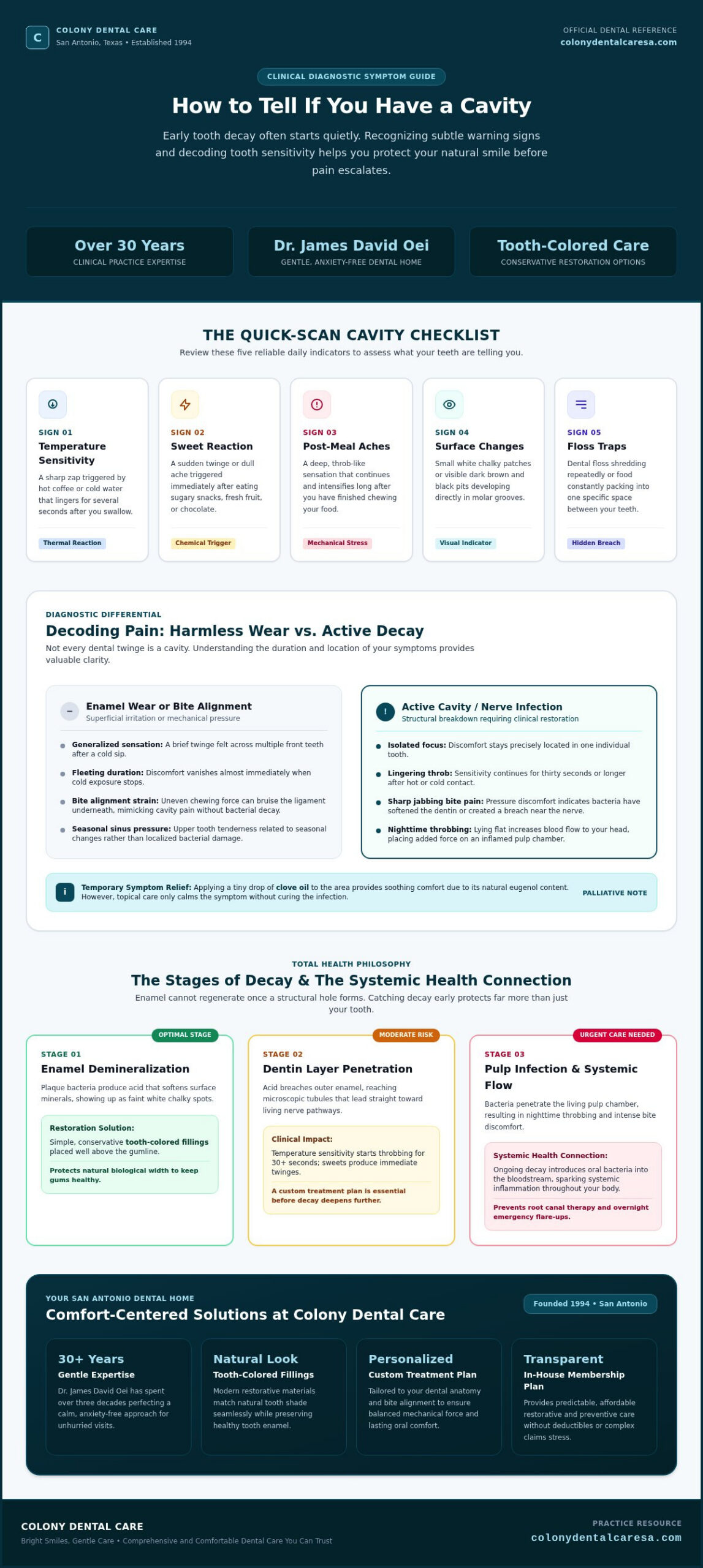
- Temperature sensitivity: A sharp zap when sipping hot coffee or cold water that lingers for several seconds after you swallow.
- Sweet sensitivity: A sudden twinge or dull ache triggered right after eating sugary snacks, fruit, or chocolate.
- Persistent post-meal aches: A deep, throb-like sensation that continues long after you finish chewing.
- Visible surface changes: Small white chalky spots, or dark brown and black pits forming in the grooves of your molars.
- Food traps: Dental floss shredding or food packing repeatedly into one specific space between your teeth.
Why Early Detection Matters for Your Smile
Catching these early signs makes a world of difference for your comfort and your wallet. In the initial stages of tooth decay, enamel demineralization can often be restored with simple, conservative tooth-colored fillings instead of extensive root canal therapy. Preserving healthy enamel keeps restorations well above the gumline, protecting your natural biological width, which is the vital space required between restorations and bone to keep gums healthy. Acting quickly helps you avoid unexpected pain and prevents the urgent need for an emergency dentist San Antonio patients turn to when deep infections flare up overnight.
The ‘Wait and See’ Risk
Enamel cannot regenerate once a structural hole forms. A cavity will gradually deepen toward the sensitive nerve center of the tooth without prompt care. Beyond localized tooth pain, ongoing decay introduces harmful oral bacteria into your bloodstream, triggering systemic inflammation throughout your body. Scheduling an evaluation gives you control over your health. Dr. James David Oei has spent over 30 years perfecting an anxiety-free, gentle approach in San Antonio, ensuring that taking care of an early issue feels supportive, unhurried, and genuinely comfortable.
Decoding Dental Sensitivity and Persistent Pain
Pain tells a story, but deciphering what type of discomfort you feel is essential when learning how to tell if you have a cavity. Not all dental sensitivity points to decay. A fleeting twinge across multiple front teeth after a cold sip often stems from minor gum recession or enamel wear. A cavity, however, typically creates isolated, focused discomfort in one specific tooth.
One major warning sign is a sharp, jabbing ache when you bite down on food. Pressure pain often means bacteria have softened the inner dentin layer or created a hairline breach near the nerve. If you are experiencing mild irritation while awaiting an exam, applying a tiny drop of clove oil to the area offers temporary soothing relief thanks to its natural eugenol content. Keep in mind that topical care calms the symptom without curing the infection.
Sometimes, what feels like decay is actually an irregular bite alignment. When upper and lower teeth meet unevenly, the excess mechanical force can bruise the ligament underneath, creating tenderness that mimics a cavity. A thorough clinical exam quickly separates structural wear from active bacterial damage.
Temperature Sensitivity: When Hot and Cold Hurt
Enamel lacks nerves, but the dentin underneath contains microscopic tubules leading directly to the living pulp. As bacteria break down enamel, extreme temperatures stimulate these internal pathways. A transient flash that vanishes instantly is often manageable, but lingering pain that throbs for thirty seconds points toward deeper involvement. During an evaluation, we map out a gentle, custom treatment plan designed to eliminate the root cause while preserving your healthy tooth structure.
Spontaneous Aches and Nighttime Pain
Unprovoked toothaches that wake you up or intensify when you lie down signal significant internal pressure. Shifting to a flat position increases blood flow to your head, putting added force on an inflamed pulp chamber. While seasonal upper tooth tenderness can stem from sinus inflammation, pressure accompanied by localized throbbing usually reflects active decay. If sudden, intense pain keeps you awake, seeking prompt emergency dental care provides fast relief and protects your tooth from deeper complications.
Reviewing recognized clinical symptoms of cavities helps you distinguish ordinary cold sensitivity from progressive damage. If a persistent ache has made you wonder how to tell if you have a cavity, scheduling a visit with a welcoming San Antonio dental home gives you definitive answers and lasting peace of mind.
Visual Indicators: Identifying Holes and ‘Invisible’ Cavities
A cavity, clinically known as dental caries, is a permanent area of structural damage that breaks down enamel and develops into tiny openings. Learning how to tell if you have a cavity often starts with a visual self-check at home. While you cannot diagnose yourself with absolute certainty in the bathroom mirror, you can certainly spot telltale signs that suggest it is time for a professional opinion.
To check your smile, grab a small flashlight and stand before a well-lit mirror. Tilt your head back slightly and examine the chewing surfaces of your upper and lower molars. Look closely for dark pitting, sticky-looking grooves, or shadows beneath the surface. If you see a distinct depression that catches light differently, your enamel has likely softened.
The trickiest situations involve “invisible” decay. According to clinical studies published by the American Dental Association, visual inspection alone misses early decay between adjacent teeth in up to 50% of cases. These interproximal cavities form right below the tight contact points where teeth touch. You might not see a hole at all until the outer enamel wall collapses inward. When treatment is needed, durable tooth-colored fillings offer the ideal restorative solution. These composite resins bond directly to your tooth structure, matching your natural enamel shade while preserving maximum healthy tooth tissue.
Spotting Discoloration Before It Becomes a Hole
Not every cavity starts as a dark hole. In the initial stage, demineralization presents as a chalky, matte white spot where vital minerals have dissolved under acidic plaque. If unaddressed, this area darkens into persistent brown or black staining that cannot be brushed or scraped away. An intraoral scanner captures detailed 3-D digital impressions of your teeth, magnifying hidden structural breakdown and hairline fissures directly on a chairside screen.
The Role of Professional Imaging
Under our total health philosophy, digital imaging is a cornerstone of prevention rather than just a repair tool. Standard bitewing X-rays illuminate early mineral loss between teeth long before it causes discomfort or visible destruction. These low-radiation images show Dr. James David Oei the exact depth of a lesion, allowing our team to craft a conservative plan tailored to your specific anatomy. Detecting these hidden spots early protects the surrounding teeth and keeps restorative appointments quick, gentle, and comfortable.
Your Total Health Connection: Why Oral Care is Systemic
Your mouth does not exist in isolation from the rest of your body. When researching how to tell if you have a cavity, it helps to understand that an untreated tooth infection is not just a localized problem. Research from the ADA Forsyth Institute and the American Heart Association highlights a clear systemic health connection. The oral cavity hosts over 700 species of bacteria. When decay penetrates deep into a tooth’s vascular pulp, these microbes can enter your bloodstream, elevating inflammatory markers linked to cardiovascular complications and difficult glycemic control.
Chronic inflammation places constant stress on your immune defenses, draining your daily energy. That is why our total health philosophy views restorative dentistry as total-body wellness care. We never treat you like an anonymous chart or case number. As your long-term dental home in San Antonio, we look at your medical history, lifestyle factors, and personal goals together, ensuring your smile supports your vitality for decades.
Preventing Decay Through Personalized Care
Stopping tooth decay before it compromises your enamel is the most comfortable way to safeguard your health. Clinical preventive therapies form an invisible protective barrier over vulnerable enamel:
- Dental sealants: Thin protective coatings smoothed over deep chewing grooves in molars to seal out food particles and cavity-causing acid.
- Fluoride treatments: Professional remineralizing applications that actively strengthen weakened crystal structures on enamel surfaces.
- Periodontal maintenance: Targeted therapy that removes bacterial tartar below the gumline, preventing receding gums from exposing tender root surfaces to decay.
Scheduling a regular dental cleaning in San Antonio remains your strongest safeguard against advancing decay and whole-body inflammation.
Nutrition and Your Smile
Every bite influences your oral ecosystem. San Antonio favorites like sweet pan dulce, sugary sodas, or sticky dried fruit feed oral bacteria that produce enamel-dissolving acids. Enjoying these items in moderation, and rinsing with fresh water afterward, helps your mouth bounce back quickly. Healthy saliva serves as your premier natural defense by neutralizing acidic foods and washing away debris.
Maintaining a balanced oral pH also protects your delicate biological width, keeping gum attachments firm, pink, and free from chronic bacterial irritation. If you are noticing persistent warning signs and want to know how to tell if you have a cavity with certainty, schedule an exam with Colony Dental Care to restore your health with gentle, personalized care.
Comfort-Focused Solutions at Colony Dental Care
Discovering early symptoms often brings a wave of anxiety, but restoring your oral health does not need to feel intimidating. If you have been wondering how to tell if you have a cavity, finding answers should bring relief, not stress. At Colony Dental Care, we believe your dental visits should be defined by comfort and clarity, never by fear of painful procedures or complicated billing.
Since founding our San Antonio practice in 1994, Dr. James David Oei has dedicated over 30 years of clinical expertise to perfecting a gentle, anxiety-free approach. Our entire team prioritizes your peace of mind from the moment you step through our doors. We take time to explain each step, listen to your concerns, and work at a pace that keeps you feeling completely at ease.
Financial concerns should never stand between you and a healthy mouth. In addition to accepting insurance plans such as Cigna PPO, we offer an in-house membership plan designed for individuals and families without traditional dental coverage. This private option provides predictable preventive care and restorative savings without deductibles, waiting periods, or annual maximum limits.
Restoring Your Smile with Tooth-Colored Fillings
When a cavity requires repair, modern restorative dentistry provides durable, metal-free options that blend seamlessly into your smile. Our practice specializes in tooth-colored fillings crafted from composite resin. We match the resin shade to your natural enamel, ensuring your finished restoration looks completely authentic. Because this material bonds directly to your remaining enamel, it supports the natural integrity of your tooth while withstanding daily chewing forces for years to come.
Joining Our San Antonio Dental Family
For more than three decades, our team has helped over 5,000 local patients maintain healthy, radiant smiles. We treat you like a neighbor rather than just a case number, maintaining honest conversations, transparent pricing, and zero pressure. If you are noticing warning signs and need guidance on how to tell if you have a cavity, schedule your gentle exam today and experience compassionate care you can trust.
Take the Next Step Toward Lasting Smile Health
Understanding how to tell if you have a cavity gives you the power to protect your teeth before minor decay turns into persistent discomfort. Paying attention to subtle signals like lingering temperature sensitivity, visible discoloration, or recurring food traps allows you to preserve healthy enamel and safeguard your total systemic wellness.
You don’t have to face dental worries or treatment anxiety on your own. With over 30 years of clinical expertise, Dr. James David Oei has helped more than 5,000 local patients achieve healthy smiles in a warm, unhurried environment. We proudly accept Cigna PPO and most major insurances, while also offering an accessible in-house membership plan to keep restorative care transparent and affordable. Schedule your gentle cavity check in San Antonio today and let our caring team restore your comfort and peace of mind.
Frequently Asked Questions
Does a cavity always hurt immediately?
No, early cavities rarely cause noticeable pain. Enamel contains no nerves, so decay must penetrate into the softer inner dentin layer before triggering discomfort or temperature sensitivity. That is why waiting for pain isn’t the best way when learning how to tell if you have a cavity. By the time an ache develops, the decay has advanced, making regular dental exams essential for early detection.
Can I reverse a cavity once I see a spot on my tooth?
Yes, but only in its earliest stage before a physical hole forms. If the lesion appears as a faint, chalky white spot on your enamel, professional fluoride treatments and proper home hygiene can help remineralize the enamel crystals. However, once bacteria break through the enamel surface and create a structural pit, remineralization can no longer repair it, and a conservative restoration becomes necessary.
How long can I wait to fix a cavity if it doesn’t hurt?
You shouldn’t delay treatment even if the tooth feels fine. Tooth decay is an active bacterial infection that steadily dissolves tooth structure beneath the surface. Postponing care gives bacteria time to migrate deeper into the pulp chamber, turning what could have been a quick, gentle filling into a complex root canal or tooth extraction. Treating it promptly preserves your tooth and saves money.
Are tooth-colored fillings as strong as metal ones?
Yes, modern composite resin materials offer exceptional durability and strength for daily chewing. Unlike traditional metal amalgams, tooth-colored fillings bond directly to your remaining tooth structure, physically supporting and sealing the weakened areas. They don’t expand or contract with temperature changes like metal does, which protects your tooth from micro-fractures while perfectly matching the natural shade of your smile.
What happens if I ignore a cavity for too long?
An untreated cavity steadily destroys enamel and infects the living pulp tissue inside your tooth root. This progression triggers intense, throbbing pain, localized swelling, and potential dental abscesses. In severe cases, the tooth structure degrades beyond repair, requiring an extraction. Over time, unaddressed oral bacteria enter your bloodstream, sparking chronic bodily inflammation that can negatively impact your overall cardiovascular health.
Is it a cavity or just a sensitive tooth?
General tooth sensitivity often affects multiple teeth and causes a fast, fleeting reaction to cold air or water. When evaluating how to tell if you have a cavity, look for isolated discomfort centered on one specific tooth that lingers after eating or throbs spontaneously. If you also notice localized biting pain or food catching in the same spot, decay is far more likely.
How much does a simple tooth-colored filling cost in San Antonio?
The exact cost depends on the tooth’s location, the number of affected surfaces, and your specific insurance coverage. In San Antonio, dental plans like Cigna PPO typically cover a substantial portion of restorative care. At Colony Dental Care, we provide complete fee transparency before treatment begins, ensuring you never encounter surprise expenses or hidden charges for your care.
Do you offer financing for dental work if I don’t have insurance?
We believe quality care should always remain accessible. While we do not operate internal lending programs, Colony Dental Care offers a dedicated in-house membership plan for uninsured patients. This plan provides predictable preventive services and immediate discounts on restorative treatments like fillings, without deductibles or waiting periods. Our team gladly discusses clear, manageable payment options to keep your care stress-free.