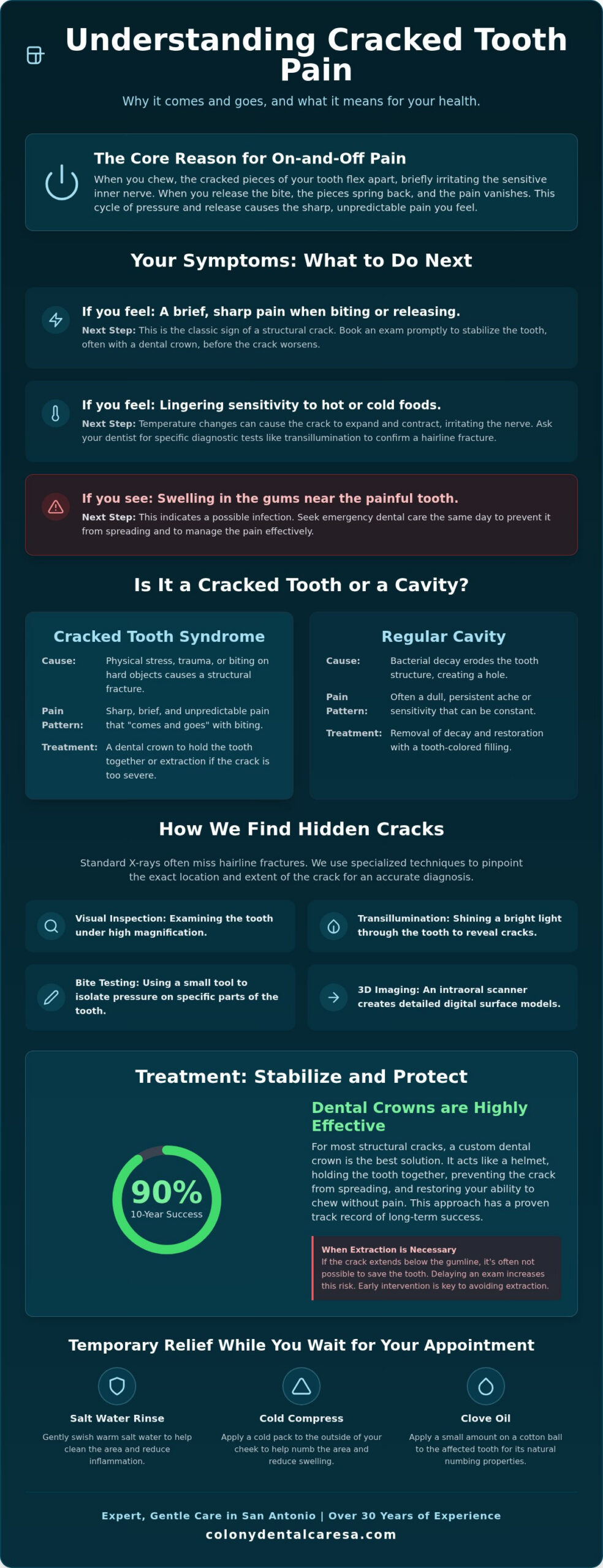
Cracked tooth pain comes and goes because flexing of the fractured tooth (tooth fracture) structure releases pressure on the internal nerve pulp, causing sharp discomfort primarily when biting down or releasing chewing force. Unpredictable nerve irritation occurs long before visible infection or permanent damage sets in. Your main decisions are whether the pattern you feel needs prompt evaluation, which repair path fits the depth of the crack, and how to act before delay turns a savable tooth into an extraction.
Key Takeaways: Cracked tooth pain comes and goes because chewing pressure flexes the tooth structure, irritating the internal nerve before the fracture springs back into place.
- Custom dental crowns provide a 90% ten-year survival rate for stabilizing structural tooth fractures.
- Except when damage extends below the gumline, which typically requires extraction instead of repair.
- Therefore, seek an exam if pain flashes on bite release to prevent nerve infection.
- Bite stick tests and transillumination find hairline cracks that standard X-rays often miss.
Brief Bite Pain, Temperature Sensitivity, or Gum Swelling: What to Do Next
You need care when a cracked tooth causes brief, sharp pain while biting down. Typical situations map to clear next steps: if pain flashes only when you bite and release, book an exam so a crown or filling can stabilize the tooth if the crack is above the gumline; if hot or cold leaves lingering sensitivity, ask for bite testing and magnification to confirm a hairline fracture rather than assuming a simple cavity; if gums swell near the sore tooth, seek emergency toothache relief the same day so infection does not spread.
With clients we see that ignoring off-and-on discomfort often leads to sudden, severe infections. Our team sees this often in our San Antonio practice because chewing pressures split damaged enamel further. A second major sign is lingering sensitivity after eating hot or cold foods: structural damage expands under temperature changes and keeps the nerve irritated. Finally, swelling along your gums demands attention. Our team has cared for local smiles for over 30 years and can keep treatment simple, gentle, and affordable when small cracks are fixed early. Call 210-904-0940 to schedule a prompt visit.
How Flexing Crack Walls Trigger Sharp Nerve Pain on the Bite
Flexing tooth pieces irritate your inner nerve whenever you bite down on food. Each chew shifts the broken pieces and drives sharp pressure deep into your sensitive pulp, then the friction stops when you open your jaw, so the sudden discomfort fades quickly.
If you feel brief electric pain only on bite release after tough foods, prioritize a same-visit bite stick test so the crack line can be located before bacteria reach the pulp. If temperature spikes linger after the bite pain fades, ask for magnification and transillumination rather than waiting for a visible chip. Feeling nervous about dental visits is normal, and gentle care makes treating a cracked tooth far more comfortable. Delaying treatment exposes your nerve to bacteria and deeper damage over time. You can visit our San Antonio dental team for clear answers and a comfortable path back to ease.
Cracked Tooth Syndrome vs a Cavity: Different Causes, Different Care
A cracked tooth involves a structural split in your tooth, whereas a cavity is damage caused by bacterial decay. Cavities produce steady aches as decay reaches the nerve. Fractures often trigger sharp, unpredictable pain when you bite down or release pressure.
| Feature | Cracked Tooth Syndrome | Regular Cavity |
|---|---|---|
| Primary Cause | Physical stress or fracture | Bacterial decay |
| Pain Pattern | Comes and goes on bite | Continuous ache |
| Main Treatment | Crown or gentle extraction guidance for total health when the tooth cannot be saved | Tooth-colored filling (restorative material) |
Tooth structures that flex under chewing pressure may expose hidden crack lines, allowing fluids to irritate the internal nerve before springing back into place. That pattern behaves like a delicate crack in a glass mug rather than a slow hole in wood. Early care limits how far the split can travel. If a severe split leaves no restorative option, pulling a tooth (extraction) paired with a clear replacement plan restores your comfort reliably. Request a quote for the option that matches your exam findings.
Focused Light, Bite Sticks, and Magnification Find Hidden Cracks
Dentists use specialized visual and tactile tests to locate a hidden cracked tooth when standard X-rays miss the hairline break. During your visit, our team carefully examines your tooth so your concerns receive full attention.
- Visual inspection: We examine your enamel under high magnification for faint fracture lines.
- Transillumination: Fiber-optic light passes through your tooth structure, revealing blocked light pathways caused by deep cracks.
- Bite testing: You bite down on a specialized stick to pinpoint exact pain points upon release.
- 3D imaging: An intraoral scanner creates detailed digital surface views without causing extra discomfort, supporting planning once the crack is located clinically.
Locating a break early protects your smile from deeper complications. Treating a small fracture before it spreads keeps the visit simpler and gentler. Review our broken tooth repair guide for restoration paths, then tell us what you feel so we can match tests to your symptoms.
One reviewer on the thecolonyfamilydental.com page "Reviews | The Colony, TX" shared a clear problem-to-outcome arc: symptoms were easy to dismiss until the team took them seriously.
"The staff is nice and great, they really do care about your teeth. Didn’t agree when the person cleaning my teeth was talking down on me. Also, I think it’s important to relay a patient’s concerns and take them seriously and not brush it off." (source)
When faint or intermittent pain is brushed off, cracks keep flexing; when bite sticks and light transillumination validate what you feel, the right repair can start before the nerve is lost. You deserve a gentle dental home where your voice is heard and thoroughly evaluated.
Crowns, Fillings, and Root Canals: Success Rates That Guide Your Choice
When chewing stress has already split enamel, a custom dental crown holds the damaged tooth together under heavy pressure, much as a protective helmet stabilizes what is underneath. Custom crowns achieve a ten-year survival rate of over 90%, which is why they are a strong choice for structural stability.
Small surface cracks may only need tooth-colored fillings (restorative materials). Situation: minor enamel damage without nerve involvement. Solution: a conservative filling. Result: these fillings maintain an 80% success rate over seven years.
If damage reaches your nerve, a root canal paired with a custom crown resolves pain while saving your natural root structure. Situation: deep crack with pulp irritation. Solution: root canal plus crown. Result: root canal treatments retain a 90% long-term success rate.
We focus on treatments that preserve your health and do not push cosmetic work you do not want. Clear recommendations protect your smile and your peace of mind.
Over on the thecolonyfamilydental.com topic "Reviews | The Colony, TX", one patient described pressure elsewhere for work they did not need, then relief at finding care that stayed honest:
"Unlike my dentist in Florida whom I hated, Dr. Rossen does not tell you that you need unnecessary work. My old dentist had told me I needed all my amalgam removed, wanted to do 6 crowns, and had a fascination with wanting everything white and pretty." (source)
Unnecessary crown proposals create cost and anxiety; a plan limited to structural need (filling, crown, or root canal plus crown) keeps the outcome tied to health, not cosmetics. Ask us for a written treatment outline after your exam.
Waiting Too Long Can Force Extraction Instead of Repair
Ignoring a cracked tooth allows the break to deepen into your root, which makes saving it impossible. When structural damage reaches below the gumline, pulling a tooth becomes your only safe medical option to protect your health.
Our dental team regularly sees how timely checkups help protect your original teeth. Acting quickly protects your natural structure and keeps treatments simpler. An unaddressed crack opens a path for hidden bacteria, which slowly destroys underlying bone long before daily discomfort returns. Delaying treatment compounds damage the way driving on a flat tire wears the whole wheel the longer you wait. Seeking emergency dental care early preserves your comfort. Our team helps you explore flexible care, including our in-house membership plan, so cost is clearer when you need to move fast. Contact the office to reserve an urgent evaluation.
Salt Water, Cold Compress, and Clove Oil While You Wait
You can temporarily ease discomfort from a cracked tooth at home while you wait for professional care. Safe temporary measures protect your mouth and bring quicker comfort.
Rinse gently with warm salt water to clean the area and soothe sensitive gums. Applying a cold compress to your cheek helps reduce swelling around the painful spot. You may also dab a tiny drop of clove oil onto the affected area for natural relief. Avoid chewing on that side of your mouth to prevent further stress.
From client work we see that patients who shield the damaged area from extreme temperatures experience far fewer pain spikes; that step limits unnecessary nerve irritation before your visit. Prompt professional treatment still matters, because home steps only bridge the gap. Our San Antonio team is ready to keep your visit gentle and clear when you call 210-904-0940.
Insurance Limits and an In-House Membership Plan for Predictable Costs
Your dental insurance may cover visits only twice a year, which creates stress when unexpected cracked tooth pain appears. From client work we see that patients often delay care because they worry about exceeding annual plan limits, and that delay raises restoration expenses later.
We accept dental insurance to lower your out-of-pocket expenses. Our team works with many dental insurance plans and helps maximize benefits. For care without traditional policies, an in-house membership plan provides clear savings and predictable costs.
Dr. Oei is a member of the Academy of General Dentistry, American Dental Association, Texas Dental Association, and San Antonio District Dental Society. We prioritize your family’s financial comfort and walk through options before treatment begins.
Tip: Maximize your yearly benefits before December 31 to offset major restorative treatments like crowns.
Throbbing, Fever, or Swelling Means You Need Urgent Care
Severe or constant pain from a cracked tooth requires immediate care to save your tooth. In our San Antonio office, we see that waiting too long allows small cracks to reach the sensitive inner nerve. Prompt action keeps treatment simpler and protects your peace of mind. Seeking emergency dentist service is the right choice when discomfort prevents sleeping or eating.
Continuous throbbing, fever, or swelling around your gums are clear warning signs. Sudden pain when biting down also signals an urgent issue. We prioritize your comfort and reserve time for urgent appointments. We treat you like a neighbor, offering gentle emergency care so you are not left managing another night of sharp pain alone.
A commenter in the thecolonyfamilydental.com thread "Reviews | The Colony, TX" described the path from sudden emergency to fast relief:
"My visit today was excellent. I had a dental emergency and got right in this morning after I called. The staff was outstanding and Dr. Rossen fixed my problem in about 15 minutes." (source)
Situation: an unexpected dental emergency with no room to wait. Action: same-morning access after a call. Outcome: the problem addressed in about 15 minutes with strong staff support. Fast access brings relief when severe tooth pain strikes; our local team focuses on rapid, compassionate care so you can protect your smile. Call 210-904-0940 for urgent help.
Frequently asked questions
Can a cracked tooth hurt without being infected?
Yes, a cracked tooth can cause pain without having an active infection. Biting down spreads the crack, which irritates the internal pulp tissues and triggers sharp discomfort.
How do I get a cracked tooth to stop hurting?
You can soothe temporary pain at home by applying clove oil or gently rinsing with warm salt water. Dr. Oei, a member of the American Dental Association, provides gentle emergency care in San Antonio to relieve your discomfort on a lasting basis.
How to tell if tooth pain is from a nerve?
Nerve pain often feels like an intense, throbbing sensation or a sharp ache triggered by hot and cold temperatures. When cracked tooth pain comes and goes, the inner nerve is usually being impacted by pressure changes rather than a steady decay ache.
How long can a cracked tooth hurt?
A fractured tooth can hurt intermittently for weeks or months until a dentist treats the underlying damage. Ignoring the issue allows the crack to expand, so early evaluation protects the tooth you still have.
When does a cracked tooth need a crown vs extraction?
A crown protects your tooth if the crack remains above the gum line. Pulling a tooth becomes necessary if the damage extends deep into the root. Custom treatment options and many dental insurance plans help keep needed care affordable.
Restoring Your Comfort in San Antonio
Pain that comes and goes is still a decision point: evaluate now, choose a repair that matches crack depth, or risk a path that ends in extraction. When a cracked tooth causes intermittent discomfort, swift care protects your smile and restores your peace of mind.
In 2026, the team at Colony Dental Care continues a 30-year tradition of gentle, community-focused dentistry. Dr. James David Oei brings decades of experience to help you find relief without stress. The practice accepts dental insurance to keep essential treatments accessible and simple.
Schedule your consultation by visiting our contact page so you can regain comfort before the next sharp bite.