Did you know that 66% of Americans enjoy at least one cup of coffee every single day? While that morning ritual helps many of us power through the day here in San Antonio, it might also be the reason your smile isn’t as bright as it used to be. It’s completely normal to feel a bit self-conscious when you notice your teeth losing their luster, especially when healthy habits like sipping green tea or snacking on fresh berries seem to be the culprits. We understand how confusing it is to balance a nutritious diet with the desire for a radiant, confident smile.
In this guide, we’ll answer the common question: What Foods Stain Your Teeth the Most? You’ll learn exactly which dietary choices affect your enamel and discover practical, gentle ways to protect your pearly whites. We’re here to show you that you don’t have to choose between your favorite treats and a healthy glow. We will walk through simple daily habits you can start today and explain how professional support can help you achieve lasting results without any unnecessary stress or discomfort. Let’s explore how we can keep your smile looking its best together.
Key Takeaways
- Learn how your tooth enamel acts like a sponge and why the “triple threat” of pigments and acids leads to discoloration.
- Identify exactly What Foods Stain Your Teeth the Most?, including the impact of daily coffee, tea, and dark sodas on your smile.
- Discover how “hidden” culprits like white wine and vibrant spices can prime your teeth for deeper staining.
- Find out how to use the 30-minute rule and other easy habits to protect your enamel while still enjoying your favorite snacks.
- Understand the difference between surface stains and deep discoloration to determine if professional teeth whitening is your best path forward.
Understanding the Science: Why Certain Foods Discolor Your Smile
We often think of our teeth as hard, solid surfaces like polished marble. In reality, your tooth enamel is much more like fine china or even a sponge. It features a microscopic network of tiny pores that can absorb the colors of the things you eat and drink. If you have been wondering What Foods Stain Your Teeth the Most?, it helps to first understand why your teeth are susceptible in the first place. Please know that staining is a completely natural part of life. It is not always a sign of poor hygiene; even the most diligent brushers will see their smile change shade over time as they enjoy life’s many flavors.
When you consume something dark or acidic, a chemical interaction occurs on the surface of your teeth. These substances don’t just sit on top of the enamel. Instead, they find their way into those microscopic pores. If the food or drink is acidic, it can temporarily soften your enamel. This creates a window of opportunity for pigments to sink in deeper than they otherwise would. We want you to feel confident in your smile, and that starts with knowing how these interactions work.
Chromogens, Tannins, and Acids: The Staining Trio
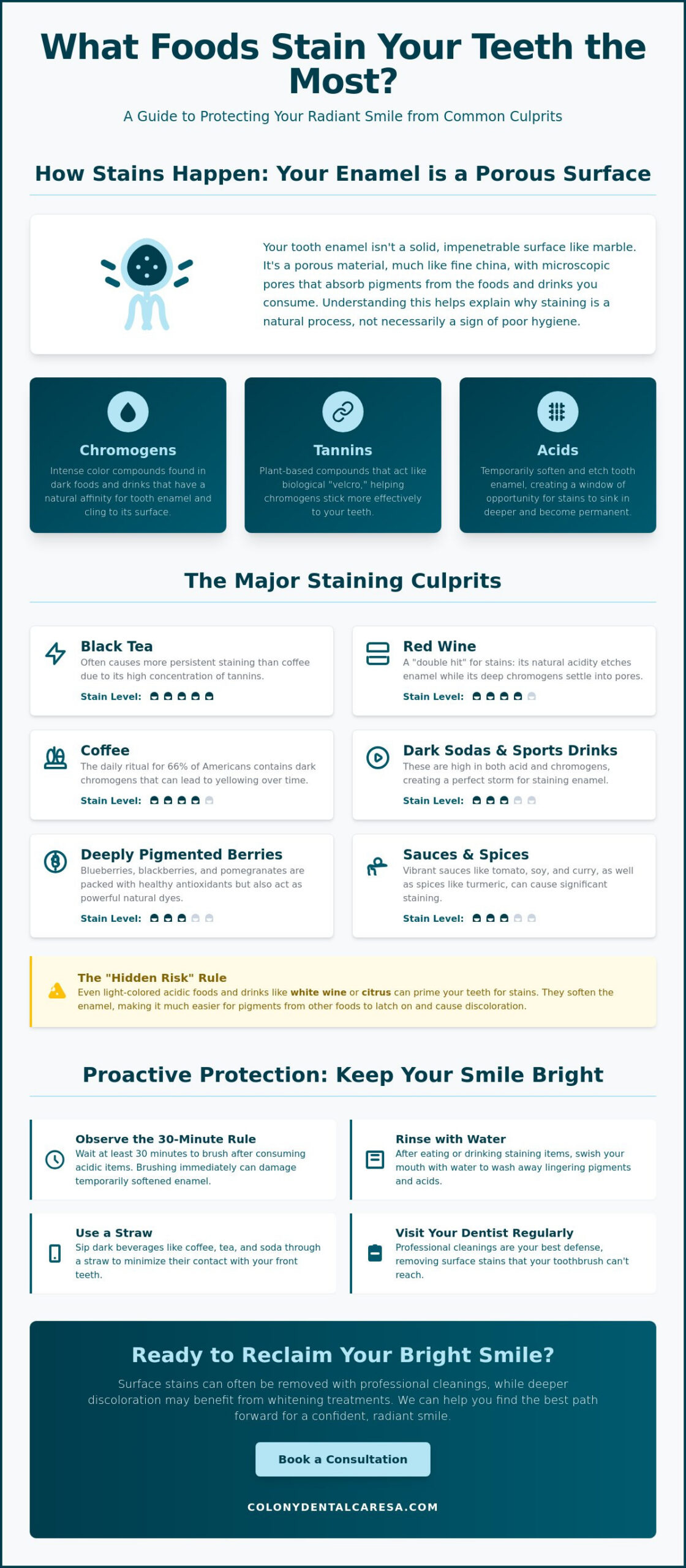
There are three main culprits that work together to dull a bright smile: chromogens, tannins, and acids. Chromogens are intense color compounds found in many of our favorite treats. They have a natural affinity for tooth enamel and love to cling to its surface. Tannins, which you might recognize from certain teas or wines, act like a biological version of “velcro.” They help those chromogens stick to your teeth more effectively, making the stains harder to rinse away with a simple sip of water.
Finally, acids play a supporting role by lowering the pH level in your mouth. This process etches the enamel ever so slightly, “opening the doors” for discoloration to settle in. You can explore more about the science of tooth discoloration to see how these factors interact at a cellular level. When these three elements combine, they create the perfect environment for lasting stains.
Is Your Enamel Porous? How Stains Sink In
Because your enamel is porous, it naturally captures what it touches. Think of it like a white shirt; some spills are easy to wipe off, while others require a deeper soak. Some of us are genetically more prone to staining than others because the size and density of these pores can vary from person to person. This is why your neighbor might drink coffee all day with no visible change, while you notice a difference after just one cup.
Since these colors eventually move past the surface, regular dental cleanings are your first and best line of defense. These professional visits allow us to gently clear away the buildup that your toothbrush simply cannot reach. While we can help you identify What Foods Stain Your Teeth the Most?, professional care ensures those microscopic pores stay clean and your enamel remains strong. We are here to partner with you to keep your smile looking vibrant and healthy for years to come.
The Major Culprits: Common Foods That Cause Dental Staining
Now that we’ve looked at the science of how enamel acts like a sponge, let’s get into the specifics of What Foods Stain Your Teeth the Most? in our daily lives. While we’d never ask you to give up your favorite morning brew or a celebratory dinner, being aware of these major culprits helps you make small adjustments that protect your smile’s vitality. We want you to enjoy the vibrant flavors of San Antonio without worrying about the toll they might take on your pearly whites.
It’s helpful to rank the “Big Three” beverages that most often lead to discoloration: coffee, black tea, and red wine. You might be surprised to learn that black tea often causes more persistent staining than coffee. This is because tea is rich in tannins, those “velcro” binders we mentioned earlier, which help pigments latch onto your teeth. Red wine delivers a double hit; its natural acidity etches the surface while its deep chromogens settle into the pores. If you’re a tea lover, adding a splash of milk can actually help dilute these staining agents and reduce their impact.
Deeply Pigmented Fruits and Berries
We all love the health benefits of fresh fruit, but deeply pigmented berries like blueberries, blackberries, and pomegranates act as powerful natural dyes. A good rule of thumb is the “White T-Shirt Rule”: if a food would leave a stubborn stain on a white shirt, it’s likely doing the same to your teeth. You don’t need to skip these nutritious snacks, though. Simply swishing with water immediately after eating a bowl of berries can help rinse away the juice before it has time to set into your enamel. It’s a small habit that makes a big difference over time.
Sauces and Condiments: From Soy to Tomato
In our neck of the woods, tomato-based BBQ sauces and rich pasta sauces are kitchen staples. These are particularly tricky because they combine high acidity with intense red pigments. This combination of Acidic Foods and Unexpected Staining Agents makes it much easier for discoloration to take hold. We also have to watch out for dark-colored sodas. Beyond their deep color, these drinks often contain phosphoric acid, which can wear down your protective enamel and leave it vulnerable.
Other liquid offenders include soy sauce and balsamic vinegar, which are both highly pigmented and thin enough to penetrate microscopic pores easily. When you can, try opting for lighter-colored alternatives like pesto or a tangy white BBQ sauce to give your enamel a break. If you’ve noticed these favorites have already left their mark on your smile, a professional teeth whitening treatment can gently lift those deep-set colors and restore your natural glow. We’re here to help you find the best path to a brighter, more confident you.
The Hidden Risks: Acidic Foods and Unexpected Staining Agents
While dark coffee and vibrant berries are easy to spot, some of the biggest threats to your smile’s brightness are actually clear or light colored. When our patients ask us What Foods Stain Your Teeth the Most?, they are often surprised to hear about the “invisible” role of acidity. It is not just about the color of the food itself; it is about how that food prepares your enamel to absorb stains from everything else you eat. We want to help you spot these hidden risks so you can keep your smile glowing without any guesswork.
Beyond beverages, we also have to consider the impact of sports drinks and energy drinks. These are often highly acidic and loaded with sugar, which can weaken your enamel integrity over time. When your enamel is softened by acid, it becomes much easier for pigments to find a permanent home. Similarly, sticky candies and sugary snacks contribute to the buildup of plaque. Plaque is naturally “sticky” and acts like a magnet for food dyes, holding onto stains right against the surface of your teeth.
White Wine and Clear Sodas: The “Invisible” Danger
Even though white wine and clear sodas lack dark pigments, their high acidity levels make them significant staining agents. Think of these drinks as a “primer” for your teeth. When you sip white wine before a meal, the acid etches your enamel, making it more vulnerable to the tomato sauce or balsamic vinegar that follows. To protect your smile, we recommend neutralizing your mouth by swishing with plain water between sips of acidic drinks. This simple step helps wash away the acid and keeps your enamel firm and smooth.
Curry and Turmeric: Vibrant Spices with Lasting Effects
San Antonio is home to a wonderful variety of global cuisines, but some of our favorite spices carry intense staining power. Turmeric, in particular, contains an incredibly deep yellow pigment that is notoriously difficult to remove once it settles into enamel. These vibrant spices don’t just affect natural teeth; they can also discolor dental restorations like tooth-colored fillings. Since these materials are designed to blend in with your smile, keeping them bright is essential for a seamless look.
You don’t have to skip the flavor to save your smile. A great trick is to pair your favorite curry or spiced dish with crunchy, high fiber vegetables like celery or cauliflower. These “detergent” foods act as natural scrubbers while you chew, helping to sweep away pigments before they can bond to your teeth. We believe that enjoying a rich, diverse diet and maintaining a bright smile can go hand in hand with just a few mindful habits.
Proactive Protection Strategies: How to Enjoy Your Favorites
Learning What Foods Stain Your Teeth the Most? shouldn’t feel like a reason to stop enjoying the vibrant culinary scene here in San Antonio. We believe that life is meant to be lived fully, and that includes savoring your favorite morning coffee or a rich plate of pasta. Protecting your smile is less about restriction and more about adopting smart, gentle habits that fit into your daily routine. By making a few small adjustments, you can keep your enamel bright while still indulging in the treats you love.
One of the most effective ways to manage staining is through the use of “detergent foods.” Nature has provided us with its own version of a toothbrush in the form of crunchy, high fiber fruits and vegetables. When you snack on apples, carrots, or celery, the mechanical action of chewing helps scrub away surface debris and pigments. These foods also stimulate saliva production, which is your mouth’s most powerful natural defense against both acids and staining agents. It’s a simple, healthy way to maintain your glow between meals.
Immediate Post-Meal Habits for Brighter Teeth
Many of our neighbors are surprised to learn about the “30-Minute Rule.” While it’s tempting to brush your teeth immediately after eating something acidic or highly pigmented, it’s actually better to wait. Acidic foods temporarily soften your enamel. If you brush too soon, you might accidentally “scrub” those stains deeper into the softened surface or even wear away the protective layer. Instead, we recommend waiting at least 30 minutes to give your saliva time to naturally remineralize and harden your teeth.
During that waiting period, you can still take action. Rinsing your mouth with plain water for 30 seconds can remove a significant portion of surface pigments before they have a chance to settle into your pores. Chewing a piece of sugar-free gum is another excellent strategy. It boosts saliva flow, which helps neutralize the pH levels in your mouth and washes away lingering food particles. These quick habits are easy to do on the go and offer lasting benefits for your smile’s vitality.
The “Straw Method” and Other Practical Swaps
If you’re a fan of iced tea or soda, try using a straw. This simple trick allows the liquid to bypass your front teeth entirely, significantly reducing the contact time between staining agents and your visible enamel. You might also consider small swaps in your beverage choices. For example, switching from black tea to green or herbal varieties can lower the tannin levels you’re exposed to daily.
Staying hydrated is also key to a bright smile. San Antonio’s tap water contains fluoride, which helps strengthen your enamel and makes it more resistant to the etching effects of acids. Even with the best home habits, professional support is essential for removing deep-set discoloration. We invite you to schedule your next dental cleaning with us to ensure your smile stays as healthy and radiant as possible. Our team is here to provide the thorough, gentle care you deserve to keep your pearly whites looking their best.
Professional Solutions in San Antonio: Reclaiming Your Bright Smile
Even when you are mindful of What Foods Stain Your Teeth the Most?, time and lifestyle can eventually leave their mark. Some discoloration happens deep within the tooth structure, known as intrinsic staining, which your daily brushing simply cannot reach. We want you to know that it’s perfectly okay to seek a little extra help to restore your confidence. Dr. James David Oei brings over 30 years of experience in restorative care to our neighbors here in San Antonio, ensuring that every treatment is as comfortable as it is effective. We focus on your individual needs to create a plan that feels right for you.
Maintaining a bright smile shouldn’t be a financial burden or a source of anxiety. That’s why we offer a Colony Dental Care in-house membership. This program is designed to make regular maintenance and professional care more affordable for our community. It allows us to build a long term partnership with you, focusing on your total health rather than just a single appointment. We believe that everyone deserves to feel proud of their smile, and we are here to make that a reality through steady, compassionate care.
When Brushing Isn’t Enough: Professional Dental Cleanings
Our professional cleanings go far beyond what you can achieve at home. We use advanced tools like ultrasonic scalers to gently vibrate away stubborn tartar and surface “extrinsic” stains that have bonded to your enamel. Following this with a professional polishing leaves your teeth smooth, making it harder for new pigments to stick. These regular visits also allow us to monitor your enamel health. If we notice thinning, we can step in early to prevent permanent yellowing. We invite you to experience our gentle, neighborly approach to hygiene where your comfort is always our top priority.
Professional Whitening at Colony Dental Care
When you are ready for a more significant change, professional teeth whitening offers results that store bought strips simply cannot match. While over the counter products often only treat the very surface, our professional grade gels are designed to penetrate deeper into the pores of your enamel. This lifts away years of discoloration from What Foods Stain Your Teeth the Most?, providing longer lasting and more vibrant results. We prioritize your peace of mind by using comfort focused techniques that minimize sensitivity, ensuring your journey to a brighter smile is a pleasant one.
Every smile is unique, and your treatment should be too. We encourage you to schedule a cosmetic consultation with us today. During this relaxed, unhurried visit, we will listen to your goals and discuss the best options for your specific dental health. Whether you need a simple cleaning or a complete whitening refresh, we are here to act as your trusted advisors and partners in health.
Start Your Journey to a Radiant San Antonio Smile
You now have a clear understanding of the science behind tooth discoloration and the simple habits that protect your enamel. By identifying What Foods Stain Your Teeth the Most?, you can enjoy our city’s wonderful food scene while keeping your smile bright. Small changes, like swishing with water or choosing crunchy detergent foods, make a significant impact on your long-term health and confidence. We’ve seen how easy it is to balance a love for flavor with a commitment to a vibrant look.
We’re here to support you every step of the way with warm, neighborly care. Led by Dr. James David Oei, who has over 30 years of clinical experience, our team focuses on your individual comfort and peace of mind. If you’re worried about costs, our in-house dental membership plan makes brightening your smile affordable even without traditional insurance. We believe a healthy, glowing smile should be accessible to everyone in our community.
Ready for a brighter, more confident smile? Schedule your gentle dental cleaning at Colony Dental Care today! We look forward to seeing you soon and helping you achieve the radiant, healthy results you deserve. Let’s work together to keep your smile looking its best for years to come.
Frequently Asked Questions
Is coffee or tea worse for staining your teeth?
Tea is often the bigger culprit because it contains higher levels of tannins, which act like binders that help pigments stick to your enamel. While coffee is dark, the tannins in black tea create a more persistent bond with your teeth. If you enjoy both, you might notice that tea stains appear more quickly and are harder to remove with just your daily brushing routine.
Can I remove food stains from my teeth at home?
You can effectively manage surface level discoloration at home by using whitening toothpaste or over the counter strips. These products are great for “extrinsic” stains caused by your daily diet. However, deeper “intrinsic” stains that have moved into the inner layers of the tooth usually require professional treatment. Understanding What Foods Stain Your Teeth the Most? helps you prevent these deep stains before they start.
How long after eating staining foods should I wait to brush?
We recommend waiting at least 30 minutes before you pick up your toothbrush after consuming acidic or highly pigmented items. Brushing immediately can be harmful because acids temporarily soften your enamel. If you brush too soon, you risk scrubbing the stains deeper or wearing away the protective surface. Rinsing with plain water during this waiting period is a safe and effective way to protect your smile.
Does whitening my teeth make them more prone to future stains?
Professional whitening doesn’t make your teeth more prone to staining in the long run, but your enamel is temporarily more porous immediately after a treatment. During the first 24 to 48 hours, it’s best to avoid dark liquids and foods while your enamel settles. Following this brief “white diet” period, your teeth will return to their normal resistance levels, allowing you to enjoy your favorite San Antonio flavors.
Are there any “white” foods that still cause staining?
Clear or light colored items like white wine, clear sodas, and white balsamic vinegar can still contribute to discoloration. These foods are highly acidic, which etches the microscopic surface of your enamel and makes it “stickier” for other pigments. Even though they don’t have dark colors themselves, they prepare your teeth to absorb stains from the next thing you eat, like a colorful salad or sauce.
How often should I get a professional cleaning to manage stains?
Most of our patients find that a professional cleaning every six months is the ideal rhythm for managing dental stains. These regular visits allow us to use specialized tools to clear away the buildup that home care can’t reach. If you are a heavy coffee or tea drinker, we can tailor your schedule to ensure your smile stays bright and healthy throughout the year.
Do strawberries actually whiten your teeth or stain them?
Strawberries are a bit of a mixed bag because they contain malic acid, a natural cleanser, but they also have deep red pigments. While some people use them as a home remedy, the natural sugars and acids can actually weaken enamel if left on too long. It’s much safer to enjoy them as a healthy snack and rinse with water afterward rather than relying on them for whitening.
What is the best way to prevent stains from red wine?
The most effective way to prevent red wine stains is to swish with water between sips and eat a little cheese. The water helps rinse away the pigments and acids, while the calcium in cheese creates a thin, protective film over your enamel. This neighborly tip allows you to enjoy a glass of wine at dinner without worrying about a “purple” smile by the end of the night.