You’re finally relaxing with a piece of dark chocolate or a slice of fresh fruit, only to be met with a sharp, sudden “zing” that makes you catch your breath. It’s a frustrating moment that often leaves you wondering, “Why Does My Tooth Hurt After Eating Sweets?” You aren’t alone in this experience. In fact, roughly 1 in 8 Americans suffers from tooth sensitivity, and it’s completely normal to feel a bit of anxiety about what that pain might mean for your health or your budget.
We believe that dental care should feel like a partnership, not a source of stress. In this 2026 guide, you’ll discover the hidden causes of sugar-related pain, from enamel erosion to the way sugar interacts with your dental nerves. We’ll help you determine if your discomfort is a minor issue or a dental emergency that requires a visit to a gentle dentist here in San Antonio. We’ll also preview how modern, comfort-focused solutions like tooth-colored fillings or dental sealants can help you regain your vitality and enjoy your favorite treats again without hesitation.
Key Takeaways
- Understand the unique “zing” sensation and why sugar triggers a different reaction in your nerves than a cold drink would.
- Explore the science of enamel and dentin to answer the question, “Why Does My Tooth Hurt After Eating Sweets?” while learning how your tooth’s protective shield works.
- Learn to spot the difference between a temporary “flash” of sensitivity and a lingering ache that might signal a cavity or a more serious concern.
- Discover simple, proactive habits like the “water rinse” trick to neutralize sugar and protect your smile after your favorite snacks.
- See how gentle, modern options like tooth-colored fillings can restore your comfort and peace of mind with a compassionate touch.
Understanding That Sudden “Zing”: Why Sugar Triggers Tooth Pain
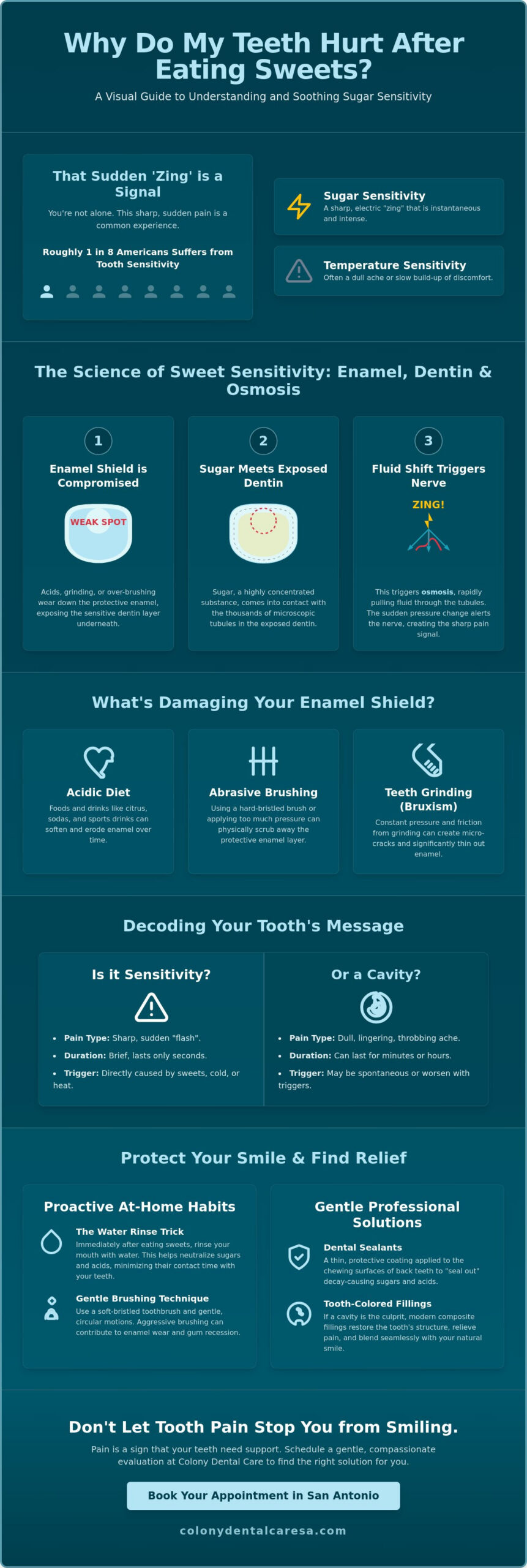
That sharp, electric flash you feel after a bite of chocolate or a sip of soda is more than just a nuisance. It is a distinct sensation often called a “zing” because of its sudden, high-intensity nature. If you find yourself asking, “Why Does My Tooth Hurt After Eating Sweets?” you are noticing a very specific biological response. Unlike temperature sensitivity, which can feel like a dull ache or a slow build, sugar sensitivity is usually instantaneous. This sensation is often explained by the hydrodynamic theory of tooth pain, which describes how certain triggers cause fluid to shift within your teeth, signaling your nerves to react. You are right to pay attention to this signal. Ignoring it won’t make the underlying issue disappear, and catching it early is the best way to ensure a simple, gentle solution.
In San Antonio, we are surrounded by incredible flavors. From the sweet tea at a neighborhood barbecue to the seasonal fruits at the Pearl Farmers Market, sugar is a part of our local community life. However, when these treats cause pain, it can turn a pleasant outing into a source of stress. This discomfort is your body’s way of asking for help. Understanding exactly Why Does My Tooth Hurt After Eating Sweets? is the first step toward enjoying your favorite local desserts again with total confidence.
The Emotional Side of Tooth Pain
Sudden pain often brings a wave of anxiety. You might worry about the cost of treatment or find yourself chewing only on one side of your mouth to avoid another “zing.” This “avoidance” habit is a common way to cope, but it can lead to extra wear on your other teeth. At Colony Dental Care, we prioritize your peace of mind. We want to help you reframe this pain as a helpful early warning system. It isn’t a failure of your hygiene; it’s a message that your enamel needs a little extra support to stay healthy and strong.
When the Pain Happens: Common Culprits
Not all sweets trigger pain in the same way. Sticky candies like gummies or chamoy-covered treats are particularly difficult because they cling to the tooth surface. This gives sugar more time to interact with sensitive areas. Liquid sugars in sodas and sweet teas can wash over every tooth, often causing a more widespread sensitivity. If the pain is localized to just one tooth, it might indicate a specific area of wear or a small cavity. Identifying these patterns helps us create a personalized plan for your care that focuses on your comfort.
The Science of Sweet Sensitivity: Enamel, Dentin, and Osmosis
To understand why your tooth reacts this way, we have to look at the anatomy of your smile. Your enamel acts as a strong, protective shield. It’s the hardest substance in your body, designed to keep the sensitive inner layers safe from daily wear. Beneath that enamel lies the dentin, which is a dense “highway” made of thousands of microscopic tubules. These tiny tubes lead directly to the pulp, where your nerves live. When your enamel is thick and healthy, it blocks external triggers from reaching these pathways. However, when that shield thins or breaks, these tubules become exposed to the world. Sweet sensitivity is fundamentally an osmotic reaction that triggers the pulpal nerves within your tooth.
You might wonder, “Why Does My Tooth Hurt After Eating Sweets?” specifically compared to other foods. It comes down to a process called osmosis. Sugar is a highly concentrated substance. When it touches exposed dentin, it creates a strong pull that draws fluid out of those microscopic tubules. This rapid movement of fluid causes a sudden change in pressure, which your nerves interpret as a sharp, electric pain. As the American Dental Association explains, this sensitivity can be a sign that your protective layers have been compromised. Staying current with dental cleanings and exams is the best way to monitor your enamel health and catch these issues before they become painful.
How Enamel Erosion Happens
Enamel doesn’t just disappear overnight; it usually wears down through daily habits or physical stress. Diets high in acidic foods, such as citrus or soda, can soften the enamel surface over time. Some of us are also “over-brushers,” using too much force or a hard-bristled brush that physically scrubs away the protective layer. Additionally, many people in our San Antonio community struggle with bruxism, or teeth grinding. This constant pressure can create tiny cracks or thin out the enamel. When your enamel is thin, it can no longer act as an effective barrier, leaving your dentin vulnerable to the osmotic pull of sugar.
The Fluid Movement Theory
This reaction is quite different from a typical cavity. While bacteria “eat” sugar and produce acid over time to create decay, the sweet “zing” is almost instantaneous. The moment sugar hits the tooth, the pressure inside those tubules shifts. This immediate fluid movement is why you feel the pain the second you take a bite of candy. It’s a physical reaction to pressure changes rather than a slow chemical process. By understanding this science, we can work together to find the right solutions to keep your nerves calm and your smile comfortable.
Cavity vs. Sensitivity: How to Tell What Your Teeth are Saying
Deciphering the signals your teeth send can feel like solving a mystery. When that sharp sensation hits, your first thought is likely, “Why Does My Tooth Hurt After Eating Sweets?” closely followed by, “Is this a cavity?” Understanding the nuances of that pain helps us determine whether you are dealing with temporary sensitivity or a structural issue that needs our care. We want you to feel empowered in your health journey, and knowing what to look for can provide significant peace of mind between visits.
The most telling sign is often the duration of the discomfort. A quick, passing flash that disappears almost as soon as you swallow is usually a sign of dentinal sensitivity. In contrast, a lingering ache that stays with you for several minutes suggests the inner pulp might be involved. You can also look for visual cues in a well-lit mirror. Look for dark spots, visible holes, or even “chalky” white areas that look different from the rest of your tooth. These white spots often indicate early mineral loss where enamel is beginning to fail. We also look closely at the gum line; if your gums are receding, the softer root surface is exposed, which lacks the protection of enamel. This can cause a sharp reaction to sugar that feels very much like a cavity.
Because these symptoms often overlap, a professional exam is the only way to get a definitive answer. Regular dental cleanings serve as a vital early warning system. These visits allow our team to spot signs of decay before they cause significant pain. According to the CDC’s 2024 reports, 21% of adults have untreated tooth decay, and catching these issues early is the key to gentle, simple repairs.
Signs It Might Be a Cavity
- Pain that occurs spontaneously, even when you aren’t eating or drinking.
- Sharp discomfort when you bite down or apply pressure to one specific tooth.
- Food consistently getting stuck in the same spot, which may indicate a small hole has formed in the structure.
Signs of General Sensitivity
- Discomfort that affects multiple teeth at once rather than a single point.
- A reaction that also occurs when you breathe in cold air or drink cold water.
- Sensitivity that correlates with recent professional whitening or a history of aggressive brushing.
Practical Steps to Manage Discomfort and Protect Your Smile
If you’ve been asking, “Why Does My Tooth Hurt After Eating Sweets?” you likely want more than just a scientific explanation. You want to know how to stop the “zing” and protect your smile from future discomfort. Taking control of your oral health doesn’t have to be overwhelming. There are several gentle, effective steps you can take at home today to manage sensitivity and keep your enamel strong and resilient.
One of the easiest ways to find immediate relief is switching to a desensitizing toothpaste. These specialized formulas work by blocking the microscopic tubules we discussed earlier, preventing the osmotic pull of sugar from reaching your nerves. For the best results, try rubbing a small amount of the paste directly onto the sensitive tooth before bed. We also recommend the “Water Rinse” trick. After enjoying a sweet treat, simply swish with plain water. This helps neutralize acids and washes away sugar before it can trigger a painful reaction. It’s a small habit that makes a big difference for your comfort.
Your brushing technique also plays a major role in enamel protection. We always suggest using a soft-bristled brush and a light touch. Hard bristles can act like sandpaper on already thinned enamel, making your teeth even more sensitive over time. Most importantly, try to wait at least 30 minutes to brush after eating sweets. Sugar and acids temporarily soften your enamel, and brushing too soon can actually scrub away the protective minerals your teeth need to stay healthy.
Dietary Tweaks for Healthier Enamel
You don’t have to give up your favorite San Antonio treats entirely. The 2025-2030 Dietary Guidelines for Americans recommend that added sugars should account for no more than 10% of your daily calories, which is a great target for both your body and your teeth. When you do indulge, try pairing sweets with dairy, like a piece of cheese or a spoonful of yogurt. Dairy helps neutralize mouth acids and provides calcium to support your enamel. Staying hydrated is also essential; water keeps your saliva flowing, which is your body’s natural defense against sugar and decay.
When to Call for Help
While at-home care is helpful, it isn’t a substitute for professional guidance. We often suggest the “Three-Day Rule.” If your tooth pain persists for more than three days, or if the “zing” becomes a constant ache, it’s time to reach out to us. We are here to help you identify a dental emergency and provide the gentle care you deserve. Being proactive prevents small discomforts from turning into larger, more complex issues. If you’re ready to find lasting relief, schedule a visit with our compassionate team today.
Gentle Solutions at Colony Dental Care in San Antonio
Finding the answer to “Why Does My Tooth Hurt After Eating Sweets?” is the first step toward a healthier, more comfortable smile. At Colony Dental Care, we believe the next step should be just as reassuring and clear. Dr. James David Oei brings over 30 years of clinical experience to our San Antonio community, offering a level of gentle expertise that turns a stressful diagnosis into a manageable, calm plan. We take the time to listen to your specific concerns, ensuring your visit is never rushed or transactional. Whether you need a simple fluoride treatment to strengthen your enamel or modern, tooth-colored fillings that blend seamlessly with your natural teeth, we prioritize your peace of mind above all else.
We understand that anxiety about dental costs can often lead to delayed care, which only allows small issues to grow. Our practice is committed to making high-quality care accessible to all our neighbors. We accept a wide range of insurance plans to help you maximize your benefits. For our patients without traditional insurance, we offer a dedicated in-house membership plan. This provides a simple, affordable way to maintain your oral health without the stress of unexpected financial hurdles. We want you to focus on your vitality and comfort rather than your budget.
Our Approach to Restorative Care
Our team uses advanced diagnostic technology to catch tiny areas of wear or decay before they cause a sharp “zing.” We believe in conservative restorative care, which means we focus on treatments that save as much of your natural tooth structure as possible. From dental sealants that protect vulnerable surfaces to durable dental crowns for more significant repairs, our goal is always a comfort-focused outcome. We want you to feel nothing but relief and confidence when you leave our office.
Join Our Dental Family
Choosing a dentist is about more than a single appointment; it’s about building a long-term relationship with a local fixture you can trust. Regular dental cleanings and exams are your strongest defense against sweet sensitivity, allowing us to monitor your health in a familiar, friendly environment. We value the community roots we’ve planted here in San Antonio and look forward to partnering with you for years to come. We are here to help you smile again.
Regain Your Comfort and Confidence
You deserve to enjoy the vibrant flavors of San Antonio without fear of a sudden “zing.” Understanding Why Does My Tooth Hurt After Eating Sweets? is about more than just identifying a biological reaction like osmosis; it’s about listening to what your body is telling you. Whether you’re dealing with thinned enamel that needs a gentle fluoride treatment or a small cavity that requires a modern, tooth-colored filling, your comfort is our priority.
At Colony Dental Care, we combine over 30 years of clinical expertise with a neighborly touch to make every visit stress-free. We believe everyone should have access to high-quality care, which is why we offer an in-house dental membership plan for our neighbors without insurance. Don’t let dental anxiety or confusion keep you from your favorite treats. We’re ready to partner with you to restore your vitality and peace of mind.
Schedule your gentle dental exam at Colony Dental Care today! We look forward to seeing you soon and helping you smile with confidence again.
Frequently Asked Questions
Is it normal for my teeth to hurt every time I eat something sweet?
It isn’t normal for your teeth to experience pain during every meal, even when enjoying sugary treats. While many people suffer from occasional sensitivity, persistent discomfort is usually a signal that your enamel has thinned or your gums have receded. If you find yourself asking, “Why Does My Tooth Hurt After Eating Sweets?” quite often, it’s a sign that your tooth’s protective layers need some professional attention to prevent further wear.
Can a cavity feel like a sharp sting or is it always a dull ache?
A cavity can certainly feel like a sharp, electric sting, especially in its early stages. While a deep infection might cause a constant dull ache, the initial breakdown of enamel often results in a sudden “zing” when sugar or cold air hits the area. This sharp sensation is your nerve reacting to external triggers through a small hole or weakened spot in the tooth structure.
Will my tooth sensitivity go away if I start using a special toothpaste?
Desensitizing toothpaste can provide wonderful relief for general sensitivity by blocking the microscopic pathways to your nerves. However, it won’t heal a cavity or repair a cracked filling. While it’s a great tool for managing comfort, it’s best used as a temporary measure until we can determine the root cause of your pain during a gentle exam.
Why does only one specific tooth hurt when I eat sugar?
When pain is localized to just one tooth, it usually points to a specific structural issue rather than general sensitivity. This might be a sign of a new cavity, a localized area of gum recession, or even a tiny crack in your enamel. Because general sensitivity usually affects multiple teeth, a single-tooth reaction is something our team should look at closely to ensure a simple repair.
Can receding gums cause sugar sensitivity even if I don’t have a cavity?
Yes, receding gums are a very common reason for sugar-related pain because they expose the tooth’s root. Unlike the crown of your tooth, the root isn’t protected by a thick layer of enamel. This leaves the sensitive dentin underneath vulnerable to the osmotic pull of sugar, which can trigger a sharp reaction even if the tooth is otherwise healthy.
Does whitening my teeth make them more sensitive to sugar?
Teeth whitening can lead to temporary sensitivity because the process involves opening the microscopic pores in your enamel to lift stains. This can make the inner layers of your teeth more reactive to sugar and temperature for a few days. We always prioritize comfort-focused outcomes, so we can suggest ways to manage this brief sensitivity if you’re planning a whitening treatment.
How much does it cost to fix a sweet-sensitive tooth in San Antonio?
The cost of treatment depends on whether you need a simple fluoride treatment, a tooth-colored filling, or a more involved restorative solution. Every smile is unique, and we focus on providing unhurried, individualized care. We recommend checking with your insurance provider or exploring our in-house membership plan to see how we can make your care both predictable and affordable.
What should I do if I have a sudden, unbearable toothache after eating?
If you experience sudden, severe pain that doesn’t go away, you should contact us for emergency dental care immediately. Unbearable pain can sometimes indicate an infection or an abscess that requires urgent attention to find relief. We are here to provide a calm, reassuring environment and the prompt care you need to get back to your daily life without discomfort.