Could bleeding gums signal a problem even if your mouth doesn’t hurt? The signs of gum disease can be easy to dismiss as irritation from brushing or flossing. But changes in your gums may deserve attention even when discomfort is mild or absent.
It’s understandable to wonder whether a little blood or tenderness calls for a dental visit. Gum disease can develop without obvious pain, and symptoms alone can’t identify the cause. They’re clues, not a diagnosis.
This guide explains common early and more advanced gum changes, what they may mean, and when to seek a dental evaluation. You’ll also learn what a dentist may look for, so you can feel more at ease about taking the next step. If you’re in San Antonio, Colony Dental Care provides personalized gum-health assessments with comfort-focused care and care in Spanish. You deserve clear answers and support that feels right for you.
Key Takeaways
- Use a simple checklist to notice bleeding, redness, swelling, tenderness, and persistent bad breath.
- Learn how plaque and hardened buildup can contribute to gum inflammation.
- Understand why signs of gum disease may recur without pain, while temporary irritation can have other causes.
- Track when gum changes began and how often they happen, then arrange a dental evaluation if they persist or concern you.
- Find out what a personalized gum-health assessment in San Antonio may involve at Colony Dental Care.
Signs of Gum Disease: A Simple Checklist of Changes to Notice
A change in your gums is worth noticing, but it doesn’t prove you have gum disease. You might see a little blood after flossing or notice that your gums look different. A single, brief episode can have more than one explanation. Changes that recur, persist, or appear alongside other symptoms are good reasons to arrange a dental evaluation.
Look for a pattern rather than relying on one clue. Common early signs of gum disease include bleeding, redness, puffiness, tenderness, and ongoing bad breath or an unpleasant taste.
Early gum changes you may notice at home
Notice what happens while you brush or floss, and whether the same areas look irritated or feel sore over time. Plaque-related gum inflammation is one possible cause, though a dental professional needs to assess what’s behind your symptoms. For a general overview of gum conditions, see What is Periodontal Disease?
- Bleeding during brushing or flossing: A pink tinge in the sink or on your toothbrush can be easy to dismiss. If it happens repeatedly, note when and where you see it.
- Redness or swelling: Gums that look redder or puffier than usual may be inflamed. Compare areas gently, without pressing or repeatedly prodding them.
- Tenderness: Soreness when you brush or eat is another change to notice, especially if the tenderness keeps returning.
- Persistent bad breath or unpleasant taste: If these linger despite your usual brushing and flossing, mention them during an evaluation. They can be clues, but they don’t identify a cause on their own.
A brief episode after brushing more firmly than usual may settle, but recurring bleeding or irritation is still worth discussing. You don’t need to decide for yourself what it means.
Changes that deserve prompt attention
Some changes affect how your teeth look or feel and should be brought to a dentist’s attention promptly. They don’t confirm gum disease, but they aren’t signs to ignore or monitor indefinitely.
- Gums pulling away from teeth: If your teeth appear longer or more of their surface seems exposed near the gumline, tell a dentist what you’ve noticed.
- A changed bite or loose teeth: A tooth that feels newly loose or seems to shift when you bite needs timely evaluation. Mention it if your upper and lower teeth no longer meet as they used to.
- Discomfort while chewing: Pain or tenderness when chewing can have different causes. If it occurs with gum changes or continues, describe when it happens and which area is affected.
These signs are clues, not a diagnosis. Noticing them gives your dental team helpful information to assess your gum health and decide what care, if any, is appropriate.
How Gum Disease Develops: From Plaque to Gum Inflammation
Gum disease involves inflammation or infection in the gums and other tissues that hold your teeth in place. It often begins when plaque builds up along the gumline. This soft, sticky film contains bacteria and forms on teeth throughout the day. If it isn’t cleared away regularly, it can irritate the gums. Early gum disease may cause few noticeable symptoms, so a lack of pain doesn’t always show what’s happening beneath the surface.
What plaque and tartar have to do with gum symptoms
Brushing and flossing help remove plaque before it hardens. Pay attention to where teeth meet the gums and to the spaces between teeth, where plaque can be harder to reach. If plaque stays in place, your gums may become irritated or inflamed. The process can happen without a dramatic change you’d notice right away.
Over time, plaque can harden into tartar, also called calculus. Tartar clings to teeth and can collect near or below the gumline. Unlike soft plaque, it can’t be brushed or flossed away at home. A dental professional removes it during a cleaning. Regular dental exams and cleanings give your dental team a chance to check your gum health and clean areas that are difficult to reach effectively at home.
How early inflammation can differ from later disease
Gingivitis is an early form of gum inflammation. Your gums may look red or swollen, feel tender, or bleed during brushing. Some people notice little or nothing. Gingivitis doesn’t progress the same way for everyone, and these changes alone can’t confirm the cause. A dental evaluation can clarify whether your gums are inflamed and what care may be appropriate.
If inflammation continues, periodontitis can affect the tissues and bone that support your teeth. Your gums may pull away, making your teeth look longer, and the supporting structures can weaken. In some cases, teeth may feel loose or chewing may become uncomfortable. These changes don’t establish a diagnosis, but they deserve timely professional attention.
The distinction matters because what you can see on the surface may not show the full picture. A dentist can assess your gums and supporting tissues rather than relying only on what you see or feel. That’s why recurring signs of gum disease are worth bringing up, even if they seem mild or don’t hurt.
If you’re in San Antonio and have questions about gum inflammation, Colony Dental Care provides personalized care in a comfort-focused setting. A dental professional can discuss what you’ve noticed and assess your gum health. Learn about gum disease care in San Antonio as a next step toward understanding your oral health.
Could It Be Something Else? Understanding Gum Symptoms Without Self-Diagnosing
Bleeding or tenderness can make you wonder whether you have gum disease. These changes are worth noticing, but no single symptom can tell you what’s causing it. Gum disease may be painless, especially early on, so pain isn’t a reliable test. Your gums can feel comfortable even when an issue needs attention.
Brushing with too much pressure or irritating your gums in another way may cause temporary soreness or bleeding. Plaque buildup can also inflame gum tissue. Tobacco use, age, diabetes, and other health factors may affect gum health and are useful for your dentist to know. These factors don’t determine a diagnosis by themselves, but they help provide context for an individual evaluation.
Does bleeding always mean gum disease?
No. Bleeding can be a warning sign, but it doesn’t confirm gum disease on its own. A new toothbrush, firm brushing, or flossing after a break may irritate your gums. Notice whether bleeding settles or keeps returning, and whether you see other changes such as redness, swelling, or tenderness. If it recurs or comes with other concerns, arrange a dental evaluation rather than trying to identify the cause at home.
Can gum disease be present without pain?
Yes. Early gum changes may cause little or no discomfort, so comfortable gums aren’t always a reliable sign of good health. Regular dental visits still matter when you feel fine. A dental team can assess your gum health during an exam and discuss what they find, rather than waiting for pain to prompt a visit.
It may help to compare a one-time change with a pattern. For example, irritation after brushing unusually hard may ease, while bleeding that returns during your usual routine is worth mentioning. This distinction can guide what you share with your dentist, but it can’t show what’s happening below the gumline. Track when the change started, how often it appears, and whether anything else feels different.
Only a dental evaluation can determine what’s causing your gum symptoms. The signs of gum disease can overlap with irritation and other concerns, so use self-checks to notice changes, not to label them. Your dentist can consider your symptoms alongside your oral health and relevant health history, then explain the next steps clearly.
If you’re unsure whether a change deserves attention, you don’t have to figure it out alone. Colony Dental Care provides personalized gum-health assessments in San Antonio with a comfort-focused approach. Learn more about a personalized gum-health assessment and bring your questions to a dental visit.
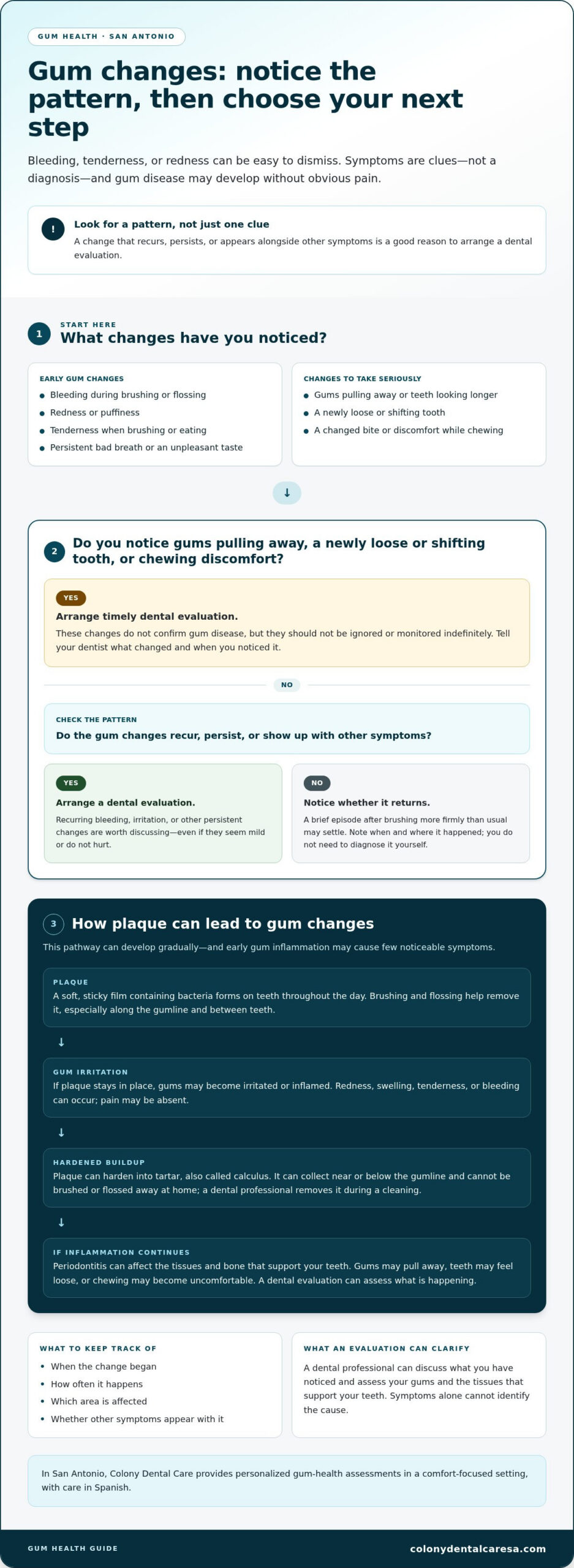
What to Do If You Notice Signs of Gum Disease
Noticing a gum change can feel worrying, but you don’t have to work out the cause on your own. A few simple steps can help you track what’s happening and share useful details with your dental team. Persistent or recurring symptoms deserve an evaluation, even if they seem mild.
- Make a note of what you notice. Record when the change began, how often it occurs, and whether it’s changing. Include bleeding, tenderness, breath changes, gums pulling away from teeth, or any looseness or shifting.
- Keep up gentle daily care. Brush gently and clean between your teeth with floss as part of your usual routine. Avoid scrubbing harder to stop bleeding, since extra pressure may irritate your gums.
- Arrange a dental evaluation. Share your observations with your dental team so they can assess your gum health and discuss appropriate next steps. You don’t need to wait for pain before raising a concern.
How to prepare for a dental visit
Before your visit, note which areas bleed or feel tender, whether your breath or taste has changed, and whether you’ve noticed recession or a loose tooth. Mention relevant health changes and tobacco use, too. These details give your dental team helpful context and make it easier to understand what you’ve observed. Bring any questions you want answered, even if they seem small.
Regular checkups are useful even when your gums feel fine. Colony Dental Care recommends dental visits every six months for most patients, though the right schedule can depend on your individual needs. At a visit, your dental team can assess your gums rather than relying on symptoms alone. A professional cleaning can remove tartar, the hardened buildup you can’t brush or floss away at home.
What daily care can and cannot do
Consistent brushing and flossing help control plaque between visits, but home care can’t remove tartar once it has hardened. It also can’t determine why your gums are bleeding or tender. If a change persists despite your routine, don’t respond by brushing more forcefully or putting off an assessment. A dental professional can examine your gums and explain what they find without assuming that one symptom tells the whole story.
Taking these steps doesn’t mean you have gum disease. It means you’re paying attention and giving your dental team a clearer picture. If you’re noticing signs of gum disease in San Antonio, Colony Dental Care provides personalized gum-health evaluations with comfort-focused care. Arrange a gum-health evaluation to discuss your concerns with the team.
Gum Health in San Antonio: What to Expect From a Dental Evaluation
Noticing a change in your gums doesn’t mean you need to arrive with a diagnosis. A dental evaluation gives you a chance to describe what you’ve observed and have a professional assess your gum health. Symptoms are useful clues, but they don’t determine on their own whether you need treatment or what kind of care may be appropriate.
A personalized assessment can clarify what you are noticing
Your visit can start with your concerns: what changed, when you noticed it, and whether it keeps happening. Sharing details such as recurring bleeding, tenderness, or gums that seem to be pulling away helps the team understand what prompted your visit. You can also mention related health changes and ask questions in plain language.
At Colony Dental Care, the team uses digital X-rays and intraoral cameras as part of its dental care. These tools support the assessment, while your symptoms and gum health remain central to understanding your needs. Your observations matter, but they don’t replace a professional evaluation. If you feel nervous, say so. Your care is provided with comfort in mind.
Local gum-disease care with a comfort-focused approach
Colony Dental Care is a San Antonio practice led by Dr. James David Oei, with more than 30 years of trusted care. The practice provides Gum Disease Treatment, including Laser Gum Treatment and Arestin®. Which care may be appropriate depends on an individual assessment, so a symptom checklist alone can’t predict the next step or its outcome.
A visit is also a chance to get clear answers about what the team observes and which options may fit your needs. Ask for explanations as you go, discuss any concerns about comfort, and share what matters most to you. The goal is a personalized conversation, not pressure to decide before you understand the information.
If you’re in San Antonio and have noticed changes in your gums, Colony Dental Care welcomes local patients seeking an evaluation. You don’t need to be certain that something is wrong before asking for guidance. Schedule a gum-health evaluation to discuss your concerns with the team.
Take the Next Step Toward Clear Answers
You don’t need to be certain about what you’re seeing before seeking guidance. If changes in your gums are on your mind, writing down what you’ve noticed can help you start a clear, comfortable conversation with a dental professional. The signs of gum disease are clues to discuss, not a reason to diagnose yourself or feel embarrassed.
At Colony Dental Care, you can share your concerns and learn about care options in a welcoming San Antonio setting. The team provides Gum Disease Treatment, including Laser Gum Treatment and Arestin®, and proudly serves the San Antonio community with care in Spanish. You can ask questions and talk through what feels comfortable for you.
A gum-health evaluation can help you get more clarity about your oral health. Schedule a gum-health evaluation with Colony Dental Care and take the next step with support.
Frequently Asked Questions
Are bleeding gums always a sign of gum disease?
No. Bleeding can signal gum irritation, but a single episode doesn’t confirm gum disease. You might notice blood after brushing harder than usual, for example. Pay attention to whether it happens again during your regular routine or appears with other changes. If bleeding continues, arrange a dental evaluation so the team can assess your gums and consider what may be contributing.
Can you have gum disease without pain?
Yes. Some signs of gum disease can appear without pain, so feeling comfortable isn’t proof that your gums are healthy. You may notice a visual change while brushing or looking in the mirror, even if your mouth feels normal. Keep routine dental visits and mention anything new. If you’ve missed a checkup, you don’t need to wait for discomfort before arranging one.
What does early gum disease look like?
Early gum inflammation may show up as redness, puffiness, tenderness, or bleeding during brushing or flossing. You might also notice breath changes that don’t go away with your usual oral care. Look for changes while brushing, but avoid repeatedly pressing or probing sore areas. These clues can have different causes, so a dental professional can help explain what they mean for your gum health.
Can gum disease make your teeth feel loose?
It can. More advanced gum disease may affect the tissues and bone that support your teeth, but a loose or shifting tooth can have other causes, too. Don’t repeatedly wiggle the tooth to test it. Note when you first noticed the change and whether your bite feels different, then arrange a prompt dental evaluation so a professional can assess it.
Can gum disease go away on its own?
Don’t assume persistent gum changes have resolved just because they ease for a while. Symptoms can vary, and temporary improvement doesn’t explain what caused them. Keep brushing and flossing consistently, but don’t use home care as a substitute for an assessment if bleeding, swelling, or tenderness continues. A dental professional can evaluate your gums and explain whether care is appropriate.
How often should you see a dentist if your gums seem healthy?
Colony Dental Care recommends dental visits every six months for most patients. Your ideal schedule may differ based on your oral health and personal circumstances, so discuss it with your dental team. Routine visits give you a chance to ask about changes you’ve noticed, even if they aren’t causing pain. If something concerns you between visits, share it with the practice rather than waiting for your next checkup.