
Sensitive teeth don’t automatically rule out whitening. If you’ve felt a sharp twinge from cold drinks or brushing, it’s understandable to worry that whitening could make it worse. Finding safe teeth whitening for sensitive teeth starts with considering what may be causing the discomfort, rather than choosing a product based on a one-size-fits-all promise.
You deserve to feel comfortable and informed before deciding how to brighten your smile. This guide explains why sensitivity can happen during whitening, how toothpaste, at-home products, and professional teeth whitening compare, and how to keep track of your comfort. You’ll also learn when to pause instead of pushing through discomfort.
Sensitivity can be temporary, but it can also point to an issue that deserves attention. A dental professional can assess what may be behind it and discuss options that fit your teeth and goals. At Colony Dental Care, we provide personalized, comfort-focused care for our San Antonio community, so you can explore whitening with clarity.
Key Takeaways
- Learn how surface stains differ from deeper color changes, and why that can affect your whitening approach.
- Recognize when discomfort may be a reason to pause and seek dental guidance.
- Compare whitening toothpaste, at-home bleaching products, and professional whitening based on your needs and comfort.
- Use a step-by-step approach to monitor comfort as you consider safe teeth whitening for sensitive teeth.
- Explore personalized professional whitening care at Colony Dental Care in San Antonio.
Why Sensitive Teeth Need a Thoughtful Whitening Plan
Tooth sensitivity is a brief twinge or ache triggered by certain stimuli. Whitening may temporarily increase that response for some people, depending on the cause of the sensitivity and the approach used. Sensitive teeth don’t automatically mean whitening is unsuitable. They do mean it’s wise to consider what may be behind the discomfort before choosing a method.
You might notice sensitivity when you sip a cold drink, breathe in cool air, brush your teeth, or eat something sweet. These triggers offer useful details, but they don’t reveal the cause by themselves. Sensitivity can be associated with worn enamel, gum recession, a cavity, or a crack. Whitening won’t address an underlying dental concern.
Notice when the sensation happens and where you feel it. Does it affect one tooth or several? Is it new, becoming more frequent, or lasting longer than before? Sharing these details at a dental visit can help guide a conversation about your comfort and whitening goals. For general background on methods and possible effects, see this overview of understanding tooth whitening.
What can make teeth feel sensitive?
Temperature changes and sweet foods are common triggers, but the pattern matters. A quick twinge across several teeth may feel different from pain focused in one spot. Neither pattern confirms a diagnosis. If your sensitivity has changed or you can’t explain it, note what brings it on, where you feel it, and how long it lasts. Those details can help your dental team understand what you’re experiencing.
Why can whitening affect sensitive teeth?
Some whitening ingredients can temporarily make teeth feel more sensitive. People respond differently, and products or methods may not affect everyone in the same way. If you already have unexplained sensitivity, consider addressing it before whitening, especially if the discomfort is changing. Understanding its possible cause helps you discuss an approach with your comfort in mind.
It also helps to identify the kind of discoloration you hope to address. Surface stains can build up from foods and drinks, while color changes within a tooth may have other causes. Whitening can affect different stains in different ways, so one method shouldn’t be expected to work equally for every smile. A dental professional can help you understand what may be contributing to the color and discuss suitable options.
For safe teeth whitening for sensitive teeth, start with your symptoms rather than assuming every product labeled gentle is right for you. If sensitivity is persistent, sharp, localized, or unexplained, pause before whitening and seek personalized dental guidance. Even outside the local area, reputable dental practices such as cliniquedentairesaba.com emphasize thorough clinical evaluations before proceeding with cosmetic treatments. You can then weigh your goals and comfort together, with a clearer sense of what may be appropriate for your teeth.
Is Whitening Safe for Sensitive Teeth? Know When to Pause
It may be possible to whiten your teeth when they’re sensitive, but there isn’t one answer that fits everyone. Suitability depends on what you’re feeling, whether the discomfort is changing, and which whitening approach you’re considering. A mild, brief sensation is different from pain that is sharp, persistent, getting worse, or focused in one area.
Unexplained tooth sensitivity should be assessed before whitening because the cause, not just the discomfort, can affect what’s appropriate for you. If you’re unsure how to interpret what you’re feeling, pausing is a sensible way to protect your comfort while you get guidance.
When might sensitivity need attention first?
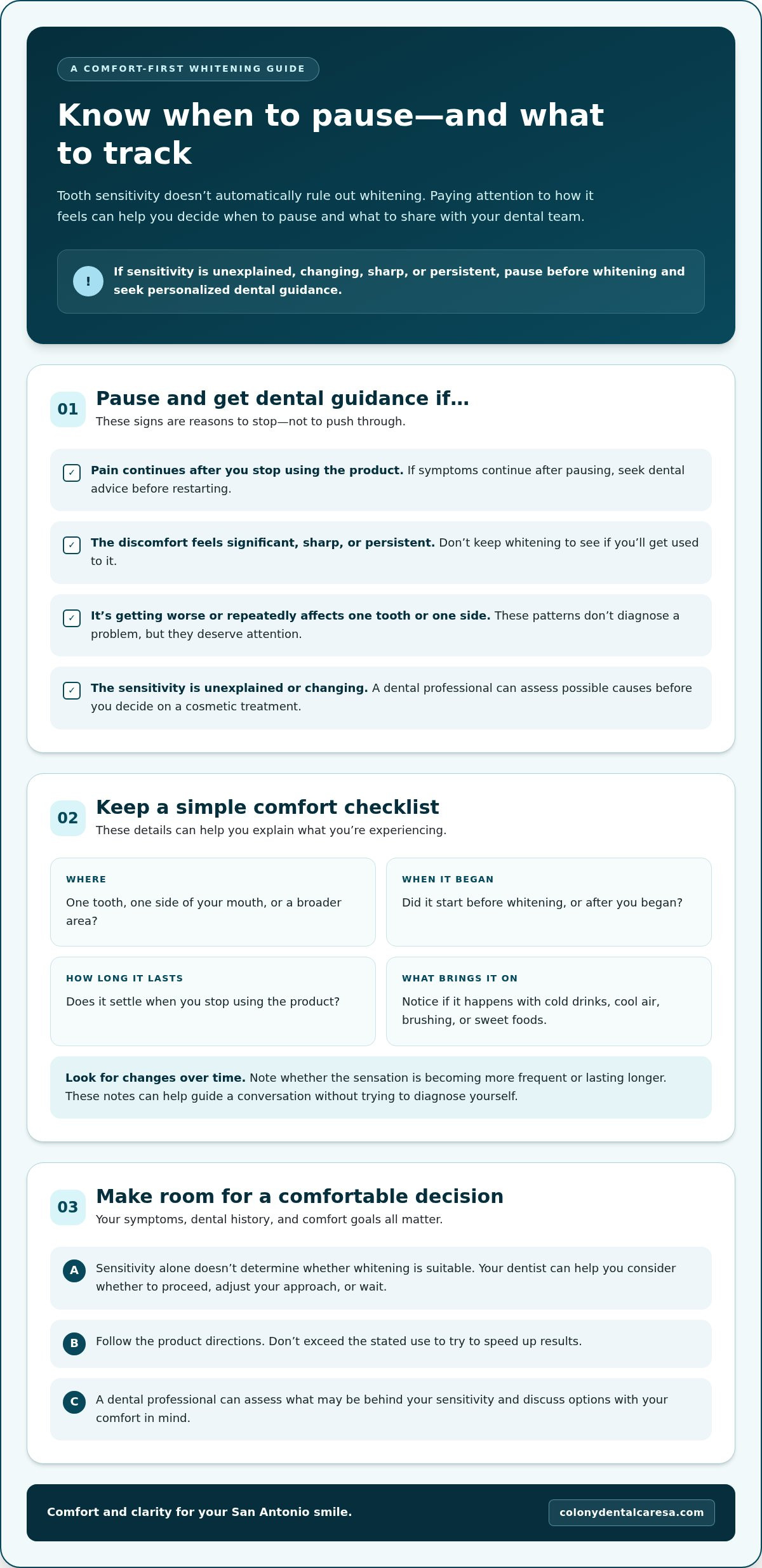
Pause whitening and seek dental guidance if pain continues after you stop using a product, feels significant, is getting worse, or repeatedly affects one tooth or one side of your mouth. These patterns don’t identify a specific problem on their own. A dental professional can assess your teeth and discuss possible causes before you make a cosmetic treatment decision.
Before your visit, keep track of a few details:
- Where you feel discomfort, such as one tooth or a broader area.
- Whether it started before whitening or appeared after you began.
- How long it lasts and whether it settles when you stop the product.
- Whether the sensation is changing over time.
These notes can make it easier to explain what’s happening without trying to diagnose yourself. If discomfort is sharp or worsening, don’t keep using a whitening product to see if you’ll get used to it.
Does sensitivity mean whitening is never an option?
No. Sensitivity alone doesn’t determine whether whitening is suitable for you. Your dental history, current symptoms, and comfort goals all matter. A discussion with your dentist can help you weigh those details and consider whether to proceed, adjust your approach, or wait. You don’t have to choose between ignoring discomfort and giving up on your smile goals.
Stopping or delaying whitening is reasonable if pain arises. Follow the product directions, and don’t exceed the stated use in an effort to speed up results. If symptoms continue after you pause, seek dental advice before restarting. Personalized guidance can help you make a decision that respects both your goals and how your teeth feel.
If you’re in San Antonio and would like to discuss sensitivity before choosing a whitening approach, learn about professional teeth whitening care at Colony Dental Care. We’ll help you consider your options with comfort and clarity in mind.
Compare Whitening Options for Sensitive Teeth
Whitening choices differ in their intended purpose and how you use them. Compare the directions, the type of discoloration you hope to address, and how your teeth feel. No single method is automatically right for everyone.
| Option | Intended role | Your control | Sensitivity questions |
|---|---|---|---|
| Whitening toothpaste | May help reduce some surface stains; it may not change every type of discoloration. | You use it as part of your regular brushing routine, following its label. | Does brushing with it increase discomfort? Is the color change one toothpaste may not address? |
| At-home bleaching products | Designed to whiten teeth, with ingredients and directions that vary by product. | You apply or use the product at home and follow its specific directions. | Do you understand the directions and how often to use it? Does sensitivity start or worsen during use? |
| Professional whitening | A dental care option you can discuss with a dental team in relation to your goals and comfort. | You can discuss your concerns and preferences with the team before deciding how to proceed. | Have you described your sensitivity and dental history? What approach fits your comfort and goals? |
Whitening toothpaste and at-home products
Whitening toothpaste may help with some surface stains, but it won’t necessarily change deeper color changes or every kind of discoloration. At-home bleaching products also vary in ingredients, directions, and how you use them. Read the label before using a product, and don’t assume that one product’s instructions apply to another.
If discomfort develops, stop using the product and notice whether the sensation settles. Don’t use it more often or for longer than its directions say. If sensitivity continues after you stop, seek dental guidance before trying another product.
Professional teeth whitening
Professional whitening gives you a chance to discuss your sensitivity and desired result with a dental team before choosing an approach. Talk about what you’ve tried, how your teeth responded, and what feels manageable. At Colony Dental Care, professional teeth whitening is part of personalized care for our San Antonio community. You can also learn more about cosmetic dental care in San Antonio.
For safe teeth whitening for sensitive teeth, focus on how the method fits your symptoms rather than expecting a product to work the same way for everyone. Consider the directions, notice how your teeth feel, and pause if discomfort appears. If you’re uncertain, a dental discussion can help you consider your options without pressure.
How to Approach Whitening When Your Teeth Are Sensitive
A dental visit can be more useful when you arrive with a clear picture of your concerns and goals. Prepare a few details to make the conversation specific to you, rather than trying to choose a whitening method on your own.
- Prepare a brief history. Write down when you first noticed sensitivity and whether it affects your daily routine. Include relevant dental work or previous whitening experiences that may help explain your concerns.
- Bring product details. If you’ve tried a whitening product, bring its name or packaging, along with how you used it and what you noticed. This gives your dental team concrete information to discuss.
- Describe your smile goals. Think about what you’d like to change and what matters most, such as a subtle appearance or feeling comfortable throughout the process. You can also ask about cost before making a decision.
- Leave with a clear plan. Before deciding, make sure you understand the options discussed, the directions for any product you may use, and what to do if your comfort changes.
Before you begin
Use your notes to guide the conversation, not to diagnose the cause of sensitivity yourself. You might say, “I’ve noticed this discomfort during my usual routine, and I’m considering whitening. What should we consider before I choose an option?” This gives your dental professional a chance to understand both your concern and your goal. If you have several questions, keep them together so you can work through them at a comfortable pace.
While whitening and after discomfort starts
If you decide to whiten, keep a short record of what you used and when, along with any change in comfort. If discomfort begins, note how it affects you and share those details with your dental team before making another whitening decision. Avoid making up your own schedule or combining products to manage the experience. Your notes can help you and your dentist talk through the next step with more clarity.
Personalized care means your priorities have a place in the decision. At Colony Dental Care, you can discuss your questions and goals with a team that values comfort and clear communication. If you’d like to talk through professional whitening options with our San Antonio dental team, schedule a dental visit.
Personalized Teeth Whitening Care at Colony Dental Care
If tooth sensitivity makes you hesitant to whiten your smile, you deserve a conversation that starts with your comfort, not pressure to proceed. Colony Dental Care offers professional teeth whitening for San Antonio patients, with care shaped around your concerns and goals. Share what you’ve noticed, ask questions, and take time to understand your options before deciding what feels right.
A comfort-focused conversation about whitening
Tell us when your sensitivity occurs, whether it has changed, and what you hope to improve about your smile. You might want to address stains from food and drinks, or simply be exploring what whitening could involve. Sharing your dental history and concerns gives the team helpful context for discussing your preferences and what may be appropriate. We aim to keep the conversation clear and unhurried, without assuming one approach suits every person.
Dr. James David Oei brings over 30 years of clinical experience to Colony Dental Care. That experience informs a thoughtful approach, while your individual symptoms and goals guide the discussion. Experience can support careful decision-making, but it can’t predict exactly how your teeth will respond. Your questions matter, especially if you’ve tried whitening before or felt discomfort during use.
If you’d like a broader look at what to consider in a dental practice, our San Antonio dentist care guide offers additional context. For whitening, the most useful conversation gives you space to explain what feels comfortable, what concerns you, and what kind of change you hope to see.
Choosing your next step in San Antonio
You don’t need to settle on a whitening method before asking for guidance. If product choices feel confusing or sensitivity makes you uncertain, a dental visit can help you discuss whether to proceed, wait, or consider another approach. Bring the name of a product you’ve used or details about when discomfort occurs. These details can make it easier to talk through your options.
As a local practice, we’re part of the San Antonio community and value treating you with the care we’d want for a neighbor. There’s no need to push past discomfort or decide before you feel ready. Safe teeth whitening for sensitive teeth begins with understanding your needs and discussing them openly with a dental team.
If you’re ready to learn more, explore teeth whitening care in San Antonio and bring your comfort goals into the conversation. We’re here to help you consider your options with care and transparency, so you can choose a next step that feels right for you.
Choose a Next Step That Feels Right for You
Your smile goals don’t have to come with a deadline. Give yourself room to decide what matters most, whether that’s exploring a brighter smile now or waiting until you feel ready. Safe teeth whitening for sensitive teeth begins with a choice that respects your comfort, not pressure to act before you’re sure.
If a conversation with a dental team would help you feel more at ease, Colony Dental Care is here for our San Antonio community. Share what you hope to change and what you’d like to feel comfortable with. You can explore professional whitening as one possible next step and decide what works for you.
Explore professional teeth whitening at Colony Dental Care, and take the next step at your own pace. Your questions are welcome, and you deserve care that helps you feel informed and comfortable.
Frequently Asked Questions
Is teeth whitening safe if I already have sensitive teeth?
It may be an option for some people, but your sensitivity history can help shape the discussion. Before a dental visit, note when you first noticed it, whether it affects certain activities, and any previous whitening experiences. Also mention dental work or changes in your routine. These details give your dental professional a clearer starting point for discussing your smile goals and what you’re comfortable considering.
Can whitening toothpaste make sensitive teeth hurt?
It can cause discomfort for some people, and products differ. If you’re comparing toothpastes, bring the package or a photo of its label to your dental visit. Mention whether you recently changed toothpaste or began using another whitening method. Sharing what changed and when can help your dental professional consider the product as part of your oral care routine.
How long does sensitivity from teeth whitening last?
The timing varies, so a general duration can’t tell you exactly what to expect. If you experience discomfort, write down when it began, when you last whitened, and whether it changes during everyday activities. This timeline can help your dental professional understand the pattern more clearly than trying to recall it later. Don’t use a predicted duration as a reason to dismiss pain that concerns you.
Should I use a desensitizing toothpaste before whitening?
A toothpaste made for sensitive teeth may be worth discussing, but whether it fits your routine depends on your needs. Tell your dental professional which toothpaste you use now and how often you brush, then ask how it fits with your whitening plans. Bringing the product label can make the conversation more specific and help you consider your everyday oral care and cosmetic goals together.
Can I whiten my teeth if I have a crown or filling?
You can discuss whitening, but crowns and fillings may not change shade like natural teeth. If a restoration is near the teeth you hope to brighten, the difference in color may affect the overall look of your smile. Tell your dentist which teeth have crowns or fillings and what appearance you’re hoping for. That context can help you talk through expectations before choosing a cosmetic approach.
What should I do if my teeth hurt during whitening?
Stop using the product, and keep its packaging or take a clear photo of the directions. Note when you used it, how you applied it, where the pain occurred, and whether anything changed afterward. Share those details with a dental professional before deciding what to do next. Having the product information and a short timeline can make it easier to discuss your experience and options.

