A damaged or missing tooth can affect how you chew, speak, and feel about your smile. If you’re considering restorative dentistry San Antonio TX, you may be wondering which treatment fits your needs, what the visit will involve, and how to plan for the cost. A useful first step is understanding what’s causing the concern before choosing a treatment.
Restorative care can include tooth-colored fillings, crowns, root canal therapy, bridges, dentures and partials, or dental implants. Each option addresses different needs. Your dentist can assess the tooth and your oral health, then explain which approaches fit your goals. This article covers common treatments, ways to compare them, and what to expect during an evaluation.
At Colony Dental Care, Dr. James David Oei brings over 30 years of clinical experience to personalized care focused on comfort and clear communication. Our San Antonio team accepts dental insurance, including Cigna PPO, and offers an in-house membership plan for patients without coverage. You can discuss your questions about treatment and affordability as part of a clear, unhurried conversation.
Key Takeaways
- Restorative care repairs or replaces teeth to support everyday comfort, chewing, and confidence.
- Tooth-colored fillings, crowns, bridges, dentures, implants, and root canal therapy serve different purposes.
- Compare options by considering the tooth or teeth involved, your oral health, your goals, and the care each option involves.
- A restorative visit includes discussing your concerns, having an exam, reviewing the findings, and talking through possible next steps.
- For restorative dentistry San Antonio TX, Colony Dental Care offers personalized care with Dr. James David Oei, who brings over 30 years of clinical experience.
What Does Restorative Dentistry in San Antonio Address?
A damaged, worn, or missing tooth can affect your comfort throughout the day. You might avoid chewing on one side, notice a rough edge with your tongue, or feel self-conscious when you smile. These changes are worth discussing with a dentist, but they don’t tell you by themselves which treatment you need.
Restorative dentistry repairs or replaces teeth to support their function and appearance. Care may address a cavity, a weakened tooth, or a gap left by tooth loss. This Restorative dentistry overview offers additional background on the field and the concerns it may address.
Restorative dentistry aims to help your teeth work comfortably and support a smile that feels like yours. An evaluation helps your dentist identify what’s causing the concern and explain suitable next steps. Two people with similar discomfort can have different dental needs, so treatment recommendations should be based on an exam. If you’re considering restorative dentistry San Antonio TX, start by describing what you’ve noticed and what you want care to address.
Which dental concerns may call for restorative care?
Cavities, cracked teeth, worn surfaces, weakened teeth, and tooth loss are common reasons to ask about restorative care. Visible damage, discomfort, or difficulty chewing can also prompt an evaluation. Because symptoms don’t always show what’s happening inside or around a tooth, an exam is the way to assess the concern and discuss an appropriate next step.
Before your visit, note where you feel discomfort, what makes it noticeable, and when you first saw a change. You can also mention whether eating, speaking, or smiling has become difficult. These details give your dentist useful context, but they don’t replace an examination or determine a treatment on their own.
How restorative care supports your total health philosophy
A total health philosophy recognizes that oral health is part of your overall well-being. Restorative care focuses on your teeth and mouth while taking your comfort and daily needs into account. Your dentist can explain what the exam reveals and how possible treatments relate to your goals, without treating cosmetic perfection as the only measure of a healthy smile.
A custom treatment plan connects your dental needs with your preferences and questions. You might prioritize comfortable chewing, addressing visible damage, or replacing a missing tooth. Ask your dentist to explain the purpose of each recommended treatment and how it may address the concern. Clear explanations help you make decisions at a pace that feels comfortable.
In San Antonio, a thoughtful restorative conversation should make space for your concerns. Ask the dental team to explain unfamiliar terms in plain language and compare the options that fit the exam findings. With clear information and personalized guidance, you can decide on a next step with a better understanding of your smile’s needs.
Restorative Dentistry Options Available in San Antonio
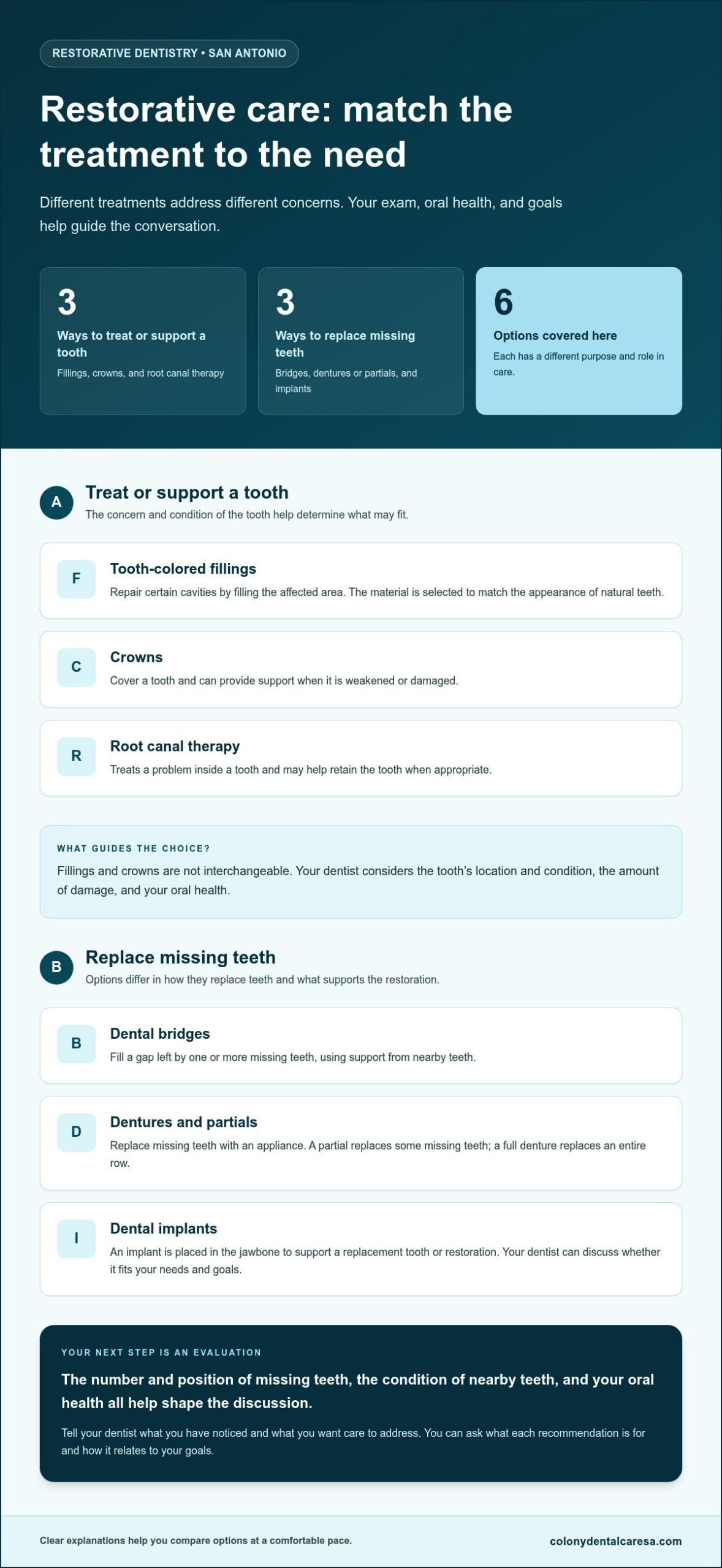
Restorative care includes several ways to repair or replace teeth. A filling can address a cavity, while a crown covers a tooth that needs support. Bridges, dentures, and implants offer different ways to replace missing teeth. Root canal therapy addresses a problem inside a tooth. Knowing the basic purpose of each treatment can help you ask more focused questions at your visit.
The right restoration depends on the tooth, your oral health, and the goals that matter to you. Your dentist will consider your individual needs rather than selecting a treatment based on symptoms alone. If you’re researching restorative dentistry San Antonio TX, use the comparisons below to prepare questions about which options fit your situation. The Scientific advancements in restorative dentistry also reflect how dental science informs treatment planning and care.
Fillings and crowns for damaged teeth
Tooth-colored fillings repair certain cavities by filling the affected area. The material is selected to match the appearance of natural teeth. A crown covers a tooth and can provide support when it’s weakened or damaged. Your dentist can explain which option may suit the tooth after examining its condition.
Fillings and crowns aren’t interchangeable. The location and condition of the tooth, the amount of damage, and your oral health all help guide the discussion. Ask what the proposed restoration is intended to address, why it fits the exam findings, and what the treatment involves. A clear explanation makes it easier to compare options.
Bridges, dentures, and implants for missing teeth
A dental bridge fills a gap left by one or more missing teeth, using support from nearby teeth. Dentures and partials replace missing teeth with an appliance. A partial replaces some missing teeth, while a full denture replaces an entire row. Dental implants are another tooth-replacement option. An implant is placed in the jawbone to support a replacement tooth or restoration. Your dentist can discuss whether implants fit your dental needs and goals.
These options differ in how they replace teeth and what parts of your mouth support the restoration. The number and position of missing teeth, the condition of nearby teeth, and your oral health all help shape the conversation. Learn more about restorative dental care at Colony Dental Care and the personalized care available in San Antonio.
Root canal therapy treats a problem inside a tooth and may help retain the tooth when appropriate. Your dentist’s evaluation helps determine whether this treatment or another approach makes sense. Ask what the procedure is intended to address and how it fits into your custom treatment plan.
When reviewing options, focus on what each treatment is designed to do and how it relates to your needs. Your dentist can explain the findings, outline relevant choices, and answer questions about comfort, function, and appearance. This gives you a clearer basis for deciding what to discuss next.
How to Compare Restorative Dentistry Options for Your Needs
A useful comparison starts with the concern you want to address and what you hope treatment will help you do. The guide below can help you prepare questions, but it can’t identify the right treatment for you. Your dentist needs to examine your teeth and oral health before making a recommendation.
| Concern | General restoration purpose | Factors discussed at an exam |
|---|---|---|
| Cavity or limited tooth damage | A filling repairs an affected area of a tooth. | The location and condition of the tooth, and the extent of the area needing repair. |
| Weakened or damaged tooth | A crown covers and supports a tooth. | The tooth’s condition, the support it may need, and your goals for function and appearance. |
| One or more missing teeth | A bridge replaces teeth in a gap, using support from nearby teeth. | The gap’s location, nearby teeth, and your oral health. |
| Several or all teeth missing in an area | Dentures or partials replace missing teeth with a removable appliance. | How many teeth are missing, the shape of the gap, and your preferences. |
| Missing tooth or teeth | Implants offer another option for replacing missing teeth. | Your oral health, the location of the missing tooth, and your treatment goals. |
What factors shape a custom treatment plan?
Your dentist considers the condition of the tooth, the health of surrounding teeth, and your overall oral health. Your priorities matter, too. You may want to focus on chewing comfortably, improving the appearance of a visible tooth, or both. These details help shape a custom treatment plan around your needs rather than a one-size-fits-all recommendation.
Share any concerns about treatment, comfort, costs, or insurance while you’re planning. Ask what each option is meant to address, what the steps involve, and how the choices differ. Clear answers help you weigh practical considerations alongside your dental needs. For restorative dentistry San Antonio TX, the aim is a useful discussion based on your exam and preferences.
When might a dental crown, bridge, or denture be discussed?
A crown may be discussed when a tooth needs coverage and support. A bridge may be an option for a gap where nearby teeth can support the restoration. Dentures or partials may be considered to replace multiple missing teeth or a larger area. Each option serves a different purpose, and your dentist will evaluate your specific dental situation before discussing what may fit.
If your dentist recommends a crown, ask what it’s intended to address and how it relates to your goals. You can also request a plain-language explanation of the exam findings and the alternatives being considered. That gives you a clearer basis for discussing comfort, appearance, function, and other practical concerns with your dental team in San Antonio.
What to Expect at a Restorative Dentistry Visit in San Antonio
A restorative evaluation includes a conversation as well as an exam. You can explain what concerns you, hear what the dentist observes, and review possible next steps. You don’t need to know the name of a treatment before you come in. The discussion starts with your needs, and you can ask questions along the way.
Expect a calm, step-by-step conversation about your concerns, your dental health, and the options that may fit your needs. The evaluation helps you understand the findings and consider possible care with clear information. You can take part in the discussion without arriving with a treatment decision already made.
Your first conversation and dental evaluation
Start by sharing what you’ve noticed, such as discomfort, a change in a tooth, or trouble chewing. Tell your dentist about relevant dental history, any comfort needs, and what you hope to address. These details make it easier to focus the conversation on what matters to you.
The dentist then evaluates the concern and explains the findings in plain language. If you hear an unfamiliar term, ask what it means for your tooth. Your dentist can discuss options that relate to the exam and your goals. You can ask questions before deciding which next step feels right.
Discussing comfort, insurance, and affordability
Your comfort preferences belong in the conversation. If you feel anxious or have questions about what a treatment may involve, let the team know. You can talk through your concerns and ask for explanations at a pace that feels comfortable. The aim is to help you understand your choices without overwhelming you with technical language.
Cost questions are welcome, too. Colony Dental Care accepts dental insurance, including Cigna PPO. Since coverage depends on your plan, review your benefits and ask about the expected patient portion before deciding on care. If you don’t have dental insurance, the practice’s in-house membership plan offers another way to plan for dental care. You can discuss how the proposed treatment relates to your priorities and budget.
For restorative dentistry San Antonio TX, a clear evaluation turns uncertainty into a practical discussion: what the dentist found, which options may apply, and what questions you still have. If you’re looking for a dental home in the community, a visit with Colony Dental Care gives you an opportunity to talk through your restorative concerns and affordability questions with the team.
Choosing Restorative Dentistry in San Antonio with Colony Dental Care
Deciding what to do about a damaged or missing tooth can feel like a lot to take in. At Colony Dental Care, we want the conversation to feel clear and personal. Our San Antonio team takes time to understand your concerns, answer your questions, and help you feel at ease as you consider your options.
Personalized restorative care from an established local team
You deserve to be heard before treatment options are discussed. We’ll listen to what’s bothering you, what you hope to address, and what matters most in your care. Then we’ll explain the evaluation findings in everyday language and talk through possible next steps. If a term or recommendation isn’t clear, ask us to explain it another way.
Your needs and preferences guide the discussion. A custom treatment plan reflects your oral health and personal priorities, whether you’re focused on function, appearance, or both. We’ll give you useful information so you can consider your choices without feeling rushed.
As your neighbors in San Antonio, we want your visit to feel comfortable and transparent. Share concerns about the process and ask practical questions before deciding how to proceed. Clear communication helps you understand your choices and feel prepared for the next step.
A clear next step for your smile
An evaluation helps clarify what may be affecting your tooth or teeth. Your dentist can review the findings with you, explain possible restorative options, and answer questions about care. You can take time to consider the information and raise any questions that matter to you.
Before your visit, you might note what you’ve noticed, what you hope to address, and any comfort or affordability concerns. You can also explore our guide to restorative and dental care in San Antonio as you think about what you want to discuss.
When you’re ready, schedule a restorative evaluation with Colony Dental Care. Our team will listen, explain your options, and help you consider a custom treatment plan at a pace that feels comfortable.
Take a Comfortable Next Step Toward a Healthier Smile
You don’t need to have every answer before you begin. A first conversation can help you turn a concern into clear questions, understand what an evaluation involves, and decide what feels right for you. Taking the process at your own pace can make restorative care feel more manageable.
If you’re considering restorative dentistry San Antonio TX, focus on understanding your needs and choices. Share what matters most to you, whether that’s feeling comfortable during care, understanding the proposed treatment, or planning for affordability. Your priorities belong in the discussion, and you can ask questions before deciding on next steps.
Schedule a restorative dentistry visit with our San Antonio team to discuss your concerns and explore a personalized path forward. A healthier, more comfortable smile can start with a conversation, and our team is here to welcome you.
Frequently Asked Questions
Is restorative dentistry painful?
Comfort varies by procedure and by person, so ask your dentist what you may feel and what comfort measures are available for the treatment being discussed. If you’re nervous, let the team know before care begins. You can also agree on a way to signal that you need a pause. Sharing these preferences helps your dental team support you throughout the visit.
How long do dental restorations last?
There’s no single lifespan for every restoration. The type of restoration, your oral care habits, and changes in your dental health can all affect how it holds up over time. Keep up with regular dental visits so your dentist can check your restoration as part of your ongoing care. If you notice a change in how it feels or fits, mention it at your next visit or arrange an evaluation.
Does dental insurance cover restorative dentistry in San Antonio?
Coverage depends on your plan and the specific service. Before treatment, review your benefits and ask your insurer how the proposed care is handled, including any deductible, waiting period, or annual limit that applies to your policy. You can also ask the dental team to explain the expected patient portion. Knowing these details can help you plan and avoid surprises.
How much does restorative dentistry cost in San Antonio?
The cost varies with the type of care and the details of your treatment. Ask for a written estimate based on the care being proposed. Clarify what each part of the estimate covers and how your insurance benefits may apply. This gives you a clearer basis for planning before you decide how to proceed.
Can restorative dentistry improve the appearance of my smile?
It may, depending on what you’d like to address and what your dentist finds during an exam. If a visible area of your smile concerns you, describe what you notice and what you hope will look different. Your dentist can explain which restorative approaches may fit those goals and how appearance relates to the health and function of your teeth.
Can I get more than one tooth restored?
Yes, restorative care can involve more than one tooth. If you have several concerns, tell your dentist which ones affect you most in daily life and share any practical preferences about planning care. The team can discuss how the proposed work might be organized and what to expect from each step. You can review the plan and ask questions before choosing how to move forward.