Have you ever hesitated to order your favorite meal because you were worried about something getting caught under your new restoration? It is a common concern, and feeling a bit of anxiety about keeping your smile fresh and secure is completely natural. We believe that caring for dental bridges should feel like a simple, life-enhancing part of your day rather than a source of stress. When you have the right techniques, you can move past the fear of bad breath and focus on enjoying your time with neighbors and friends here in our community.
We understand that specialized flossing tools can seem overwhelming at first, but mastering them is the secret to a bridge that remains healthy for 10 to 15 years or more. We are here to guide you through the professional techniques and gentle habits needed to keep your bridge functional and beautiful while protecting your surrounding natural teeth. We will walk you through the best tools for the job, from interdental brushes to water flossers, so you can maintain your oral health with ease. Let’s work together to ensure your smile stays as comfortable and natural-looking as the day it was placed.
Key Takeaways
- Understand why the space beneath the replacement tooth is the most vital area to keep clean to prevent plaque buildup and bad breath.
- Discover the essential toolkit for caring for dental bridges, including specialized floss threaders and interdental brushes that reach where standard floss cannot.
- Learn which specific “bridge-breaker” foods to avoid to protect the integrity of your porcelain and ensure your restoration lasts for years.
- Identify early warning signs like gum inflammation or slight movement so you can address issues before they become uncomfortable.
- Find out how regular professional maintenance here in San Antonio supports your home care routine and extends the life of your smile.
Understanding Your Dental Bridge: The Foundation of Care
When you first receive your restoration, it feels like a fresh start for your smile. To keep that feeling, we need to look at how this piece of dental engineering actually works. A bridge is more than just a cosmetic fix; it is a structural support system for your entire mouth. If you are asking yourself, What is a dental bridge?, think of it as a custom-made structure designed to span the space where teeth are missing. It relies on a team effort between your existing teeth and the new porcelain replacement.
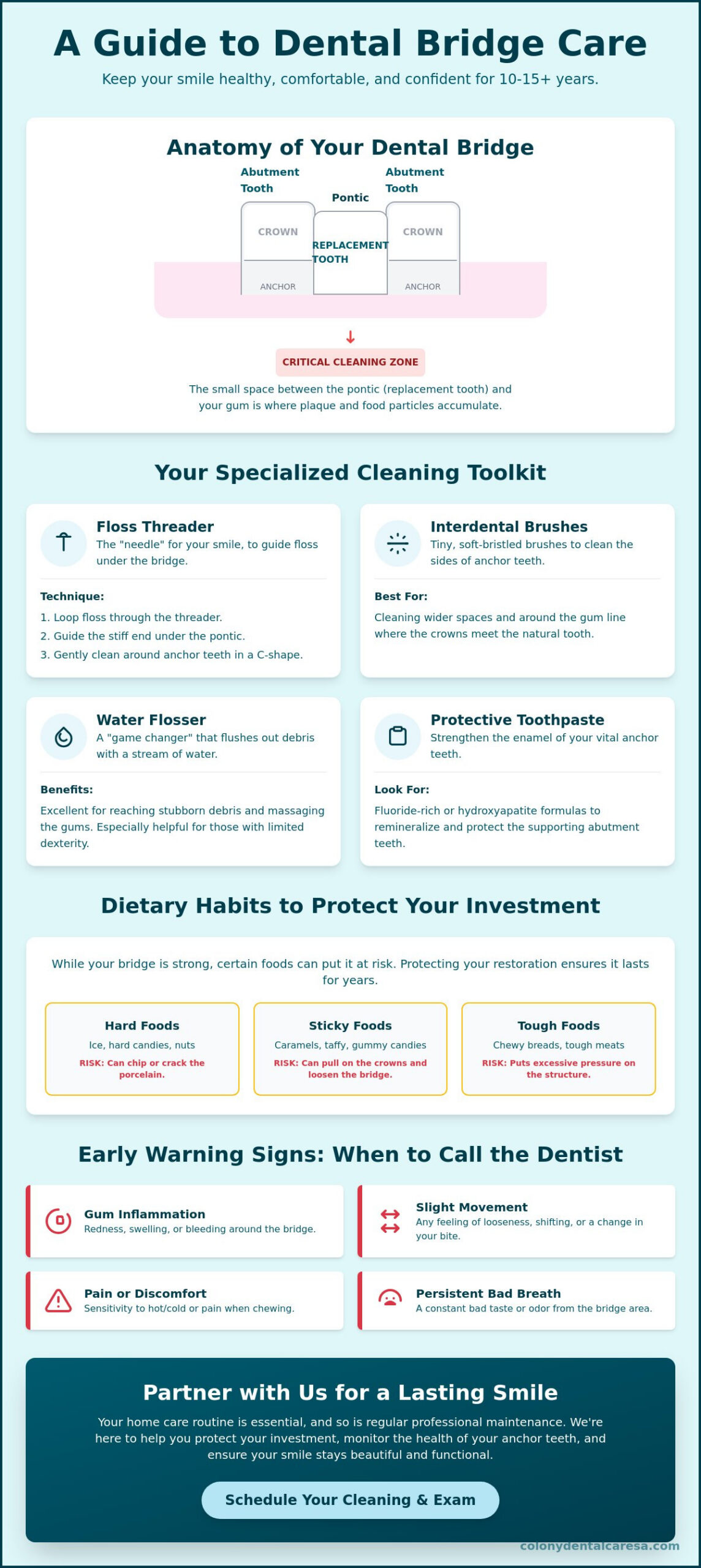
The secret to successfully caring for dental bridges lies in understanding the “pontic.” This is the medical term for the false tooth that sits in the gap. Unlike a natural tooth, the pontic doesn’t have a root in your jawbone. Instead, it “hovers” just above your gum line. This tiny space between the pontic and your gums is the most critical area for hygiene. Because it’s not sealed to the gum, tiny particles of food can find their way underneath. If left alone, these particles can lead to irritation or even decay on the surrounding teeth.
We also want you to know how vital this restoration is for your jaw health. When a tooth is lost, the neighboring teeth often try to “lean” into the open space. This shifting can change your bite and even lead to discomfort in your jaw joint. By filling that gap, your bridge acts as a placeholder that keeps everything in its proper alignment. This helps maintain your natural facial structure and ensures your smile remains vibrant and functional for years to come. Maintaining this structural alignment is just as crucial for your spine as it is for your jaw, and for those in need of specialized support, Minimally Invasive Neurosurgery of Texas offers advanced care to ensure total-body wellness.
Pontics vs. Abutments: Why Both Matter
The anchor teeth, known as abutments, are the heroes of your restoration. They wear custom crowns that hold the pontic in place. We focus heavily on the “seal” where these crowns meet your natural tooth at the gum line. If the anchor teeth aren’t kept perfectly clean, the entire bridge can lose its foundation. We’re here to help you protect these anchors so your bridge stays strong and secure.
The Adjustment Period: What’s Normal?
It’s very common to feel a bit of sensitivity to hot or cold drinks during the first few days. Your tongue might also take a little time to adjust to the new shape, which can slightly affect your speech at first. Don’t worry; this is completely normal. Most of our patients find that within a week, the bridge feels like a natural, comfortable part of their mouth that they don’t even notice anymore.
The Specialized Toolkit for Cleaning Under a Bridge
Standard flossing is a wonderful habit, but it reaches a literal wall when you have a bridge. Since the replacement tooth is fused to the anchors, you cannot slide traditional floss down from the top. This is why we recommend a specialized approach to caring for dental bridges. Using the right tools ensures that no food particles remain trapped, which keeps your breath fresh and your gums healthy. We want this process to feel like a simple, refreshing part of your morning rather than a complex task.
We suggest starting with a fluoride-rich toothpaste to keep your natural anchor teeth resilient. Strengthening that enamel is your first line of defense. Recent dental trends also point to the benefits of hydroxyapatite toothpaste for remineralizing enamel, which can be a great fluoride-free alternative for protecting those vital supports. Your toolkit should also include items specifically designed to navigate the unique architecture of your restoration. This proactive care is essential for maintaining your dental bridge and ensuring the surrounding tissue stays vibrant.
Mastering the Floss Threader Technique
Think of a floss threader as a flexible plastic “needle” for your smile. You simply loop a piece of floss through the eye of the threader and guide the stiff end through the space between your bridge and the gum line. Once the floss is through, wrap it in a gentle C-shape against the side of the anchor tooth. This motion allows you to sweep away plaque without irritating the delicate gum tissue. If you ever feel unsure about your technique, we are happy to demonstrate these steps during your next dental cleaning and exam.
Interdental Brushes and Water Flossers
For many of our neighbors, a water flosser is a total game changer. These devices use a steady, pulsating stream of water to flush out debris from under the pontic. They are especially helpful if you find traditional flossing difficult or have limited dexterity. You might also find interdental brushes useful; these tiny, soft-bristled brushes slide easily into the small gaps beside your bridge. To finish your routine, a quick rinse with a non-alcoholic antibacterial mouthwash provides an extra layer of protection. This combination of tools ensures every corner of your restoration receives the thorough care it deserves.
Dietary Habits: Protecting Your Investment from Damage
Living in San Antonio means enjoying some of the best flavors in the world. Whether you are gathering for a family barbecue or snacking on local pecans, we want you to feel confident in every bite. Caring for dental bridges doesn’t mean you have to give up the foods you love. Instead, it is about developing a few gentle habits that protect your restoration from unnecessary stress. By being mindful of how you chew, you can keep your smile functional and comfortable for years to come.
One of the most important habits to adopt is chewing on both sides of your mouth. It’s natural to favor one side, especially if you were missing a tooth there for a while. However, distributing the pressure evenly prevents excessive wear on the anchor teeth we discussed earlier. We also encourage our neighbors to break the habit of chewing on ice. While it might seem harmless, the sudden, sharp pressure of ice can cause tiny fractures in the porcelain, eventually compromising its strength. Taking these small steps is a vital part of caring for your dental bridge and maintaining your overall oral health.
Foods to Approach with Caution
Sticky treats like caramel, taffy, or even some gummy vitamins can create a surprising amount of suction. This force can slowly tug at the dental cement that holds your bridge in place. If the seal weakens, bacteria can find their way underneath. When it comes to crunchy favorites like apples or tough meats, try cutting them into smaller, manageable pieces. This simple change reduces the “bite force” required and keeps the pressure on your bridge within a safe, comfortable range. We also recommend being careful with hard nuts or seeds that can get trapped in the small gap beneath the replacement tooth.
Protecting the Porcelain Finish
Your bridge is designed to look and feel like a natural part of your smile, but it does require some protection from acidic and staining agents. Frequent consumption of dark sodas, coffee, or highly acidic citrus fruits can affect the luster of your dental materials over time. While modern porcelain is quite resilient, we always suggest rinsing with water after enjoying these items. Most importantly, never use your teeth as tools. Using your bridge to open a plastic package or bite a fingernail creates lateral pressure that the restoration wasn’t built to handle. By treating your bridge with a little extra kindness, you ensure it remains a beautiful, reliable fixture in your life.
Troubleshooting: Warning Signs and When to Call the Dentist
Even when you are diligent about caring for dental bridges, your mouth is a dynamic environment. We believe that proactive monitoring is just as important as your daily cleaning routine. One of the first signs that bacteria might be hiding is a persistent foul taste or bad breath that doesn’t go away after brushing. This often indicates that the seal beneath a crown has weakened, allowing tiny particles to settle where your brush cannot reach. Staying vigilant helps us catch small issues before they become uncomfortable.
If you notice your gums looking red or puffy around the anchor teeth, it’s time to give us a call. Healthy gums should be a pale pink and firm to the touch. Another significant “red flag” is pain when you bite down. This discomfort could mean the bridge is no longer distributing pressure correctly or that the underlying natural tooth is under stress. We also look for the “trap door” effect. If you feel the bridge move even slightly when you speak or eat, it means the cement has lost its grip. Consistent attention to these details is a fundamental part of caring for dental bridges and protecting your long-term health.
Detecting Decay Under the Crown
One of the trickiest aspects of restorative care is that decay under a bridge is often invisible to the naked eye. Since the anchor teeth are covered by crowns, we cannot see the enamel directly. You might feel a slight sensation of “looseness,” or perhaps your bite suddenly feels “high” or uneven. To ensure your smile stays healthy, Dr. James David Oei uses advanced digital X-rays to monitor the integrity of your abutment teeth. These clear, detailed images allow us to spot potential issues long before they cause you pain or discomfort.
Handling a Bridge Emergency
If your bridge happens to break or fall out entirely, please don’t panic. We are here to help you through it. First, carefully clean the bridge with water and place it in a secure container. Never attempt to “superglue” a bridge back into your mouth. Household glues contain chemicals that can damage your natural teeth and the restoration itself. Instead, contact us immediately. We provide Emergency Dentist in San Antonio services to get your smile back on track quickly and comfortably. If you have concerns about the stability of your restoration, you can always request a professional exam to ensure everything is secure.
Professional Maintenance at Colony Dental Care
Even with the most diligent home routine, your smile deserves a professional partner to ensure everything stays in perfect alignment. Professional maintenance is the final, essential piece of the puzzle when it comes to caring for dental bridges. While your daily habits keep the surface clean, our team here in San Antonio uses specialized equipment to reach the areas that even the best water flosser might miss. Over time, minerals in our local water and natural saliva can cause plaque to calcify into tartar. Once this hardened material forms around your anchor teeth, it requires a professional touch to remove it safely without scratching your porcelain.
Dr. James David Oei brings more than 30 years of experience in restorative dental care to our practice. He understands that a bridge is a long-term investment in your quality of life. During your regular dental cleanings and exams, we don’t just look for cavities. We evaluate the structural integrity of your restoration and the health of the bone supporting it. We also know that many of our neighbors worry about the cost of long-term care. That is why we offer an in-house membership plan designed to make consistent bridge maintenance affordable and stress-free for everyone in our community.
What Happens During Your Bridge Check-up?
When you visit us, our hygienists use specialized tools designed specifically for dental prosthetics. These instruments are gentler than standard metal scalers, ensuring we don’t compromise the smooth finish of your porcelain. We also perform a detailed check of your “occlusion,” which is simply the way your teeth meet when you bite down. If the pressure isn’t perfectly even, it can cause the bridge to loosen over time. We can make tiny, precise adjustments to your bite that significantly extend the life of your restoration. Finally, we apply a professional-grade topical fluoride to the margins of your anchor teeth to give them an extra layer of protection against decay.
The Colony Dental Care Difference
We take pride in being a local fixture where you are treated like a neighbor, not just a case number. Our approach is rooted in a holistic philosophy; we know that a healthy bridge supports your overall systemic well-being by allowing you to eat a nutritious, varied diet comfortably. We create personalized care plans that consider your unique history and health goals, ensuring you feel heard and cared for at every turn. If it has been a while since your last professional exam, we invite you to join our practice family. Schedule your bridge check-up with Dr. Oei today and let us help you maintain a beautiful, functional smile for years to come.
Enjoying Your Vibrant Smile for Years to Come
Your dental bridge is more than just a restoration; it’s a vital part of your daily confidence and well-being. By mastering the specialized flossing techniques we’ve discussed and being mindful of your dietary choices, you are already taking the most important steps in caring for dental bridges. These small, gentle habits protect your anchor teeth and ensure your smile remains as functional as it is beautiful. Remember that your home care and our professional support work together to keep your restoration secure for the long term.
We are honored to be your partners in this journey. Our San Antonio practice provides a neighborly environment where your comfort is always our first priority. Led by Dr. James David Oei, who brings over 30 years of restorative expertise, we offer personalized care tailored to your specific needs. To make consistent maintenance easier, we even provide an in-house dental membership plan for affordable care. We invite you to Book Your Gentle Dental Exam at Colony Dental Care Today. Together, we can keep your smile bright, healthy, and perfectly secure for a lifetime of happy memories.
Frequently Asked Questions
How long does a dental bridge typically last with good care?
A dental bridge typically lasts between 7 and 15 years. With excellent oral hygiene and regular dental check-ups, you can often extend this lifespan. In fact, research observing bridge survival over a 10-year period found that approximately 72% of conventional bridge abutments were still functioning. We focus on helping you maintain the health of your natural anchor teeth to ensure your restoration remains a stable, beautiful part of your smile for as long as possible.
Is it normal for a dental bridge to feel tight or uncomfortable at first?
Yes, it is completely normal to experience a feeling of tightness or slight sensitivity immediately after your bridge is placed. Your gums and neighboring teeth are simply adjusting to the new structure in your mouth. This sensation usually fades within a few days as you get used to the fit. If you notice persistent discomfort or a bite that feels uneven after a week, please reach out to us so we can make a gentle adjustment.
Can a dental bridge be repaired if the porcelain chips?
Minor porcelain chips can often be smoothed or repaired with a tooth-colored resin right here in our office. However, if the chip is large or affects the structural integrity of the bridge, we may need to evaluate if a replacement is necessary. We prioritize your comfort and will always recommend the most conservative solution to restore the natural look and function of your smile while ensuring the underlying anchor teeth remain protected and healthy.
What is the best way to clean under a dental bridge if I have arthritis?
A water flosser is often the best solution for patients with limited dexterity or arthritis. These devices use a pulsating stream of water to flush out debris, eliminating the need for the fine motor skills required by traditional threaders. You might also find that interdental brushes with larger, ergonomic handles are much easier to grip. Caring for dental bridges should be a comfortable experience, and we can help you find tools that work for your hands.
Why does my breath smell bad even though I brush my bridge?
Persistent bad breath usually occurs because bacteria and tiny food particles are trapped in the small space between the replacement tooth and your gum line. Brushing the surface isn’t enough to reach this area. Using specialized tools like floss threaders or a water flosser is essential for flushing out these hidden pockets. If the odor continues despite thorough cleaning, it could signal that the cement seal has weakened and needs a professional inspection to prevent further issues.
Can I get a cavity under a dental bridge?
Yes, you can still develop a cavity on the natural anchor teeth that support your bridge. While the bridge itself cannot decay, the natural tooth structure underneath the crowns is still susceptible to plaque buildup along the gum line. This is why caring for dental bridges requires focusing on the “margins” where the crown meets your tooth. Regular fluoride treatments and consistent cleaning are your best defenses against decay in these critical, hard-to-reach areas.
How often should I see Dr. Oei for bridge maintenance?
We generally recommend visiting Dr. Oei every six months for a professional cleaning and exam. These regular check-ups allow us to use specialized tools to remove calcified plaque and monitor the fit of your bridge. During these visits, we check for early signs of wear or gum inflammation that you might not notice at home. This proactive schedule helps us ensure your restoration stays comfortable and functional for many years to come while supporting your overall well-being.
What should I do if my bridge feels loose when I chew?
If your bridge feels loose, you should contact us immediately for a professional evaluation. A loose bridge often means the dental cement has weakened or that the underlying anchor teeth need attention. Avoid chewing on that side of your mouth until we can see you to prevent further damage. Please do not attempt to glue it back yourself; we will carefully assess the situation to determine if we can re-cement the bridge or if a new restoration is needed.