What if the shade of your gums was as unique as your fingerprint, rather than a reason for worry? It’s common to feel a sudden wave of anxiety when you look in the mirror and ask, “Why Do My Gums Look Dark or Discolored?” Perhaps you’ve noticed a new patch of pigment or a gradual shift in tone that makes you hesitate to smile fully. You aren’t alone in these feelings. We see many neighbors who feel self-conscious or concerned that they might be facing a serious health issue, but often, the answer is simpler than you might think.
We believe that understanding your body is the first step toward true peace of mind. In this guide, we’ll help you distinguish between natural melanin and signs that your oral health needs a little extra attention. You’ll discover the common causes for these changes, from simple genetics to the impact of certain medications. We will also preview how modern periodontal disease treatment can gently restore health and vitality. By the end, you’ll know exactly when to visit us for a checkup and feel reassured that comfortable, personalized solutions are always within reach.
Key Takeaways
- Understand that healthy gums naturally vary from coral pink to deep brown depending on your unique genetic background and melanin levels.
- Identify how external factors like tobacco use or older silver fillings might be responsible for specific dark spots or changes in your smile.
- Learn the specific symptoms of inflammation and tartar buildup that help answer the question, “Why Do My Gums Look Dark or Discolored?”
- Discover how professional dental cleanings and periodontal disease treatments can gently restore your gums to their healthiest, most vibrant state.
- Gain peace of mind knowing that our compassionate team in San Antonio uses decades of experience to provide care tailored specifically to your comfort.
The Spectrum of Healthy Gums: Understanding Natural Pigmentation
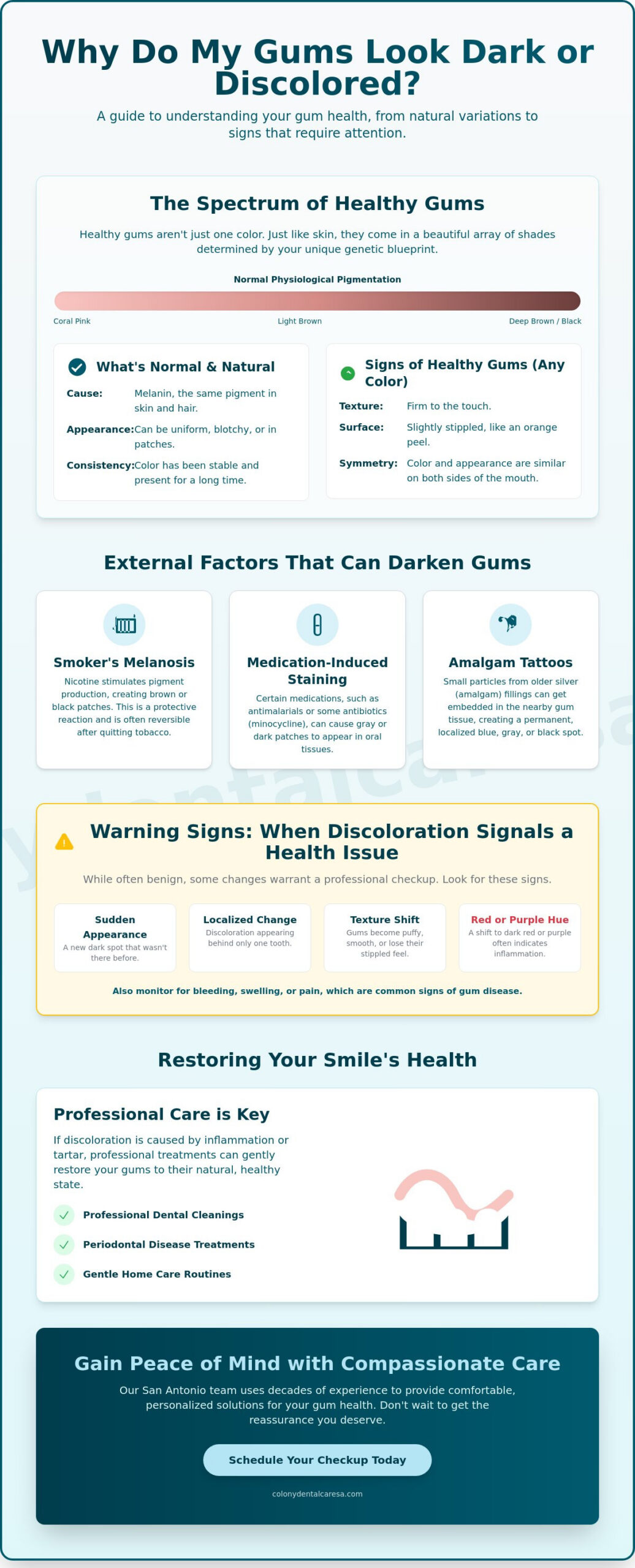
When you look in the mirror and ask, “Why Do My Gums Look Dark or Discolored?” it’s often helpful to start with a deep breath and a bit of perspective. Most of us grew up seeing images of bright “coral pink” gums in textbooks, but the reality of human health is far more diverse. Just as our skin and hair come in a beautiful array of shades, healthy gum tissue spans a wide spectrum. For many of our neighbors, gums that appear deep brown, purple, or even slightly black are not a sign of illness; they are simply a reflection of a unique genetic blueprint.
We want you to feel confident in your smile, which begins with understanding that color alone doesn’t define health. Your gums are a vital part of your overall well-being, and their baseline shade is determined by the same biological factors that determine the rest of your features. If your gums have always been a darker shade, it’s likely just your body’s natural way of protecting and expressing itself.
Melanin and Your Genetic Blueprint
The primary reason for darker gum tissue is melanin. This is the natural pigment produced by cells called melanocytes. If you have a darker skin tone, your melanocytes are naturally more active, which often leads to Understanding Oral Pigmentation as a standard physiological trait. This isn’t a disease or a side effect; it’s a healthy, normal function of your body.
In many cases, this natural pigmentation appears as a solid, rich color across the entire gum line. For others, it might look slightly “blotchy” or appear in varied patches. Both patterns are perfectly normal as long as they have been present for a long time. These variations are simply how your body distributes pigment. We often remind our patients that physiological pigmentation is a sign of vitality, showing that your cells are doing exactly what they were designed to do from birth.
Identifying Uniform Color vs. Sudden Changes
To help you feel more at ease, we suggest looking for symmetry in your mouth. Natural pigmentation usually follows a balanced pattern. If the gums on the left side of your mouth look similar to the gums on the right, you’re likely seeing your genetic baseline. When patients ask us “Why Do My Gums Look Dark or Discolored?” we guide them to look for changes that feel “new” or localized.
While natural color is usually stable, a sudden dark spot that appears only behind one tooth or a shift in texture is worth a closer look. Healthy gums, regardless of their color, should feel firm and have a slightly “stippled” texture, similar to the skin of an orange. If you notice a specific area turning dark red or purple while also becoming puffy or smooth, it might be time for us to check for inflammation. By paying attention to these subtle shifts in texture and symmetry, you can stay ahead of your health while staying calm about your natural appearance.
External Factors: Lifestyle Habits and Medications That Darken Gums
Sometimes, the answer to “Why Do My Gums Look Dark or Discolored?” isn’t found in your genes but in your daily habits or medical history. Our bodies are incredibly reactive to our surroundings. Your gums are no exception. Just like your skin can tan or bruise, your gum tissue can change color based on what it encounters. Whether it’s a habit you’ve had for years or a medication you recently started, these external factors are often manageable once we identify them together. We view this as a partnership in your long-term health and comfort.
Smoker’s Melanosis and Tobacco Impact
One of the most common external causes is tobacco use. This leads to a condition called Smoker’s Melanosis. When you use tobacco, the nicotine stimulates your melanocytes to produce more pigment as a protective shield for the delicate tissue. Think of it as your body’s natural defense mechanism. This often results in a brown or black tint, usually on the inside of the lips or cheeks. The good news is that this isn’t necessarily permanent. Many people find their natural gum color returns once they stop using tobacco products. It is just one way your body tries to take care of itself, and we are here to support you in that journey toward healing.
Medication-Induced Staining and Amalgam Tattoos
It’s also possible for certain prescriptions to influence your smile. Some medications, including antimalarials or specific antibiotics like minocycline, can lead to gray or dark patches in the mouth. This happens because the medication can settle into the tissue or trigger subtle pigment changes. If you’ve noticed a sudden change after starting a new health regimen, it’s a great idea to mention it during your next dental cleaning and exam. We can help you track these changes and ensure your gums remain healthy and comfortable.
You might also notice a very specific, isolated dark spot near an old silver filling. This is known as an amalgam tattoo. It happens when tiny particles of silver from a filling become embedded in the gum tissue. While these spots are harmless and don’t require treatment, they are one of the common causes of black gums that we like to document. Knowing exactly what these spots are helps us rule out other concerns during your visits. It provides a clear baseline for your future care and peace of mind.
Finally, don’t overlook simple trauma. Your gums are sensitive and vascular. Biting into a sharp chip or brushing too aggressively can cause a “bruise” that looks dark red, purple, or even black. These spots usually heal on their own within a week or two, much like a bruise on your arm. If a spot lingers, changes shape, or feels uncomfortable, we’re always here to take a look and provide some reassurance. We want you to feel steady and informed about every part of your oral health journey.
When Discoloration Signals a Health Issue: Symptoms You Shouldnt Ignore
While we’ve explored natural pigment and lifestyle habits, there are times when your body uses color as a signal for help. If you’ve been asking, “Why Do My Gums Look Dark or Discolored?” and you’ve noticed accompanying discomfort, it’s a good time to look closer. We want you to feel empowered by this information, not overwhelmed. Recognizing these shifts early allows us to partner with you for a gentle, effective solution that protects your peace of mind.
Our team sees your oral health as a vital part of your total well-being. When changes occur suddenly or are paired with other symptoms, they often point to underlying issues that we can easily address together. By staying observant, you’re taking a proactive step toward a healthier, more confident future.
The Role of Subgingival Tartar (Black Calculus)
One common reason for a dark line near the teeth is subgingival tartar, also known as black calculus. Plaque is a soft film that we can usually brush away at home, but if it stays on the teeth too long, it hardens into tartar. When this happens below the gum line, the deposit can absorb blood and minerals, which turns it a dark brown or black color. Because your gum tissue is relatively thin, this dark buildup often shows through from underneath, creating a discolored appearance. It’s important to remember that once tartar has hardened, home brushing and flossing can’t remove it. We use specialized, gentle tools during a professional cleaning to clear this away, letting your gums return to their natural, healthy state.
Gum Disease and Inflammation Indicators
Changes in color are often the first way your gums communicate inflammation. While early gingivitis usually looks bright red, advanced periodontitis can cause the tissue to turn a deep, dusky purple or dark red. This shift happens because chronic inflammation affects blood flow and the vitality of the tissue. If you notice your gums look darker and are also swollen, tender, or prone to bleeding when you brush, it may be a sign you need professional gum disease treatment. Other symptoms to watch for include persistent bad breath or a feeling that your teeth are slightly loose. Catching these signs early is the best way to protect your long-term smile and systemic health.
In rare cases, a sudden and painful darkening of the gums can indicate an infection called Acute Necrotizing Ulcerative Gingivitis (ANUG). This requires immediate, compassionate care to stop the infection and manage your comfort. Additionally, some systemic health issues, such as Addison’s disease, can manifest as oral hyperpigmentation. This is why we take a holistic view of your health. Your mouth is a window to your overall well-being. If we notice these patterns, we’ll guide you through the next steps with the care and clinical expertise you deserve.
Restoring Your Smile: Professional Treatments and Gentle Home Care
If you’ve spent time wondering, “Why Do My Gums Look Dark or Discolored?” you’ll be glad to know that modern dentistry offers many gentle ways to restore your smile’s natural vitality. We start every journey with a thorough, unhurried diagnosis. This ensures we’re treating the actual cause rather than just the symptom. Whether your discoloration is a sign of tartar or a natural trait you’d like to change, we prioritize your comfort at every step. We want you to feel seen and heard as we work together to find the right path for your health.
Our approach is always methodical and careful. We believe that a healthy smile is a partnership between professional expertise and your daily habits at home. By combining advanced clinical care with simple, effective maintenance, we can help you achieve a look that feels both healthy and confident.
The Importance of Professional Periodontal Therapy
For many of our neighbors, the first line of defense is a deep cleaning. If black tartar has settled below the gum line, we may recommend a process called scaling and root planing. This gentle procedure removes the hardened deposits that cause a dark shadow to show through the tissue. It’s a way to hit the reset button on your gum health, allowing the tissue to heal and reattach firmly to your teeth. Regular dental cleanings are then the best way to maintain that healthy, vibrant look. We understand that dental procedures can sometimes cause a bit of worry, so we use modern techniques to ensure the experience is as comfortable and easy as possible.
Cosmetic Solutions and Preventive Maintenance
If your dark gums are a result of natural melanin and you’d prefer a lighter shade for aesthetic reasons, there are modern cosmetic options to consider. Laser depigmentation is a precise, minimally invasive way to gently lighten the tissue. This procedure is often completed in a single visit with a very quick recovery time. Beyond professional care, what you do at home makes a huge difference. A balanced diet rich in Vitamin C supports the collagen in your gums, keeping them resilient and healthy. To keep your gums looking their best, we suggest following this simple daily checklist:
- Use a soft-bristled toothbrush to prevent “bruising” or irritation of the delicate tissue.
- Commit to flossing every day to stop plaque from mineralizing into dark tartar.
- Stay hydrated to maintain a healthy flow of saliva, which naturally cleanses your mouth.
- Avoid tobacco products to prevent the recurrence of smoker’s melanosis.
Every smile is unique, and we’re here to provide the individualized care you deserve. If you’re ready to find a solution that fits your goals, we invite you to reach out to our friendly team in San Antonio for a personalized consultation. We’ll guide you through your options with the kindness and skill you expect from a trusted local advisor.
Reassuring Gum Care at Colony Dental Care in San Antonio
At Colony Dental Care, we believe you deserve a dental home where your concerns are met with a smile and a listening ear. If you’ve been searching for answers to Why Do My Gums Look Dark or Discolored?, you’ve found a team that prioritizes your peace of mind above all else. Dr. Oei brings over 30 years of experience to our San Antonio community, offering a deep well of clinical knowledge paired with a warm, neighborly touch. We don’t just treat teeth; we care for the person behind the smile.
We understand that many of our neighbors feel a sense of hesitation when visiting the dentist. Perhaps you’re worried about a specific diagnosis or simply feel self-conscious about the appearance of your gums. Our goal is to alleviate those anxieties from the moment you walk through our doors. We’ve designed our practice to feel like a stable, reliable fixture in the neighborhood, where long-term relationships are valued over transactional appointments.
Our Gentle Approach to Periodontal Health
Our team focuses on creating an unhurried, methodical experience for every individual. During your evaluation, we take the time to explain every detail, ensuring you never feel overwhelmed by the unknown. By using modern technology for our periodontal disease treatment, we can provide precise care for those asking Why Do My Gums Look Dark or Discolored? while seeking a path to health. This approach allows us to create a supportive cadence for your journey, guiding you through each step with professional confidence and kindness.
A Partnership for Your Total Well-being
Our holistic philosophy means we always look at the big picture of your health. We recognize that healthy gums are a cornerstone of your systemic well-being, and our personalized treatment plans reflect that thoroughness. Whether you need a routine cleaning or a more detailed plan to address discoloration, we tailor every service to your specific needs and goals. We want you to feel empowered and informed about every aspect of your oral health.
Neighbors in San Antonio are invited to experience a different kind of dental care that puts comfort first. Let us help you find the clarity and reassurance you’ve been looking for. Schedule your consultation with Colony Dental Care today and take the first step toward a healthy, confident smile in an environment where you are truly cared for.
Take the Next Step Toward Your Confident Smile
Your gum color is a unique part of your health story, whether it’s a natural trait or a recent change. We’ve seen how understanding the difference between genetic pigmentation and issues like tartar buildup can replace worry with a clear plan of action. If you’ve been asking, “Why Do My Gums Look Dark or Discolored?” you don’t have to find the answers alone. Our team is here to provide the clarity you need in a space where you always feel safe and heard.
With over 30 years of experience, Dr. Oei and our compassionate team specialize in providing gentle care that prioritizes your comfort. We accept most insurance plans and offer an in-house membership to ensure that expert care remains accessible for our San Antonio neighbors. You deserve a smile that makes you feel vibrant and healthy.
Schedule Your Reassuring Gum Exam at Colony Dental Care today. We look forward to partnering with you on your journey to a lifetime of dental wellness and peace of mind.
Frequently Asked Questions
Can dark gums be turned pink again?
Yes, many forms of discoloration can be reversed once we identify the root cause. If the change is due to dark tartar or inflammation, a professional cleaning and specialized periodontal care can restore the tissue to a healthy, vibrant state. For those with natural melanin who prefer a lighter shade, modern cosmetic depigmentation offers a gentle and effective way to achieve your desired look. We’ll work with you to find the most comfortable path for your specific goals.
Is it normal for gums to turn black as you age?
A darkening of the gums isn’t a standard part of the aging process, though certain factors become more common as time passes. You might notice changes due to years of tobacco use, the long-term presence of silver fillings, or the side effects of medications taken for other health conditions. If you’ve been wondering, “Why Do My Gums Look Dark or Discolored?” as you get older, it’s often a sign that it’s time for a thorough checkup. We can help determine if the shift is a harmless lifestyle reflection or something that needs clinical attention.
Does smoking always cause dark gums?
While not every person who smokes will experience a change in pigment, it’s a very frequent side effect known as smoker’s melanosis. The nicotine in tobacco triggers your body’s cells to produce extra melanin as a way to protect the delicate oral tissues from heat and irritation. This brown or black tint is your body’s natural defense mechanism. In many cases, the tissue will slowly return to its original shade if you choose to stop using tobacco products, and we’re here to support you in that healthy transition.
What should I do if I see a single black spot on my gums?
The best course of action is to schedule a gentle evaluation so we can document the spot and ensure it’s harmless. Many single dark spots are simply amalgam tattoos, which are tiny, safe silver particles from older fillings that have settled into the tissue. However, because new or irregular spots can occasionally signal other health needs, having an expert eye look at it provides essential peace of mind. We’ll examine the texture and borders of the spot to give you a clear, reassuring answer.
How much does it cost to fix discolored gums in San Antonio?
The investment for care depends entirely on the underlying cause and the specific treatment path we choose together. If the discoloration is caused by tartar buildup, the cost is often covered by dental insurance as part of your necessary periodontal health maintenance. Cosmetic procedures to lighten natural pigment are typically an out-of-pocket investment. During your visit, we provide a clear, step-by-step breakdown of your options and explain how our in-house membership can help make your care more accessible and stress-free.
Can stress cause my gums to change color?
Stress doesn’t directly change the color of your gums, but it can lead to conditions that do. For instance, high levels of stress can weaken your immune system, making you more susceptible to infections like gingivitis or the rare but serious Acute Necrotizing Ulcerative Gingivitis. These conditions can cause the gums to look dark red, purple, or even gray. By focusing on your total well-being and maintaining regular visits, we can help you stay ahead of these changes even during life’s busier seasons.
Are dark gums a sign of oral cancer?
While the vast majority of gum discoloration is completely benign, sudden or irregular dark patches are something we always take seriously. During every routine exam at our San Antonio practice, we perform an oral cancer screening to ensure everything is healthy and as it should be. It’s one of the reasons we encourage patients to ask, “Why Do My Gums Look Dark or Discolored?” if they notice something new. Early detection is a powerful tool, and our thorough approach is designed to keep you safe and informed.
Can I use teeth whitening strips on my gums to lighten them?
You should never use teeth whitening strips or gels on your gum tissue. These products are formulated with strong bleaching agents designed specifically for the hard enamel of your teeth. When they come into contact with the soft, sensitive tissue of your gums, they can cause chemical burns, significant irritation, and even further discoloration. If you’re interested in lightening your gums, it’s much safer to talk to us about professional, clinical methods that protect your comfort and the health of your smile.