Imagine it’s 2:00 AM on a Tuesday, and a sharp, throbbing pain is keeping you awake while the rest of San Antonio sleeps. You’re exhausted, but every time you try to close your eyes, that toothache demands your full attention. You’re likely wondering exactly what to do for a toothache at home to find enough relief to make it through the night. It’s a stressful moment, and you shouldn’t have to face it alone or feel confused about your next steps.
We know how overwhelming dental pain can be, especially when you’re balancing the need for sleep with concerns about the cost of emergency care. In our community, where the rate of untreated tooth decay among local third graders reached 37% during the 2024-2025 school year, we’ve seen how vital it is to have reliable information at your fingertips. This guide will provide you with safe, effective home remedies to manage your discomfort and help you determine if your symptoms require a professional visit. We’ll explore everything from saltwater rinses to what you can expect regarding San Antonio emergency exam costs, which typically range from $75 to $150, ensuring you feel confident and cared for every step of the way.
Key Takeaways
- Learn how to use simple household staples like warm salt water and cold compresses to provide immediate, soothing relief when pain strikes unexpectedly.
- Understand exactly what to do for a toothache at home by utilizing natural anesthetics like clove oil and safe over-the-counter options to manage inflammation.
- Recognize the specific red flags, such as fever or facial swelling, that signal when it is time to transition from home care to a professional dental examination.
- Discover local San Antonio resources, including 24-hour pharmacies and the benefits of our fluoridated water, to support your oral health during recovery.
- Explore how our team provides gentle, anxiety-free emergency care designed to restore your comfort and peace of mind as quickly as possible.
Immediate Steps for Quick Toothache Relief at Home
When a sudden throb starts in your jaw, your first instinct is to find a way to stop the pulsing. Knowing exactly what to do for a toothache at home can mean the difference between a sleepless night and a manageable evening. We often see patients who feel anxious because they don’t have immediate access to a dentist. We want you to know that there are safe, gentle ways to find comfort in your own kitchen. In San Antonio, where 37% of third graders faced untreated decay in the 2024-2025 school year, we understand that dental issues can arise unexpectedly for anyone in our community. Start by focusing on reducing the blood flow and inflammation around the affected area.
The Proper Way to Use a Salt Water Rinse
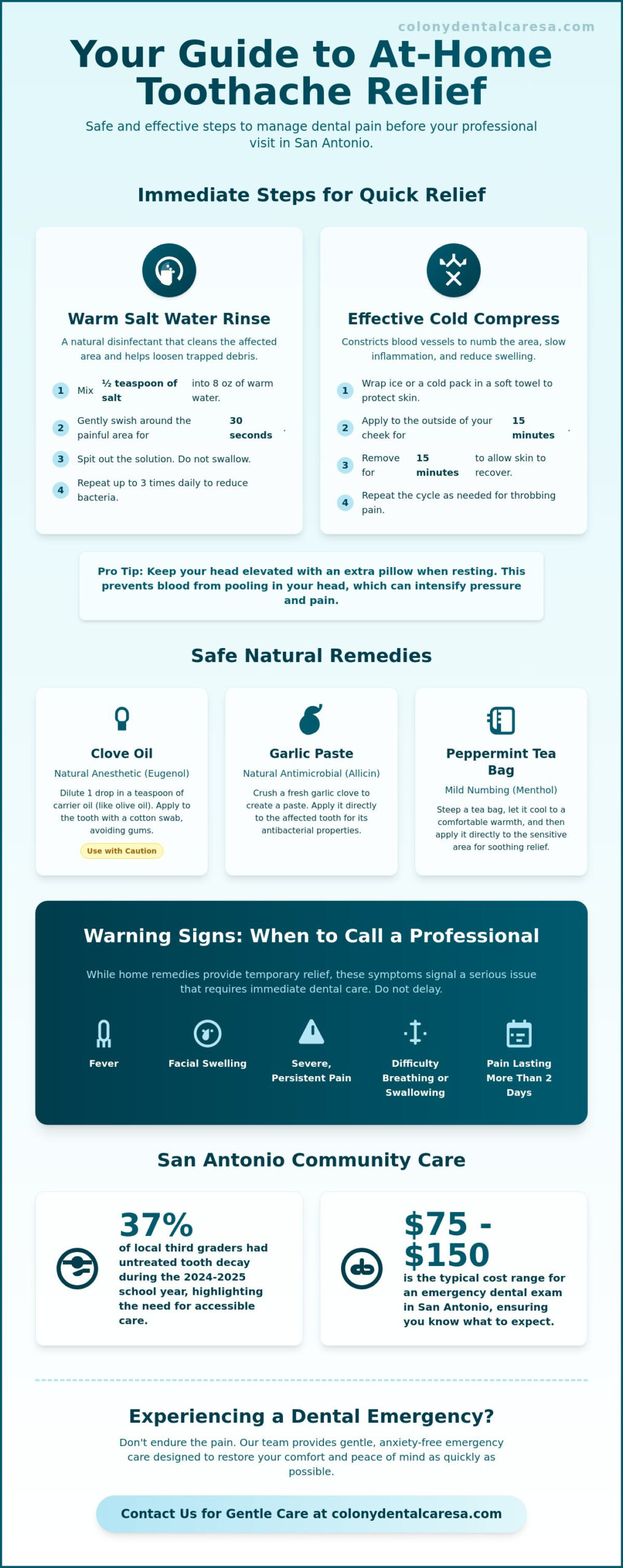
A warm salt water rinse is one of the most effective first steps you can take. It acts as a natural disinfectant and helps loosen food particles trapped between your teeth. A foundational part of understanding toothaches involves recognizing how bacteria and debris contribute to localized pressure. Warm water is key because cold water can trigger a sharp, painful reaction in an exposed nerve. Follow these steps for the best results:
- Mix the solution: Stir half a teaspoon of salt into eight ounces of warm, filtered water until dissolved.
- Swish gently: Move the liquid around the painful area for 30 seconds.
- Spit it out: Never swallow the salt water, as it can be hard on your stomach.
- Repeat: You can do this up to three times daily to keep the area clean and reduce bacteria.
Effective Cold Compress Techniques
If your face feels warm or looks slightly swollen, a cold compress is a helpful tool. It constricts the blood vessels, which numbs the area and slows down the inflammatory response. This is particularly useful for throbbing pain that feels like it’s “beating” in time with your heart. To use this method safely, wrap ice or a cold pack in a soft towel. This prevents skin irritation or ice burns on your cheek. Apply the pack to your jawline for 15 minutes, then remove it for 15 minutes. This cycle allows your skin to recover while still providing deep relief to the underlying tissue.
Beyond these active treatments, your physical position matters. Try to keep your head elevated with an extra pillow, even while you’re resting. This prevents blood from pooling in your head, which can intensify the pressure inside the tooth. If you are unsure of what to do for a toothache at home while waiting for an appointment, remember to avoid triggers like sugary snacks or drinks that are extremely hot or cold. These external factors can aggravate sensitivity and make the pain much harder to control. Our goal is to help you manage the discomfort until we can provide a more permanent, personalized solution in our office.
Safe Natural and Over-the-Counter Options
Once you have addressed the initial pressure with rinses and compresses, you might look toward your pantry or medicine cabinet for more sustained relief. Knowing what to do for a toothache at home often involves using items you already have on hand to manage discomfort. These methods are wonderful for keeping you comfortable until our team can see you for a gentle dental evaluation. While these solutions don’t cure the underlying issue, they provide a much-needed bridge to professional care.
Garlic is a surprising but potent ally in your kitchen. It contains allicin, a compound with natural antimicrobial properties that can help fight off bacteria near the site of the pain. You can crush a fresh clove into a paste and apply it directly to the affected tooth. Similarly, peppermint tea bags offer a soothing experience. Menthol, the active ingredient in peppermint, provides a mild numbing sensation. Simply steep the bag, let it cool until it’s comfortably warm, and press it against the sensitive area for several minutes. These at-home toothache remedies are excellent for temporary comfort, but they shouldn’t replace a clinical diagnosis.
Using Clove Oil Safely
Clove oil is perhaps the most well-known natural remedy for oral pain. It works because of eugenol, which is the active chemical compound in cloves that acts as a natural anesthetic. However, it’s very strong and must be used with care. We recommend diluting one drop of clove oil with a teaspoon of a carrier oil, like olive oil, before application. Use a small cotton swab to dab the mixture onto the tooth itself. Try your best to avoid the surrounding gum tissue, as the oil can be irritating to sensitive oral membranes.
OTC Medication Guidelines
Over-the-counter (OTC) medications are often the most reliable way to handle a throbbing ache. Ibuprofen is typically the preferred choice for dental pain because it is an anti-inflammatory that targets the swelling around the tooth root. When deciding what to do for a toothache at home, always follow the dosage instructions on the product label for Ibuprofen or Acetaminophen. If you’re already taking other medications, a quick call to your local San Antonio pharmacist can help prevent any unwanted interactions.
One common mistake to avoid is placing an aspirin tablet directly against your gums or the aching tooth. While it might seem like a direct way to stop the pain, the acid in aspirin can actually cause painful chemical burns on your soft tissues. Instead, swallow the medication as directed. If your pain persists or worsens after trying these options, it’s a sign that your body needs a bit more help than home care can provide. We’re here to help you find a long-term solution in a calm, anxiety-free environment.
Recognizing a Dental Emergency in San Antonio
While learning what to do for a toothache at home is a great way to find temporary peace, it’s vital to recognize when your body is signaling a deeper issue. Pain is a communication tool, and the specific type of discomfort you feel can tell us a lot about what’s happening beneath the surface. A sharp, sudden sting when you bite down often points to a cracked tooth or a loose filling that has exposed a sensitive nerve. In contrast, a persistent, dull throb that feels like a heartbeat in your jaw usually suggests that the pulp inside your tooth is inflamed or infected. If you notice a foul taste or a sudden salty discharge in your mouth, this is often a sign of a dental abscess draining. This type of infection requires professional attention to prevent it from spreading to other parts of your body.
Signs You Need Immediate Professional Care
Some situations move beyond simple discomfort and become urgent medical concerns. If your toothache is accompanied by a fever, chills, or difficulty swallowing, these are systemic signs that an infection may be moving through your system. You should also seek help immediately if you experience severe facial swelling that extends toward your eye or down your neck. For our San Antonio neighbors, knowing when to see a dentist for a toothache can prevent a minor irritation from becoming a major health crisis. Additionally, a knocked-out or loose permanent tooth is a time-sensitive emergency where every minute counts for saving the tooth. We want you to feel safe and supported during these moments, knowing that quick action is the best way to protect your long-term health.
When Home Remedies Are No Longer Enough
Home care is meant to be a supportive bridge, not a permanent cure. If you’ve been researching what to do for a toothache at home and your pain persists for more than 48 hours despite your best efforts, it’s time to let a professional take a look. When discomfort is so intense that over-the-counter medications provide no relief, your tooth is likely telling you that the root cause needs clinical intervention. Our team is here to provide a calm, anxiety-free environment during these stressful times. If you find yourself in this position, reaching out to an emergency dentist San Antonio can help you get back to your normal life. We prioritize your comfort and aim to provide a personalized plan that addresses the infection at its source, ensuring you feel seen and cared for throughout the process.
San Antonio Resident Tips: Managing Oral Pain Locally
Living in South Texas presents unique challenges when you’re managing dental discomfort. If you’re searching for what to do for a toothache at home during one of our intense summer heatwaves, staying indoors in the air conditioning is actually a medical necessity. High temperatures can increase your heart rate and peripheral blood flow, which often makes a throbbing toothache feel much more aggressive and pulsing. We also recommend staying hydrated with San Antonio’s fluoridated tap water. Our local water is specifically treated to help support your enamel health, providing a small but steady layer of mineral protection while you’re recovering from a minor irritation.
It’s a great idea to keep a dedicated dental emergency kit in your medicine cabinet. This kit should include sterile gauze, a small container of sea salt, and a bottle of clove oil. Having these items ready means you won’t have to scramble when you’re already in pain. If you do find yourself needing supplies in the middle of the night, San Antonio is home to several 24-hour pharmacies. Locations like the CVS on San Pedro Avenue or specific HEB pharmacies offer quick access to pain relief supplies at any hour. This ensures you can manage your symptoms immediately rather than waiting for stores to open in the morning.
Finding Relief Supplies in San Antonio
Our local weather patterns can also play a role in how you feel. San Antonio often experiences rapid changes in barometric pressure, which can lead to significant sinus congestion. We’ve noticed that many neighbors find that what they thought was a toothache was actually sinus pressure mimicking dental pain. If your upper teeth ache on both sides, it might be related to the cedar or oak pollen counts. Saving our practice’s phone number in your contacts now ensures you can quickly call for a consultation. We can help you distinguish between a sinus issue and a dental infection, giving you peace of mind before you even leave your house.
Preparing for Your Visit to Dr. Oei
If your home efforts aren’t enough to stop the pain, being prepared for your appointment helps us provide the most accurate, personalized care. We suggest writing down exactly when the pain started and what triggers, like cold water or chewing, make it feel worse. Bring a list of any medications you’re currently taking so we can ensure our treatment plan is safe for your total health. If you are worried about the cost of an unexpected visit, you can check your eligibility for the Colony Dental Care membership plan if you are currently uninsured. Having this information ready allows our team to focus entirely on your comfort the moment you walk through our doors. If you’re ready for a long-term solution, contact us today to schedule a gentle evaluation.
Gentle Emergency Care at Colony Dental Care
While discovering what to do for a toothache at home provides a necessary bridge to comfort, the final step in your journey to relief happens in a professional setting. We understand that visiting the dentist can feel intimidating, especially when you are already dealing with a throbbing ache. At Colony Dental Care, our mission is to transform that anxiety into peace of mind. We’ve designed our practice to feel like a supportive partnership where your comfort is our primary focus. We don’t just fix teeth; we care for people, ensuring you feel seen and heard from the moment you call our office.
Our team recognizes that dental pain doesn’t just affect your mouth; it disrupts your sleep, your work, and your overall quality of life. Even if you’ve found temporary success researching what to do for a toothache at home, a clinical evaluation is the only way to ensure an infection doesn’t spread. We prioritize emergency cases to get you out of pain as quickly as possible. We accept many PPO insurance plans and provide flexible, affordable in-house options for our neighbors without insurance, ensuring that financial concerns don’t stand in the way of your health.
Why San Antonio Families Trust Dr. Oei
Dr. James David Oei has served the San Antonio community for over 30 years, building a reputation for clinical excellence and a compassionate, neighborly touch. This deep experience allows our team to quickly identify the source of your pain using modern digital diagnostics. We believe that a precise diagnosis is the first step toward a gentle, anxiety-free experience. If you are looking for a long-term dental home, we invite you to read our finding the best dentist in San Antonio guide to see how we prioritize patient education and personalized care. We take the time to explain every step of your treatment, ensuring you never feel rushed or overwhelmed by complex terminology.
Schedule Your Comfort-Focused Appointment
Booking your emergency exam and X-ray is a simple, stress-free process. We’ll work with your schedule to find the earliest possible time to see you and provide the relief you deserve. Our ‘Total Health’ philosophy means we look at how your oral health impacts your systemic well-being, helping you avoid future emergencies through proactive, comprehensive care. Don’t let a minor irritation turn into a major infection that affects your daily life. Contact Colony Dental Care today to experience the stable, reliable care our San Antonio community has trusted for three decades. We’re ready to help you feel confident, healthy, and pain-free once again.
Take the Next Step Toward Lasting Relief
Managing dental pain can be a lonely and exhausting experience, but you now have a clear roadmap for recovery. We’ve explored how simple rinses and local San Antonio resources can offer temporary comfort while you wait for a permanent solution. Knowing exactly what to do for a toothache at home provides a vital bridge, but it shouldn’t be the end of your care journey. Whether you are using our in-house membership plan for patients without insurance or your own provider, we want to ensure you get back to your vibrant, healthy self without the stress of lingering pain.
With over 30 years of expert dental experience, Dr. James David Oei and our team are dedicated to providing personalized, anxiety-free care right here in our community. We prioritize your peace of mind and use modern technology to address the root cause of your discomfort. You don’t have to navigate this alone. Schedule your gentle emergency visit with Dr. Oei today and let us help you find the lasting comfort you deserve. We look forward to seeing you soon and helping you smile with confidence again.
Frequently Asked Questions
How can I stop a toothache from throbbing at home?
You can reduce a throbbing sensation by keeping your head elevated above your heart to lower the blood pressure in the affected area. Applying a cold compress to your cheek for 15 minutes also helps by constricting blood vessels and numbing the nerves. These steps are a vital part of what to do for a toothache at home when you need immediate, temporary relief from pulsing pain.
Is it okay to wait a few days to see a dentist for a toothache?
It’s generally safe to wait 24 to 48 hours if your pain is mild and manageable with home care. However, if your discomfort persists beyond this window, you should schedule an appointment to prevent a minor issue from worsening. In San Antonio, where untreated decay rates reached 37% in 2024, waiting too long can lead to more complex and costly restorative procedures later on.
Can a toothache go away on its own without professional treatment?
A toothache rarely goes away permanently without professional intervention because the underlying decay or infection remains in the tooth structure. Sometimes the pain may vanish if the nerve inside the tooth dies, but the bacteria will continue to spread into the jawbone. Seeking a clinical diagnosis ensures that the source of the problem is removed before it impacts your total health.
What is the best over-the-counter medicine for severe tooth pain?
Ibuprofen is often considered the most effective over-the-counter option for dental pain because it specifically targets inflammation at the tooth root. Acetaminophen is another reliable choice, and some patients find success alternating the two under the guidance of a pharmacist. Always follow the specific dosage instructions on the label to manage your symptoms safely while you research what to do for a toothache at home.
What happens if I ignore a toothache that has a bad taste or smell?
Ignoring a bad taste or smell can lead to a serious systemic infection because these symptoms usually indicate an active dental abscess. This drainage is full of bacteria that can move into your bloodstream or surrounding tissues if left untreated. Our team uses digital diagnostics to locate these infections quickly, providing gentle care to clear the blockage and protect your overall well-being.
Can sinus pressure in San Antonio cause my teeth to ache?
Yes, San Antonio’s high pollen counts and rapid pressure changes frequently cause sinus congestion that mimics tooth pain. Because your upper tooth roots sit very close to your maxillary sinuses, inflammation in those cavities can put direct pressure on your teeth. If your pain is accompanied by nasal congestion and affects multiple upper teeth, it may be related to local environmental triggers rather than a cavity.
Is a toothache considered a medical emergency if I have a fever?
A toothache accompanied by a fever is a medical emergency that requires immediate clinical attention. A fever indicates that your body is fighting an infection that may no longer be localized to just your tooth. If you also experience chills or difficulty breathing, you should visit an emergency provider or our office right away to ensure the infection is managed before it spreads further.
How do I know if my toothache is caused by a cavity or an infection?
Determining if a cavity or an infection is the culprit depends on the duration and triggers of your pain. Cavities often cause sharp, fleeting pain when you eat something sweet, hot, or cold. An infection or abscess typically results in a constant, deep throb that doesn’t stop and may cause visible swelling in the gums. We provide personalized evaluations to give you a clear answer and a path back to a healthy, vibrant smile.